The Classics Club Spin Result

The spin number in The Classics Club Spin is number …

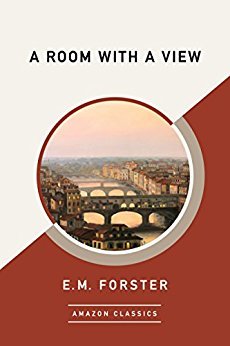
which for me is A Room with a View by E M Forster. The rules of the Spin are that this is the book for me to read by 30th April, 2022.

This has been on my Classics Club List for ages, so it’s time I read it – I think I saw the film years ago.

Set in freewheeling Florence, Italy, and sober Surrey, England, E. M. Forster’s beloved third novel follows young Lucy Honeychurch’s journey to self-discovery at a transitional moment in British society. As Lucy is exposed to opportunities previously not afforded to women, her mind – and heart – must open. Before long, she’s in love with an “unsuitable” man and is faced with an impossible choice: follow her heart or be pressured into propriety.

A challenge to persistent Victorian ideals as well as a moving love story, A Room with a View has been celebrated for both its prescient view of women’s independence and its reminder to live an honest, authentic life. (Goodreads)

Did you take part in the Classics Spin? What will you be reading?

Book Beginnings & The Friday 56: Earth and Heaven by Sue Gee

Every Friday Book Beginnings on Friday is hosted by Gillion at Rose City Reader where you can share the first sentence (or so) of the book you are reading. You can also share from a book you want to highlight just because it caught your fancy.

This week I’m featuring Earth and Heaven by Sue Gee. This is one of my TBRs I bought several years ago because I’d read one of her other books, The Hours of the Night, pre-blog, when I just noted that it was ‘good overall’ and ‘could be shorter’. But the blurb about this one interested me.

The Book Begins:

When Walter painted his family at evening, a towering angel stood at the door with folded wings.

Also every Friday there is The Friday 56, hosted by Freda at Freda’s Voice, where you grab a book and turn to page 56 (or 56% of an eBook), find one or more interesting sentences (no spoilers), and post them.

Page 56:

They climbed the stairs to the class and took their places. Walter was working from a bust now. After weeks of limbs and torsos it felt both liberating and strange to spend his time studying a human face, a female face: to measure the proportions of hairline to brow, and brow to cheekbone; to draw the sweet and subtle curve of the lips.

Blurb from the back cover:

In the aftermath of the First World War, the young painter Walter Cox and the wood-engraver Sarah Lewis meet at the Slade, then set up home and a studio together. With their newfound happiness, and the birth of Meredith, then Geoffrey, the grief of war recedes. But children are unpredictable and have their own inner lives: events on a summer afternoon change everything …

Deeply affecting, shot through with a shimmering apprehension of the natural world, Earth and Heaven is about life’s fragility, and the power of love and painting to disturb, renew and reveal us to ourselves.

What do you think? Does it interest you too?

Ten Books On My Spring 2022 TBR

Top Ten Tuesday is a weekly meme created by The Broke and the Bookish and now hosted by Jana at That Artsy Reader Girl. For the rules see her blog. The topic this week is Books On My Spring 2022 TBR

The first five are review books on my NetGalley Shelf and the rest are books on my TBR shelves. They are books I want to read before too long, but maybe not all of them over the next three months – there are other books I’d like to read too, which I may read instead.

  1. The Drowned City by K J Maitland Daniel Pursglove Book One – historical mystery set in 1606 in England where there is religious persecution, with fears of witchcraft and political unrest.
  2. Traitor in the Ice by K J Maitland Daniel Purslove Book Two – Pursglove investigates the death of a man found dead in the grounds of Battle Abbey, Sussex.
  3. The Chapel in the Woods by Dolores Gordon-Smith – a Jack Haldean murder mystery set in 1920s England when a body, mauled to death as if by a wild animal, is found in the grounds of a 17th century chapel.
  4. Moonlight and the Pearler’s Daughter by Lizzie Pook – set in Bannin Bay, Australia in the late 19th century when Charles Brightwell, a pearler, goes missing from his ship while out at sea.
  5. Quichotte by Salman Rushdie – a retelling of Don Quixote for the modern age. Sam DuChamp, mediocre writer of spy thrillers, creates Quichotte, a courtly, addled salesman obsessed with television, who falls in impossible love with the TV star Salman R. Together with his (imaginary) son Sancho, Quichotte sets off on a picaresque quest across America to prove worthy of her hand,
  6. The Girl with the Dragon Tattoo by Stieg Larsson – Harriet Vanger, scion of one of Sweden’s wealthiest families, disappeared over forty years ago. Years later, her aged uncle continues to seek the truth. He hires Mikael Blomkvist, a crusading journalist to investigate. He is aided by the pierced and tattooed punk prodigy Lisbeth Salander. 
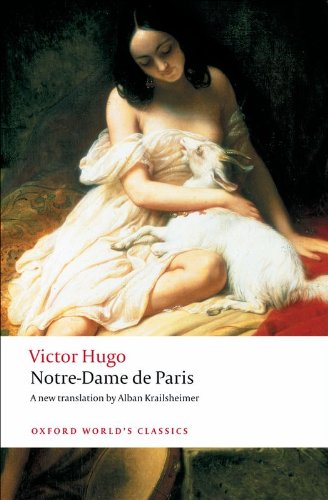
  7. The Hunchback of Notre Dame by Victor Hugo – a reworking of the tale of Beauty and the Beast. Hugo creates a host of unforgettable characters – amongst them, Quasimodo, the hunchback of the title, hopelessly in love with the gypsy girl Esmeralda.
  8. Strangers on a Train by Patricia Highsmith – Guy Haines and Charles Anthony Bruno meet on a train. Bruno manipulates Guy into swapping murders with him. From this moment, almost against his conscious will, Guy is trapped in a nightmare of shared guilt and an insidious merging of personalities.
  9. Night of the Lightbringer by Peter Tremayne – This is the 28th Sister Fidelma mystery, a medieval murder mystery,  featuring a Celtic nun who is also an advocate of the ancient Irish law system. It’s set in Ireland in AD 671 on the eve of the pagan feast of Samhain.
  10. When Christ and His Saints Slept by Sharon Penman – the first book in the Eleanor of Aquitaine trilogy. Historical fiction about Stephen and his cousin, the Empress Maude, and the long fight to win the English throne.

Have you read any of these books?

Classics Club Spin

It’s time for another Classics Club Spin.

I have a new list, so plenty to choose from for this spin list. Before next Sunday, 20th March create a post that lists twenty books of your choice that remain “to be read” on your Classics Club list.On that day the Classics Club will post a number from 1 through 20. The challenge is to read whatever book falls under that number on your Spin List by 30th April, 2022.

Here’s my list:

  1. Sense and Sensibility by Jane Austen
  2. Another Part of the Wood by Beryl Bainbridge
  3. The Mousetrap and Selected Plays by Agatha Christie
  4. Heart of Darkness by Joseph Conrad
  5. The Case of the Gilded Fly by Edmund Crispin
  6. The Stars Look Down by A J Cronin
  7. Moll Flanders by Daniel Defoe
  8. Nicholas Nickleby by Charles Dickens
  9. The Black Tulip by Alexandre Dumas
  10. The Birds and other short stories by Daphne du Maurier
  11. A Room with a View by E M Forster
  12. Brighton Rock by Graham Greene
  13. Strangers on a Train by Patricia Highsmith
  14. The Hunchback of Notre Dame by Victor Hugo
  15. Go Set a Watchman by Harper Lee
  16. A Town Like Alice by Neville Shute
  17. On the Beach by Nevil Shute
  18. Tortilla Flat by John Steinbeck
  19. The Invisible Man by H G Wells
  20. Between the Acts by Virginia Woolf

I ‘d really like The Hunchback of Notre Dame by Victor Hugo to be picked as that is a book I’ll definitely be reading for FictionFan’s Review-Along to be reviewed on 20th April – that would be my ideal choice. Failing that, I’d like a shorter book! Maybe The Birds and other short stories by Daphne du Maurier. Any of one them would be OK, although I probably wouldn’t be able to finish it in time …

So, I’ll be looking out for number 14!

The Red Monarch by Bella Ellis

Hodder and Stoughton| 18 November 2021| 326 pages| e-book| Review copy| 3*

Blurb

The Brontë sisters’ first poetry collection has just been published, potentially marking an end to their careers as amateur detectors, when Anne receives a letter from her former pupil Lydia Robinson.

Lydia has eloped with a young actor, Harry Roxby, and following her disinheritance, the couple been living in poverty in London. Harry has become embroiled with a criminal gang and is in terrible danger after allegedly losing something very valuable that he was meant to deliver to their leader. The desperate and heavily pregnant Lydia has a week to return what her husband supposedly stole, or he will be killed. She knows there are few people who she can turn to in this time of need, but the sisters agree to help Lydia, beginning a race against time to save Harry’s life.

In doing so, our intrepid sisters come face to face with a terrifying adversary whom even the toughest of the slum-dwellers are afraid of . . . The Red Monarch.


The Red Monarch is the third Brontë Mystery book in which the main characters are the three Brontë sisters, Charlotte, Emily and Anne and their brother Branwell. I’ve read the first two and enjoyed them. But when I came across the first book I wasn’t at all sure I wanted to read it, as I’m never very keen on books that use real people as fictional characters. So, I was delighted to find that I thoroughly enjoyed the books even though, of course, the stories about the Brontës being ‘detectors’, or amateur sleuths, are pure imagination. The setting in the Yorkshire Moors is superb, the characters came across as ‘real’ and the books are well plotted.

And so, I was looking forward to reading The Red Monarch and it began well in Haworth in August 1852 as Charlotte is trying to write Villette. She is in despair after the deaths of her siblings – Emily and Branwell in 1848, and Anne in 1849. Instead of writing she reads a little notebook containing Emily’s poems and one particular poem brought back to her the dreadful events that had taken place and the terrors and cruelties they had seen, on their excursion to London. It had all taken place just after the Brontë sisters’ first poetry collection had been published – in 1846.

It was at this point, right at the beginning of the story about their time in London, that I thought I was reading a completely different type of mystery from the earlier books – not only is in not set in Yorkshire this book is a gothic melodrama. In a terrifying attack on Lydia and her husband Harry, a gang of thieves and murderers, led by Noose, had burst into Harry and Lydia’s bedroom. They had seized Harry and threatened to kill him unless Lydia brought them the jewel that Harry had been ordered to collect. Lydia, who was pregnant, had seven days to save their lives. But it is the Red Monarch, who was in control of the gang, and who held them all under his control – a most villainous and fearsome gangster. In desperation Lydia wrote to Anne for help.

The story is melodramatic, sensational and fast-paced. It is told through each of the sisters’ eyes, each one clearly distinctive, whilst Emily (once more) is the standout character. They are all independent women, strong-willed and determined and as Victorian women, vastly underestimated by the men. But, I had a hard time accepting the Brontë sisters in this story. Whereas in the two previous books I could believe that the Brontë family were just as Bella Ellis has described them, in this book I couldn’t.

The descriptions of mid 19th century London are vivid, clearly depicting the filthy living conditions of the poor, the sights and foul smells. The details of the Brontës’ search for Harry and the missing jewel test their strength, courage and skill in detection.

There are a few other real people who play a minor role, notably Charles Dickens, who is dismissive when Charlotte, somewhat in awe of him, asks for his advice as a writer, telling her to abandon any ideas of being a novelist and to marry, or teach. His companion, Mrs Catherine Crowe, another real author who wrote supernatural tales, was much more approachable and friendly, contacting her spirit friends to help with Charlotte’s search as well as giving her useful advice as a writer. Another character, with a larger role, is Louis Parensell, who develops a passion for Emily. He was not a real person, but Virginia Moore, a Brontë biographer, misread the handwritten title of Emily’s poem ‘Love’s Farewell’ as ‘Louis Parensell’, and developed the theory that Louis was Emily’s secret lover.

As the novel reached its dramatic climax, Emily in particular is in danger of losing her life as she dared to challenge the Red Monarch. I was most interested in the identity of The Red Monarch – was he in fact a real person, or totally fictitious? There various references to him throughout the novel, what was the origin of his name, and what was the meaning of his insignia? It seemed to be two capital Rs back to back topped with a crown and contained within a five-pointed star of pentagram. Anne had first discovered them and she felt sure they carried a secret meaning to those in know. When the identity of the Red Monarch is finally revealed I was surprised – but it is appropriate in that the real person has been described as a maniacal, controlling man.

I enjoyed this book, but I think the two previous books are much better and seem more authentic, aided by being set in the Brontës’ Yorkshire. They were out of place in London. It all seems to me to be over dramatic and unbelievable. The fictional element far outweighs the historical.

~~~

‘Bella Ellis’ is the Brontë-inspired pen name for the author Rowan Coleman, who has been a Brontë devotee for most of her life. As well as writing the Brontë Mysteries she is the .author of sixteen novels including the Richard and Judy pick The Memory Book and the Zoe Ball bookclub choice, The Summer of Impossible Things.

My thanks to Hodder Stoughton for a review copy via NetGalley

Book Beginnings & The Friday 56: The Homecoming by Anna Enquist

Every Friday Book Beginnings on Friday is hosted by Gillion at Rose City Reader where you can share the first sentence (or so) of the book you are reading. You can also share from a book you want to highlight just because it caught your fancy.

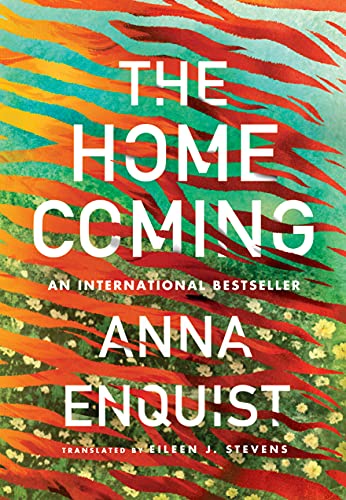
This week I’m featuring The Homecoming by Anna Enquist, to be published on 1 April 2022. This is my Amazon First Reads choice this month – where you can choose to download a free e-book from a choice of eight early release titles if you subscribe to Amazon Prime.

The Book Begins:

He’ll expect an empty table when he comes home, she thought. He’ll be lugging chests and sacks into the house, filled with journals, sketches and maps.

Also every Friday there is The Friday 56, hosted by Freda at Freda’s Voice, where you grab a book and turn to page 56 (or 56% of an eBook), find one or more interesting sentences (no spoilers), and post them.

Page 56:

How could he, from one minute to the next, become a father again, or a husband? In the brief span of time between dusk and darkness, there was no way to catch up on three years. They would have to take a leap of faith and trust that, in the coming weeks and months, they could fill in the gaps.

I was beginning to think I wouldn’t choose an Amazon First Reads book this month, until I came to the Literary Historical Fiction choice (I notice that this is a different choice from the US selection). I chose this book because I like historical fiction and this one is about Elizabeth Cook, the wife of the eighteenth-century explorer, Captain James Cook. I also chose it because it’s by Anna Enquist, (the pen name of one of the more popular authors in the Netherlands, Christa Widlund-Broer.) She is a musician, and a psychoanalyst as well as a poet and novelist, and I have read one of her books before, a Leap, a very short book (80 pages) made up of six dramatic monologues. Overall they are sad, even tragic stories and I liked her style of writing, which is clear and brings the people and places to life. 

I started to read The Homecoming as soon as I downloaded it and so far I am enjoying it very much.

Synopsis:

After twelve years of marriage to English explorer James Cook, Elizabeth has yet to spend an entire year with her husband. In their house by the Thames, she moves to the rhythms of her life as a society wife, but there is so much more to her than meets the eye. She has the fortitude to manage the house and garden, raise their children, and face unbearable sorrow by herself—in fact, she is sometimes in thrall to her own independence.

As she prepares for another homecoming, Elizabeth looks forward to James’s triumphant return and the work she will undertake reading and editing his voluminous journals. But will the private life she’s been leading in his absence distract her from her role in aid of her husband’s grand ambitions? Can James find the compassion to support her as their family faces unimaginable loss, or must she endure life alone as he sails off toward another adventure?

An intimate and sharply observed novel, The Homecoming is as revelatory as James Cook’s exploration of distant frontiers and as richly rewarding as Elizabeth’s love for her family. With courage and strength, through recollection and imagination, author Anna Enquist brilliantly narrates Elizabeth’s compelling record of her life, painting a psychological portrait of an independent woman ahead of her time and closely acquainted with history.