Six Degrees of Separation from Our Wives Under the Sea to Five Little Pigs

It’s time again for Six Degrees of Separation, a monthly link-up hosted by Kate at Books Are My Favourite and Best. Each month a book is chosen as a starting point and linked to six other books to form a chain. A book doesn’t need to be connected to all the other books on the list, only to the one next to it in the chain.

The starting book is Our Wives Under the Sea by Julia Armfield:

I haven’t read Our Wives Under the Sea. It’s about Leah and Miri, a married couple, whose relationship hits difficulties when Leah returns home after a three month absence on a deep sea mission and has changed. It seems to me like a variation on the mermaid folklore tales.

Leah is also a character in The Crimson Rooms by Katharine McMahon set in London in 1924, with Britain still coming to terms with the aftermath of the First World War. Evelyn Gifford, one of the few pioneer female lawyers takes on the case of Leah Marchant, whose children had been taken into care. It’s early days for women to be accepted as lawyers and Evelyn struggles to defend Leah who distrusts her and wants Daniel Breen, Evelyn’s boss to defend her.

Earth and Heaven by Sue Gee, a novel about a painter and his family is also set in the aftermath of the First World War. The back cover reveals that it is a ‘detailed portrayal of an era which refuses to become part of the past, even today.’ I bought this book because I’d read and enjoyed Sue Gee’s novel The Hours of the Night.

In The Hours of the Night, also by Sue Gee, Gillian Traherne and her mother Phoebe lead a remote existence in their grey, stone house on the Welsh borders. Gillian is a loner, an eccentric poet in her thirties, who has a difficult relationship with her very different mother: a well-known and expert gardener. Into their strange and secluded world, described with beautifully observed detail, come strangers from London to disrupt life as Gillian knows it.

Another author with the surname Gee is Maggie Gee.In her novel, My Cleaner, Vanessa, white, middle-class and totally self-absorbed asks Mary, black, and equally selfish, to return from Uganda to help look after Justin, Vanessa’s 22 year old son. Mary had worked as Vanessa’s cleaner 10 years earlier, but their relationship has changed and the balance of power between the two women shifts as the story reaches its climax. 

Another character who is also a cleaner called Mary is in Magpie Murders by Anthony Horowitz. Mary Blakiston was an unpleasant character, who lived in the village of Saxby-on-Avon. She was found dead at the bottom of the stairs at Pye Hall. Magpie Murders is a novel within a novel. The inner story is a whodunnit, a murder mystery and the chapter headings are taken from the rhyme One for Sorrow’ in the same way that Agatha Christie used rhymes for chapter headings in some of her books.

One of Agatha Christie’s books using lines from a nursery rhyme in some of the chapters and in its title is Five Little Pigs – ‘this little pig went to market, this little pig stayed at home …’. In it Poirot investigates a crime that had been committed sixteen years earlier. The convicted murderer’s daughter is convinced her mother was innocent.

My chain began with a novel about an underwater mission that went wrong and ended up with a murder mystery, in which it is claimed the wrong person was found guilty. The books are a mix of historical and crime fiction, and contemporary fiction.

Next month (May 7, 2022), we’ll start with Peter Carey’s True History of the Kelly Gang.

Throwback Thursday: The Western Wind by Samantha Harvey

Today I’m looking back at my post on The Western Wind by Samantha Harvey, historical fiction, a medieval murder mystery. I first reviewed it on March 7, 2018.

My review begins:

The Western Wind really is an extraordinary book. I was drawn into the story right from the start. Samantha Harvey’s writing brings to life the sights, smells and sounds of the daily life of the ordinary people living in Oakham, a small village in Somerset  in 1491. So often in historical fiction it’s about the notable historical figures of the period that are the main characters – here there none (although there is a reference to their bishop who is in prison for trying to put a pretender on the throne (Perkin Warbeck had first claimed the English throne in 1490).

Click here to read my full review

The next Throwback Thursday post is scheduled for May 5, 2022.

The Drowned City by K J Maitland

Headline Review| 1 April 2021| 495 pages| e-book| Review copy| 3*

1606. England stands divided in the wake of the failed Gunpowder Plot. As a devastating tidal wave sweeps the Bristol Channel, rumours of new treachery reach the King.

In Newgate prison, Daniel Pursglove receives an unexpected – and dangerous – offer. Charles FitzAlan, close confidant of King James, will grant his freedom – if Daniel can infiltrate the underground Catholic network in Bristol and unmask the one conspirator still at large.

Where better to hide a traitor than in the chaos of a drowned city? Daniel goes to Bristol to investigate, but soon finds himself at the heart of a dark Jesuit conspiracy – and in pursuit of a killer.

My thoughts:

I didn’t realise when I began reading The Drowned City that K J Maitland is Karen Maitland, an author whose books I’ve enjoyed in the past. It is the first book of a new series featuring Daniel Pursglove, set in Jacobean England under the reign of James I of England and VI of Scotland. It is an historical thriller set in 1606, a year after the Gunpowder Plot failed.

It begins dramatically as a huge wave surges up the Bristol Channel, flooding the surrounding countryside in south-west England and parts of South Wales causing devastation and loss of life. The drama continues with Daniel Pursglove’s arrival in Bristol sent on the orders of King James to find Spero Pettingar, one of the conspirators of the Gunpowder Plot. King James is fearful of his life as there are rumours of more Catholic uprisings and plots to assassinate him, especially if the flood is taken as a sign of God’s anger, revenge for the executions of the conspirators.

Daniel is an interesting character, but there is a mystery about him. He was in Newgate prison at the start of the book, but no details are given about what crime he had committed, and little is given about his family background. He is offered his freedom if he finds Spero, or torture and death if he doesn’t. King James is an expert on witchcraft and also fears the flood was caused by enchantments, by witches and sorcerers paid by Jesuits to wreck the King’s ports and open the country to an invading army.

Daniel’s real name is not Pursglove. He’s skilled at opening locks, described as a ‘crossbiter’ meaning a trickster, and hints are given about his origins – we know he had been educated as a nobleman and brought up to act the lord, but without money, title of position, raised in Lord Fairfax’s Catholic household. He is also a most determined and courageous investigator and he needs all his skills during his visit to Bristol, as his life is in danger more than once.

I like description in a novel but it is excessive in the this book, so much so, that it slowed down the narrative almost to a standstill in places and I had to really concentrate to keep track of who was who and even what was actually going on. The detailed description makes it a long book.

There is an extensive Glossary at the end of the book that explains many of the terms that puzzled me and was unable to find in a dictionary – I wish I’d discovered it when I began the book, rather than in the middle. Maitland’s historical research is impressive but at times I felt I was reading a history book rather than a novel. However, overall I enjoyed reading it and I’m looking forward to reading the second book in the series, The Traitor in the Ice.

Book Beginnings & The Friday 56: A Room with a View by E M Forster

Every Friday Book Beginnings on Friday is hosted by Gillion at Rose City Reader where you can share the first sentence (or so) of the book you are reading. You can also share from a book you want to highlight just because it caught your fancy.

This week I’ve started to look at A Room with a View as this is the book I’ll be reading next for the Classics Club Spin. It was first published in 1908, set in Italy and England about a young woman, Florence and was E M Forster’s third book.

The Book Begins in Florence:

‘The Signora had no business to do it, said Miss Bartlett, ‘no business at all. She promised us south rooms with a view close together, instead of which here are north rooms, looking onto a courtyard, and a long way apart. Oh, Lucy!’

Also every Friday there is The Friday 56, hosted by Freda at Freda’s Voice, where you grab a book and turn to page 56 (or 56% of an eBook), find one or more interesting sentences (no spoilers), and post them.

Page 56:

The well-known world had broken up, and there emerged Florence, a magic city where people thought and did the most extraordinary things. Murder, accusations of murder, a lady clinging to one man and being rude to another – were these the daily incidents of her streets?

Synopsis from Goodreads:

Set in freewheeling Florence, Italy, and sober Surrey, England, E. M. Forster’s beloved third novel follows young Lucy Honeychurch’s journey to self-discovery at a transitional moment in British society. As Lucy is exposed to opportunities previously not afforded to women, her mind – and heart – must open. Before long, she’s in love with an “unsuitable” man and is faced with an impossible choice: follow her heart or be pressured into propriety.

A challenge to persistent Victorian ideals as well as a moving love story, A Room with a View has been celebrated for both its prescient view of women’s independence and its reminder to live an honest, authentic life.

I think I’m going to enjoy this book.

The Homecoming by Anna Enquist

Amazon Crossing| 1 April 2022| Print length 383 pages| 4*

I’ve read one book by Anna Enquist, a Leap, which is a collection of short stories, so when I saw The Homecoming was one of the Amazon First Reads for March this year I decided that was the one for me. It was first published in 2005 in Dutch and this English edition was translated by Eileen J Stevens in 2022.

There’s a lot written about Captain James Cook, the 18th century explorer, but I’d never come across anything about his wife, Elizabeth, before. The story is told from Elizabeth’s perspective and begins as she is at home in Mile End in London, preparing for James’s return home after his Second Voyage round the world in the ships Resolution and Adventure in 1775. This book is historical fiction, based on historical facts, although as the author writes in her Afterword: ‘the story is woven between the cracks of those verifiable cracks.’

So because there is little known about Elizabeth’s life, much of her story is the result of the author’s imagination and conjecture, but using the dates of births and deaths, of James’s departures and homecomings, and of letters and meeting. What is fact, is that she had six children – five sons and one daughter – and she outlived all of them. It is a heart-wrenching story as Elizabeth copes at home alone without her husband, a story of daily, domestic life at the end of the 18th century. She is a strong and resourceful woman who loves her husband, coping whilst desperately hoping he will not leave for a third voyage.

I was immediately drawn into the story and thoroughly enjoyed it, apart from the ending, which did spoil it somewhat. I can’t explain what happens at the end without giving away too much, except to say that it is Anna Enquist’s version of Cook’s death on Hawai’i as she imagines what was going on in his head as the days drew on towards the final tragedy – and it is strange, very strange.

Reading The Homecoming has made me want to know more about the Cook family and James’s life in particular. So, I was pleased to see there is a bibliography at the end of the book. And I also found there is another novel about Elizabeth: Mrs Cook: the Real and Imagined Life of the Captain’s Wife by Marele Day.

Other sources:

The Captain Cook Society

The Royal Naval Museum Information sheet on James Cook and a reading list

Ten Books with an Adjective in the Title

Top Ten Tuesday is a weekly meme created by The Broke and the Bookish and now hosted by Jana at That Artsy Reader Girl. For the rules see her blog. The topic this week is Books with an Adjective in the Title.

This takes me back to my school days, when I learnt a simple definition – an adjective is a ‘describing word’, a word that is used to describe or modify a noun or a pronoun. Of course there is more to it than just that, but I’m keeping it simple. These are books I’ve read and reviewed, excluding books with colours in the titles, as I’ve done at least two TTT posts on those in the past:

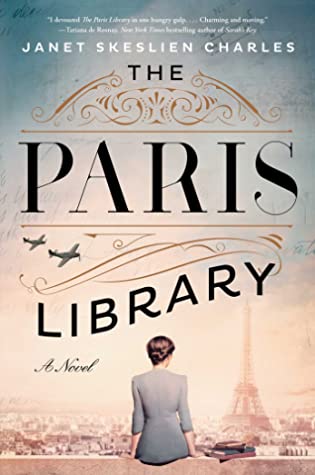
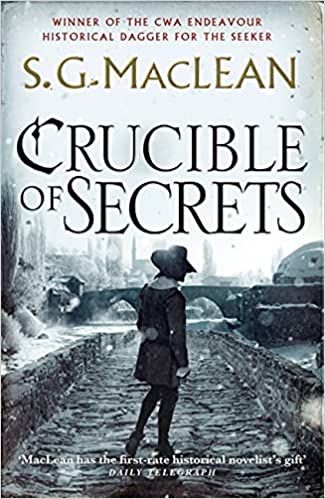
Have you read any of these books?