Once more I’m behind with reviews of some of the books I’ve read in June, July and August, so this is the first of several short posts as I try to catch up with writing reviews.
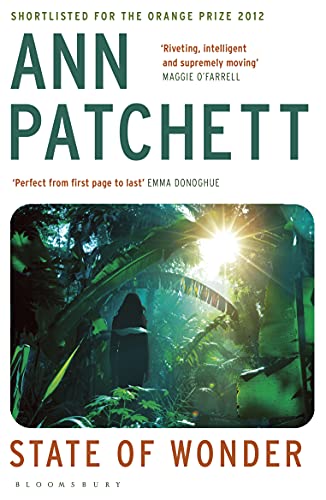
After a slow start I began to realise that this was a book I was really going to enjoy. In some ways it is similar to Heart of Darkness by Graham Greene, but set in the Brazilian jungle along the Rio Negro instead of the Belgian Congo in Africa. It slots into the River box in the Wanderlust Bingo card. It is also one of my TBRs, a book I’ve owned since 2015 and so qualifies for the Mount TBR Challenge.
Dr. Annick Swenson, a research scientist, is developing a drug that could alter the lives of women forever. But she refuses to report on her progress, especially to her investors, whose patience is fast running out. Anders Eckman, a lab researcher, is sent to investigate. When Dr. Swenson reported that Anders had died of a fever in a remote part of the jungle, Dr. Marina Singh, a former student of Dr. Swenson, is sent to find out what has happened to him.
From that point onwards it gets more and more complicated. First of all it’s very difficult for her to meet Dr. Swenson, and when she does eventually reach her there are all the dangers of the rain forest to deal with, including deadly snakes, hundreds of insects, mysterious natives and exotic diseases plus the intense heat. There are also secrets and lies that are only gradually revealed.
The novel raises questions about the morality and ethics of research into the use of extreme fertility treatments and drug studies in general, along with the exploitation of native populations. It is wonderfully descriptive and I could easily imagine that I was there in the jungle, experiencing the oppressive heat and humidity. I found it all fascinating and I was totally absorbed in the story.
Every Friday Book Beginnings on Friday is hosted by Gillion at Rose City Readerwhere you can share the first sentence (or so) of the book you are reading. You can also share from a book you want to highlight just because it caught your fancy.
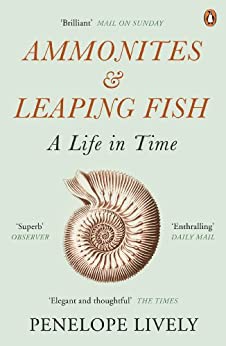
I was on holiday in the Lake District last week, overlooking Esthwaite Water. There were two shelves of books in our apartment and one of them was Ammonites and Leaping Fish: a Life in Time by Penelope Lively, so I read it whilst we were away. I’ll write more about it in a later post (although I’ve not been keeping up with reviewing the books I’ve read this summer).
This is not quite a memoir. Rather it is a view from old age.
And a view of old age itself, this place at which we arrive with a certain surprise – ambushed, or so it can seem. The view from eighty for me. One of the few advantages of age is that you can report on it with a certain authority; you are a native now and know what goes on here.
Also every Friday there is The Friday 56, hosted by Freda at Freda’s Voice, where you grab a book and turn to page 56 (or 56% of an eBook), find one or more interesting sentences (no spoilers), and post them.
Page 56:
When I was on the other side of the Atlantic a few years ago staying with my best friend in America, she produced a photo she had found of the two of us taken in the early 1980s. We gazed at it with surprised respect; ‘Weren’t we young!’ said Betty. Actually verging on middle age, but never mind – our reaction was in perfect accord: an acknowledgement of those other selves.
Penelope Lively is one of my favourite authors and I’ve been reading her books for years, all of them are enjoyable and this one is no exception. I thoroughly enjoyed it.
Synopsis from Amazon:
In this charming but powerful memoir, Penelope Lively reports from beyond the horizon of old age. She describes what old age feels like for those who have arrived there and considers the implications of this new demographic. She looks at the context of a life and times, the history and archaeology that is actually being made as we live out our lives in real time, in her case World War II; post war penny-pinching Britain; the Suez crisis; the Cold War and up to the present day. She examines the tricks and truths of memory. She looks back over a lifetime of reading and writing. And finally she looks at her identifying cargo of possessions – two ammonites, a cat, a pair of American ducks and a leaping fish sherd, amongst others. This is an elegant, moving and deeply enjoyable memoir by one of our most loved writers.
Before next Sunday, 18 September, create a post that lists twenty books of your choice that remain “to be read” on your Classics Club list. On that day the Classics Club will post a number from 1 through 20. The challenge is to read whatever book falls under that number on your Spin List by 30 October, 2022.
Here’s my list:
Sense and Sensibility by Jane Austen
Another Part of the Wood by Beryl Bainbridge
In Cold Blood by Truman Capote
The Case of the Gilded Fly by Edmund Crispin
The Stars Look Down by A J Cronin
Moll Flanders by Daniel Defoe
Nicholas Nickleby by Charles Dickens
The Lost World by Arthur Conan Doyle
The Black Tulip by Alexandre Dumas
The Birds and other short stories by Daphne du Maurier
Strangers on a Train by Patricia Highsmith
Brave New World by Aldous Huxley
Daisy Miller by Henry James
Go Set a Watchman by Harper Lee
How Green Was My Valley by Richard Llewellyn
Fire from Heaven by Mary Renault
On the Beach by Nevil Shute
Tortilla Flat by John Steinbeck
The Invisible Man by H G Wells
Between the Acts by Virginia Woolf
I don’t mind which one is picked as I’m aiming to read all of them in due course! But which one/s would you recommend?
Top Ten Tuesday is a weekly meme created by The Broke and the Bookish and now hosted by Jana at That Artsy Reader Girl. For the rules see her blog.
The topic this week is Books with Geographical Terms in the Title (for example: mountain, island, latitude/longitude, ash, bay, beach, border, canyon, cape, city, cliff, coast, country, desert, epicenter, hamlet, highway, jungle, ocean, park, sea, shore, tide, valley, etc. For a great list, click here!) (Submitted by Lisa of Hopewell)
There are many books I could have chosen for this theme, but I decided to choose those with the word ‘River/s’ in the title. These are all books I’ve either read (marked with an *) or are books I own but haven’t read yet.
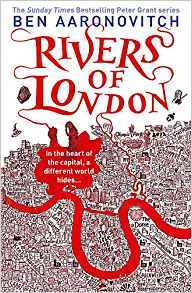
Rivers of London by Ben Aaronovitch* – This is a magical reading experience, and a fast-paced police procedural of a very different kind. It’s fantastical in the literal meaning of the word; an urban fantasy set in the real world of London. It’s a mix of reality and the supernatural. Peter Grant is a Detective Constable and a trainee wizard who is assigned to work with Detective Chief Inspector Thomas Nightingale (who is the last wizard in England) as part of a special and secret branch of the Met, dealing with all things magical and supernatural.
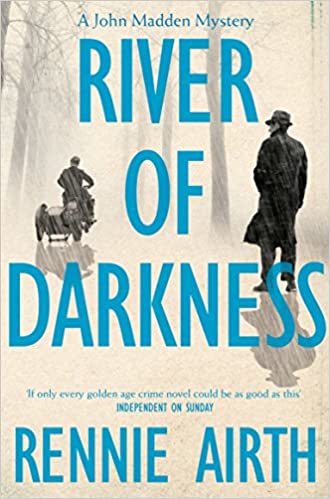
River of Darkness by Rennie Airth – the first novel in his John Madden trilogy, published in 1999. It’s set in 1921 and a terrible discovery has been made at a manor house in Surrey – the bloodied bodies of Colonel Fletcher, his wife and two of their staff. The police seem ready to put the murders down to robbery with violence, but DI Madden from Scotland Yard sees things slightly differently.
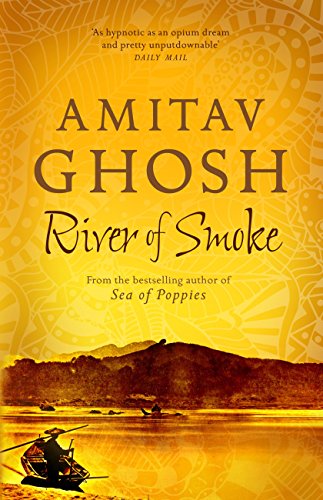
River of Smoke by Amitav Ghosh – In September 1838, a storm blows up on the Indian Ocean and the Ibis, a ship carrying a consignment of convicts and indentured laborers from Calcutta to Mauritius, is caught up in the whirlwind. River of Smoke follows its storm-tossed characters to the crowded harbors of China. There, despite efforts of the emperor to stop them, ships from Europe and India exchange their cargoes of opium for boxes tea, silk, porcelain and silver.
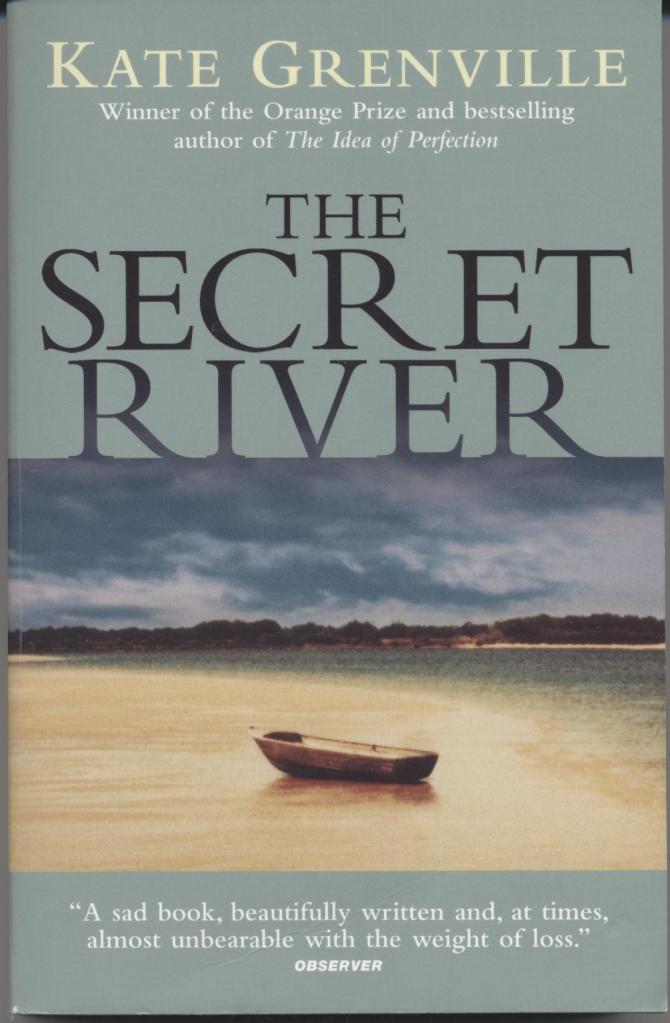
The Secret River by Kate Grenville* – one of my favourite books. It is historical fiction, straight-forward story-telling following William Thornhill from his childhood in the slums of London to Australia. He was a Thames waterman transported for stealing timber; his wife, Sal and child went with him and together they make a new life for themselves. William was eventually pardoned and became a waterman on the Hawkesbury River and then a settler with his own land and servants.
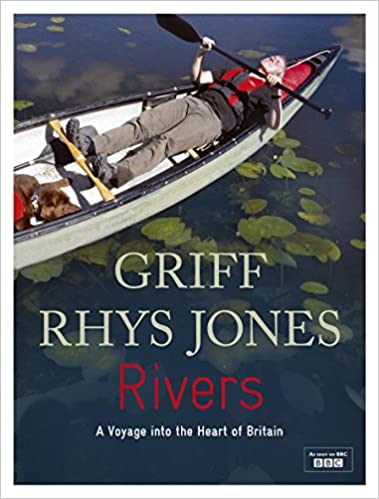
Rivers: A Voyage into the Heart of Britain by Griff Rhys Jones* – Griff is passionate about rivers and opening them up for people to use. The waterways of Britain are the ancient transport routes only superseded by road and rail relatively recently. He writes about the history of rivers – telling how the monks were the first people to use the rivers, creating the water meadows to irrigate the land, how people settled near rivers, how the towns grew up, how they were above all working rivers, and how we have lost our ancient connection with rivers. It is fascinating, complete with line drawings, maps and colour illustrations.
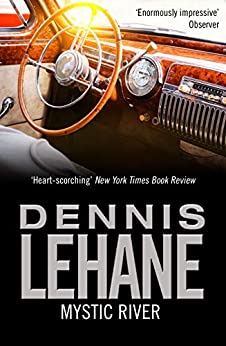
Mystic River by Dennis Lehane – Three boys’ lives were changed for ever when one of them got into a stranger’s car and something terrible happened. Twenty five years later they have to face the nightmares of their past. I’m not sure what to expect from this book, not having read any of Lehane’s books before, but a reviewer in the Guardian described it as one of the finest novels he’d read in ages.
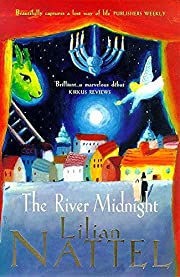
The River Midnight by Lilian Nattel – this is about the fictional village of Blaska, a small Jewish community in Poland at the turn of the 20th century, when Poland was under Russian occupation. It is told from the perspective of a group of women, including Misha, the midwife, Hannah-Leah, the butcher’s wife, and Faygela, who dreams of the bright lights of Warsaw. Myth meets history and characters come to life through the stories of the women’s lives and prayers, their secrets, and the intimate details of everyday life.
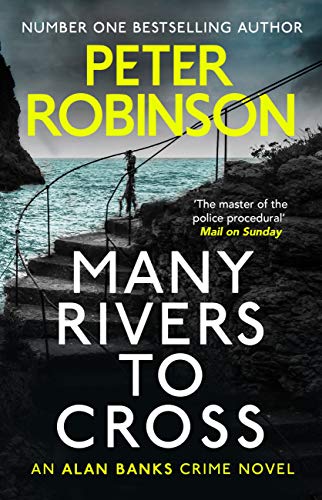
Many Rivers to Cross by Peter Robinson – the 26th Inspector Banks book, in which he and his team investigate the murder of a teenage boy found stuffed into a wheely bin on the East Side Estate. But Banks’s attention is also on Zelda, who in helping him track down his old enemy, has put herself in danger and alerted the stonecold Eastern European sex traffickers who brought her to the UK
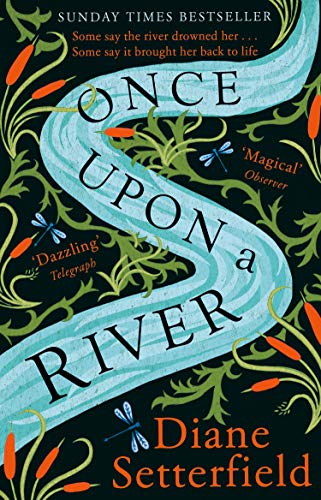
Once Upon a River by Diane Setterfield* – An intriguing and mystifying book, a mystery beginning in the Swan Inn at Radcot, an ancient inn, well-known for its storytelling, on the banks of the Thames. A badly injured stranger enters carrying the drowned corpse of a little girl. It’s mystifying as hours later the dead child, miraculously it seems, takes a breath, and returns to life. The mystery is enhanced by folklore, by science that appears to be magic, and by romance and superstition.
The Riddle of the River by Catherine Shaw* – Set in Cambridge in 1898 Mrs Vanessa Weatherburn used to be a school mistress until she married Arthur. Now with two children (twins) she acts as a private investigator. Vanessa is enlisted by her friend, journalist Patrick O’Sullivan to investigate the death of a young woman found floating, reminding her of Ophelia, in the River Cam.
It’s time again for Six Degrees of Separation, a monthly link-up hosted by Kate atBooks Are My Favourite and Best. Each month a book is chosen as a starting point and linked to six other books to form a chain. A book doesn’t need to be connected to all the other books on the list, only to the one next to it in the chain.
The starting book this month is the book you finished with in August, which for me is Death at Wentwater Court by Carola Dunn, the first book in her Daisy Dalrymple series, a typical country house murder mystery, with plenty of suspects. The Honourable Daisy Dalrymple, keen to be independent and earn her own living, is on her first writing assignment for Town and Country magazine, writing about country houses. It is set at Christmas time and the family and guests at Wentwater Court are enjoying the snow. One of the guests, Lord Stephen Astwick is found dead in the lake and it appears he has had a skating accident. Enter Detective Chief Inspector Alec Fletcher of Scotland Yard, who is also investigating a jewel robbery at Lord Flatford’s house nearby.
First Link
The Corpse in the Snowman by Nicholas Blake is a vintage murder mystery also set at Christmas in an isolated country house, Easterham Manor in Essex, the home of the Restorick family. The family is cut off from the neighbouring village by snow. There’s a death and a body hidden in a snowman that is only discovered when a thaw sets in. Amateur detective, Nigel Strangeways, is helping the police and he eventually solves the mystery.
Second link
Another book with the word ‘corpse‘ in the title is A Beautiful Corpse by Christi Daugherty. This is a murder mystery set in Savannah, with its historic buildings, parks and ancient oak trees covered in Spanish moss. Harper McLain, a crime reporter with the Savannah Daily News investigates a murder in downtown River Street, a narrow cobblestoned lane between the old wharves and warehouses and the Savannah River.
Third link
I’m linking next to another character with the name Harper, in His and Hers by Alice Feeney – DCI Jack Harper. It’s a standalone psychological thriller. When a woman is murdered in Blackdown village, newsreader Anna Andrews is reluctant to cover the case. Anna’s ex-husband, DCI Jack Harper, is suspicious of her involvement, until he becomes a suspect in his own murder investigation. It’s one of those books I didn’t really like, but I did enjoy working out the puzzle of who could be trusted, who to be wary of and most of all who was doing the murders.
Fourth Link
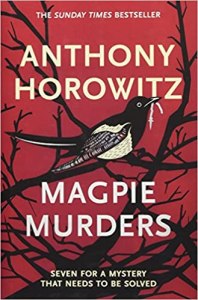
A good example of a puzzle-type murder mystery is Magpie Murders by Anthony Horowitz. It’s crime fiction combining elements of the vintage-style golden age crime novel with word-play and cryptic clues and allusions to Agatha Christie and Arthur Conan Doyle. It’s also a novel within a novel, with mystery piled upon mystery. I also particularly liked the use of the rhyme of ‘One for Sorrow’ in the chapter headings of Conway’s novel in the same way that Agatha Christie used rhymes in some of her books.
Fifth Link
This link is an obvious one – to an Agatha Christie book in which she uses a nursery rhyme for the title, One, Two, Buckle My Shoe. Hercule Poirot and Inspector Japp investigate the apparent suicide of Mr Morley, Poirot’s Harley Street dentist, who was found dead in his surgery, shot through the head and with a pistol in his hand. Each chapter is entitled after a line of the nursery rhyme and the first line contains an important clue. Earlier in the morning Poirot had visited his dentist and as he was leaving the surgery another patient was arriving by taxi. He watched as a foot appeared. The importance of the shoe and its buckle don’t become clear until much later in the book!
Sixth Link
A dentist also appears in Agatha Christie’s Death in the Clouds, a kind of locked room mystery, only this time the ‘locked room’ is a plane on a flight from Paris to Croydon, in which Hercule Poirot is one of the passengers. In mid-air, Madame Giselle, is found dead in her seat. It appears at first that she has died as a result of a wasp sting (a wasp was flying around in the cabin) but when Poirot discovers a thorn with a discoloured tip it seems that she was killed by a poisoned dart, aimed by a blowpipe. The passengers, including Poirot, and the flight attendants are all suspects,
My chain this month has a variety of books linked in different ways, by snow at Christmas, the word ‘corpse’ in the title, two characters with the same name, puzzle-type murder mysteries, the use of nursery rhymes and two characters who are dentists. The books are all crime fiction, from the first book to the last, with the word ‘death‘ in both the starting book and the last one making the chain a complete circle.
Next month (October 1, 2022), we’ll start with Notes on a Scandal by Zoë Heller.
The 20 Books of Summer annual event, hosted by Cathy at 746 Books came to an end yesterday. I actually read just 10 of the 20 books I listed (I did swap some of the original list!) and still have 3 of the books to review. And over the summer I read a further 10 books – just not books that I’d originally listed! I’m not too good at sticking to reading lists.








 BooksPlease