Top Ten Tuesday: “Aww” Moments In Books

Top Ten Tuesday is a weekly meme created by The Broke and the Bookish and now hosted by Jana at That Artsy Reader Girl. For the rules see her blog.

The topic this week is Favorite “Aww” Moments In Books (Share those sweet/cute moments in books that give you warm fuzzies.) Well this was hard as I don’t read much romantic fiction so I’ve twisted it a bit to include books that moved me to tears. And that was hard too as there aren’t many books that do that. But anyway, here’s my offering today and I’m amazed I found ten – maybe I do like romantic fiction after all:

Saving Missy by Beth Morrey – a special book, full of wonderful characters, ordinary people drawn from life, about everyday events, pleasures and difficulties. the joys that friendship can bring, and the love and companionship that a dog can give you. It moved me to tears.

A Tale of Two Cities by Charles Dickens – the sacrifice that Sydney Carton made to save Charles Darnay from the Guillotine, with these words, which close the book: It is a far, far better thing that I do, than I have ever done; it is a far, far better rest that I go to than I have ever known. It just loved this the first time I read it as a teenager – still do.

Hotel on the Corner of Bitter and Sweet by Jamie Ford  – another book that brought tears to my eyes, a beautiful book moving between two time periods, the early 1940s and 1986, set in Seattle, about the friendship betweena Chinese American boy and a Japanese American girl.

The Hopes and Dreams of Lucy Baker is a romantic novel with a touch of magic about it. I enjoyed it more than I thought I would – a novel about friendship, family relationships, love, caring for others and the importance of finding your own inner strength.

Where the Crawdads Sing by Delia Owens – left alone, Kya survived with help from Jumpin’, the general store owner, who lived in Colored Town and his wife, Mabel, and also from Tate, an older boy who taught her to read and write. It’s a story of survival and the power of love combined with a murder mystery, which didn’t actually bring tears to my eyes, but one I enjoyed.

Star Gazing by Linda Gillard – Marianne who has been blind from birth falls in love with Keir, a solitary Highlander and geophysicist, who works on the oil rigs, but who spends his time on shore at his house on Skye. The locations in Star Gazing are just beautiful, described so vividly you could almost be there. Marianne falls in love with Keir and with Skye and I loved this book.

Atonement by Ian McEwan is another book that moved me to tears, even reading it for the second time when I already knew the story. It is a captivating story of the use of imagination, shame and forgiveness, love, war and class-consciousness in England in the twentieth century. The depiction of the Second World War is both horrifying and emotional as British troops were withdrawn from France in 1940.

Persuasion by Jane Austen – I’m including this as it is one of those books that does give me an “aww” feeling telling of Anne Elliot’s constancy in her love for Captain Wentworth. I switch between this book and Pride and Prejudice as my favourite Austen novel – I love watching Elizabeth Bennet’s realisation that she loves Mr Darcy.

The Graveyard Book by Neil Gaiman – it is ultimately about life and death, love and friendship, loyalty and the fight between good and evil. There is humour, sadness and suspense. Above all it is about growing up and the excitement and expectations that Bod has about life. Quite simply it touched me.

The Nightingale by Kristin Hannah is one of the most moving books I’ve read and I was emotionally drained by the end of the story. It tells of two French sisters and their experiences during the occupation of France in the Second World War. I was in tears at the sadness and pathos of it all.

The Island by Victoria Hislop: A Short Post

I have been struggling to write posts recently. I haven’t been able to settle down to writing after finishing a book, either because I’m too eager to read the next book, or like Heavenali I’ve been so distracted and mithered by other things going on in my life, mostly minor that shouldn’t really bother me, but do, that I am finding it hard to concentrate on writing.

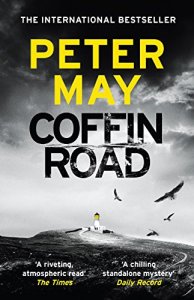
So, that is why I haven’t written about a number of books I read earlier this year. Some of them are books that qualify for the Wanderlust Bingo CardThe Island by Victoria Hislop, The Fellowship of the Ring by J R R Tolkien, The Night of the Mi’raj by Zoë Ferraris and Coffin Road by Peter May. These aren’t the only books I’ve read that need to write about, but it’s a start.

The first one I’m writing about is The Island by Victoria Hislop, her debut novel and one of my TBRs. It’s been on my bookshelves for years and I did start reading it soon after buying it, but I didn’t get very far and put it back on my bookshelves. Since then I’ve read three other books by Victoria Hislop and enjoyed them so I decided to try it again, especially as it fills the Island Square (set in Greece) on the Wanderlust Bingo card. I began reading it in August, when I took it away with me, visiting family, but didn’t find much time to read it and had to set it to one side. After I returned home I went on to read other books until October when I picked it up once more.

It is historical fiction set in Plaka on the island of Crete and in Spinalonga, a tiny, deserted island just off the coast of Plaka. I wasn’t very sure I would like it when I read the first chapter about Alexis Fielding longing to find out about her mother’s past. Sofia had never told her anything about it and all that Alexis knew was that Sofia had grown up in Plaka, a small Cretan village before moving to London. She gave Alexis a letter to take to an old friend, Fotini, promising that through her she will learn more. And once Fotini entered the story I was hooked as she told what had happened to Sophia’s grandmother, Eleni and her daughters, Anna and Maria after Eleni caught leprosy and was sent to live on Spinalonga.

Beginning before the Second World War the story moved between Plaka and Spinalonga and I loved all the details of Elena’s life on Spinalonga, but then when the narrative moved on to describing her daughters’ lives I began to lose interest. Instead of a fascinating historical novel about leprosy it changed into a historical romance, which I didn’t enjoy as much as the earlier part of the book. Overall, I think it’s too long and drawn out, and the ending is a bit too neat. So I’m giving this book 4*, combining 5* for Eleni’s story and 2-5* for both the beginning and the ending.

I’m hoping to write similar short posts for the other three books.

Maigret’s Memoirs by Georges Simenon Translated by Howard Curtis

Week 2 in Novellas in November is Novellas in translation and a Maigret book is an obvious choice for me. But Maigret’s Memoirs is not your usual Maigret mystery. This a memoir written by Simenon writing as his fictional character, Maigret.

Penguin Classics| 2016| 160 pages| My Own Copy| 4*

I can still see Simenon coming into my office the next day, pleased with himself, displaying even more self-confidence, if possible, than before, but nevertheless with a touch of anxiety in his eyes.’

Maigret sets the record straight and tells the story of his own life, giving a rare glimpse into the mind of the great inspector – and the writer who would immortalise him.

‘One of the greatest writers of the twentieth century . . . Simenon was unequalled at making us look inside, though the ability was masked by his brilliance at absorbing us obsessively in his stories’ Guardian

‘A supreme writer . . . unforgettable vividness’ Independent

The original French version of Maigret’s MemoirsLes Mémoires de Maigret, was first published in 1950. An English translation was later published in Great Britain in 1963. It is unlike any of the other Maigret novels. It’s a fictional autobiography by Georges Simenon writing as Maigret, beginning in 1927 or 1928 when Maigret and Simenon, calling himself Georges Sim, first ‘met’. I don’t recommend reading if you haven’t read some of the Maigret mysteries.

I enjoyed it – it’s a quick entertaining read as Maigret looks back to his first ‘meeting’ with Sim. He fills in some of the background of his early life and talks about his father and how he first met his wife, Louise. Simenon had written 34 Maigret novels before this one and Maigret took this opportunity to correct some of Simenon’s inaccuracies. I recognised some of the books – I’ve read 11 of his first 34 books.

One of the things that irritated Maigret the most was Simenon’s habit of mixing up dates, of putting at the beginning of his career investigations that had taken place later and vice versa. He’d kept press cuttings that his wife had collected and he had thought of using them to make a chronology of the main cases in which he’d been involved. And he also considered some details his wife had noted – concerning their apartment on Boulevard Richard Lenoir, pointing out that in several books Simenon had them living on Place des Vosges without explaining why. There were also times when he retired Maigret even though he was still several years away from retirement. Madame Maigret was also bothered by inaccuracies concerning other characters in the books and by Simenon’s description of a bottle of sloe gin that was always on the dresser in their apartment – that was in actual fact not sloe gin but raspberry liqueur given to them every year by her sister-in-law from Alsace.

Simenon drops facts and information piecemeal in his Maigret books and one thing I particularly like in Maigret’s Memoirs is that it is all about Maigret, but I did miss not having a mystery to solve.

The Darkness Manifesto by Johan Eklöf, translated by Elizabeth DeNoma

Virgin| 3 Novmber 2022| 205 pages| Review Copy| 3.5*

How much light is too much light? The Darkness Manifesto urges us to cherish natural darkness for the sake of the environment, our own wellbeing, and all life on earth.

The world’s flora and fauna have evolved to operate in the natural cycle of day and night. But constant illumination has made light pollution a major issue. From space, our planet glows brightly, 24/7. By extending our day, we have forced out the inhabitants of the night and disrupted the circadian rhythms necessary to sustain all living things. Our cities’ streetlamps and neon signs are altering entire ecosystems.

Johan Eklöf encourages us to appreciate natural darkness and its unique benefits. He also writes passionately about the domino effect of damage we inflict by keeping the lights on: insects failing to reproduce; birds blinded and bewildered; bats starving as they wait in vain for insects that only come out in the dark. And humans can find that our hormones, weight and mental well-being are all impacted.

Johan Eklöf, PhD, is a Swedish bat scientist and writer, most known for his work on microbat vision and more recently, light pollution. He lives in the west of Sweden, where he works as a conservationist and copywriter. The Darkness Manifesto is his first book to be translated into English.

~~~

Until I read The Darkness Manifesto: How Light Pollution Threatens the Ancient Rhythms of Life all I knew about light pollution was its effect on the night sky, how artificial light impairs our view of the sky, the stars and the planets. But I hadn’t realised just how much it adversely affects our environment, wildlife and our own health. This book is full of fascinating facts about the impact that darkness and the night have on all living creatures, including ourselves.

Artificial lighting today makes up a tenth of our total energy usage but most of it is of little benefit to us, spilling out into the sky. Animals cannot distinguish between artificial light and natural daylight which means their circadian rhythms are disrupted, sending body clocks awry, disrupting our sleep.

There is, of course, the need for safety and security, and Eklöf cites several examples of places around the world that have projects that promote darkness, and have established light pollution laws, such as France where there are regulations to limit how much light, and what kind of light, can be emitted into the atmosphere. The light needs to be adapted to suit the needs of both animals and humans.

Eklöf ends his book with his Darkness Manifesto, urging us to become aware of the darkness, to protect and preserve it individually by turning off lights when not in a room, and letting your garden rest in darkness at night; to discover nocturnal life; to observe the different phases of twilight and how the sun gives way to the moon and stars; and to learn more about the darkness and its importance for the survival of animals and plants. He also asks us to inform local authorities about the dangers of light pollution. To my mind the current energy crisis is another reason to reduce our use of lighting and electricity.

My thanks to the publishers for a review copy via NetGalley.

Top Ten Tuesday: Series I Would like to Start (Maybe)

Top Ten Tuesday is a weekly meme created by The Broke and the Bookish and now hosted by Jana at That Artsy Reader Girl. For the rules see her blog.

The topic this week is Series I’d Like to Start/Catch up on/Finish, and because I listed some of the book series I’m still reading in an earlier post, I’ve decided to look at some series I might like to start reading.

Liveship TradersShip of Magic by Robin Hobb

Siri Paiboun The Coroner’s Lunch by Colin Cotterill

John ShakespeareMartyr by Rory Clements

Detective Joe SandilandsThe Last Kashmiri Rose by Barbara Cleverly

The Mistra Chronicles The Walls of Byzantium by James Heneage

Harry Bosch The Black Echo by Michael Connelly

Inspector Albert Lincoln – A High Morality of Doves by Kate Ellis

Tom Hawkins The Devil in the Marshalsea by Antonia Hodgson

DI Nikki Galena Crime on the Fens by Joy Ellis

Flavia Albia –  The Ides of April by Lindsey Davies

Lord of the Flies by William Golding: a Mini Review of a Short Classic

The first weekly theme for Novellas in November is short classics and I read Lord of the Flies, William Golding’s 1954 novel about a group of boys stranded on a desert island. It was his first novel and it certainly packs a punch. It was described as ‘A post-apocalyptic, dystopian survivor-fantasy … [A novel] for all time … A cult classic.’ Guardian. It’s a quick read of just 183 pages.

What are we? Humans? Or animals? Or savages? What’s grown-ups going to think? Going off-hunting pigs-letting fires out-and now!

A plane crashes on a desert island. The only survivors are a group of schoolboys. By day, they explore the dazzling beaches, gorging fruit, seeking shelter, and ripping off their uniforms to swim in the lagoon. At night, in the darkness of the jungle, they are haunted by nightmares of a primitive beast. Orphaned by society, they must forge their own; but it isn’t long before their innocent games devolve into a murderous hunt …

I thought I’d read this book years ago. But as soon as I began reading I realised I hadn’t read it – it’s one of those books you think you’ve read because you know the basic outline of what happens.

It is frighteningly believable. What at first seemed to the boys as a great adventure – stranded on a desert island, leaving them free to play all day without any annoying interference from adults, soon descended into a sinister nightmare scenario. They elected a leader, Ralph who initially made friends with Jack, the leader of a group of choirboys. But soon the two fell out as Jack, disappointed at not being chosen as leader, tried to take over – and a battle for power followed.

Ralph wanted to make sure they were seen if a ship passed the island and organised the boys to keep a fire going as a smoke signal. But when one of the younger boys thought he saw a beast in the jungle panic set in. Jack made himself the leader of the hunters, promising to hunt and kill the beast band the boys let the fire go out as they joined the hunt. Things got completely out of hand ending in chaos. It is absolutely gripping and very dark, showing the savage side of human nature.