Top Ten Tuesday: Books with Living Things in the Titles

Top Ten Tuesday is a weekly meme created by The Broke and the Bookish and now hosted by Jana at That Artsy Reader Girl. For the rules see her blog.

The topic this week is a Freebie and I’m featuring Books with Living Things in the Titles.

These are all books I’ve read, so the links take you to my posts on them.

The Behaviour of Moths by Poppy Adams – the story of two sisters, Ginny and Vivi. Vivi, the younger sister left the family mansion 47 years earlier and returns unexpectedly one weekend. Ginny, a reclusive moth expert has rarely left the house in all that time.

The Cat Who Could Read Backwards by Lilian Jackson Braun – about Koko, the Siamese cat and Jim Qwilleran who investigate a stabbing in an art gallery.

Corvus: a Life with Birds by Esther Woolfson – a remarkable book about the birds she has had living with her; birds that were found out of the nest that would not have survived if she had not taken them in.

H is for Hawk by Helen Macdonald – I really wanted to love this but I found it difficult to read and draining, despite some richly descriptive narrative. It’s about wildness, grief and mourning, and obsession, which made it heavy reading for me.

Lord of the Flies by William Golding – about a group of boys stranded on a desert island. Things got completely out of hand ending in chaos. It is absolutely gripping and very dark, showing the savage side of human nature.

James Herriot’s Cat Stories by James Herriot – James writes that cats were one of the main reasons he chose a career as a vet. They have always played a large part in his life and and now he has retired they are still there “lightening” his days.

The Lady of the Ravens by Joanna Hickson – set in the early years of Henry VII’s reign as seen through the eyes of Joan Vaux, a lady in waiting to Elizabeth of York, whose marriage in 1486 to Henry united the Houses of Lancaster and York after the end of the Wars of the Roses.

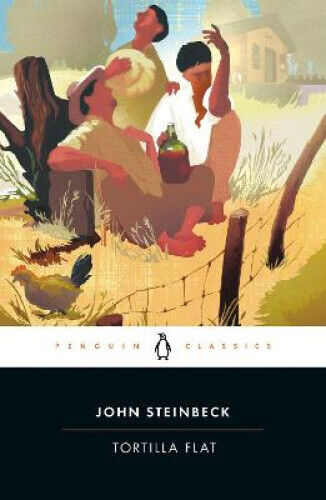
The Owl Service by Alan Garner – the basis of the story is the Welsh legend from The Mabinogion about Lleu and his wife Blodeuwedd who was made for him out of flowers. It’s a tragedy about three people who destroy each other through no fault of their own but just because they were forced together.

Salmon Fishing in the Yemen by Paul Torday – a novel about Sheikh Muhammad, who has an estate in Scotland where he pursues his great love of fly fishing, wants scientific advice on how best to introduce salmon fishing into the Yemen.

The Tenderness of Wolves by Stef Penney – a murder mystery set in Canada in 1867 beginning in a small place called Dove River on the north shore of Georgian Bay. Laurent Jammet, a hunter-trader, has been found in his bed with his throat cut. His neighbour, 17 year old Francis Ross, is missing and his mother fears he may be the killer.

Lion by Conn Iggulden – the First in The Golden Age series

Penguin| 26 May 2022| 416 pages| Review Copy| 4*

Ancient Greece, 5th century BC

The age of myths and legends has given way to the world of men. In the front rank stands Pericles, Lion of Athens.
Behind Pericles lies the greatest city of the ancient world. Before him, on land and at sea, stands the merciless Persian army. Both sides are spoiling for war.

Though still a young man, Pericles knows one thing: to fight a war you must first win the peace

It’s time for a hero to rise.

For his enemies to tremble.

And for Athens, a city of wisdom and warriors, to shine with glory . . .

I was so pleased when I started reading Lion as I realised straight away I was going to enjoy it. It’s been a long time since I read anything set in Ancient Greece, so a lot was new to me, including the characters as well as the historical setting. This is the first book in Conn Iggulden’s Golden Age series set in the 5th century BCE. I thoroughly enjoyed it which surprised me as generally speaking I’m not keen on reading battle scenes and the book starts and ends with battles. But I had no problem with following the action of the battles between the Greeks and the Persians, and was able to visualise what was going on without any difficulty. The characters’ names took me a little while to get clear in my mind but I soon got used to them.

The two main characters are both young men, Cimon the older of the two has more authority than Pericles, the younger man. Lion is the story of their early careers. Iggulden covers the capture of Eion under Cimon’s leadership of the Delian League, an alliance of Greek states, and of Scyros where Cimon found the bones of Theseus and returned them to Athens. He then captured Cyprus and destroyed a Persian fleet on the Eurymedon River. Below the age of thirty little is known of Pericles’ life, but the likelihood is that he was with Cimon for these events.

The middle section of Lion forms an interlude between the battles and is about Pericles’ marriage to Thetis, and his involvement in the theatre in Athens and the Festival of Dionysus. Pericles was the ‘choregos’ (producer) of Aeschylus’ plays made up of three tragedies and a ‘satyr’ play. I found this part of the book just as fascinating as the battle scenes.

Iggulden adds a useful historical note and recommends reading Pericles: a Biography in Context by Thomas R Martin for more information.

The next book in the Golden Age series is Empire, which will be released on May 25, 2023.

My thanks to the publishers for a review copy via NetGalley.

Top Ten Tuesday: New-to-Me Authors I Discovered in 2022

Top Ten Tuesday is a weekly meme created by The Broke and the Bookish and now hosted by Jana at That Artsy Reader Girl. For the rules see her blog. The topic this week is New-to-Me Authors I Discovered in 2022.

All of them are fiction and some of them are debut novels, whilst others are books that were first published years ago. I enjoyed all of them – I’ve marked my favourites with an asterisk *.

*Miss Austen by Gill Hornby – historical fiction about Cassandra, Jane Austen’s sister. Totally believable.

*The Homecoming by Anna Enquist  – historical fiction about Captain James Cooke told from his wife, Elizabeth’s perspective. A different view of Captain Cook’s life!

The Chalet by Catherine Cooper – a murder mystery, set mainly in La Madière, a fictional ski resort in the French Alps, a story of revenge, stemming from the events in 1998 when two brothers go skiing with their girlfriends and only one of the brothers returns.

Moonlight and the Pearler’s Daughter by Lizzie Pook – historical fiction set in 19th Australia. When Charles Brightwell disappears from his pearl fishing ship, his daughter refuses to accept he is dead and goes looking for him.

A Tapping at My Door by David Jackson – a crime thriller. The mystery begins as Terri Latham is disturbed late one night by a ‘tapping, scratching, scrabbling noise at her back door’.

*Where the Crawdads Sing by Delia Owens –  a story of loneliness and of the effects of rejection – a story of survival and the power of love combined with a murder mystery, and full of fascinating characters that had me racing through its pages.

*The Second Sight of Zachery Cloudesley by Sean Lusk – a mixture of historical fact and fantasy set in the 18th century, in London and in Constantinople. The characters are fabulous, the settings are beautifully described and the historical background is fascinating.

*A Town Like Alice by Nevil Shute – this was not what I thought it would be; it’s not about Alice Springs in Australia. It is the story of Jean Paget and her experiences during the war in Malaya after the Japanese invaded and later when she returned after the end of the war, ending with her life in Australia.

Mrs March by Virginia Feito – beautifully written, but so tragic. I couldn’t like any of the characters, but they got under my skin as I read and I wanted it to end differently – of course, it couldn’t.

Now and Forever by Ray Bradbury – two novellas, the first about the mysterious Summerton, a small town in the middle of Arizona, a town which seems perfect and the second a retelling of Moby Dick set in outer space.

The Lord of the Rings by J R R Tolkien

Last year I began re-reading The Fellowship of the Ring by J R R Tolkien and when I finished it I had to carry on with the other two books of the The Lord of the Rings trilogy. They were first published between 1954 and 1955. I first came across it at the library when I was a teenager. I loved it so much that I decided I needed to buy my own copy for myself and have since read the trilogy several times. The three books are The Fellowship of the Ring, The Two Towers and The Return of the King. Imagine my delight when I went to college and found that so many of the students on my course also loved the trilogy and I read it all again and could talk about it with the others.

What follows is not a review. It is some of my thoughts on reading this epic fantasy story about the quest undertaken by Frodo and the Fellowship of the Ring to destroy the One Ring of Power in the Mountain of Fire, Mount Doom in Mordor and thus prevent the Dark Lord, Sauron from conquering Middle-earth.

Re-reading The Lord of the Rings, I was delighted to find that it had lost none of the magic I found the first time. It is one of my all time favourite books and this time round I was struck by Tolkien’s world building and his powers of description of the characters and the locations, but most of all by Tolkien’s storytelling – superb. I read it slowly, taking my time over it, just a small section each day – letting the story soak into my mind.

The members of the Fellowship are Gandalf the Grey, a wizard; the hobbits Frodo, Merry, Pippin, and Sam; Gimli the Dwarf; Legolas the Elf; Boromir of Gondor; and a tall, mysterious stranger called Strider (later revealed as Aragorn, the heir of Isildur, an ancient King of Arnor and Gondor). And there’s a whole host of other characters.

Alongside my reading I also watched Peter Jackson’s three films, adaptations of the trilogy. When I watched these when they first came out I wasn’t surprised that they didn’t live up to my visualisation of the characters, except that Ian McKellen was just perfect as Gandalf, or of the locations, beautiful as the locations in the films are, Lothlorien is nowhere nearly as magical as I had imagined from reading the book. But the main difference I noticed this time is that the book is very descriptive, going into great detail about the routes of the journeys, of the places and of the characters, it is very long – The Fellowship of the Ring alone took me a month to read. Whereas the films are very much action movies with long and violent battle scenes, against the backdrop of the locations and the running time of each one is approximately three hours – with the extended versions being even longer.

So, inevitably there are changes from the books rearranging the sequence of events in places and cutting scenes – most notably for me the hobbits’ meeting with Tom Bombadil, one of my favourite episodes. Tom is a nature spirit and like the wizards he appears like a man. I loved that episode – when Tom rescued Merry and Pippin from Old Man Willow, the malevolent tree in the Old Forest that had grabbed them and enclosed them within the folds of his trunk. He lives in the Old Forest, near the Barrow-downs, with his wife Goldberry, ‘Daughter of the River’. Goldberry says he ‘He is the master of wood, water, and hill.‘ He has lived in Middle Earth from its earliest days and when Frodo asks him who he is he says

Eldest, that’s what I am. … Tom was here before the river and the trees; Tom remembers the first raindrop and the first acorn. He made paths before the Big People, and saw the little People arriving. He was here before the Kings and the graves and the Barrow-wights. When the Elves passed westward, Tom was here already, before the seas were bent. He knew the dark under the stars when it was fearless – before the Dark Lord came from Outside. (page 171)

Other characters and episodes that stand out for me are:

Frodo and Sam, two hobbits. I prefer to think of them both as they are in the books, rather than in the films, because the actors are totally different from how I first visualised the characters. Frodo was adopted by Bilbo Baggins, a distant relative and lived with him at Bag End as his heir and so he inherited Bag End and the One Ring. He and Bilbo shared the same birthday and the same party to celebrate Bilbo’s 111th birthday and Frodo’s coming of age birthday at the age of 33. On his 50th birthday Frodo left Bag End with Sam, his gardener, beginning his quest to destroy the One Ring. So, the depiction of the hobbits by the actors wasn’t right at all, they are far too young, and I had to remember that the films and the books are two separate creations (but it still rankles).

My favourite characters, in no particular order, are Gandalf the Grey, later known as Gandalf the White, especially his battle with the Balrog at the Bridge of Khazad-dûm, Strider/Aragorn, Gollum, all the Elves and the Ents.

This post is left over from last year when I stopped writing it just before I went into hospital and I have now finished it. I had intended it to be more detailed but it was not to be …

Aftermath by Peter Robinson – a brief review

A house of horror. A despicable serial killer. Banks’s darkest case.

When a concerned neighbour calls the police to number 35 The Hill after a domestic disturbance, the two constables are led to a truly horrific scene. They unwittingly uncover an elusive serial killer known as the Chameleon. With the killer finally in custody it appears the nightmare is over.

Not for Banks though. Too many questions remain unanswered at the house of horrors. And then they discover there are more bodies than victims. Is the Chameleon killer just one monster of many? Banks must solve his darkest case yet

Aftermath is the 12th book in Peter Robinson’s Inspector Banks series. The synopsis does not indicate the real nature of this book. There is much more to it than ‘truly horrific’. I agree that it is Banks’ darkest case in the series so far, but it is more than that. I didn’t like it right from the start; there is too much violence and graphic detail for me. It is harrowing and deeply disturbing with some scenes of physical abuse, child abuse, and rape. However the characters are well written and the story is gripping and despite hating it I read all 512 pages.

I’ve read some of the later books in the series and don’t remember that any of them were as dark and disturbing as this one, so I’m hoping the next book in the series, The Summer That Never Was, is not like Aftermath.

  • ASIN ‏ : ‎ B003DWC6NQ
  • Publisher ‏ : ‎ Pan; New Edit/Cover edition (4 Sept. 2008
  • Print length ‏ : ‎ 512 pages
  • My Rating: 3* not for the storyline but for the writing
  • Source: I bought the e-book

The Stroke of Winter by Wendy Webb

Lake Union| 1 November 2022 | 300 pages| e-book edition| My own copy| 2.5*

She’s restoring the old family home on the hill. And unearthing something evil.

In the tourist town of Wharton, on the coast of Lake Superior, Tess Bell is renovating her old family home into a bed-and-breakfast during the icy dead of winter…

As the house’s restoration commences, a shuttered art studio is revealed. Inside are paintings Tess’s late grandfather, beloved and celebrated artist Sebastian Bell, hid away for generations. But these appear to be the works of a twisted mind, almost unrecognizable as paintings she and others familiar with his art would expect. The sinister canvases raise disturbing questions for Tess, sparking nightmares and igniting in her an obsession to unearth the truth around their origins.

What evil has been locked away for so many years? The ominous brushstrokes, scratching at the door, and moving shadows begin to pull Tess further and further into the darkness in this blood-chilling novel of suspense by the #1 Amazon Charts bestselling author of The Keepers of Metsan Valo.

I haven’t read any of Wendy Webb’s books, but I liked the blurb so I got an ebook through Amazon First Reads. I didn’t know what to expect but I was rather disappointed. It is easy to read, almost too easy in a simplistic style in which actions such as getting items out of the fridge are described in detail. In fact it is so detailed that all the rooms in the house are described, along with all the furniture and furnishings. It is a mix of genres – a cozy mystery, a haunted house/ghost story with some creepy scenes, a horror story, a romance and a recipe book. There is lots of unnecessary repetition as various events are described over and over again and the ending is rushed.

Its good parts are that I liked the setting in the fictional town of Wharton on the shores of Lake Superior and despite my disappointment in the writing style I liked the plotline centered on Amethyst (known as Tess) Bell’s family and their family home. So I wanted to read on to find out what was going on, just what was making the scratching noises Tess hears in the middle of the night and what is the secret of the large room that had been closed off, the door permanently bolted and the windows shuttered in black? It had been like that as long as Tess could remember.