Britain in Books

A few days ago Cath at Read Warbler wrote about doing her own personal USA Challenge, which got me thinking about doing something similar but based in Britain. I love books with a strong sense of location so it seemed quite straightforward – I’d read books set in Britain.

Then I realised it’s not as simple as that – how was I going to decide on the locations? For centuries the people of the British Isles have been discussing, debating and even fighting over how we should divide up the land. Now, I don’t want to get into politics (I’m not saying anything about moves from different sections of our community for ‘independence’), so I thought I’d focus around our counties.

Again not simple. At first I thought I’d use the current local administrative areas, forgetting all the reorganisation that seems to be always on the go! How could I have forgotten after working for over 20+ years in local government! It’s not only the physical areas that keep being tinkered with but also the names of our counties. It’s  complicated and confusing. Eventually I came round to the idea of using the Historic Counties of the United Kingdom – there are 92. With so many counties, I’m making this an open ended project, because I shan’t be restricting my reading to just British books, by any means.

Map source: The Association of British Counties

I’ll read fiction in different genres, I’ll stray into poetry and drama occasionally and I’ll also include non-fiction – history, travel, diaries, biographies and so on. As well as focusing on the counties I’m also going to include regional books and books about the four countries that make up the United Kingdom of Great Britain and Northern Ireland – England, Northern Ireland, Scotland and Wales, not forgetting the surrounding islands.

I shall most likely expand/adapt this project and I plan to make a separate page on this blog to record my progress.

I’m not waiting until next year to start – I’m beginning now, in the far north, in the Shetland Isles reading White Nights by Ann Cleeves.
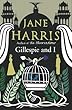
Gillespie and I by Jane Harris: a Book Review

Gillespie and I by Jane Harris is a cleverly told story, narrated by Harriet Baxter, alternating between events in 1888-90 (in Glasgow) and those in 1933 (in London). In 1888 Harriet moved to Glasgow where she got to know the painter, Ned Gillespie and his family. At first I liked Harriet but as I read on I became increasingly doubtful about her character, even though she comes across as an honest, reliable person. But, as she relates what her life is like in 1933 my impression of her began to change.

All is well at first but than a tragedy occurs which forms the major part of the book. It’s signalled in advance, when Harriet refers to the ‘horrible events’ that lay in the future. To say any more would be too much of a spoiler.

The setting of the book in Glasgow of the late 19th century is well described, helped by plans in the front of the book. The characters are also convincing, even some of the minor ones and her portrayal of Ned’s disturbed daughter, Sybil is quite chilling. This is a very detailed book, both about the place, artists and, through the account of a trial, the Scottish legal system of that period. It’s a book that lingered in my mind after I finished reading and if it wasn’t so long I’d like to re-read it in the light of what I now know.

  • Hardcover: 528 pages
  • Publisher: Faber and Faber (5 May 2011)
  • Language English
  • ISBN-10: 0571275168
  • ISBN-13: 978-0571275168
  • Source:an uncorrected proof from the publishers (via LibraryThing Early Reviewers)
  • My rating 3.5/5

I haven’t read Jane Harris first book, The Observations, although I’ve owned it for a while. It’s probably time I read that one too.

Saturday Snapshot – In the Garden

Autumn is now well set in here. Our garden is well on the way to being covered in leaves. There are still some leaves clinging to the trees like this red maple:

whereas others still have their leaves, like the Japanese Maple shown below.

I was a bit concerned earlier this year that this little tree wouldn’t survive because its leaves were scorched by a late frost soon after the new shoots had opened.

A Saturday Snapshot post, hosted by Alyce, At Home with Books.

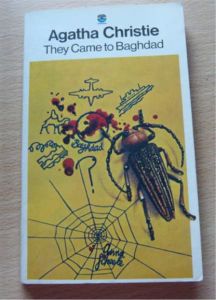
They Came to Baghdad by Agatha Christie: a Book Review

They came to Baghdad

I made copious notes as I read Agatha Christie’s They Came to Baghdad because it’s such a complex plot and there seemed to be so many significant events and people that I wanted to clarify what was happening. This is not one of Agatha Christie’s detective novels – no Miss Marple or Hercule Poirot,-  just Victoria Jones, a short-hand typist, a courageous girl with a ‘natural leaning towards adventure’ and a tendency to tell lies. Set in 1950 this is a story about international espionage and conspiracy. The heads of the ‘great powers‘ are secretly meeting in Baghdad, where if it all goes wrong ‘the balloon will go up with a vengeance.’ And an underground criminal organisation is out to make sure it does go wrong, aiming at ‘total war – total destruction. And then – the new Heaven and the new Earth.’

Victoria gets involved after one meeting with a young man, Edward, who is going out to Baghdad the following day to join an archaeological dig. She thinks he’s an incredibly good-looking man and considering herself an excellent judge of character is immediately attracted to him. As she has just been fired from her job, impulsively she decides to follow him to Baghdad, claiming to be the niece of Dr Pauncefoot Jones, Richard’s boss .

At the same time a British secret agent, Carmichael, is trying to get to Baghdad with important information, and is his life is in great danger. Will he get there? Anna Scheele, a mysterious character is also on her way to Baghdad and there are hints that she is at the centre of things. Just who is she and what side is she on?

Alongside the mystery, Agatha Christie’s descriptions of the locations, local people and of the archaeological dig are superb, no doubt taken from her experience of her own visits to Baghdad and Iraq. I enjoyed it for its entertaining plot, the authenticity of the background and its great characters, in particular I grew very fond of the amazing Victoria Jones.

  • First published in 1951 by William Collins & Co Ltd
  • My copy a secondhand paperback Fontana Books, 1980
  • My Rating: 4/5

R.I.P. VI Challenge Completed

Carl’s R.I.P. VI  challenge ended on 31 October and I’m pleased that I completed Peril the First, which was :

Read four books, any length, that you feel fit (my very broad definitions) of R.I.P. literature. It could be Stephen King or Sir Arthur Conan Doyle, Ian Fleming or Edgar Allan Poe’¦or anyone in between.

I read the following books (linked to my reviews):

These are all books that were on my to-be-read list. I think Blood Harvest has to be my favourite of the four and I thoroughly enjoyed it – a dark, scary book, disturbing, and completely gripping.  I was particularly pleased that I finally read The Turn of the Screw as I first started to read it some years ago. It’s an ideal book for the RIP Challenge. Thanks go to Carl for hosting.

P is for Pissarro

L'Hermitage a Pontoise 1867, oil on canvas

 Camille Pissarro (1830 – 1903) was one of the French Impressionist painters. In 1866 he moved to Pontoise on the banks of the River Oise, on the outskirts of Paris and lived there until 1884. He loved the area and painted 300 or so paintings in that period. L’Hermitage à Pontoise, the painting above, is one of my favourites of his, painted in a realistic rather than an impressionist style, showing an idyllic village scene and the hills behind. I like all the detail and his use of light and shade drawing attention to the figures on the road and highlighting the houses.

Red Roofs, 1877, oil on canvas

Ten years later he painted Red Roofs showing a corner of the village in winter with the traditional 18th century houses viewed through the trees. I like the blend of colours with the differing tones of the red of the roofs, fields and earth in the foreground, contrasting with the green of the grass and the blue of the sky. The twisting forms of the trees with their vertical trunks contrast sharply with the geometric shapes of the houses.

An ABC Wednesday post.