I’ve read Alice Feeney’s debut novel,Sometimes I Lie and His and Hers and loved them. So I had high hopes for Daisy Darker, her fifth book. Sadly, I was disappointed and I have to say that I didn’t enjoy it. I’ll even go as far as admitting, which I really don’t want to say because I don’t like being negative about a book, I think it is dire. But there are plenty of other readers who enjoyed it, even loved it, so I’m in the minority here. Don’t let me put you off reading it, if it appeals to you. This is just my opinion.
Description (Goodreads)
After years of avoiding each other, Daisy Darker’s entire family is assembling for Nana’s 80th birthday party in Nana’s crumbling gothic house on a tiny tidal island. Finally back together one last time, when the tide comes in, they will be cut off from the rest of the world for eight hours. The family arrives, each of them harboring secrets. Then at the stroke of midnight, as a storm rages, Nana is found dead. And an hour later, the next family member follows… Trapped on an island where someone is killing them one by one, the Darkers must reckon with their present mystery as well as their past secrets, before the tide comes in and all is revealed.
With a wicked wink to Agatha Christie’s And Then There Were None, Daisy Darker’s unforgettable twists will leave readers reeling.
My thoughts:
I’m going to be brief. The beginning, was promising and made me interested enough to read on as the Darker family reunited for their Nana’s 80th birthday party at Halloween. They all arrive, Daisy, her father Frank, her mother Nancy, her siblings Rose and Lily and her niece, Trixie. Nana lives on a tidal island, which means that when the tide was in they couldn’t leave, making this a variation on the ‘locked room murder’ mystery, which I generally like. So, I read on, as hour by hour, one by one they’re all found dead. There’s a poem written in chalk on the back wall of the kitchen about the Darker family. As each death occurs the lines about each person are struck through. The poem is pure doggerel and painful to read.
The story quickly began to drag for me and I got fed up with the repetition of how many hours were left until low tide. I got tired of the unlikable characters in this dysfunctional family, the platitudes scattered throughout the book and the increasingly stupid plot, culminating in a surreal supernatural conclusion. I was glad to get to the end.
I’m pleased to see that Jo at The Book Jotter is running this meme again this year to summarise the first six months of reading, sorting the books into six categories – you can choose from the ones Jo suggests or come up with your own. Or if you want to do a shorter version, then just post something about six books you have read in the first six months of 2024.
I think it’s a good way to look back over the last six months’ reading. As I’ve been reading less than usual this year (30 books in the first six months) I’ve had to use some of the books in more than one category. And as I’ve been reviewing less I haven’t written posts about all the books. Where they exist the links take you to my posts on the books, and some are just short posts, not reviews.
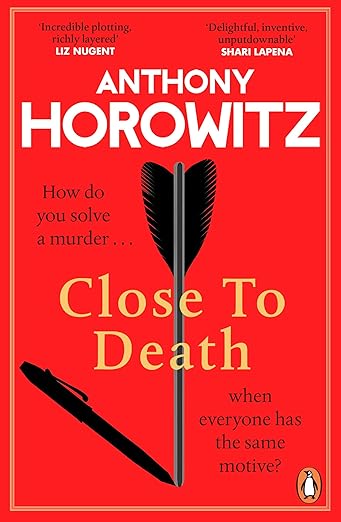
Close to Death is the fifth in Anthony Horowitz’s Hawthorne and Horowitz Mystery series. I have read all the earlier books, and I think it really is best if you read these books in order to fully understand the main characters and their relationship. Daniel Hawthorne, an ex-policeman, is now a private investigator, who the police call in to help with their more complicated cases. Anthony Horowitz himself appears as a fictional character, recruited by Hawthorne to write a book about him and the cases he investigates. It’s one of the books on my 20 Books of Summer list.
Book Beginnings quote:
It was four o’clock in the morning, that strange interval between night and morning when both seem to be fighting each other for control of the day ahead.
Friday 56 quote:
‘We’re not going to let them get away with it,’ Roderick exclaimed. ‘Someone should do something about him! Someone should … I don’t know! Ever since he came here, he’s been nothing but trouble.’
Synopsis from Goodreads:
In New York Times–bestselling author Anthony Horowitz’s ingenious fifth literary whodunit in the Hawthorne and Horowitz series, Detective Hawthorne is once again called upon to solve an unsolvable case—a gruesome murder in an idyllic gated community in which suspects abound.
Riverside Close is a picture-perfect community. The six exclusive and attractive houses are tucked far away from the noise and grime of city life, allowing the residents to enjoy beautiful gardens, pleasant birdsong and tranquillity from behind the security of a locked gate.
It is the perfect idyll until the Kenworthy family arrives, with their four giant, gas-guzzling cars, a gaggle of shrieking children and plans for a garish swimming pool in the backyard. Obvious outsiders, the Kenworthys do not belong in Riverside Close, and they quickly offend every last one of their neighbours.
When Giles Kenworthy is found dead on his own doorstep, a crossbow bolt sticking out of his chest, Detective Hawthorne is the only investigator that can be called on to solve the case. Because how do you solve a murder when everyone is a suspect?
My Review:
In the earlier books Horowitz works with Hawthorne on current murders. In this book he is looking back at one of Hawthorne’s earlier cases, using Hawthorne’s case notes and recordings. Set in Riverside Close, a gated community, this is a variation on the locked room type of mystery, with all the residents being suspects for the murder of Giles Kenworthy who had been found dead, shot with a crossbow. He and his family had disrupted the peaceful lives of all the residents in one way or another, when they moved into the largest property in the Close.
I thoroughly enjoyed this book, with interesting and believable characters, two of whom own a bookshop/cafe, The Tea Cosy, which specialised in the Golden Age of Crime detective stories, or modern novels that reimagined it. This link to the Golden Age of Crime novels reminded me not only of Agatha Christie’s novels, and in particular Murder on the Orient Express, which is also a version of a locked room mystery, but also of John Bude’s The Cheltenham Square Murder in which one of the residents of the Square is also killed with a bolt shot from a crossbow. Needless to say, really, there are plenty of twists and turns, numerous complications and red herrings before Horowitz gets to the bottom of the case.
Book Beginnings on Friday is hosted by Rose City Reader. Share the opening quote from the book.The Friday 56 is hosted by Anne@ MyHeadisFullof Books. Find a quote from page 56.
Top Ten Tuesday is a weekly meme created by The Broke and the Bookish and now hosted by Jana at That Artsy Reader Girl. For the rules see her blog.
The topic this week is a throwback freebie and I’ve chosen to have another go at Books with Character Names In the Titles, which I first did in February 2022.
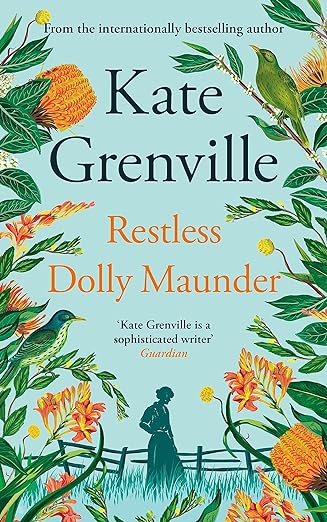
Restless Dolly Maunder by Kate Grenville, the fictionalised life story of Kate Grenville’s maternal grandmother, Sarah Catherine Maunder, known as Dolly.
Shakespeare: The Man who Pays the Rent by Judi Dench, Brendan O’Hea. This book is a wonderful run through the plays told from Judi’s perspective and, of course, her life, giving her insight not only into the characters but also into the world of the theatre.
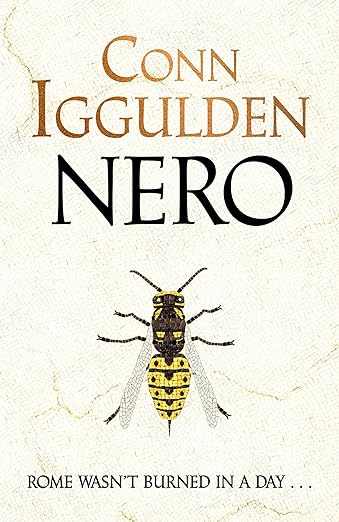
Nero by Conn Iggulden. This is the story of Nero’s birth and early years up to his 10th year. But it’s more about his mother, Agrippina than about him. She was ruthless, scheming and ambitious for her son, allowing no one to stand in her way.
Hamlet, Revenge! by Michael Innes, the second Inspector John Appleby book in which he investigates the murder of Lord Auldearn, Lord Chancellor of England whilst on stage during an amateur production of Hamlet at Scamnum Court.
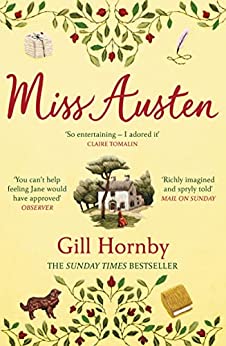
Miss Austen by Gill Hornby, a fictionalised account of Jane Austen as seen through the eyes of her sister, Cassandra.
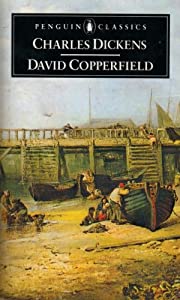
David Copperfield by Chalers Dickens, said to be his most autobiographical novel. There’s drama, comedy and tragedy, melodrama and pathos as the story follows David’s life from his birth to his adulthood.
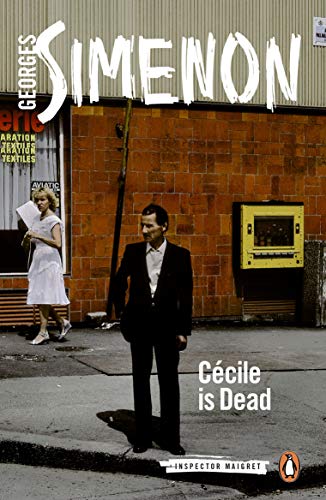
Cécile is Dead by Georges Simenon, one of the best Maigret books I’ve read – and it is complicated, remarkably so in a novella of just 151 pages.
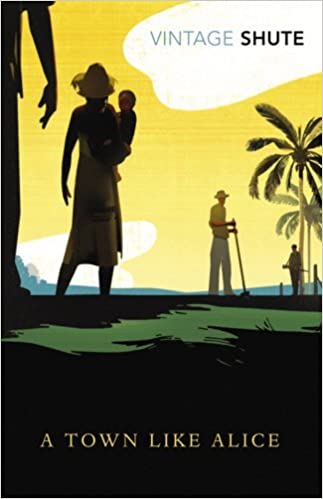
A Town Like Alice by Nevil Shute, set in three parts, with just the third part set in Australia, not in Alice Springs but in Willstown, a fictional town in the outback. Narrated by Noel Strachan, a solicitor, this is the story of Jean Paget. Jean has great strength of character, determination and entrepreneurial skills.
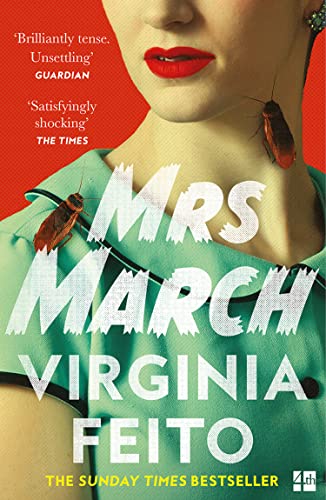
Mrs March by Virginia Feito, a remarkable character study, taking the reader right inside Mrs March’s head as she descends into paranoia and madness.The whole book is seen solely from her perspective, which makes it the most uncomfortable experience – but that is down to the brilliance of Feito’s writing.
It’s time again for Six Degrees of Separation, a monthly link-up hosted by Kate atBooks Are My Favourite and Best. Each month a book is chosen as a starting point and linked to six other books to form a chain. A book doesn’t need to be connected to all the other books on the list, only to the one next to it in the chain.
This month starts with Kairos by Jenny Erpenbeck. Kairos is the winner of the International Booker Prize 2024. An intimate and devastating story of the path of two lovers through the ruins of a relationship, set against the backdrop of a seismic period in European history. Translated from German by Michael Hofmann.
Berlin. 11 July 1986. They meet by chance on a bus. She is a young student, he is older and married. Theirs is an intense and sudden attraction, fuelled by a shared passion for music and art, and heightened by the secrecy they must maintain. But when she strays for a single night he cannot forgive her and a dangerous crack forms between them, opening up a space for cruelty, punishment and the exertion of power. And the world around them is changing too: as the GDR begins to crumble, so too do all the old certainties and the old loyalties, ushering in a new era whose great gains also involve profound loss.
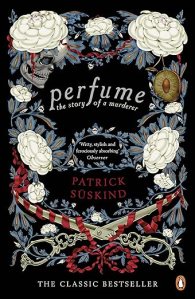
My first link is another novel translated from German, Perfume:the story of a murderer by Patrick Süskind, translated from German by John E Woods. It is an extraordinary novel, a Gothic work in the vein of Edgar Allen Poe, or Oscar Wilde’s ThePicture of Dorian Grey. It depicts the strange life of Jean-Baptiste Grenouille and is a book of smells. This is a horror story, one that made me not want to read it and yet also want to read it to the bitter end.
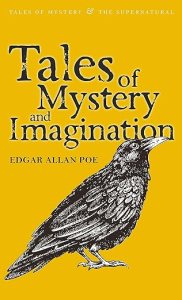
My second link is Tales of Mystery and Imagination by Edgar Allan Poe, which is a collection of Poe’s best stories containing all the terrifying and bewildering tales that characterise his work. As well as the Gothic horror of such famous stories as ‘The Pit and the Pendulum’, ‘The Fall of the House of Usher’, ‘The Premature Burial’ and ‘The Tell-Tale Heart’, all of Poe’s Auguste Dupin stories are included.
These are the first modern detective stories and include ‘The Murders in the Rue Morgue’, ‘The Mystery of Marie Roget’ and ‘The Purloined Letter’.
My third link stays on the theme of tales of horror with Tales of Terror by Robert Louis Stevenson, which are published in my copy of The Strange Case of Dr. Jekyll and Mr Hyde. It consists of two short stories, both written for the Christmas “crawler” tradition in 1884 and 1885. Christmas was a season traditionally associated with supernatural and creepy tales. The Body Snatcher is very much a traditional Christmas ghost story, beginning with four men gathered in an inn on a dark winter’s night telling tales round the fireside of grisly deeds. The other story is Olalla, a Gothic tale, set in an ancient Spanish castle surrounded by deep woodland, about a young man recovering from his war wounds and to “renew his blood”, who finds himself living with a strange family.
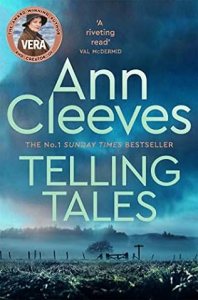
My fourth link moves away from horror stories to crime fiction, linked by the word ‘tales’ in the title. It is Telling Tales by Ann Cleeves, a book I have read but I didn’t write a review. It’s the 2nd of her Vera Stanhope series in which the residents of an East Yorkshire village are revisited with the nightmare of a murder that happened 10 years before. There was some doubt about the guilty verdict passed on Jeanie Long and now it would seem that the killer is still at large. Inspector Vera Stanhope builds up a picture of a community afraid of itself and of outsiders.
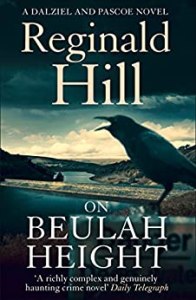
My fifth link is On Beulah Height, Reginald Hill’s 17th Dalziel and Pascoe novel. It’s also set in a Yorkshire village, Dendale. Three little girls had gone missing from the village one summer. Their bodies were never found, and the best suspect, a strange lad named Benny Lightfoot, was held for a time, then released. Fifteen years later another little girl, Lorraine, aged seven went out for a walk one morning with her dog before her parents got up and didn’t return home, reviving memories of the missing children from fifteen years earlier.
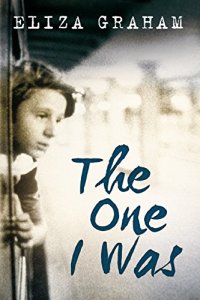
My final link is to a another book featuring a character called Benny – The One I Was by Eliza Graham – historical fiction split between the present and the past following the lives of Benny Gault and Rosamund Hunter. Benny first came to Fairfleet in 1939, having fled Nazi Germany on a Kindertransport train. As an adult he bought the house and now he is dying of cancer. Rosamund returns to Fairfleet, her childhood home, to nurse Benny. I was totally engrossed in both their life stories as the various strands of the story eventually combined.
Half of my chain consists of horror stories, not a genre I often read and the other half is made up of crime fiction novels, as usual.
Top Ten Tuesday is a weekly meme created by The Broke and the Bookish and now hosted by Jana at That Artsy Reader Girl. For the rules see her blog.
The topic this week is Books with My Favourite Colour on the Cover. Here they are in various shades of red:
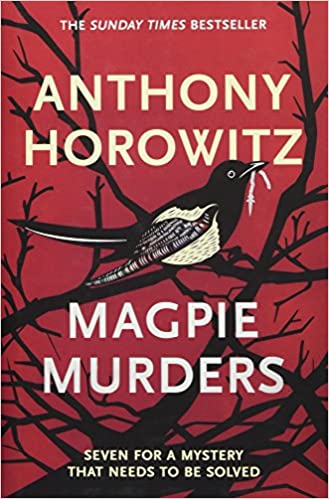
Magpie Murders by Anthony Horowitz – a prime example of a puzzle-type of crime fiction combining elements of the vintage-style golden age crime novel with word-play and cryptic clues and allusions to Agatha Christie and Arthur Conan Doyle. It’s also a novel within a novel, with mystery piled upon mystery. I loved it.
The Sentence is Death by Anthony Horowitz – the second book in the Hawthorne and HorowitzMystery series in which Daniel Hawthorne, an ex-policeman, now a private investigator, who the police call in to help when they have a case they call a ‘sticker’. What I found particularly interesting was the way that Anthony Horowitz inserted himself into the fiction, recruited by Hawthorne to write a book about him and the cases he investigates.
Close to Death by Anthony Horowitz – the fifth literary whodunit in the Hawthorne and Horowitz series, Detective Hawthorne is once again called upon to solve an unsolvable case—a gruesome murder in an idyllic gated community in which suspects abound, aided by Horowitz, as a fictional character.
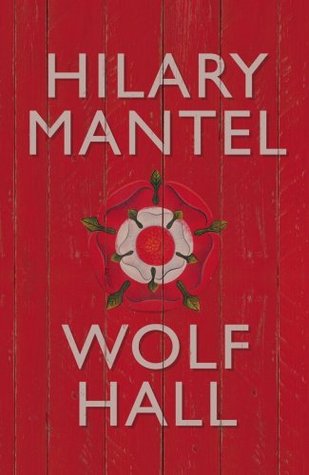
Wolf Hall by Hilary Mantel – historical fiction, the story of Thomas Cromwell, the son of a blacksmith, and his political rise, set against the background of Henry VIII’s England and his struggle with the Pope over his desire to marry Anne Boleyn. This is the first in the Wolf Hall trilogy, based on the life of Thomas Cromwell (c. 1485-1540), who rose from obscurity to become chief minister of King Henry VIII of England.
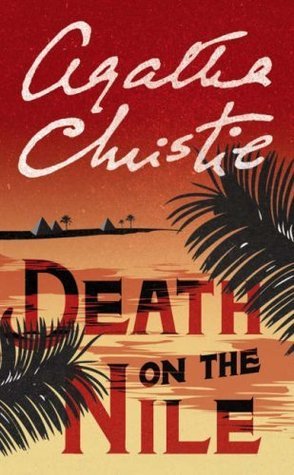
Death on the Nile by Agatha Christie, a pre-Second World War crime fiction novel. It shows Agatha Christie’s interest in Egypt and archaeology and also reflects much of the flavour and social nuances of the pre-war period. In it she sets a puzzle to solve – who shot Linnet Doyle, the wealthy American heiress? Although the novel is set in Egypt, an exotic location, it is essentially a ‘locked room mystery’.
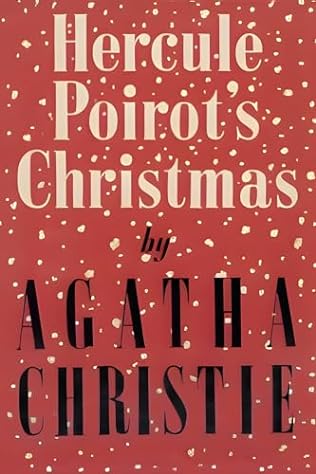
Hercule Poirot’s Christmas by Agatha Chistie in which Poirot investigates the death of Simeon Lee, the head of the Lee family. None of his family like him, in fact most of them hate him and there are plenty of suspects for his murder. He is found dead with his throat cut in a locked room – locked from the inside.
Wild Fire by Ann Cleeves, the 8th and last book in Ann Cleeves’ Shetland series. I have loved this series ever since I read the first book, Raven Black, back in 2010. And because I began reading the books before they were televised my picture of Inspector Jimmy Perez is drawn from them rather than from the dramatisations. There are some significant changes between the TV dramatisations and the books. I love the books, but still enjoyed the TV adaptions.
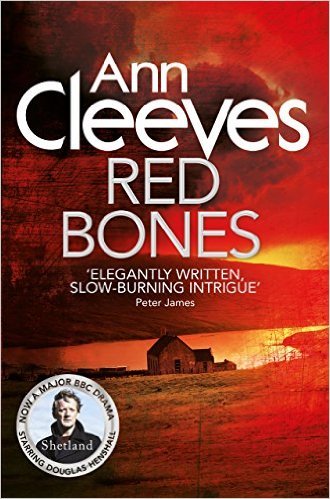
Red Bones by Ann Cleeves, the third book in her Shetland Quartet. It’s set on Whalsay, where two young archaeologists, excavating a site on Mima Williams’s land, discover human bones. They are sent away for testing – are they an ancient find or are the bones more contemporary?
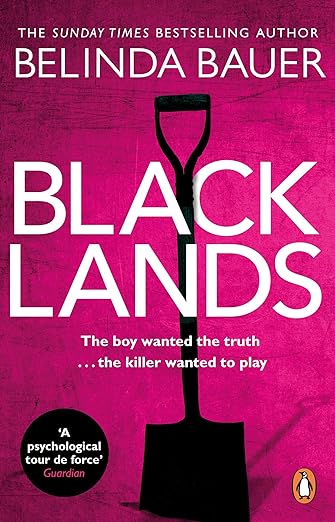
Blacklands by Belinda Bauer, crime fiction. This is an absolutely gripping battle of wits between Stephen aged twelve and serial killer Arnold Avery as they exchange letters about the whereabouts of Stephen’s uncle’s body.
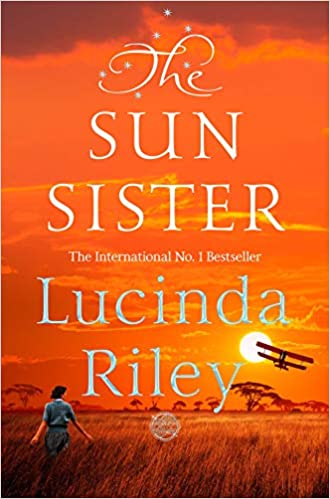
The Sun Sister by Lucinda Riley – the only book on this list that I haven’t yet read. It’s the sixth book in The Sven Sisters series, the storyof love and loss, inspired by the mythology of the famous star constellation. It’s one of my TBRs only because I’m reading the series in order and so far I’ve read the first three books.





















 BooksPlease