This Week in Books: 22 April 2015

My week in books

This Week in Books is a weekly round-up hosted by Lypsyy Lost & Found, about what I’ve been reading Now, Then & Next. A similar meme is run by Taking on a World of Words.

Now:

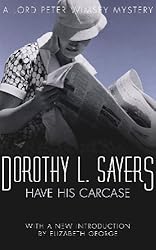
I‘ve just started to read Have His Carcase by Dorothy L Sayers, the  second book featuring Harriet Vane. Harriet is on a walking holiday on her own and finds a dead body on the top of a rock on a deserted beach, ‘the corpse with the cut throat‘ as Lord Peter Wimsey describes it. As this was first published in 1932, Harriet was not only without a mobile phone, but also without access to a landline without walking miles to a village where she could phone the police from the village shop. It’s promising to be an excellent read.
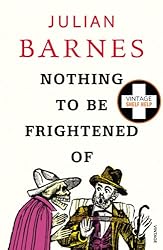
I’m also still reading Nothing To Be Frightened Of by Julian Barnes ( non fiction, a memoir, a meditation on death and the fear of dying) – in fact I’ve not read any more of this book than I had last week – blame not only reading other books but also the good weather and the garden, where I’ve spent too much time, not relaxing, but weeding, mowing and general tidying up.
Then:

I’ve finished both Elizabeth is Missing by Emma Healey and The Last Girl by Jane Casey – my reviews will  follow soon.

Next:

Next up I’ll probably be reading The Lost Garden by Katharine Swartz, an advance proof copy of the book from Lovereading due to be published in May – how can I resist a book that begins with a walled garden? I’ve always wanted a garden like that ever since I read The Secret Garden.

But then I could get drawn to a different book when the time comes!


Stacking the Shelves: April 18

STSmall

Stacking The Shelves is all about sharing the books you are adding to your shelves. This means you can include ‘˜real’ and ‘˜virtual’ books (ie physical and ebooks) you’ve bought, books you’ve borrowed from friends or the library, review books, and gifts.

These are the latest arrivals from the mobile library:

Vargas

Gently North West by Alan Hunter – I’ve read a couple of the Inspector Gently books and I really like the TV dramatisation of these books. (Coincidently the BBC are showing a trailer of the new series of Inspector Gently coming soon.) This book is a bit different as it’s set in Scotland where Gently is on holiday. Inevitably, his holiday is put on hold as he stalks a murderer in the mountains!

Harbour Street by Ann Cleeves – I’ve seen the TV version but not  read the book. This is the 6th Vera book. It’s set in the quiet Northumberland town of Mardle (filmed at Alnmouth) where DI Vera Stanhope is investigating the deaths of two women – but the residents of Harbour Street are reluctant to speak.

Bright Hair About The Bone by Barbara Cleverly – this is by a new-to-me author and I picked the book off the shelf as the title struck me as rather strange. It’s historical crime fiction set in France in 1926, where an ancient church is being excavated in Burgundy. Archaeologist Laetitia Talbot investigates the death of her godfather, Daniel Thorndon. I hope it’s as interesting as it appears.

The Ghost Riders of Ordebec by Fred Vargas. I’ve read a few of her Commissaire Adamsberg books. This one looks really interesting, set in a village far outside Adamsberg’s jurisdiction (like the Gently book!) he agrees to investigate the strange happenings in the village which is terrorised by wild rumours and ancient feuds.

Have you read any of these – and what books have you found this week?

This Week in Books: 15 April 2015

This Week in Books is a weekly round-up hosted by Lypsyy Lost & Found, about what I’ve been reading Now, Then & Next. A similar meme is run by Taking on a World of Words.

Now:

I’m currently reading:

  • The Last Girl by Jane Casey, the third Maeve Kerrigan book. The only witness to the murder of her mother and twin sister and the attack on her father is a teenager. Maeve’s first thought is that this is a domestic dispute gone bad.
  •  Elizabeth is Missing by Emma Healey, a complete contrast to The Last Girl. There is only one thing Maud is sure about – her friend Elizabeth is missing and nobody seems to be taking her seriously. It’s going really well so far.
  • Nothing To Be Frightened Of by Julian Barnes – non fiction, a memoir, a meditation on death and the fear of dying.

Then:

I’ve recently read (links are to my posts on the books):

My thoughts: Set in the late 1960s in Wexford, Ireland this is a portrait of recently widowed Nora Webster. Unmoored by her sudden loss and the needs of her children Nora finds a strength within herself and through the discovery of music and the gift of friendship finds a way to live again. It’s a vivid portrait of a woman initially locked within her grief, claustrophobic and intensely personal, and focussing on daily life in all its boredom, frustration and triviality. A moving book.

Next:

As usual I’m undecided about what to read next. It will probably be Out of Africa by Karen Blixen, my spin result for the Classics Club Spin. But I also have my eye on Have His Carcase by Dorothy L Sayers, another Lord Peter Wimsey and Harriet Vane book and Gray Mountain by John Grisham another of his legal thrillers although I see it has some bad reviews on Amazon. Both are books I’ve borrowed from the library.  I have a feeling I’ll pick Have His Carcase when the time comes.

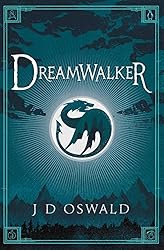
Dreamwalker: The Ballad of Sir Benfro Book 1

Dreamwalker

I read  Dreamwalker: The Ballad of Sir Benfro by James Oswald on my Kindle.  It has since been published by Penguin as Dreamwalker by J D Oswald.

So far there are three books in the series and there will eventually be five books published by Penguin. See James Oswald’s website for more information.

Synopsis from Amazon UK:

In a small village, miles from the great cities of the Twin Kingdoms, a young boy called Errol tries to find his way in the world. He’s an outsider – he looks different from other children and has never known his father. No one, not even himself, has any knowledge of his true lineage.

Deep in the forest, Benfro, the young male dragon begins his training in the subtle arts. Like his mother, Morgwm the Green, he is destined to be a great Mage. No one could imagine that the future of all life in the Twin Kingdoms rests in the hands of these two unlikely heroes.

But it is a destiny that will change the lives of boy and dragon forever …

My view:

I enjoyed this book, inspired by Welsh folklore. It’s very readable, each time I picked it up I just wanted to carry on reading this magical tale of the young dragon, Benfro and the young boy, Errol, born on the same day. I was drawn into their fantasy world.

But I wasn’t prepared for the ending – when you get to the end of the book it is not the end – it’s only the end of the first instalment! The tension builds throughout the book as both Benfro and Errol approach their fourteenth birthdays, Benfro in the dragon community, learning their magical powers and Errol,growing up thinking his mother was the village healer and then taken from his home by Melyn, the Inquisitor to train to be one of the warrior priest. Then there is the wicked Princess Beaulah, who is keeping her father the king alive until she reaches her 21st birthday.

And as the tension built I was eager to find out how it would end, only to be faced with the words ‘To be continued in The Ballad of Sir Benfro -Volume Two‘. I was so frustrated, as it just came to a full stop after a catastrophic event, that I couldn’t really believe had happened – a real cliff-hanger! I wish I’d realised before so that I’d been prepared – it was a complete let-down. So, if you are going to read it be warned!

Dreamwalker is followed by The Rose Cord and The Golden Cage. J. D. Oswald is also the author of the Detective Inspector McLean series of crime novels under the name James Oswald. In his spare time James runs a 350-acre livestock farm in North East Fife, where he raises pedigree Highland Cattle and New Zealand Romney Sheep.

Read more about Dreamwalker on the Penguin website.

Reading ChallengesDreamwalker is the perfect choice for Once Upon a Time IX. As it’s been on my Kindle since 2012 it’s also perfect for the Mount To Be Read Challenge and as James Oswald lives in Scotland it fits into the Read Scotland Challenge too.

Blog Anniversary 12 April!

Today is the 8th anniversary of BooksPlease. Eight years ago I’d just left work and had more time to read and write about books, so I began this blog partly to help me remember what I’ve read and also to extend the pleasure of reading and to record what I thought about the books. And so ‘BooksPlease‘ was born.

I thought of calling my blog ‘Books Matter‘, or ‘Book Matters‘ but decided that it should be ‘BooksPlease‘ because they do and also because if somebody asked me what I wanted for my birthday or Christmas when I was a child I always said ”ooh, books please!

Right from the start it’s been more than just a book blog and I’ve also written about art, pets, places I’ve visited, personal anecdotes or thoughts, cookery, walking, travels and holidays, and about crafts, such as knitting and cross-stitch – and well, anything else that interests or pleases me.

On the book front a recurring theme over the years has been ‘what to read next‘. Choosing what to read next is almost as pleasurable as actually reading  the books.

This is the first photo I posted showing a pile of some of the books I had waiting to be read in April 2007. It seems so long ago now!


I don’t always manage to read all the books I list as possibles but in this case, although it took me a while, over the years I have read these books (with one exception, The Sound of Paper by Julia Cameron, although I did start it –  my bookmark is still at page 61).

I really enjoy blogging  – the contact with other book bloggers, exchanging views on books and finding yet more books to read makes it even better. I love reading your comments and hope you’ll continue visiting and commenting on my blog – I really do appreciate it.

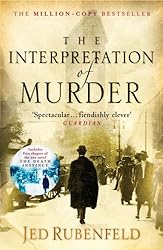
The Interpretation of Murder by Jed Rubenfeld

I was looking forward to reading The Interpretation of Murder by Jed Rubenfeld. It had sat on my shelves for nearly 8 years and I decided it was time to read it this year, including it in my TBR Pile Challenge list of books. It’s historical fiction – a mixture of murder mystery and psychoanalysis with an interpretation of ‘˜Hamlet‘˜ thrown in.

It began well as Sigmund Freud and Carl Jung arrived in New York in 1909 to give a series of lectures and to receive an honorary degree from Clark University. That much is fact, but this book is a work of fiction as Rubenfeld makes clear in his Author’s Note and most of the characters are fictional.

There are some things that I did think were well done, for example the descriptions of New York as the city grew, its architecture and streets, the building of the Manhattan Bridge; and as I mentioned earlier the interpretation of ‘Hamlet‘. But as I read on I began to lose interest and at times I felt it was slowed down too much by psychological exposition and debate. Rubenfeld is no doubt well grounded in Freud – as a Princeton undergraduate he wrote his senior thesis on Freud – and also in Shakespeare, which he studied at the Juilliard School of Drama. I found his ideas on interpreting ‘Hamlet‘ most interesting. But I was less enamoured with the dialogue between Freud and Jung, which as Rubenfeld explained is drawn from their own letters, essays and statements, which whilst being factually accurate, doesn’t come across as real conversation.

I thought the murder mystery was unconvincing and too convoluted. Briefly, the morning after Freud’s arrival a young woman is found brutally murdered and later a second, Nora Acton, is attacked in a similar fashion but she survives, although unable to speak. Freud is asked to help by psychoanalysing Nora and asks his young American colleague, Dr Stratham Younger to carry out the analysis. To cut a long story short Younger is helped in his investigations by Detective Jimmy Littlemore and together they discover what really happened.

Maybe I was expecting too much from this book, which is described in the blurb as’Spectacular … fiendishly clever‘, and a ‘thrilling heart-in-the-mouth read … Once you start reading, it’s impossible to put down.’  It jumps about a bit too much for my liking, between narrators and sub-plots, some of the characters came over a bit flat and I didn’t find it either ‘fiendishly clever‘ or ‘impossible to put down‘.