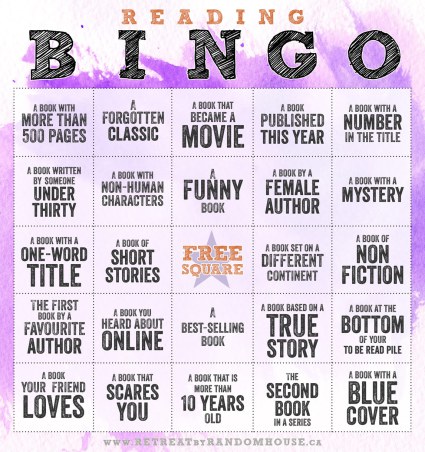
Reading Bingo 2016

reading-bingo-small

I enjoyed doing this last year, so here is this year’s version. I like it because I just read what I want to read during the year and then see whether they will match the squares. And I’ve really enjoyed looking back at the books I’ve read. Last year I didn’t complete the card – but this year I have!

A Book With More Than 500 pages
1192920


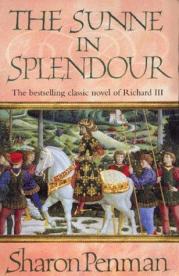
The Sunne in Splendour by Sharon Penman is the longest book I’ve read this year – 866 pages. It’s a novel rich in detail about Richard III’s life from his childhood to his death at Bosworth Field in 1485. I think this is one of the best historical novels that I’ve read. Penman portrays a very likeable Richard, from his childhood onwards he comes across as a kind, generous and brave man, a skilled leader on the battlefield, a loving husband to his wife, Anne, and devoted and loyal to his brother, Edward IV, who was by no means a saint.

A Forgotten Classic 
The Man Who Would Be King by Rudyard Kipling, which first published in 1888.  Set in India and narrated by a journalist, it’s the story of two ruffianly-looking adventurers, wanderers and vagabonds, Daniel Dravot and Peachey Carnehan, who announce that they are off to Kafiristan in the mountains of Afghanistan to make themselves Kings. But some two years later, on a hot summer’s night, what was left of Carnehan crept into the journalist’s office with a sorry tale to tell.

A Book That Became a Movie

The Spy Who Came in from the Cold by John Le Carre, a dark, tense book and complicated. Back from Berlin where he had seen his last agent killed whilst trying to cross the Berlin Wall, Alex Leamas is apparently no longer useful to the British Secret Services. Now Control wants to bring him in ‘“ but only after one final assignment. The atmosphere throughout is of secrecy, manipulation, of human frailty and its duplicitous nature and at times I wasn’t sure just what was going on, what lay behind the scenes ‘“ just what was Leamas up to, amidst the various deceptions and subterfuges?

A Book Published This Year

To the Bright Edge of the World by Eowyn Ivey. This is a lovely book, narrated through the journals of Allen Forrester, and the diaries of his wife, Sophie, about his journey in 1885 from Perkins Island up the Wolverine River in Alaska. It’s a novel inspired by a historical military expedition but all the characters and many places in the story are fictionalised including the Wolverine River. I loved this story of great beauty and full of love, backed up by fact and elevated by Eowyn Ivey’s writing.

A Book with a Number in the Title
Six Tudor Queens: Katherine of Aragon by Alison Weir –  fictional biography, told from Katherine’s point of view it follows her life from the time she arrived in England at the age of sixteen to marry Prince Arthur, the elder of Henry VII’s two sons, to her death in 1536. Overall I enjoyed this long and comprehensive study, based on extensive research and written with great attention to historical accuracy, but in places this made it tedious and too drawn out.

A Book Written by Someone Under Thirty

Extremely Loud and Incredibly Close

Extremely Loud And Incredibly Close by Jonathan Safran Foer – an unusual story about a boy whose father is killed in the September 11th attacks on the World Trade Centre. Oskar is is trying to discover the facts about his father’s death and also to solve the mystery of a key he discovers in his father’s closet by attempting to search for which of the 162 million locks in New York it might open.

A Book With Non-Human Characters

The Watchmaker of Filigree Street

The Watchmaker of Filigree Street by Natasha Pulley, described as ‘steampunk’ this is a mixture of historical fact and fantasy set in Victorian times, both in London and Japan, following the lives of the main characters, Thaniel Stapleton, Keita Mori and Grace Carrow. Mori is a watchmaker extraordinaire and an inventor of amazing clockwork creations.Katsu the clockwork octopus is pure magic.

A Funny Book 
The Bottle Factory Outing by Beryl Bainbridge – it begins as a comedy, but then continues with an uneasy undercurrent before descending into a dark tragedy that is surreal and farcical and also desperately sad.  There is a bizarre twist at the end, which I thought was brilliant. It’s savagely funny, full of pathos, touching moments, frustrations, shame, stress and unhappiness,

A Book By A Female Author
I ‘m spoilt for choice in this category, with lots of female authors to choose from. In the end I’ve picked A House Divided by Margaret Skea. Set in 1597 this is historical crime fiction at its best, a gripping story of warring factions in Scotland, the French Wars of Religion, superstition and horrific witchcraft trials. It’s expertly narrated, full of tension and surprise, and based on historical facts that blend seamlessly into the narrative, with beautiful descriptive passages; one of the best I’ve read this year.

A Book With A Mystery
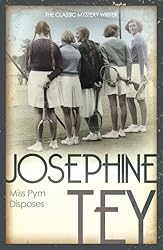
I could have chosen any one of the many crime fiction novels I’ve read this year, but instead I’ve gone for Miss Pym Disposes by Josephine Tey, which is not conventional crime fiction. There’s a ‘nasty accident’ that Miss Pym investigated. It’s a psychological study focussing on the characters, their motivation and analysis of facial characteristics. It looks at the consequences of what people do and say

A Book With A One Word Title
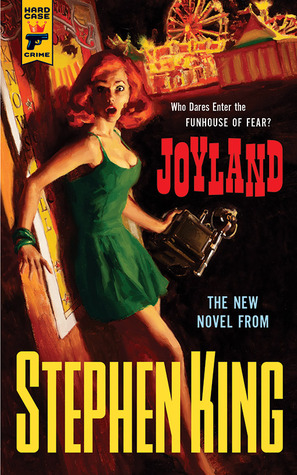
13596166

Joyland by Stephen King is a ghost story, a love story, a story of loss and heartbreak. It’s also a murder mystery and utterly compelling to read. Devin Jones is looking back forty years at the time he was a student, suffering from a broken heart, and he spent a summer working at Joyland, in North Carolina, an amusement park with ‘˜a little of the old-time carny flavor‘˜. There’s just a touch of horror and the supernatural.

A Book of Short Stories
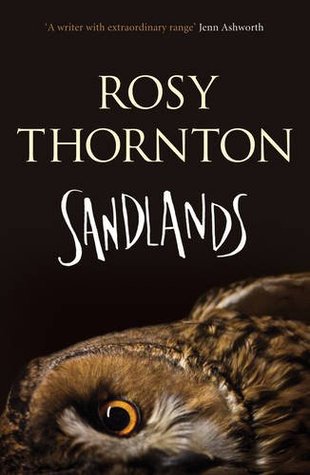
Sandlands

I am not a great fan of short story collections. I often find that they leave me feeling that something is missing, but Sandlands by Rosemary Thornton is s superb collection. These are strong, atmospheric stories, stories that bring to life the world of the past, tying them to the present, stories of family life, of the natural world, of folklore and of mystery. They are just the right length for me, perfect little cameos each one complete and satisfying.

Free Square

For this square I’ve chosen a book that the author didn’t think she meant to write and one that turned out not to be the book I had expected. It’s The Pattern in the Carpet: a Personal History of Jigsaws by Margaret Drabble.
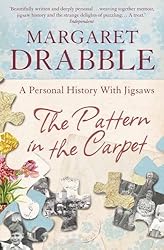
I thought it was going to be about Margaret Drabble’s memories of doing jigsaws, and she thought she was going to write a short history of jigsaws, but she found it ‘spiralled off in other directions’ and she wasn’t sure just what it became. She says it is not a memoir, but part of it is about her childhood and life at Bryn, her grandparents’ house in Long Bennington and about her beloved Aunt Phyl (Phyllis Boor). There are sections about the history of jigsaws and other puzzles. And then parts that lack a clear structure in a sort of ‘˜stream of consciousness’ style, particularly in her reminiscences and nostalgia about life (reproduced in some jigsaws) in a rural community that no longer exists.

A Book Set On A Different Continent

The Songlines by [Chatwin, Bruce]

The Songlines by Bruce Chatwin – set in Australia exploring the ‘˜Songlines’, the labyrinth of invisible pathways which cross and re-cross Australia, ‘˜known to Europeans as ‘˜Dreaming-tracks’ or ‘˜Songlines’; to the Aboriginals as the Footprints of the Ancestors’ or the ‘˜Way of the Law’.

A Book of Non Fiction 
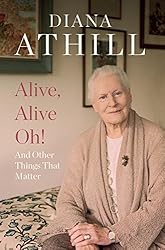
Alive, Alive Oh! by Diana Athill –  covering a wide range of Diana Athill’s memories, many images of beautiful places, and the friends and lovers she has known. The chapters follow on chronologically but are unconnected except for the fact that they demonstrate her love of life. A lovely book.

The First Book By a Favourite Author

The Voyage Out by Virginia Woolf was her first book, published in 1915. She had started writing it years earlier when she had been suffering with ill health for some time ‘“ depression,  nervous breakdowns and anorexia. She revised it several times before finalising it in 1912 and 1913. I found it an intriguing book, beginning in a leisurely fashion, as a party of English people are aboard the Euphrosyne, bound for South America. Yet there is tension in the air and this tension and sense of underlying trouble and anxiety continues throughout the book.  I was taken aback at the desperate sadness of it.

A Book You Heard About On Line
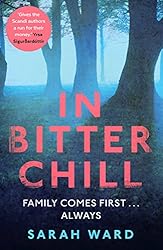
Most of the books I read these days are books I’ve heard about on line. I’ve chosen In Bitter Chill by Sarah Ward for this square because I first read about it on Sarah Ward’s blog,  Crimepieces. This book combines excellent storytelling, moving smoothly between the past and the present as the secrets from the past gradually emerge, great characterisation and a superb location in the Derbyshire Peak District. There is a modern day murder that leads to the solution of a cold case 30 years earlier.

A Best Selling Book
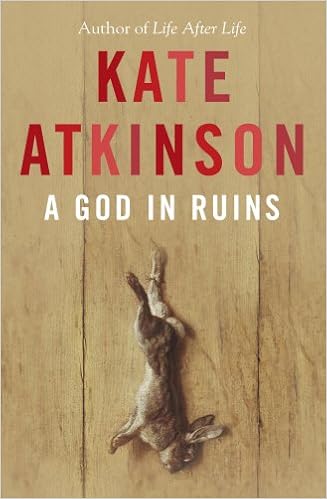
A God in Ruins by Kate Atkinson was the Costa Novel Award Winner 2015. Set partly during the Second World War, this is the story of Teddy Todd. But it’s also about the time leading up to the war  and its aftermath. I loved this book – I’ll write more about it in a later post.

A Book Based On A True Story

The Spy by Paulo Coelho – a fascinating novel about  Mata Hari, whose real name was Margaretha Zella, and who was executed as a spy during the First World War. It’s based on facts, but Coelho created some dialogue, merged certain scenes, changed the order of a few events and left out anything he thought wasn’t relative to the narrative.

A Book At The Bottom of Your To Be Read Pile
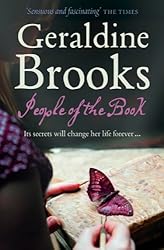
People of the Book by Geraldine Brooks, a book I’ve had for nearly eight years. I should have read it years ago because  I loved it; it’s a real gem! It has joined the ranks of my favourite books. I could have put it in the square for a book based on a true story because it was inspired by the story of the Hebrew codex known as the Sarajevo Haggadah. Some of the facts are true to the Haggadah’s known history but most of the plot and all of the characters are imaginary.

A Book Your Friend Loves
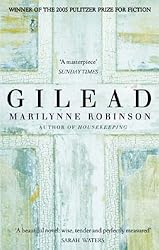
Gilead by Marilynne Robinson – recommended by a friend in my local book group. Set in Gilead, Iowa in 1956 John Ames is 76, dying of heart disease, and writing a letter to his young son aged 7 telling him the things he would have told him if he had lived to see him grow up.

A Book that Scares YouThe Plague Charmer
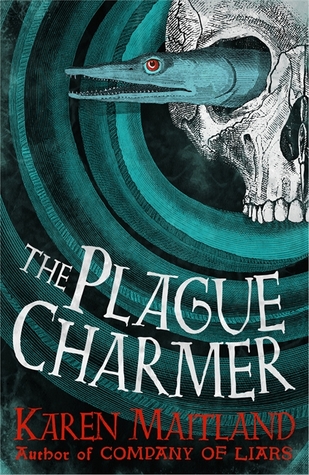
I tend to steer clear of scary books, but I was both fascinated and horrified by the events in The Plague Charmer by Karen Maitland, as she brought  the medieval world to life in all its brutality and hardship.It’s a tale of folklore, black magic, superstition, violence, torture, murder, and an apocalyptic cult.

A book That Is More Then Ten Years Old

Death Comes As The End


Death Comes as the End by Agatha Christie, first published in 1945. a detective story set in Ancient Egypt on the West bank of the Nile at Thebes in about 2000 BC. The mystery in this book is actually not too puzzling. For me, its interest lay in the setting and period details and Agatha Christie had based her characters and plot on some letters from a Ka priest in the 11th Dynasty.

The Second Book In A Series

The Black Friar by Shona MacLean is the second book in the Damian Seeker series, historical crime fiction set in 1655 during the Interregnum under Oliver Cromwell, the Lord Protector. Damian Seeker, Captain of Cromwell’s Guard, works for Thurloe, Cromwell’s Chief Secretary and spy master.  It’s a complex mystery, a body is found bricked up in a wall, children have gone missing and there are various factions and religious sects plotting rebellion against Cromwell and to reinstate Charles Stuart as king. I haven’t read the first in the series but I think this works well as a standalone book.

A Book With A Blue Cover
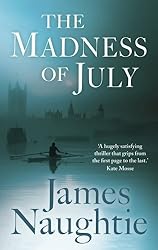
The Madness of July by James McNaughtie – a political thriller set in London in the mid 1970s one sweltering July as Will Flemyng the foreign office minister and former spy finds himself drawn back into the world of espionage, a world of deception, manipulation and diplomacy. It’s the Cold War period and Will discovers politics can be just as dangerous as espionage. I loved this book, Naughtie uses beautiful imagery and the characters are vividly drawn. It’s a book that made me think, that kept me on my toes as I read it; a book that both puzzled and entertained me.

Well, this post has taken me days to compile, but I loved doing it. My thanks to Cleo for this idea!
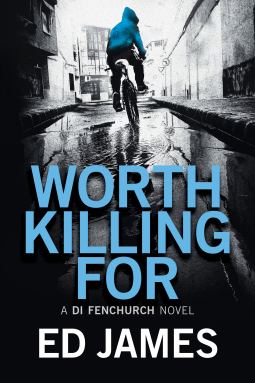
Worth Killing For by Ed James

Set in East London, Worth Killing For by Ed James is the second DI Fenchurch novel. It’s a bang up to date police procedural full of action, street talk and social and political commentary. I haven’t read the first book in the series, but that doesn’t matter as this book reads well as a standalone. It starts off at full tilt as Fenchurch witnesses a murder as a woman is attacked by a young hoodie on a bike, who snatches her mobile and handbag. He sets off in pursuit and after losing sight of him a couple of times he catches him, finding he has several smartphones in his possession, but not the victim’s. The young man claims he hadn’t attacked the woman, who is identified as a journalist, Saskia Bennett. Is it a case of mistaken identity, or as Fenchurch maintains the young man is lying? Is Saskia the victim of a phone-theft gang, run by the mysterious Kamal, or was she killed because of the stories she was investigating?

This reminded me so much of ‘Oliver Twist’, young boys recruited by Fagan to ‘pick-a pocket-or two’ and I was fascinated by the intricacies of the plot. I got a bit lost in the descriptions of the bike chases – there is more than one – but they certainly provide plenty of tension. And the scene in the underground is terrific. It is fast-packed action and you have to concentrate to keep up. Fenchurch is an interesting character and there is enough back story about his missing daughter, Chloe, to explain why he ignores procedure in his obsession to get to the truth.

I had no idea who was responsible, and at times the street talk and police jargon left me puzzled, but after I’d read more of the book it became clearer. I liked the way Ed James bamboozles the reader with all the twists and turns in the plot and the way he has brought politics, both local and national into the story. It really is right up-to-date.

In an Afterword Ed James explained how he came to write this book – his iphone was nicked, by a kid on a bike, in London. He poured out all his anger, hatred and fear into his writing.

I read this book courtesy of NetGalley. I’ll certainly read the first book now and any later DI Fenchurch books – will he find out what happened to Chloe?

  • Format: Kindle Edition
  • File Size: 2661 KB
  • Print Length: 414 pages
  • Page Numbers Source ISBN: 1503938220
  • Publisher: Thomas & Mercer (11 Oct. 2016)
  • Source: Review copy via NetGalley

About the Author

Ed James writes crime fiction novels, predominantly the Scott Cullen series of police procedurals set in Edinburgh and the surrounding Lothians. He lives in the East Lothian countryside, 25 miles east of Edinburgh, with his girlfriend, six rescue moggies, two retired greyhounds, a flock of ex-battery chickens and rescue ducks across two breeds and two genders (though the boys don’t lay eggs). While working in IT for a living, Ed wrote mainly on public transport but now writes full time. (From his website)


What’s in a Name 2016 – Completed

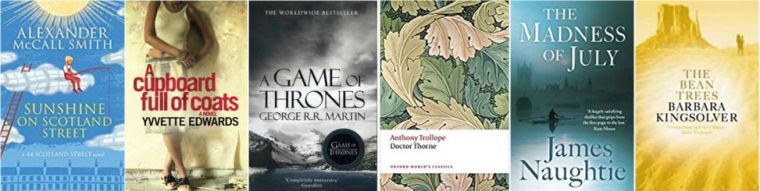
I have now completed the What’s In A Name 2016 challenge, hosted by Charlie at The Worm Hole. The challenge was to read books with titles from six categories. At the beginning of this challenge I listed the books I had initially chosen to read –  but I didn’t read any of them. Instead I realised, usually as I finished reading the books, that they just slotted into the categories.

These are the books I read, with links to my reviews:

  • A countrySunshine on Scotland Street by Alexander McCall Smith – this is an easy read, meandering from one character to the next. It has a light, humorous tone that I enjoyed, along with thoughts about friendship, religion, spirituality and happiness.
  • An item of clothing – A Cupboard Full of Coats by Yvvette Edwards – a beautiful and intense book, dramatic and full of emotion and passion, about relationships and what happens when jealousy and betrayal tear people apart.
  • An item of furnitureA Game of Thrones by George R R Martin – I was completely immersed in the world of the Seven Kingdoms, inhabited by numerous characters, all portrayed in meticulous detail and expertly constructed so that all the fantastic creations are credible, and complete with back stories.
  • A profession – Doctor Thorne by Anthony Trollope –  about mid 19th century prosperous country life and the importance of birth, of wealth and above all about money, class and power. Trollope uses gentle satire, emphasising the absurdities of the class divisions in society and poking fun at the professions.
  • A month of the year – The Madness of July by James Naughtie -a political thriller set in London in the mid 1970s, a book that makes you think, that keeps you on your toes as you read, that both puzzles and entertains you.
  • A title with the word ‘tree’ in itThe Bean Trees by Barbara Kingsolver – I loved this book. There are several themes including family relationships, particularly mother/child, sexual and physical abuse of small children, the integration of cultures, and the issue of refugees and illegal immigrants. I thought it was thought-provoking, as well as being fascinating reading.

I began the challenge in March when I read Doctor Thorne and finished it just a couple of days ago, reading A Cupboard Full of Coats. I enjoyed them all, each one different in style and genre, ranging from a 19th century classic to 21st century fantasy fiction.

A Cupboard Full of Coats by Yvvette Edwards

A Cupboard Full of Coats

A Cupboard Full of Coats is a beautiful and intense book, full of emotion and passion. It begins when Jinx opens the door to Lemon, who she hadn’t seen for fourteen years – fourteen years since the night her mother had been murdered. Over the next three days they talk about what had happened, bringing to the surface secrets, desires and jealousies that had led to the tragedy.

The narrative switches between the past and the present. Jinx’s relationship with her mother, had changed when she was sixteen and Berris, Lemon’s best friend, had moved in to live with them. It’s not clear at first just how or why her mother died although in the second paragraph Jinx reveals to the reader that she had killed her. But it is clear that both Jinx and Lemon (his full name is Philemon) have secrets that have been haunting them ever since. Lemon wants to talk about it and at first Jinx cannot open up to reveal anything, or indeed even to think about it let alone talk about it.

But I was no closer to telling him anything. He had told me heaps. More than I asked for. Much more. Yet, so far, I had shared nothing. He was right, you couldn’t just pick up a piece out of a story and present it on its own. Alone it was worthless. But I had not spoken to anyone ever about that night, had never trusted anyone enough to tell them the truth about what happened with my mother. I hadn’t wanted to. And now that I did want to, it seemed an impossible task. (pages 95 – 96)

But his talk and the delicious Caribbean food he cooks bring back her memories almost like flashbacks and her defences crumble. The cupboard full of coats helps her too – the expensive, beautiful coats, each one protected by transparent dustcovers, especially one coat, ‘made from nubuck suede, a long, ankle-length close-fitting garment, grey-blue like cloudy sky, with diagonal slit pockets lined in cobalt-coloured silk.’

It is a really dramatic story, layered and full of depth, as Jinx and Lemon relive that time of love, hatred, and violence. Beautifully written, it skillfully conveys the difficulties of relationships, communication and what happens when jealousy and betrayal tear people apart.

  • Paperback: 268 pages
  • Publisher: Oneworld Publications (21 Sept. 2011)
  • Language: English
  • ISBN-10: 1851688382
  • ISBN-13: 978-1851688388
  • Source: a library book

I borrowed this book from the library because the title, opening paragraphs and blurb interested me (see this post for the blurb etc) and I was pleased when I realised it was perfect for the final category I had to fill for the What’s in a Name challenge – the category of a book with an item of clothing in the title.

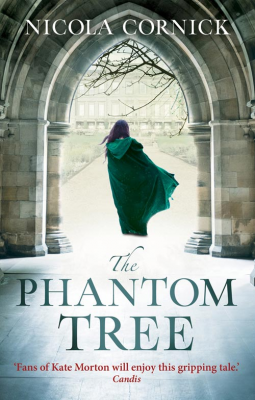
The Phantom Tree by Nicola Cornick

Last year I loved Nicola Cornick’s time-slip novel, House of Shadows. Her latest book is The Phantom Tree, due to be published on 29 December, another time-slip novel and I loved this one too.

Blurb:

‘My name is Mary Seymour and I am the daughter of one queen and the niece of another.’

Browsing antiques shops in Wiltshire, Alison Bannister stumbles across a delicate old portrait ‘“ supposedly of Anne Boleyn. Except Alison knows better’¦ The woman is Mary Seymour, the daughter of Katherine Parr who was taken to Wolf Hall in 1557 as an unwanted orphan and presumed dead after going missing as a child.

The painting is more than just a beautiful object from Alison’s past ‘“ it holds the key to her future, unlocking the mystery surrounding Mary’s disappearance, and the enigma of Alison’s son.

But Alison’s quest soon takes a dark and foreboding turn, as a meeting place called the Phantom Tree harbours secrets in its shadows’¦

My thoughts

The plot of The Phantom Tree alternates between the Tudor period and the present day following the life of Alison Banestre (known as Bannister in the present day) as she moves between the centuries trying to find out what happened to Mary Seymour. It is a mystery, based on the true story of Mary Seymour, the daughter of Katherine Parr (Henry VIII’s sixth wife) and Thomas Seymour, who she married after Henry’s death.

It’s a fascinating book, as little is known about Mary’s life. What is recorded is that she was born in 1548, her mother died after the birth and her father was executed a year later for treason against Edward VI. She disappeared from the records around about 1550, although there has been speculation that she lived until adulthood. In The Phantom Tree Nicola Cornick has provided another speculation on Mary’s life. As she states at the beginning of her book it is ‘entirely a work of fiction. The names, characters and incidents portrayed in it are the work of the author’s imagination.’

Having read Hilary Mantel’s, Wolf Hall, I was very interested in the setting of Wolf Hall where Mary and Alison, her cousin, went to live in 1557, the fourth year of the reign of Mary I. Mary Seymour was then ten years old and had a reputation for witchcraft. Wolf Hall, a rambling, run down manor house was owned by the Seymour family where Mary and other Seymour children went sent to live.

The time travel element of the book works well. I liked the way the traces of history in the present day are handled and are seen as layers of reality. Alison moves between the centuries, both forwards and backwards in time but then she found the gateway to the past had closed and she was trapped in the present day. She has to find another gateway where the past and the present meet, or some other means of connecting to the past.

I preferred the sixteenth century setting, with its belief in witchcraft slotting so well into the storyline. Mary has visions which are viewed with fear and superstition. Alison, in the future doesn’t know what happens to Mary, or to her son, Arthur, who was taken from her after his birth. She had helped Mary escape from Wolf Hall and in return Mary had promised to help her find Arthur. I think the characterisation is done well – Alison comes across as a rather unlikeable person, in contrast to Mary who is younger and has a gentler nature, although at first they didn’t get on together. I also liked the way the clues in the portrait helped Alison to discover what happened to Mary and Arthur.

My thanks to the publishers via NetGalley for a review copy of The Phantom Tree.  It is a book that seamlessly incorporates mystery and elements of the supernatural into the historical detail as the past and present meet. A most enjoyable book.

  • Paperback: 448 pages
  • Publisher: HQ (29 Dec. 2016)
  • Language: English
  • ISBN-10: 1848455046
  • ISBN-13: 978-1848455047

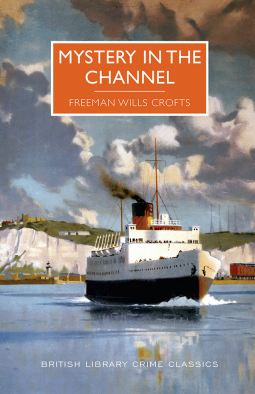
Mystery in the Channel by Freeman Wills Crofts

I’m still catching up with writing about books I read in November. First published in 1931 Mystery in the Channel by Freeman Wills Crofts is a classic crime fiction novel written during the Golden Age of detective fiction between the two world wars. The cross-channel steamer, Chichester comes across  an abandoned small pleasure yacht, the Nymph, lying motionless in the English Channel. Two men are on board, both of whom have been shot. Inspector French of Scotland Yard is in charge of the investigations into their murder.

There is no sign of a murder weapon, or the murderer. The two dead men are identified as the chairman and vice-chairman of a large financial company that is apparently on the the verge of a crash. It was thought that the two men were trying to flee the country with £1.5 million pounds in cash that was missing from the company’s strong room.

What follows is a complicated investigation into the details of nautical calculations and timetables, and of the numbers and whereabouts of the missing notes, all of  which I admit were a bit beyond me. I had absolutely no idea about the identity of the murderer but I enjoyed trying to work out the clues and avoid all the red herrings as Inspector French travelled between London (called Town), Newhaven and Dieppe  in the course of his investigations. Apart from Inspector French the characterisation is sketchy – it is the puzzle of the murder and the missing money that is the focus of the book.

I thought the comments on the effect of the company’s crash on ordinary people is still as relevant today as it was in the 1930s and the Assistant Police Commissioner’s views on crime and punishment showing a surprising sympathy with the criminal are interesting. He deplored the punishment of the out-of-work or poorly paid thief who had stolen to provide for his family’s’ needs. And he had ‘the most profound enmity and contempt’ for the wealthy thief who stole through the manipulation of stocks and shares or by other financial methods, whether those means were within or without the limits of the law.

This edition of Murder in the Channel is one of a series of classic crime novels published in September 2016 by British Library Publishing and has an introduction by Martin Edwards. My copy is courtesy of NetGalley.

It qualifies for Bev’s Golden Age Vintage Cover Scavenger Hunt in the category of a book with a ‘Boat’ on the cover.