Top Ten Tuesday: Backlist Books I Want to Read

Top Ten Tuesday new

Top Ten Tuesday is a weekly meme created by The Broke and the Bookish and now hosted by Jana at That Artsy Reader Girl.

The rules are simple:

  • Each Tuesday, Jana assigns a new topic. Create your own Top Ten list that fits that topic – putting your unique spin on it if you want.
  • Everyone is welcome to join but please link back to The Artsy Reader Girl in your own Top Ten Tuesday post.
  • Add your name to the Linky widget on that day’s post so that everyone can check out other bloggers’ lists.
  • Or if you don’t have a blog, just post your answers as a comment.

This week’s topic is: Backlist Books I Want to Read.

It’s hard to limit this to just 10 – this is just a snapshot of some of the books I own and still haven’t read. They’re all fiction.

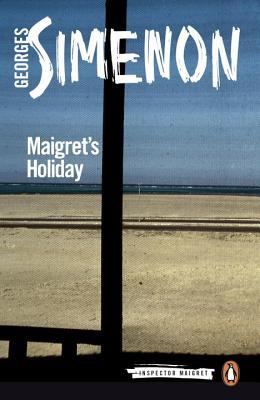
An Advancement Of Learning (Dalziel & Pascoe, #2)Maigret's Holiday (Maigret, #28)The Song of TroyFall of Giants (The Century Trilogy #1)Wednesday's Child (Inspector Banks, #6)

Family AlbumSea of Poppies (Ibis Trilogy, #1)The DryThe IslandThe Lady and the Unicorn

  • Family Album by Penelope Lively, a novel of family intrigue
  • Sea of Poppies by Amitav Ghosh – historical fiction, Ibis Trilogy Book 1 set in the 1830’s just before the opium wars in China
  • The Dry by Jane Harper, crime fiction set in the Australian outback
  • The Island by Victoria Hislop, historical fiction inspired by a visit to Spinalonga, the abandoned Greek leprosy colony
  • The Lady and the Unicorn by Tracy Chevalier, historical fiction, weaving together fact and fiction about the medieval tapestries

Six Degrees of Separation: from Vanity Fair to Oliver Twist

I love doing Six Degrees of Separation, a monthly link-up hosted by Kate at Books Are My Favourite and Best. Each month a book is chosen as a starting point and linked to six other books to form a chain. A book doesn’t need to be connected to all the other books on the list, only to the one next to it in the chain.

This month the chain begins with with Vanity Fair by William Makepeace Thackeray. I read this book in December 2004 (I know this as I’d written the date at the front of the book). I loved it. I didn’t watch the recent TV adaptation, not wanting to lose my own mental pictures of the characters and it always irritates me when adaptations move away from the original story.
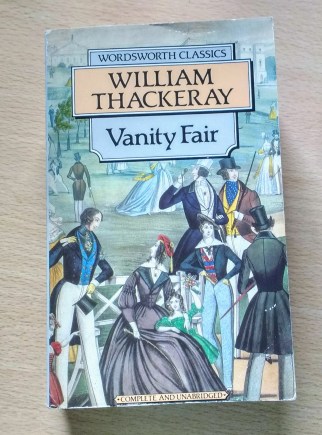
Vanity Fair


The main character in Vanity Fair is Becky Sharp, an orphan who was brought up at Miss Pinkerton’s Academy for young ladies in Chiswick Mall, which leads me to my first link in the chain –

Pinkerton’s Sister by Rushforth. The main character is Alice Pinkerton who is most definitely eccentric. The book begins: ‘The madwoman in the attic was standing at the window.’  It’s a bizarre story, funny, even ludicrous at times, full of literary and musical references and I got lost in it for hours. It’s a very long and detailed book and I don’t suppose it’s everyone’s cup of tea, but I loved it.

Pinkerton's Sister

My second link followed on naturally to another book by Peter Rushforth, A Dead Language. I was disappointed with this book as it was so hard to understand what was going on – it’s about Alice’s brother Benjamin Franklin Pinkerton, the young naval lieutenant who abandoned Madame Butterfly as he is about to set sail for Japan. It is strange and I didn’t finish it.

A Dead Language

It leads me on to another book with ‘dead’ in the title – The Beautiful Dead by Belinda Bauer. This is about Eve Singer, a TV crime reporter, who will go to any length to get the latest scoop. But when a twisted serial killer starts using her to gain the publicity he craves, Eve must decide how far she’s willing to go – and how close she’ll let him get.

The Beautiful Dead

The fantastic TV drama Killing Eve is based on Codename Villanelle, a series of novellas by  Luke Jennings.  Eve Polastri, a desk-bound MI5 officer, begins to track down talented psychopathic assassin Villanelle, while both women become obsessed with each other.
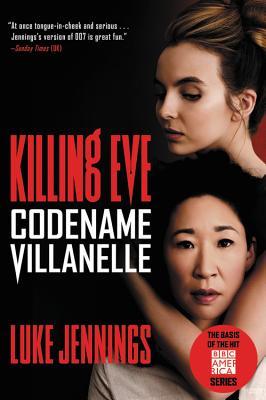
Killing Eve: Codename Villanelle

In Worth Killing For by Ed James  DI Simon Fenchurch witnesses a murder when a woman is attacked by a young hoodie on a bike, who snatches her mobile and handbag. The hoodie is part of a phone-theft gang, run by the mysterious Kamal.
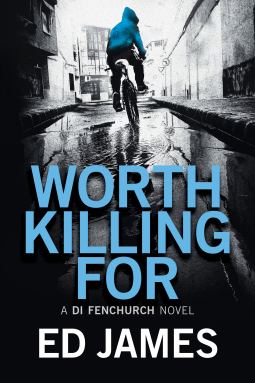
This reminded me so much of Charles Dickens’ Oliver Twist, in which young boys are recruited by Fagan to ‘pick-a pocket-or two’. After running away from the workhouse  Oliver is lured into a den of thieves peopled by vivid and memorable characters – the Artful Dodger, vicious burglar Bill Sikes, his dog Bull’s Eye, prostitute Nancy, and the cunning master-thief Fagin.

Oliver Twist

I am so surprised at where this chain has ended – from one classic to another, both about an orphan, but very different in style. Both Vanity Fair and Oliver Twist were first published as serials, before being published as books – Vanity Fair in 1847-48 and Oliver Twist in 1837-39. In between it has passed through two rather strange literary novels and three books focusing on death and murder!

Next month (December 1, 2018), we’ll begin with A Christmas Carol by Charles Dickens.

My Friday Post: I Am, I Am, I Am

Book Beginnings Button

Every Friday Book Beginnings on Friday is hosted by Gillion at Rose City Reader where you can share the first sentence (or so) of the book you are reading, along with your initial thoughts about the sentence, impressions of the book, or anything else the opener inspires.

This week I’m featuring I Am, I Am, I Am: Seventeen Brushes with Death by Maggie O’Farrell, one of the books I’m currently reading.

I Am, I Am, I Am: Seventeen Brushes With Death

I chose this book because I love Maggie O’Farrell’s books and as soon as I read the description I knew I had to read it:

About the Book

I AM, I AM, I AM is Maggie O’Farrell’s electric and shocking memoir of the near-death experiences that have punctuated her life. The childhood illness she was not expected to survive. A teenage yearning to escape that nearly ended in disaster. A terrifying encounter on a remote path. A mismanaged labour in an understaffed hospital.

This is a memoir with a difference: seventeen encounters with Maggie at different ages, in different locations, reveal to us a whole life in a series of tense, visceral snapshots. Spare, elegant and utterly candid, it is a book to make you question yourself. What would you do if your life was in danger? How would you react? And what would you stand to lose?

It begins:

Neck 1990

On the path ahead, stepping out from behind a boulder, a man appears.

This opening sentence drew me in immediately, knowing from the title and book description that this was not going to be a happy encounter – this is the ‘terrifying encounter on a remote path.’

~~~

Also every Friday there is The Friday 56, hosted by Freda at Freda’s Voice.

30879-friday2b56These are the rules:

  1. Grab a book, any book.
  2. Turn to page 56, or 56% on your eReader. If you have to improvise, that is okay.
  3. Find any sentence (or a few, just don’t spoil it) that grabs you.
  4. Post it.
  5. Add the URL to your post in the link on Freda’s most recent Friday 56 post.

Pages 55-56:

Suddenly the plane is falling, dropping, plummeting, like a rock fallen from a cliff. The downward velocity is astonishing, the drag, the speed of it. It feels like the world’s most unpleasant fairground ride, like a dive into nothing, like being pulled by the ankles into the endless maw of the underworld. My ears and face bloom like petals of pain, the seatbelt cutting into my thighs as I am thrown upwards.

~~~

The title is taken from Sylvia Plath’s The Bell Jar:

I took a deep breath and listened to the old brag of my heart. I am, I am, I am.

What about you? Does it tempt you or would you stop reading? 

Nonfiction November: Week 1 – Your Year in Nonfiction

This year I’m taking part in Nonfiction November, hosted by Kim of Sophisticated Dorkiness, Rennie of What’s Nonfiction, Katie of Doing Dewey, Julz of JulzReads and Sarah of Sarah’s Bookshelves.  Each week, we’ll have a different prompt and a different host looking at different ideas about reading and loving nonfiction.

This week’s topic is: Your Year in Nonfiction

Take a look back at your year of nonfiction and reflect on the following questions:

What was your favourite nonfiction read of the year?
Do you have a particular topic you’ve been attracted to more this year?
What nonfiction book have you recommended the most?
What are you hoping to get out of participating in Nonfiction November?

I’ve not been reading much nonfiction this year – just 7 books up to now. I’ve read two biographies – Victoria: A Life by A N Wilson, a long and fascinating book that portrays her both as a woman, a wife and mother as well as a queen set against the backdrop of the political scene in Britain and Europe, and Wedlock:  How Georgian Britain’s Worst Husband Met His Match by Wendy Moore, about Mary Eleanor Bowes, who was one of the richest young heiresses in 18th century Britain. I also read Jeremy Paxman’s A Life in Questions mainly about his career with little about his personal life.

The other books I read are on reading – Bookworm: A memoir of childhood reading by Lucy Mangan, on painting – Painting as a Pastime by Winston S. Churchill, on time – Timekeepers by Simon Garfield and on sleep – Why We Sleep by Matthew Walker.

Wedlock: How Georgian Britain's Worst Husband Met His Match

They are all so different that it’s hard to choose a favourite, but the one that sticks in my mind most is Wedlock, a biography of Mary Eleanor Bowes, who was one of the richest young heiresses in 18th century Britain. She fell under the spell of a handsome Irish soldier, Andrew Robinson Stoney. Her marriage to Andrew Robinson Stoney was an absolute disaster. He was brutally cruel and treated her with such violence, humiliation, deception and kidnap, that she lived in fear for her life.

The topics I’m attracted to are mainly memoirs, biographies and history, although I do like a variety of subjects. I think Bookworm is a must read for bookworms, it’s full of the joy of books – it’s not just what Lucy Mangan read, it’s also a history of children’s books, details of their authors and a memoir of Lucy’s childhood.

By participating in Nonfiction November I’m hoping this will encourage me to read more nonfiction rather than picking up the next novel to read and I’m looking forward to seeing what others recommend.

The Darkest Place by Jo Spain

The Darkest Place (An Inspector Tom Reynolds Mystery, #4)

4*

Quercus Books|20 September 2018|352 pages|Review copy

The Darkest Place is Jo Spain’s 4th Inspector Tom Reynolds Mystery book and although I haven’t read the first three I was keen to read this book when I saw it offered on NetGalley as I’d enjoyed her standalone book The Confession. As I expected there are references to the cases Tom Reynolds and his team investigated in the earlier books and it’s probably best to read those first, but actually this didn’t affect my enjoyment of this book.

I was soon gripped by the mystery right from the opening lines of the book:

Forty years was too long to wait for somebody to come back from the dead.

But still, she liked to get  everything ready. Just in case.

The ‘somebody’ is Conrad Howe, who was one of the senior doctors at St Christina’s asylum on Oilean na Coillte,  known to locals as the island of lost souls, an island (fictional) off the south-west corner of Ireland. His wife, Miriam had never given up hope that he was alive and would return home.

The psychiatric hospital was closed down years ago, but now there are plans to build a retreat on the island, an exclusive hotel, and during the demolition work a mass grave for the patients had been uncovered. Conrad’s body was found, hidden beneath some of the body bags and it was obvious that he had been murdered.

The narrative alternates between the police investigation and extracts from the diary Miriam had found hidden in the attic, describing what was happening at the hospital and the horrific treatment some of the patients were subjected to by one of the doctors. A few of the hospital staff, including the former head of St Christina’s, Dr Lawrence Boylan and an ex-nurse, Carla Crowley, and it is soon clear that something evil is still going on at the asylum.

This really is a chilling book and in parts I found it disturbing and difficult to read. Jo Spain makes it clear in her Acknowledgements that although this is crime fiction it is based on fact – such terrible things really did happen in mental institutions, housing vulnerable people. They were patients with dementia, deformities, depression, epilepsy and homosexuals – people whose families could not deal with them and they were treated mainly as though they were suffering from a physical illness or disorder, that could be fixed. Those that couldn’t be fixed were kept locked up.

For most of the book I kept wondering what had actually happened to Conrad Howe and suspecting various people of killing him, mainly thinking it was one particular person until halfway into the book, then thinking it couldn’t be that one. I was right about that, but it was only just before the truth was revealed that I had the slightest suspicion of what had really happened, which makes it a very satisfying book indeed. I’m now on the lookout for more books by Jo Spain.

Thanks to Quercus Books and NetGalley for provided a review copy of this book.

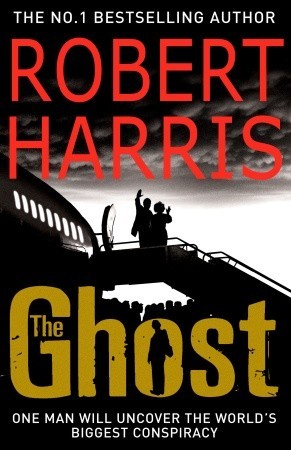
The Ghost by Robert Harris

The Ghost

4*

I have enjoyed all of Robert Harris’s books that I’ve read and The Ghost is no exceptionThe ‘ghost’ in this novel is a professional  ghostwriter employed to finish writing the memoirs of recently retired prime minister of Great Britain, Adam Peter Benet Lang. McAra, Lang’s long-term assistant, had nearly completed Lang’s memoir when he was found dead, drowned. He had gone overboard during the ferry crossing to Martha’s Vineyard, where Lang and his wife, Ruth are staying.

The setting of Martha’s Vineyard in winter reflects Lang’s mood, it is out-of-season, closed down, practically empty – as isolated as Lang himself, disconnected from the world of power he once dominated and stuck on this bleak island with his volatile wife and his aide, the beautiful Amelia Bly, who Ruth suspects is having an affair with Lang. The ghostwriter soon discovers that Lang has secrets in his past that are returning to haunt him – secrets with the power to kill. And he suspects that McAra’s death was neither an accident nor a suicide.

This is fiction, but Adam and Ruth, do have similarities to Tony and Cherie Blair. Lang is charming, personable, full of restless energy, with an engaging smile and thick wavy hair. The narrator, an unnamed writer, who Adam calls ‘man’, is a likeable character more used to ghostwriting the memoirs of footballers than politicians, who has just one month to complete Lang’s memoirs. But soon after he arrives this is reduced to two weeks when news breaks that Lang is accused of war crimes. The International Criminal Court in The Hague are investigating the allegations of Richard Rycart, the former British Foreign Secretary, that Lang had ordered the illegal handover of suspects for torture by the CIA.

I liked the details about ghostwriting from the quotes heading each chapter taken from Andrew Crofts handbook, Ghostwriting. But what I liked most about The Ghost is that it is fast- paced, full of tension and written in a straightforward linear narrative – no flashbacks or fly forwards, or multiple narrators. As in his other books  I’ve read it’s written in such a way that I feel as though I’m there with the characters taking part in the action. And his characters are distinct people, easily distinguishable from each other. In so many books I’ve read recently I’ve come across a character and have been unable to place them and have had to backtrack to find out who they are and how they fit into the plot, or the characters have similar sounding names or all begin with the same letter. Not so with The Ghost the characters have depth, the structure is clear, and there is a twist at the end that revealed the menace implied through the whole novel. Harris is a great storyteller.

My copy:

  • Paperback: 416 pages
  • Publisher: Arrow; Reprint edition (3 July 2008)
  • Language: English
  • ISBN-13: 978-009952749
  • Source: I bought the book
  • My rating: 4*