Foreign Bodies (British Library Crime Classics) edited by Martin Edwards

Poisoned Pen Press|6 March  2018 |288 pages|e-book |Review copy|3*

This edition, published in association with the British Library, has an introduction by Martin Edwards.

There are fifteen stories in this collection of vintage crime fiction in translation,  written by authors from Hungary, Japan, Denmark, India, Germany, Mexico, Belgium, the Netherlands, Russia and France. Some are detective stories in the same tradition of  Conan Doyle’s Sherlock Holmes stories, or in the same style as Agatha Christie; there are ‘locked room’ mysteries and stories mixing mystery and horror. Martin Edwards has prefaced each one with a brief biographical note, which I found useful as, unsurprisingly, the authors were all new to me, with the exception of Anton Chekhov (although I haven’t read any of his works).

Edwards presents the stories in approximately the chronological order of their publication from 1883 to 1960 and notes that these authors were writing in the same styles at much the same time as Agatha Christie and other Golden Age crime fiction writers.

When I began reading I was disappointed as I didn’t enjoy the first few stories. Short story collections are often a mixed bag and some stories are better than others, so after putting the book aside for a while I carried on reading. Some are very short and are predictable and really easy to see where they will end, but others are much more satisfying.

The ones that appealed to me the most are (in the order I read them):

The Spider (1930) by Koga Saburo who founded the Mystery Writers of Japan in 1947. His work was very popular in Japan and he wrote in the traditionalist style, favouring the puzzle element of a mystery. Edwards writes that it ‘is a pleasing fusion of macabre fiction and the classic detective puzzle‘, which explains why I like it. It’s set in a bizarre laboratory in a nine metre high round tower in which a professor is carrying out research on spiders. One night another professor visited him and fell to his death from the tower having been bitten by a poisonous spider. The circumstances of his death, however are not at all straightforward and are most ingenious. Probably my favourite story.

Murder a la Carte (1931) by Jean-Toussaint Samat, born in the Camargue, a journalist and writer of crime and adventure novels. This story is about a case of poisoning, but poisoning with a difference. A guest at a dinner party explains how to get away with murder – by using a non-poisonous substance. It’s one of the shorter stories that I did find satisfying.

The Venom of the Tarantula (1933) by Sharadindu Bandyopadhya from Bengal, educated in Calcutta, whose crime writing is similar to that of Arthur Conan Doyle. A writer called Ajit  and detective Byomkesh Bakshi join forces to investigate what is an apparently ‘impossible crime’ featuring an ingenious poisoning.  Nandadulalbabu is a hypochondriac who is writing fiction using black and red ink. He is addicted to venomous ‘spider juice’, extracted from tarantulas. His family have prevented him from getting the juice but somehow he is able to trick them and is still  getting his fix. Although I was able to work out the solution it’s still a satisfying and interesting story.

The Mystery of the Green Room (1936) by Pierre Véry from France. This story is dedicated to the memory of Gaston Leroux, and plays on the events in his story, The Mystery of the Yellow Room (1907), which I haven’t readanother ‘locked room’ whodunnit.  I enjoyed this one , particularly where the private investigator points out to the detective the similarities between the yellow room mystery to this one, the green room mystery – this is an ‘open-room’ mystery as opposed to a ‘locked-room’ puzzle.

John Flanders, born in Ghent was one of the pen-names of Jean-Raymond-Marie De Kremer. He wrote imaginative and fantastical stories and Kippers, originally written in Flemish is one of his many short stories. It’s one of the shortest stories in the book and entertained me in a very different way – it is not a puzzle or even really a mystery story, but is focused on one of Flanders’ fictional preoccupations with food and drink and as the title indicates it is a story about

Kippers, delectable, salmony kippers, smoky as a chimney, dripping with fat, one for each of us, of course, the real thing.

Even Bertie the cabin boy got one.

A sinister tale about a shipwrecked crew on a desert island that ends in horror.

My thanks to the publishers, Poisoned Pen Press, for my review copy via NetGalley.
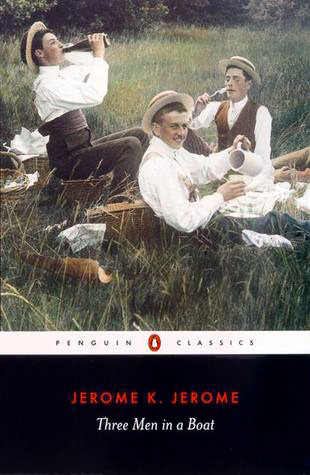
Three Men in a Boat by Jerome K Jerome

Three Men in a Boat

4*

I’ve wondered about reading Three Men in a Boat (to say nothing of the dog) by Jerome K Jerome for many years  – I first heard about it when I was at school when one of my friends read it and said she thought it was very good. And since I’ve been blogging I’ve seen that people love this book and think it’s very funny. So, I decided that it was about time that I read it.

three men map

When Jerome began writing this book he intended it to be a serious travel book about the Thames, its scenery and history, but, as he wrote it turned into a funny book.  The Thames remains at the centre of the book but it is also full of anecdotes about the events that happened to him and his friends whilst out on the river, interspersed with passages about the scenery and history. The main characters were real people, Jerome’s friends – ‘George‘ is George Wingrave who was the best man at his wedding, and ‘Harris‘ is Carl Hentschel, a photographer. Only the dog ‘Montmorency‘ is fictional.

This book was first published in 1889, which means that the descriptions of the places they passed through or stayed the night, are like a snapshot in time of what life was like in the Thames Valley, showing the how use of the river had changed with the coming of the railways for transporting goods. Cheap excursion tickets to stations along the river also meant that people could reach places like Henley, Hampton Court and Windsor as the river became the place for picnics, and regattas and hiring skiffs and punts. As time went on the river became more and more popular for fishing, boating and photography as well as a fashionable venue for young ladies to parade their elegant dresses.

It’s a story of a journey, comparing their trip to Stanley’s expedition to Africa searching for Dr Livingstone. It’s satirical, ironic and farcical.The book is composed of amusing mishaps and situations as the three friends decide what to take with them and what not to take, come across the problems of packing and unpacking the boat, where to stop the night, what food to take, and showing how they entertained themselves, for example singing comic songs, accompanied by George’s banjo, and ending in sentiment as they break down in tears singing ‘Two Lovely Black Eyes’. George’s tale of getting lost in the Hampton Court Maze made me chuckle as time after time whichever route he took he couldn’t find the way out.

I liked the way Jerome breaks up his account of their journey with recording historical events, such as his imaginative description of the signing of Magna Carta when they reach Runnymede and his account of Henry VIII’s wooing of Anne Boleyn at the priory in the grounds of Ankerwyke House, describing him as ‘that foolish boy‘ and imagining that people would have come upon them ‘when they were mooning round Windsor and Wraysbury, and have exclaimed, “Oh! you here!” and Henry would have blushed’, and Anne would have said ‘isn’t it funny? I’ve just met Mr Henry VIII in the lane, and he’s going the same way I am.’

It’s  a gentle witty book that kept me entertained all the way through – and I can’t say that for every book I read. It’s been on my Classics Club list from the first time I complied my list in 2013 and it’s also a book I’ve owned for over 11 years.

Calendar of Crime Challenge 2019

I read a lot of crime fiction so it seems only right to take part in this new challenge for 2019 devised and hosted by Bev at My Reader’s Block. This is a reading challenge that allows mystery readers to include any mystery regardless of publication date. If it falls in a mystery category (crime fiction/detective novel/police procedural/suspense/thriller/spy & espionage/hard-boiled/cozy etc.), then it counts and it does not matter if it was published in 1892 or 2019.

The Challenge runs from January 1, 2019 to December 31, 2019. All books should be read during this time period and you can sign up on Bev’s blog at any time between now and November 1, 2019.

I have summarised the rules below – for all the details see Bev’s sign up post.

  • All books must be mysteries.
  • Twelve books, one representing each month, are required for a completed challenge. Each month comes with several categories (see chart above) that may be selected to fulfil the month’s reading.
  • The “wild card” book is exactly that.
  • For the category that says “Book title contains a word that starts with the letter A,” the following do not count: “A” and “An.”
  • Books may only count for one month and one category, but they may count for other challenges.
  • Books do not have to be read during the month for which they qualify. So–if you’re feeling like a little “Christmas in July” (or May or…), then feel free to read your book for December whenever the mood strikes.

Italian Shoes by Henning Mankell

Italian Shoes

I decided to read Italian Shoes by Henning Mankell, translated by Laurie Thompson, after reading After the Fire his second book about Frederick Welin.  The events in Italian Shoes take place eight years earlier and explains in more detail Welin’s background and why he lives in self-imposed exile on an island in the Swedish archipelago. The two books can be read as standalones, but I think it would be better to read them in order to make a complete whole. These books are not Kurt Wallender mysteries but are character studies of a man living on his own, trying to come to terms with his past and reflecting on ageing and death. He cuts a hole in the ice every morning and lowers himself into the freezing water to remind himself that he is alive.

If this description makes Welin sound cold that is because he is a loner and finds it difficult to open himself up to others. He is sixty six, lives alone, apart from his cat and his dog, both of them old and dying, and he has no real friends. There is Jansson, a hypochondriac, the  postman who visits daily, but Welin doesn’t like him. He has come to a point in his life when he can’t decide what to do but suspects that his life would continue in the same way and nothing would change.

How wrong he was! That January after a snowstorm he saw a figure standing out on the ice motionless leaning on a Zimmer frame three nautical miles from the mainland. It was Harriet, the woman he had loved and abandoned nearly 40 years earlier, leaving her without any explanation. From that point onwards his life changes dramatically, for Harriet is terminally ill and wants him to take her to a small lake in northern Sweden, hidden deep in the forest; a place Welin’s father took him to once as a boy. But there are more revelations and he is forced to face the mistakes he made in the past.

The book is written in four parts, or Movements – Ice, the winter in which Welin is frozen both in his emotions and feelings, The Forest, the spring as his life and feelings begin to emerge, The Sea as his life begins to change and finally, Winter Solstice as the days start to lengthen and Welin’s new life actually begins.

I was puzzled at first by two things – the title, Italian Shoes, which seemed to be at odds with the book’s description about a man living on his own in the Swedish archipelago. the first clue comes with the quotation at the beginning of the book from Chuang Chou:

When the shoe fits, you don’t think about the feet.

Feet and shoes are mention several times throughout the book – Welin wears cut-off wellington boots most of the time – Harriet used to work in a shoe shop – and an Italian shoemaker who lives in the forest promises to make him a pair of shoes.

The second thing that made me wonder is the presence of a gigantic anthill in Welin’s living room. I do not like ants at all and the thought of an anthill next to a table in the middle of the room, almost as high as the table, swallowing up the cloth hanging down over the edge is horrific. It has been there for eleven years, containing maybe a million or more ants and Welin does not want to part with it – until the end of the book. I decided it symbolised his  inertia during the time it had been growing and he watched the ants at work. Its removal signified the change that takes place in his life.

Although this is a dark and melancholy book, as it progresses Welin begins to come to life again and to interact with others, taking responsibility for his past actions. It’s a beautifully written book, with vivid descriptions of the settings and the weather and I found it absolutely fascinating.

This book slots into the only reading challenge I’m doing this year – What’s in a Name 2018. It fits into the category of a book with a nationality in the title. It’s also one of my TBRs.

  • Format: Kindle Edition
  • File Size: 783 KB
  • Print Length: 370 pages
  • Page Numbers Source ISBN: 0099548364
  • Publisher: Vintage Digital (2 April 2009)
  • Source: I bought it
  • My Rating: 4*

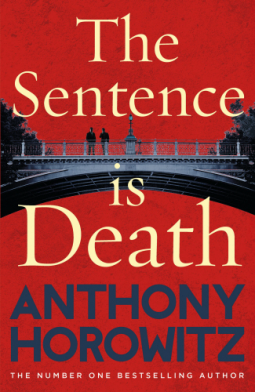
The Sentence is Death by Anthony Horowitz

5*

Random House UK Cornerstone|1 November 2018|384 pages|Review copy Last year when I read The Word is Murder I thought it was a very clever and different type of murder mystery. It features Daniel Hawthorne, an ex-policeman, now a private investigator, who the police call in to help when they have a case they call a ‘sticker’. What I found particularly interesting was the way that Anthony Horowitz inserted himself into the fiction, recruited by Hawthorne to write a book about him and the cases he investigates. In The Sentence is Death, Anthony appears again as a character, reluctantly, as he had agreed to a three-book contract with Hawthorne. At the start of the book Anthony, who wrote the script for the TV series of Foyles War, is on the set as the opening scenes in the seventh series were being shot. The rehearsal was disastrous, but it came to an abrupt end when Hawthorne interrupted the scenes by driving straight into the middle of the set to tell Anthony there had been another murder and that the police had asked for his help. Divorce lawyer Richard Pryce was found dead in his home, having been hit on the head by a wine bottle, a 1982 Chateau Lafite worth £3,000, and then stabbed to death with the broken bottle. There are several clues – there’s the number 182 written in green paint on the wall, the incredibly expensive bottle of wine when Pryce was a teetotaller, a public threat from a well known feminist writer, an unknown visitor the evening he was killed and plenty of other enemies as suspects.  There’s no doubt that Daniel is a brilliant detective, but Anthony finds him trying as he’s uncommunicative, keeping Anthony in the dark most of the time, he swears and he calls him ‘Tony’. I found it all most entertaining and perplexing, completely foxed by all the red herrings and twists and turns in the plot. But, mainly because I’d read the first book, I loved the interaction between Anthony and Daniel and had no difficulty with the mix of fact and fiction, enjoying the details about Anthony’s life as a scriptwriter as much as the mystery about the murder. I don’t think, however that you need to read The Word is Murder first because as a murder mystery The Sentence is Death works well as a standalone. But to  see how their relationship began and develops it would help to read the books in order. I loved this book as much or maybe even more than the first one and am delighted that I received a copy of this book from the publisher, via NetGalley, for review.

First Chapter First Paragraph: Rumpole by John Mortimer

Every Tuesday First Chapter, First Paragraph/Intros is hosted by Vicky of I’d Rather Be at the Beach sharing the first paragraph or two of a book she’s reading or plans to read soon.

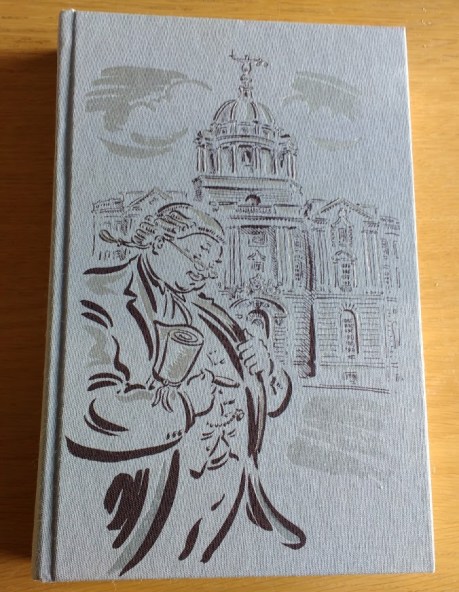
This week I’m featuring Rumpole by John Mortimer, one of the recent additions to my TBRs. There are many collections of John Mortimer’s Rumpole of the Bailey stories. My copy was published in 1994 by the Folio Society and has ten of the Rumpole stories – they are longish short stories, thirty to fortyish pages long.

Rumpole

I must thank Margot (Confessions of a Mystery Writer)  for reminding me about both the books and the TV series in her In the Spotlight post on Rumpole. The same day I read her post I went to Barter Books in Alnwick and found three books by John Mortimer, including this one, a great find! The collection Margot wrote about includes the first story in my collection, but the rest are different.

Mortimer has chosen ten of his favourite Rumpole stories, saying that they are

the stories I enjoyed writing most, those which made me laugh a little when I was writing them (the only reliable test of a successful piece of work), and which drew some laughter from the actors when they read through the television versions.

It begins with an Introduction:

About eighteen years ago I thought I needed a character, like Maigret or Sherlock Holmes, to keep me alive in my old age. I wanted a sort of detective, who could be the hero of a number of stories but whose personality and approach to life were more important than the crimes with which he was concerned. He would have to be a comic character, as well as being courageous and more than usually astute, because I believe life to be best portrayed as comedy.

and the first story is Rumpole and the Younger Generation, which begins:

I, Horace Rumpole, barrister at law, sixty-eight next birthday. Old Bailey hack, husband to Mrs Hilda Rumpole (known to me only as She Who Must Be Obeyed) and father to Nicholas Rumpole (lecturer in social studies at the University of Baltimore, (I have always been extremely proud of Nick); I who have a mind full of old murders, legal anecdotes and memorable fragments of the Oxford Book of English Verse ( Sir Arthur Quiller-Couch’s edition) together with a dependable knowledge of bloodstains, blood groups, fingerprints, and forgery by typewriter; I, who am now the oldest member of my Chambers, take up my pen at this advanced age during a lull in business (there’s not much crime about – all the best villains seem to be off on holiday in the Costa Brava) in order to write my reconstructions of some of my recent triumphs (including a number of recent disasters) in the Courts of Law, hoping thereby to turn a bob or two which won’t be immediately grabbed by the taxman, or my clerk Henry or by She Who Must Be Obeyed, and perhaps give some sort of entertainment to those, who like myself, have found in British justice a life-long subject of harmless fun.

Phew! that is just one sentence! The rest of the story is not like that and the narrative moves along briskly and as Margot says in her post there’s a great deal of wit in the stories and courtroom repartee.

What do you think? Would you keep reading?