Transworld Digital |22 May 2025| 362 pages| e-book|Review book| 5*
Description
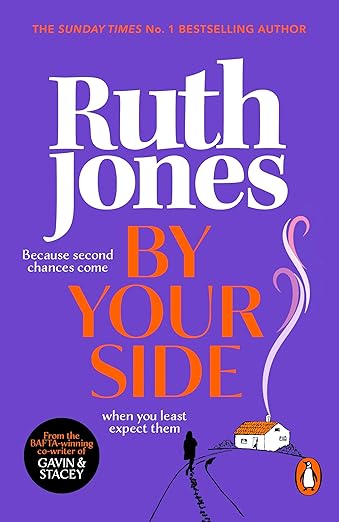
Linda Standish has been a friend to the friendless for the past thirty-three years, in her role at the council’s Unclaimed Heirs Unit. And now she’s looking forward to the joys of an early retirement.
But before she hangs up her lanyard, Linda takes on one last case – that of Levi Norman – a Welshman who made his home on a remote Scottish island for the five years before he died. Linda must visit Storrich to track down Levi’s remaining relatives . . .
What brought Levi here? And who did he leave behind? Obliged to travel (by hearse!) with her arch nemesis, and helped (and hindered…) by the local residents, Linda searches for clues to a life now lost. And in the process unexpectedly makes new friends, and discovers things about herself she never knew.
Bursting with all the heart and humour that has made Ruth’s name as a screenwriter and author, By Your Side is a joyful celebration of friendship, love and community.
I loved the TV series Gavin and Stacey which Ruth Jones co-wrote with James Corden and I loved By Your Side too. It’s the first one of her books that I’ve read but I’ll definitely look out for more to read. It’s an emotionally charged book as Linda Standish takes on her last case for the Council’s Unclaimed Heirs Unit, tracking down Levi Norman’s next of kin.
The story is told mainly from two perspectives, those of Linda and Levi. It’s told with gentle humour and laced with sadness as the details of both Levi’s and Linda’s lives are revealed. I really liked Linda, such a kind, compassionate character, who hides her vulnerability behind a confident exterior. She was looking forward to retirement and had made plans, most of which involved her four-year-old grandson, Zander, who lives with her and his father Struan. So she is devastated when she learns they will be moving to live near his ex-wife and her parents. All this just before Christmas and Linda has to travel to Storrich, the island where Levi died.
All she knows is that for the last five years seventy-five year old Levi had lived alone in Storrich, twenty miles off the mainland of Scotland. He had kept himself to himself and none of the local people knew anything about him. The story moves between their lives as Linda gradually discovers more about Levi, a Welshman, and the circumstances of his life and death.
It’s a well paced story, with wonderful characters, all well defined and believable. As I read it I could so easily hear Ruth Jones’ Welsh accent in Levi’s words. It’s a heartbreaking and poignant story, and at the same time an uplifting story, beautifully written bringing it all to life. It was a joy to read.
Many thanks to the publishers for a review copy via NetGalley.
It’s time again for Six Degrees of Separation, a monthly link-up hosted by Kate atBooks Are My Favourite and Best. Each month a book is chosen as a starting point and linked to six other books to form a chain. A book doesn’t need to be connected to all the other books on the list, only to the one next to it in the chain.
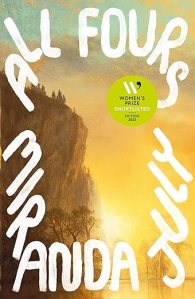
This month we start with All Fours by Miranda July, shortlisted for the Women’s Prize for Fiction 2025 and several other awards. I haven’t read it and probably won’t. This is Amazon’s description:
A semi-famous artist turns forty-five and gives herself a gift – a cross-country road trip from LA to New York, without her husband and child. But thirty minutes after setting off, she spontaneously exits the freeway, beds down in a nondescript motel – and embarks on the journey of a lifetime.
Miranda July’s second novel confirms the brilliance of her unique approach to fiction. With July’s wry voice, perfect comic timing, unabashed curiosity about human intimacy, and palpable delight in pushing boundaries, All Fours tells the story of one woman’s quest for a new kind of freedom. Part absurd entertainment, part tender reinvention of the sexual, romantic, and domestic life of a forty-five-year-old female artist, All Fours transcends expectation while excavating our beliefs about life lived as a woman. Once again, July hijacks the familiar and turns it into something new and thrillingly, profoundly alive.
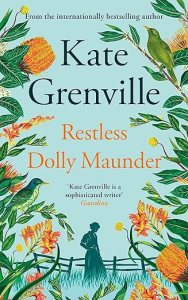
First link: I have read another book that was shortlisted for the previous year’s Women’s Prize for Fiction – Restless Dolly Maunder by Kate Grenville.
Dolly Maunder is born at the end of the 19th century, when society’s long-locked doors are just starting to creak ajar for determined women. Growing up in a poor farming family in rural New South Wales, Dolly spends her life doggedly pushing at those doors. A husband and two children do not deter her from searching for love and independence.
This is the fictionalised life story of Kate Grenville’s maternal grandmother, Sarah Catherine Maunder, known as Dolly. She was not only restless but also clever and determined – she knew what she wanted and she did her best to achieve it.
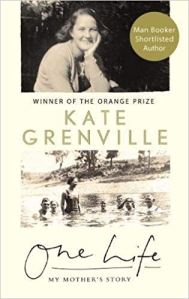
Second link: One of my favourite books by Kate Grenville is One Life: My Mother’s Story, her biography of Nance Russell, based on Nance’s memories, making it much more than a factual account of a person’s life. It’s a book that casts light not only on Nance’s life but also on life in Australia for most of the 20th century. Nance was born in 1912 and died in 2002, so she lived through two World Wars, an economic depression and a period of great social change. Nance wasn’t famous, the daughter of a rural working-class couple who became pub-keepers, but she was a remarkable woman.
It’s a vivid portrait of a real woman, a woman of great strength and determination, who had had a difficult childhood, who persevered, went to University, became a pharmacist, opened her own pharmacy, brought up her children, and helped build the family home. She faced sex discrimination and had to sell her pharmacy in order to look after her children at home.
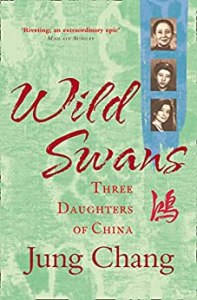
Third link: Wild Swans: Three Daughters of China by Jung Chang, a family memoir – the story of three generations of women in Jung Chang’s family – her grandmother, mother and herself, telling of their lives in China up to and during the years of the violent Cultural Revolution. Her family suffered atrociously, her father and grandmother both dying painful deaths and both her mother and father were imprisoned and tortured. She casts light on why and how Mao was able to exercise such paralysing control over the Chinese people. His magnetism and power was so strong and coupled with his immense skill at manipulation and his ability to inspire fear, it proved enough to subdue the spirit of most of the population; not to mention the absolute cruelty, torture and hardships they had to endure.
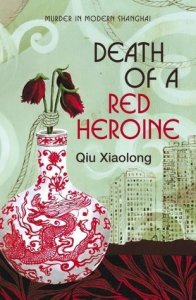
My fourth link moves from a memoir to crime fiction in Death of a Red Heroine by Qiu Xiaolong, the first book featuring Chief Inspector Chen. Chen is a reluctant policeman, he has a degree in English literature and is a published poet and translator. This is as much historical fiction as it is crime fiction. There is so much in it about China, its culture and its history before 1990 – the Communist regime and then the Cultural Revolution in the 1960s – as well as the changes brought about in the 1990s after the massacre of Tiananmen Square. This does interfere with the progress of the murder investigation as Chen has to cope with the political ramifications and consequently there are several digressions and the pace is slow and lacking tension. As Chen is a poet as well as a policeman there are also references to Chinese literature.
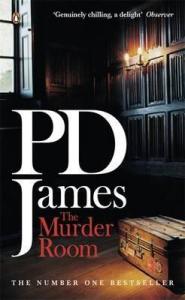
Fifth link: Another fictional Chief Inspector who writes poetry is Adam Dalgleish in The Murder Room by P D James. The Murder Room itself is in the Dupayne Museum, displaying the most notorious murder cases of the 1920s and 30s, with contemporary newspaper reports of the crimes and trials, photographs and actual exhibits from the scenes of the murders. These were actual crimes and not fictional cases made up by P D James.
The novel begins, as Adam Dalgleish visits the Dupayne in the company of his friend Conrad Ackroyd who is writing a series of articles on murder as a symbol of its age. A week later the first body is discovered at the Museum and Adam and his colleagues in Scotland Yard’s Special Investigation Squad are called in to investigate the killing, which appears to be a copycat murder of one of the 1930s’ crimes.
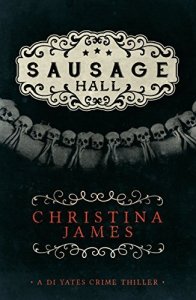
Another crime fiction writer with the surname James is my sixth link: Sausage Hall by Christina James, the third novel in the DI Yates series. It has a sinister undercurrent exploring the murky world of illegal immigrants, and a well researched historical element. It’s set in the South Lincolnshire Fens and is an intricately plotted crime mystery, uncovering a crime from the past whilst investigating a modern day murder. Sausage Hall is home to millionaire Kevan de Vries, grandson of a Dutch immigrant farmer. I liked the historical elements of the plot and the way Christina James connects the modern and historical crimes, interwoven with the history of Kevan’s home, Laurieston House, known to the locals as ‘Sausage Hall’ and the secrets of its cellar.
My chain is made up of novels shortlisted for the Women’s Prize for Fiction, a biography, a memoir and three murder mysteries. It travels from New York to the UK via Australia and China.
Where does your chain end up, I wonder?
Next month (July 5, 2025), we’ll start with the 2025 Stella Prize winner, Michelle de Kretser’s work of autofiction, Theory & Practice.
Top 5 Tuesday was created by Shanah at Bionic Book Worm, and it is now being hosted by Meeghan at Meeghan Reads. For details of all of the latest prompts for April to June, see Meeghan’s post here.
Today the topic is top 5 books with no pictures on the cover. Meegan writes: I guess this one is more of an anti-scavenger hunt? Also, it’s up to you how far you take this one. Does a pattern count as a picture? What about a single line or spot of colour? Maybe you want to go completely blank with just the words. No matter, please share your top 5 books with no pictures on the cover.
These are all books I’ve read, three nonfiction and two novels.
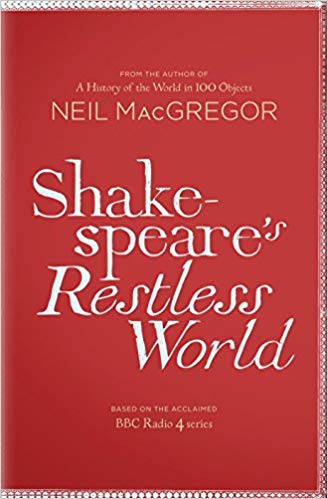
A beautiful book recreating Shakespeare’s world through examining twenty objects. It reveals so much about the people who lived then, who went to see Shakespeare’s plays in the 1590s and 1600s, and about their ideas and living conditions. Through looking at each object MacGregor explores a number of topics, including what people ate whilst watching plays, religion, medicine, the plague, magic, city life, treason, and the measuring of time. It’s all fascinating and informative, and easy to read. There are plenty of quotations from Shakespeare’s plays and puts both him and his work into context. For me, it was a new way of seeing into the past,
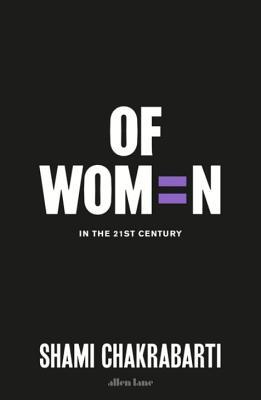
Of Women in the 21st Century by Shami Chakrabarti, a member of the House of Lords, formerly Labour’s Shadow Attorney General, and the author of On Liberty, a book about human rights violations published in 2014.
Shami Chakrabarti is passionate, and indeed angry, about the need for gender equality in her book. She examines the effects of gender injustice on a wide variety of issues in many parts of the world. In parts it reads like an academic textbook, packed full of statistics and wide ranging examples of gender injustice on a global scale. It becomes more personal however, when she writes about her own experiences her family and her background.
She covers a broad overview of many issues, rather than an in-
depth study, including violence against women, abortion, sanitary products, childcare and sex education and topics such as faith, the concept of home and displaced persons, health, wealth, education, representation, opportunity and insecurity in the 21st century. However, she remains optimistic, concluding that she believes that ‘far greater equality for women and men is realistically within our reach and well worth the stretch.’ I don’t think it is that easy and will need more than a ‘stretch’.
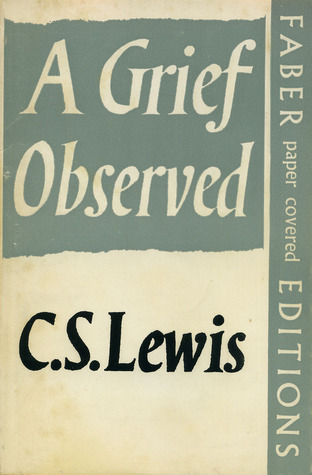
A Grief Observed by C S Lewis, another book I read before I began blogging, so no review.
Written after his wife’s tragic death as a way of surviving the “mad midnight moment,” A Grief Observed is C.S. Lewis’s honest reflection on the fundamental issues of life, death, and faith in the midst of loss. This work contains his concise, genuine reflections on that “Nothing will shake a man — or at any rate a man like me — out of his merely verbal thinking and his merely notional beliefs. He has to be knocked silly before he comes to his senses. Only torture will bring out the truth. Only under torture does he discover it himself.” This is a beautiful and unflinchingly honest record of how even a stalwart believer can lose all sense of meaning in the universe, and how he can gradually regain his bearings. (Goodreads)
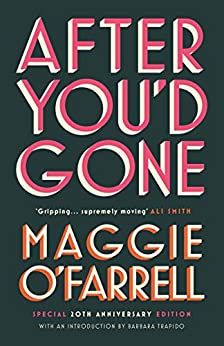
Alice is in a coma after being in road accident, which may or may not have been a suicide attempt. She has been grieving the death of her husband, John.
It’s quite a complicated story, following the life stories not only of Alice, but also those of her mother, Ann (who I didn’t like much), her grandmother, Elspeth (who I did like very much), her two sisters and of John. What was it that Alice saw at Edinburgh station that shocked her so much? You don’t find out until the end of the book, although I did have an idea before that what it meant to her and why it was so upsetting.
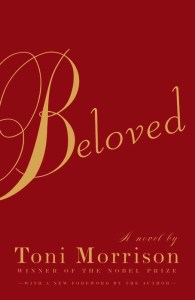
Beloved by Toni Morrison, which I read years ago before I began blogging, so I haven’t reviewed it.
Staring unflinchingly into the abyss of slavery, this spellbinding novel transforms history into a story as powerful as Exodus and as intimate as a lullaby.
Sethe, its protagonist, was born a slave and escaped to Ohio, but eighteen years later she is still not free. She has too many memories of Sweet Home, the beautiful farm where so many hideous things happened. And Sethe’s new home is haunted by the ghost of her baby, who died nameless and whose tombstone is engraved with a single word: Beloved. Filled with bitter poetry and suspense as taut as a rope, Beloved is a towering achievement by Nobel Prize laureate Toni Morrison. (Goodreads)
Top Ten Tuesday is a weekly meme created by The Broke and the Bookish and now hosted by Jana at That Artsy Reader Girl. For the rules see her blog.
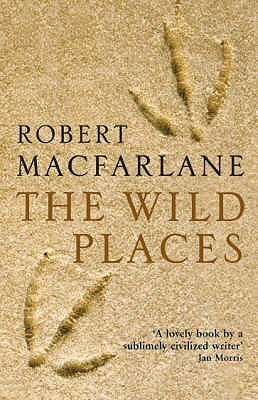
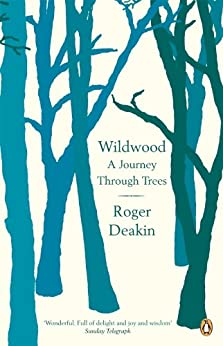
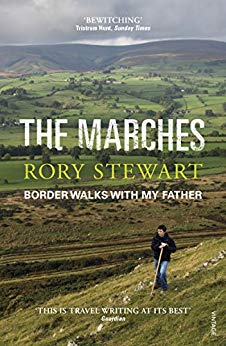
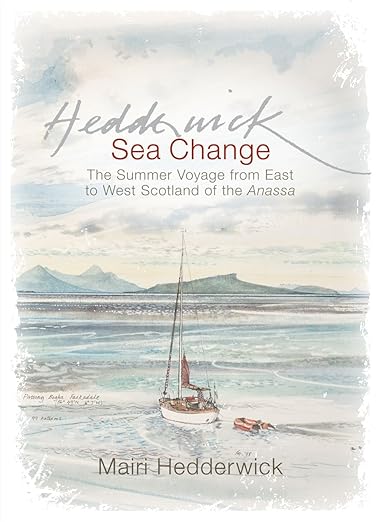
The topic today is Books that Feature Travel and the books I’ve chosen feature different types of travelling in a variety of countries – on a bicycle, on boats and ocean liners, as well as on foot. I’ve read all of them except for Sea Change, which is still sat on my bookshelves.
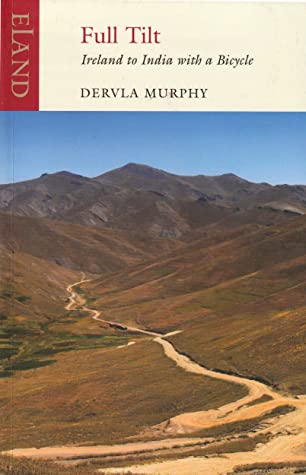
Full Tilt: Dunkirk to Delhi on a Bicycle, first published in 1965 by Dervla Murphy this is an account of her journey in 1963, which took her through Europe, Persia (Iran), Afghanistan, over the Himalayas to Pakistan and into India.
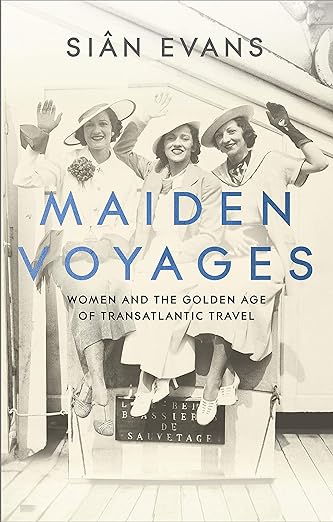
Maiden Voyages by Siân Evans – transatlantic travel between the two World Wars on magnificent ocean liners undertaken by many women. Some travelled for leisure, some for work; others to find a new life, marriage, to reinvent themselves or find new opportunities.
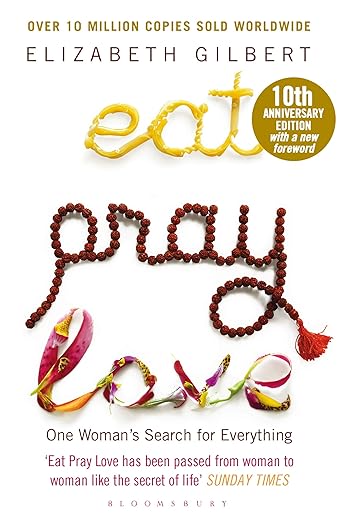
Eat, Pray, Love by Elizabeth Gilbert. She travelled to Italy (Eat), India (Pray) and Indonesia (Love) spending four months in each place, searching for pleasure in Italy, mainly through food, God in India at an ashram, and balance in Indonesia.
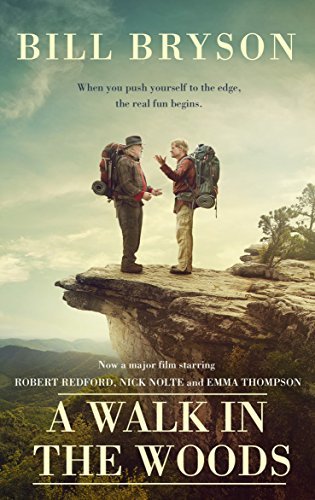
A Walk in the Woods by Bill Bryson about his hike along the Appalachian Trail, the longest continuous footpath in the world.
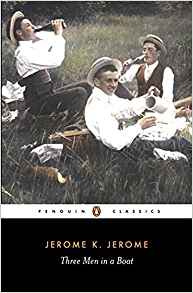
Three Men in a Boat by Jerome K Jerome, first published in 1889. He intended it to be a serious travel book about the Thames, its scenery and history, but, as he wrote it turned into a funny book. It’s a story of a journey, comparing their trip to Stanley’s expedition to Africa searching for Dr Livingstone.
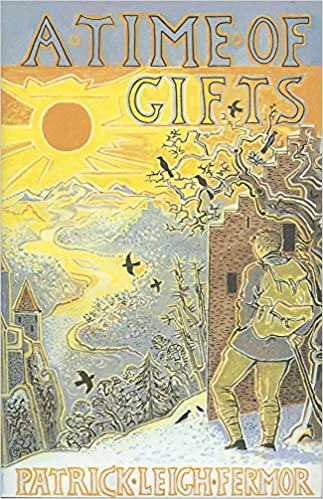
A Time of Gifts by Patrick Leigh Fermor in which he describes his travels on foot in 1933 from the Hook of Holland through Germany, to Austria, Slovakia and Hungary, on his way to Constantinople.
The Wild Places by Robert Macfarlane, with a map showing the places he visited from the cliffs of Cape Wrath, to the holloways of Dorset, the storm-beaches of Norfolk, the saltmarshes and estuaries of Essex, and the moors of Rannoch and the Pennines.
Wildwood: a Journey Through Trees by Roger Deakin about his journeys through a wide variety of trees and woods in various parts of the world. It’s a memoir, a travelogue and also it’s about the interdependence of human beings and trees
The Marches Border Walks With My Father by Rory Stewart walkingin the borderlands between England and Scotland, along Hadrian’s Wall and his coast to coast walk from Cunbria Cumbria to Berwick-upon-Tweed.
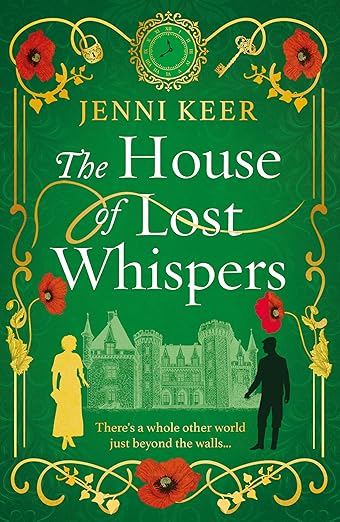
Boldwood Books|25 April 2025| 378 pages| e-book|Review book| 3*
Summary:
What if another world existed… where the Titanic had never sunk?
When the ill-fated maiden voyage of the Titanic leaves Olivia Davenport orphaned, she’s sent to live with her guardians, the Fairchilds, in their huge Jacobean mansion. But the Fairchilds have more to worry about than a grieving young girl – with war in Europe imminent and four sons to protect.
Olivia feels alone and friendless. Until she hears a voice from behind the wall in her tower bedroom. A voice from a man called Seth. Convinced he’s merely a product of her grieving imagination, it’s not until after the heartbreak of war that Olivia discovers that he exists in an overlapping world, just a shudder in time away from her own. A world where the Titanic never sank… Where everything since has been just slightly… different.
All Olivia wants is to find a way into his reality. And not just to see the faces of her beloved parents once again. But also to meet Seth. Who might just be the love of her life…
I enjoyed reading Jenni Keer’s debut novel, The Hopes and Dreams of Lucy Baker several years ago and thought I’d like to read more of her books. This one is her eighth book, so I missed the books in between. I don’t often read romance or fantasy novels but The House of Lost Whispers has both elements and it’s also historical fiction set before, during and after the First World War. I preferred the historical element, especially the middle section about the War. But I also enjoyed reading the fantasy element about the anomaly in the magnetic field surrounding the earth causing vibrations, disrupting the fabric of space and time. This resulted in the formation of a duplicate earth, one parallel with our world, in which the Titanic did not sink on 12th April 1912.
I think this is a very interesting and possibly original idea, exploring what life would have been like for Olivia and her family if the Titanic had not been sunk. The book also explores loss and grief, family life, friendship and romantic relationships, as well as the devastating and horrific events of the First World War. As described in the blurb Olivia in the ‘real’ world and Seth in the parallel world can hear each other through the wall in her tower bedroom (the whispers), but despite their efforts they cannot break through to meet.
It’s beautifully descriptive, bringing the settings to life and there is also a murder mystery to solve. My only criticisms are that at times I did get a bit confused about Seth’s character and his parallel in the ‘real’ world, and I could have done without the love scenes (too descriptive in places). As I read on I was wondering how it would end and maybe Jenni Keer wondered too because the conclusion seemed rushed and rather neatly sown up. I was a bit disappointed, although I can’t imagine how else it could have ended. But overall it kept me reading, wanting to know what would happen next.
Many thanks to the publishers for a review copy via NetGalley.
What are you currently reading? What did you recently finish reading? What do you think you’ll read next?
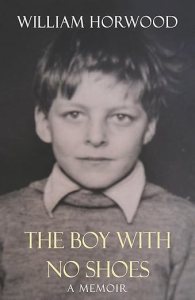
Currently I am reading The Boy With No Shoes: a Memoir by William Horwood, the author of The Duncton Chronicles an allegorical tale about the moles of Duncton Wood. It’s about his childhood in south-east England after the Second World War – the unwanted child of a mother who rejects him, and whose other children bully him.
I’m also reading The House of Lost Whispers by Jennie Kerr, a mix of historical fiction and magical realism. It begins in 1912 when thirteen-year-old Olivia goes to live at Merriford Manor with her guardians after her parents were drowned when the Titanic sank. She hears a voice through her bedroom wall. A voice from a man called Seth. At first she thinks he’s a ghost. But it soon becomes clear that he lives in an overlapping world that is just a shudder in time away from her own. I wasn’t too sure about the mix of genres, but it’s working well so far.
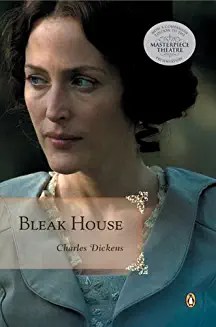
The last book I read was Bleak House by Charles Dickens, which is over 1000 pages full of description and lots of characters, about the complex and long-drawn out lawsuit of Jarndyce v Jarndyce. I’ll be writing more about it in a later post.
What will I read next? I’m thinking of reading The Curious Case of the Village in the Moonlight by Steve Wiley, a novella about Vincent Van Gogh. Van Gogh painted Starry Night whilst living in an asylum, near the village of Saint-Rémy, where a lamplighter is doing his rounds in the village. It will be his last round before electricity is installed during green hour — an absinthe-drenched celebration in his honour. The curious hour would transform the night from familiar to fantastical, with the village street lamps mysteriously vanishing.
But when the time comes I may find myself reading something different, as the mood takes me.



 BooksPlease