Saving Missy by Beth Morrey

Saving Missey

Harper Collins| 6 February 2020| 384 pages| e-book| review copy via NetGalley| 5+ stars

I absolutely loved Saving Missy, Beth Morrey’s debut novel. It is about love and loss,  family relationships, friendship, loneliness, and guilt but also about the power of kindness. It moved me to tears (not many books do that) but it is not in the least sentimental. 

Missy (Millicent) Carmichael is seventy nine, living on her own in a large house, left with sad memories of what her life used to be, a wife, mother and grandmother, but now she is alone. Her husband, Leo is no longer with her, her son and his family are in Australia and she and her daughter are estranged after a big row. And there is something else too, for Missy has a guilty secret that is gnawing away at her.

And then one morning as she is walking in the park she meets Angela and her young son Otis and their friend Sylvie. From that point on Missy’s life begins to change in a good way as she finds new friends, including a wonderful dog, Bobby. But can she let go of the past and the guilt that is crippling her emotions?

As the story follows Missy’s life in the present (told from Missy’s perspective) events from the past are also revealed – about her parents and grandparents, how she met Leo, and her struggles as a mother unable to follow the academic career she had thought was hers.

This really is a special book, full of wonderful characters, ordinary people drawn from life, about everyday events, pleasures and difficulties. I don’t want to write anymore about the book as that would reveal Missy’s secrets – for there is more than one. It conveys the misery of loneliness, and depths of despair of being stuck in memories (not all of them happy) and of the joys that friendship can bring.  It’s also about reconciliation and forgiving yourself – and last but not least, the love and companionship that a dog can give you.

Beth Morrey (from Goodreads)

Beth Morrey was inspired to write her debut novel, Saving Missy, while pushing a pram around her local park during maternity leave. Getting to know the community of dog owners, joggers, neighbours and families, she began to sow the seeds of a novel about a woman saved by the people around her, strangers who became friends. Previously Creative Director at RDF Television, Beth now writes full time. She was previously shortlisted for the Grazia-Orange First Chapter award, and had her work published in the Cambridge and Oxford May Anthologies while at university. Beth lives in London with her husband, two sons and a dog named Polly.

Many thanks to Harper Collins for a review copy via NetGalley.

My Friday Post: Deadheads by Reginald Hill

Book Beginnings Button

Every Friday Book Beginnings on Friday is hosted by Gillion at Rose City Reader where you can share the first sentence (or so) of the book you are reading, along with your initial thoughts about the sentence, impressions of the book, or anything else the opener inspires.
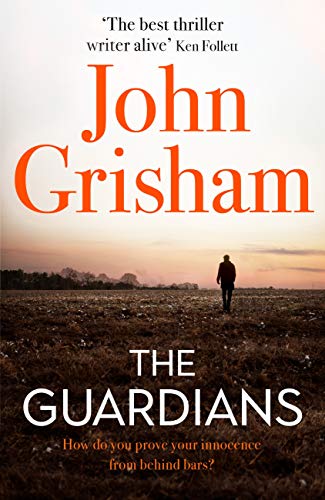
Yesterday I finished reading the 6th book in Reginald Hill’s Dalziel and Pascoe series, A Killing Kindness so I decided to look at the next book in the series Deadheads.

Deadheads


MISCHIEF

(Hybrid tea, coral and salmon, sweetly scented, excellent in the garden, susceptible to blackspot.)

Mrs Florence Aldermann was distressed by the evidence of neglect all around her.

Also every Friday there is The Friday 56, hosted by Freda at Freda’s Voice.
30879-friday2b56These are the rules:

  1. Grab a book, any book.
  2. Turn to page 56, or 56% on your eReader. If you have to improvise, that is okay.
  3. Find any sentence (or a few, just don’t spoil it) that grabs you.
  4. Post it.
  5. Add the URL to your post in the link on Freda’s most recent Friday 56 post.

Page 56:

‘Tell me, Mrs Aldermann, is there anyone you can think of who might have wanted to do you a bad turn?’

Blurb – from the back cover of my tatty secondhand copy:

Life was a bed of roses for Patrick Aldermann when his Great Aunt Florence collapsed into her Madame Louis Laperrières and he inherited Rosemont House with its splendid gardens.

But when his boss, ‘Dandy’ Dick Elgood, suggested to Peter Pascoe that Aldermann was a murderer – then retracted the accusation – the Inspector was left with a thorny problem.

By then Police Cadet Singh, Mid-Yorkshire’s first Asian copper had dug up some very interesting information about Patrick’s elegant wife, Daphne.

Superintendent Dalziel, meanwhile, was attempting to relive the days of the Empire with Singh as his tea-wallah.

~~~

Have you read this book? What did you think?

WWW Wednesday: 12 February 2020

IMG_1384-0

WWW Wednesday is run by Taking on a World of Words.

The Three Ws are:

What are you currently reading?
What did you recently finish reading?
What do you think you’ll read next?

A killing kindnessSaving MisseyCurrently reading: I’m reading A Killing Kindness, a murder mystery, the 6th Dalziel and Pascoe book by Reginald Hill and enjoying it very much.  I’m also reading Saving Missy by Beth Morrey, which I’m also enjoying. It’s a feel good story and very different from A Killing Kindness. Missy Carmichael’s life has become small. Grieving for a family she has lost or lost touch with, she’s haunted by the echoes of her footsteps in her empty home; the sound of the radio in the dark; the tick-tick-tick of the watching clock.

Happy Old Me

Recently Finished: Happy Old Me: How to Live a Long Life and Really Enjoy It by Hunter Davies. This is an account of one year in his life after his wife, Margaret Forster died – poignant, moving and very interesting. I’ll write more about later on.

Reading Next: This is a movable feast, as I rarely decide until the time comes.

It could be The Year Without Summer by  Guinevere Glasfurd. 

Year without summer

Blurb:

1815, Sumbawa Island, Indonesia
Mount Tambora explodes in a cataclysmic eruption, killing thousands. Sent to investigate, ship surgeon Henry Hogg can barely believe his eyes. Once a paradise, the island is now solid ash, the surrounding sea turned to stone. But worse is yet to come: as the ash cloud rises and covers the sun, the seasons will fail.

1816
In Switzerland, Mary Shelley finds dark inspiration. Confined inside by the unseasonable weather, thousands of famine refugees stream past her door. In Vermont, preacher Charles Whitlock begs his followers to keep faith as drought dries their wells and their livestock starve.

In Suffolk, the ambitious and lovesick painter John Constable struggles to reconcile the idyllic England he paints with the misery that surrounds him. In the Fens, farm labourer Sarah Hobbs has had enough of going hungry while the farmers flaunt their wealth. And Hope Peter, returned from the Napoleonic wars, finds his family home demolished and a fence gone up in its place. He flees to London, where he falls in with a group of revolutionaries who speak of a better life, whatever the cost. As desperation sets in, Britain becomes beset by riots – rebellion is in the air.

The Year Without Summer is the story of the books written, the art made; of the journeys taken, of the love longed for and the lives lost during that fateful year. Six separate lives, connected only by an event many thousands of miles away. Few had heard of Tambora – but none could escape its effects.

Or it could be one of my TBRs – I simply don’t know yet.

Have you read any of these books?  Do any of them tempt you? 

Top Ten Tuesday: Books with ‘Love’ in the Title

Top Ten Tuesday 2020

Top Ten Tuesday is a weekly meme created by The Broke and the Bookish and now hosted by Jana at That Artsy Reader Girl. For the rules see her blog.

The topic this week is: a Love Freebie and I’ve chosen books with the word love in the title. I haven’t read all of them, but I’ve linked the titles to my posts, for those I have read and reviewed. In no particular order they are:

  • Enduring Love by Ian McEwan – I read this many years ago. One windy spring day in the Chilterns Joe Rose’s calm, organised life and his love for his wife is shattered by a ballooning accident.
  • The Dance of Love by Angela Young –  a brilliant book, that is both a heart-rending love story and a dramatic story, as the sinking of the Titanic in 1912 and the devastating and tragic effects of the First World War impact on the characters’ lives.
  • The Tapestry of Love by Rosy Thornton –  a gentle book and yet it’s about the drama of real life, its joys and tragedies. There is romance and so much more as the story of Catherine Parkstone and her move to the Cevennes mountains in southern France, reveals.
  • Those Who Are Loved by Victoria Hislop –  Themis, a great grandmother tells her life story,  beginning from when she was a small child in the 1930s – a moving tale of an ordinary woman compelled to live an extraordinary life.
  • The Book of Love by Sarah Bower – one of my TBRS – set against the glittering background of the court of Ferrara in the early sixteenth century, this is the heart-breaking story of what happens to an innocent abroad in the world of the Borgias.
  • Love is Blind by William Boyd – one of my TBRs. Set at the end of the 19th century, it follows the fortunes of Brodie Moncur, a young Scottish musician, about to embark on the story of his life.
  • Love in the Time of Cholera – another TBR. Florentino has fallen into the arms of many delighted women, but has loved none but Fermina. Having sworn his eternal love to her, he lives for the day when he can court her again.
  • For the Love of Books by Graham Tarrant – a book to dip into, this is treasure trove of compelling facts, riveting anecdotes and extraordinary characters, that is every book-lover’s dream.
  • Women in Love by D H Lawrence – I read this many years ago. It’s about the love affairs of two sisters, Ursula with Rupert, and Gudrun with Gerald. As a sequel to The Rainbow, the novel develops experimental techniques which made Lawrence one of the most important writers of the Modernist movement – which is probably why I  found it challenging.
  • Speaking of Love by Angela Young – a novel about what happens when people who love each other don’t say so. It deals passionately and honestly with human breakdown.

The Winker by Andrew Martin

The Winker

Corsair| 6 June 2019| 272 pages| e-book| review copy via NetGalley|4 stars

I haven’t read anything by Andrew Martin before and as I began reading The Winker I found it decidedly odd and a bit creepy. I don’t like the cover at all and the title didn’t appeal to me either. But the description interested me:

London, 1976.

In Belgravia in the heat of summer, Lee Jones, a faded and embittered rock star, is checking out a group of women through the heavy cigarette smoke in a crowded pub. He makes eye contact with one, and winks. After allowing glances to linger for a while longer, he finally moves towards her.

In that moment, his programme of terror – years in the making – has begun.

Months later, the first of the many chilling headlines to come appears: ‘Police hunting winking killer.’

Meanwhile in France.

Charles Underhill, a wealthy Englishman living in Paris, has good reason to be interested in the activities of the so-called Winking Killer. With a past to hide and his future precarious, Charles is determined to discover the Winker’s identity.

In the overheating cities of London, Oxford, Paris and Nice, a game of cat and mouse develops, and catching someone’s eye becomes increasingly perilous. But if no one dares look, a killer can hide in plain sight . . .

From ‘a master of historical crime fiction’ (The Guardian), The Winker is a gripping thriller that won’t let you look away.

My thoughts:

I like the structure of this book. It is set in 1976 with flashbacks to 1951, in several locations, mainly London and Nice and sometimes in Paris and Oxford. Each time and place is clearly highlighted. The book is largely character-led. Lee Jones, a failed pop singer and psychopath is working on a ‘project’, nothing to do with music, aiming to achieve world-wide fame. He calls it a ‘programme’ and involves something he calls a ‘folder’ and his ‘trademark’. He is living in a fantasy world, accompanied by Abigail a journalist who intermittently interviews Lee. It was all a bit ambiguous at first and it took me a few pages to decide what I thought about Abigail and her role in the book. 

Then there is Charles Underhill, a man of about fifty,  living a self-imposed exile in France, because of an event in Oxford whilst he was a student there. He lives a very routine life in Paris with his mother Syl, except for his annual holiday in Nice. His routine is upset when he receives a postcard with a picture of the river at Oxford showing a boat full of university rowers, but no message on the back. When more unsigned postcards arrive he is worried that they are from Pat Price who was at the university with him in 1951.

In Nice Charles meets Howard Miller, a crime fiction writer. His first novel wasn’t a great success and he is looking for inspiration for his next novel, to prove to his father he wasn’t wasting his time. These three men are now set on a collision course as Charles offers to pay Howard for a couple of days work in Oxford to find out who had sent him the anonymous postcards. From that point onwards everything fell into place for me and I was hooked.

This is psychological crime fiction, you know right from the beginning who the ‘Winker’ is, but the precise method of the murders is not clear (at least not to me) until later in the book. And Charles’ secret is revealed quite early in the book. Neither Lee nor Charles are pleasant characters and this is decidedly a creepy tale, but it’s also a compelling one. Howard, on the other hand, is rather a naive character, who nevertheless gets to the bottom of the mystery. I loved the settings – they are so vivid and evocative of the 1970s; the places, the intense heat of the summer  of 1976, the people, their clothes, the hairstyles, sunglasses, cars, exotic cigarettes, and especially the music of the 70s, bring it all to life in technicolour. I think this is ripe for being made into a film.

Andrew Martin, a former Spectator Young Writer of the Year, grew up in Yorkshire. He has written for the Evening Standard, the Sunday Times, the Independent on Sunday and the Daily Telegraph, among others. His weekly column appears in the New Statesman and he is the author of numerous articles and books – of both fiction and non-fiction. For more information see his website.

I received a copy of this book from the publisher, via NetGalley, for review.

My Friday Post: Women of the Dunes by Sarah Maine

Book Beginnings Button

Every Friday Book Beginnings on Friday is hosted by Gillion at Rose City Reader where you can share the first sentence (or so) of the book you are reading, along with your initial thoughts about the sentence, impressions of the book, or anything else the opener inspires.

Women of the Dunes by Sarah Maine is one of the books I’m thinking I’ll read next. It’s described as: Atmospheric, intoxicating and filled with intrigue, this sweeping novel is an epic story spanning the centuries, that links three women together across history.

Women of the Dunes (1)


Prologue

West coast of Scotland, c.800 A.D., Odrhan

As the sun rose over a pale sea, Odrhan emerged from his dwelling at the end of the headland. Eyes closed, he stretched, reaching his fingertips to the sky, and felt the chill of dawn on his cheek. He offered up a prayer, and a gull’s cry was blown back on the north wind as the sun set the water asparkle.

Then the beginning of Chapter 1 :

Ullaness, 2012, Libby

When Libby Snow finally arrived, darkness was already falling. She decided to park the car anyway and walk out onto the narrow spit of land.

Also every Friday there is The Friday 56, hosted by Freda at Freda’s Voice.

30879-friday2b56These are the rules:

  1. Grab a book, any book.
  2. Turn to page 56, or 56% on your eReader. If you have to improvise, that is okay.
  3. Find any sentence (or a few, just don’t spoil it) that grabs you.
  4. Post it.
  5. Add the URL to your post in the link on Freda’s most recent Friday 56 post.

Page 56:

He stopped again, then asked: ‘How long does it take flesh to disappear in sand?’

From bizarre to macabre. ‘I’ve no idea!’

Blurb:

On the rugged, sea-lashed coast of west Scotland lies Ullaness: home to the Scottish legend of Ulla, a Viking woman who washed up on Scottish shores centuries ago. The legend will bring the stories of three different women together…

In AD 800 there is Ulla, lost in a foreign country after her lover is brutally killed. Ellen, a servant-girl in the 1800s, catches the unwanted attentions of the master of the house’s lascivious son. And, in the present day, there is Libby – an archaeologist who is determined to uncover an age-old mystery.

When a body is excavated from Ullaness – the body of someone who was murdered long ago – the mystery deepens, and the fates of the three women become ever more tightly bound.

~~~

Have you read this book? What did you think?