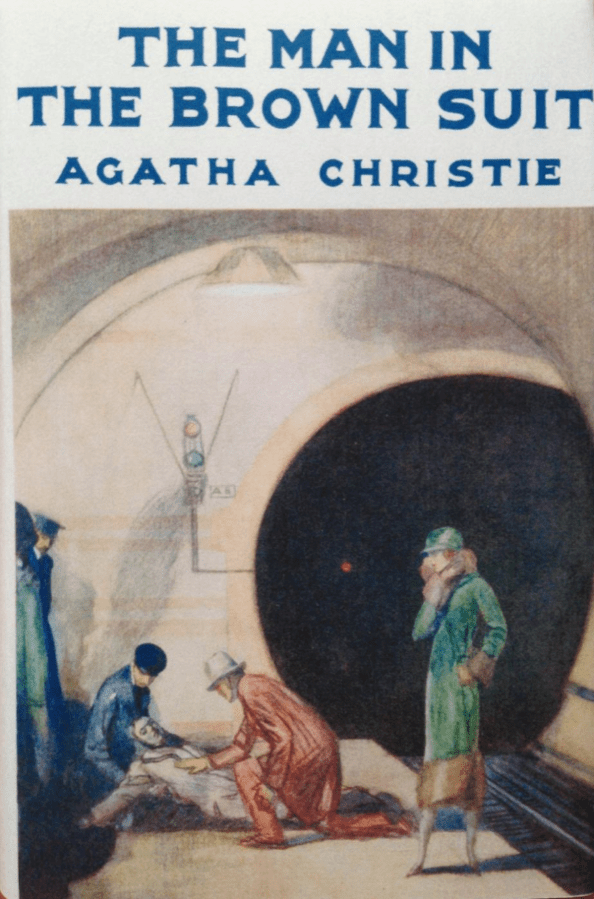
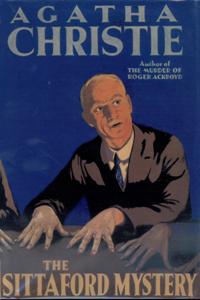
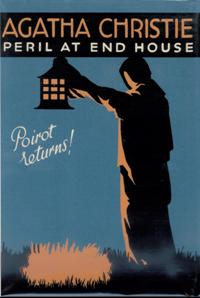
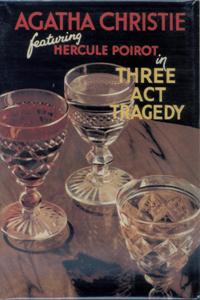
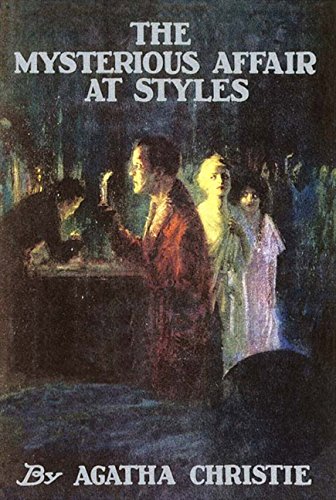
Top Ten Tuesday: First Edition Agatha Christie Book Covers

Top Ten Tuesday is a weekly meme created by The Broke and the Bookish and now hosted by Jana at That Artsy Reader Girl. For the rules see her blog. The topic this week is a Book Cover Freebie.

How it works:

There’s a new topic every Tuesday. You create your own top ten (or 2, 5, 20, etc.) list on that topic or one of your own if you wish and then link back to That Artsy Reader Girl so that others know where to find more information. If a weekly topic is listed as a “freebie”, you are invited to come up with your own topic. Sometimes she will give the freebie topic a theme, such as “love”, a season, or an upcoming holiday. That just means that you can come up with any topic you want that fits under that umbrella.

So today my top ten are twelve –

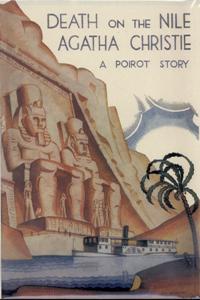
Twelve First Edition Agatha Christie book covers.

I’ve read all of Agatha Christie’s crime fiction novels and the links are to my posts – although the books I read were not first editions!

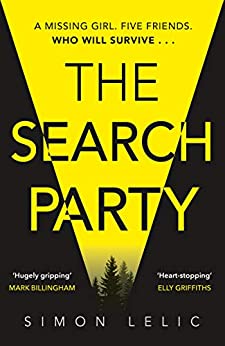
The Search Party by Simon Lelic

Rating: 4.5 out of 5.

Viking| 20 August 2020| 352 pages print length| Hardback| Review Copy

Three years ago I read The House by Simon Lelic and enjoyed it, so I was looking forward to reading The Search Party. I’m delighted to say that I think it is even better.

16-year-old Sadie Saunders is missing and five of her friends set out into the woods to find her. At the same time the police’s investigation, led by Detective Inspector Robin Fleet and Detective Sergeant Nicola Collins, is underway. The narrative alternates between the two groups. Sadie is a clever girl, popular with her school friends and loved by her parents, who favour her over her twin brother Luke and their younger brother, Dylan.

The opening lines propelled me straight into the story as one of Sadie’s friends, lost in the woods her makes an incoherent phone call to the emergency services. The caller doesn’t know their location other than it is ‘somewhere in the woods‘ near an abandoned building. And from that point on I was gripped, compelled to follow this complex novel, full of red herrings and multiple twists and turns. It is tense from start to finish, ending in an exhausting and terrifying chase that had me on the edge of my seat!

I really like Fleet, and the way he stands up to his boss, Superintendent Burton, whose main concern is the cost of the investigation. Burton puts pressure on him to arrest Mason, assuming he has killed Sadie even though her body has not been found. Mason is part of the search party, but Fleet’s instincts tell him Mason is innocent. Fleet is known for his ability to find missing persons and sticks to his gut feelings.

My only criticism is that at times the teenagers’ rambling discussions about what could have happened to Sadie and their disagreements went on too long for my liking. But that is just a minor point. They are all keeping secrets and in their interviews with the police they all lie and withhold vital facts and they are suspicious of each other, not knowing who they can trust. And I couldn’t decide what had happened to Sadie – had she run away, committed suicide or was she murdered and if so who was the murderer. They are all suspects, including Sadie’s parents. It was only just before the end of the book that I realised just what had happened.

My thanks to NetGalley and Viking, the publishers for a review copy.

My Friday Post: Hamnet by Maggie O’Farrell

Every Friday Book Beginnings on Friday is hosted by Gillion at Rose City Reader where you can share the first sentence (or so) of the book you are reading. You can also share from a book you want to highlight just because it caught your fancy.

My extracts today are from Hamnet by Maggie O’Farrell, one of my favourite authors, and the winner of this year’s Woman’s Prize for Fiction. I’ve just started to read it.

The book begins:

A boy is coming down the stairs.

Also every Friday there is The Friday 56, hosted by Freda at Freda’s Voice. *Grab a book, any book. *Turn to Page 56 or 56% on your  ereader . If you have to improvise, that is okay. *Find a snippet, short and sweet, but no spoilers!

  1. Grab a book, any book.
  2. Turn to page 56, or 56% on your eReader. If you have to improvise, that is okay.
  3. Find any sentence (or a few, just don’t spoil it) that grabs you.
  4. Post it.
  5. Add the URL to your post in the link on Freda’s most recent Friday 56 post.

Hamnet climbs the stairs, breathing hard after his run through the town. It seems to drain his strength, putting one leg in front of the other, lifting each foot to each stair. He uses the handrail to haul himself along.

~~~

What a coincidence that both the opening paragraph and the extract from page 56 are about Hamnet climbing the stairs – first down and then up.

On a summer’s day in 1596, a young girl in Stratford-upon-Avon takes to her bed with a fever. Her twin brother, Hamnet, searches everywhere for help. Why is nobody at home? 

This is historical fiction inspired by Hamnet, Shakespeare’s son and is a story of the bond between twins.

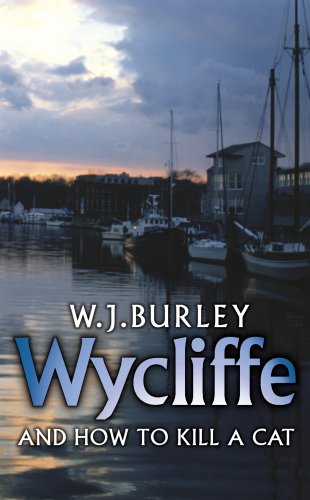
Wycliffe and How To Kill a Cat by W J Burley

W.J. Burley (1914 – 2002) was first an engineer, and later went to Balliol to read zoology as a mature student. On leaving Oxford he went into teaching and, until his retirement, was senior biology master in a large mixed grammar school in Newquay. He created Wycliffe in 1966 and the series was televised in the 1990s with Jack Shepherd starring in the title role. But I’ve never watched any of them. Set in Cornwall, they have a strong sense of place, and Wycliffe is a quiet, thoughtful detective.

Wycliffe and How to Kill a Cat is the second book in the series and is the 7th one I’ve read. It was first published in 1970 as To Kill a Cat. It’s well written, with descriptions of the coast of Cornwall, firmly set in the late 1960s, specifically at the time of the astronauts first moon landing in July 1969. At one point Wycliffe reflects on the fact that a quarter of a million miles away men were walking on the moon.

Superintendent Wycliffe, despite being on holiday can’t help getting involved when a young woman is found murdered in her seedy hotel bedroom. She’d been strangled and her face had been savagely smashed in. A thousand pounds was still in a drawer, hidden beneath her clothes, so the motive wasn’t theft.

It’s a complex story that kept me guessing to the end. Once Wycliffe had established the young woman’s identity, there were several suspects he investigated, including her husband, a meek man whose mother dominated him and his aunt who doted on him, or maybe it was the owner of the nightclub, the Voodoo where she’d worked, or one of its patrons. I kept thinking it was this person and then that person …

I like Wycliffe, a quiet man who works on instinct, but I did feel sorry for his wife, left very much on her own as he occupied himself on investigating the murder – after all they were supposed to be on holiday. She doesn’t complain. Instead she made friends with some local people and went out with them in their motor launch to explore a bit of Du Maurier country.

Wycliffe is a comparative newcomer to the area and the divisional inspector, Inspector Fehling’s first impression of him was not favourable. He thought that Wycliffe did not look like a policeman. He didn’t look ‘tall enough and he seemed almost frail. A teacher, some kind of academic, perhaps a parson, but never a policeman.’ This reminded me that there used to be a minimum height requirement for policemen of 5ft 8in tall.

These two extracts describe how Wycliffe worked:

“Wycliffe stood for a while, apparently lost in thought. Actually, though ideas chased each other through his mind they could hardly be said to have any pattern of rational consecutive thought.”

“It was when he made an effort to think in a disciplined way about anything that he was most conscious of his shortcomings. And this reflection brought him back to the case. Not only did he find sus­tained logical thought difficult but he was always short of written data. He had the official reports but these were so full as to be almost useless. Any other detective would have a sheaf of private notes, but he rarely wrote anything down and if he did he either lost it or threw it away. Notes were repugnant to him. Even now he ought to be sitting at a desk with a notepad in front of him, jotting down his ideas, transposing and relating facts like a jig-saw.”

This is police procedural, reflecting the social values and attitudes of the 1960s. It’s an early book in the series, but I think it clearly shows Wycliffe’s character and the way he worked. I’ve read the books in the series totally out of order, so it was good to read the second one. I’m still wondering about the title as there are no details in it about how to kill a cat! I’m hoping to read the first one – Wycliffe and the Three Toed Pussy, which despite its title is not about an actual cat either, but about a young woman with a deformed foot.

Top Ten Tuesday: Series I’m Reading

  • Vera Stanhope by Ann Cleeves – I’ve not read books 2 and 3. The latest one, the 9th was published this month – The Darkest Evening.
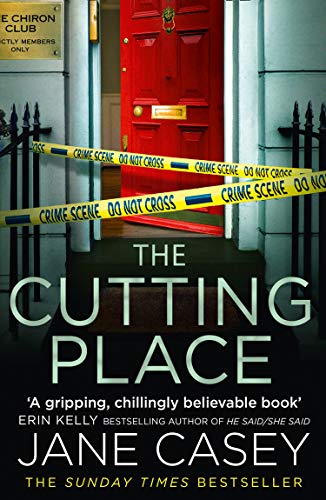
  • Maeve Kerrigan by Jane Casey – I’ve read 7, with 2 novellas and 2 more books to read.
  • Inspector Rebus by Ian Rankin – I’ve read 22. Book 23 A Song for the Dark Times is out on 1 October.
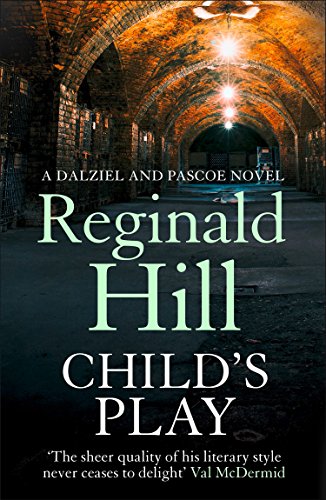
  • Dalziel and Pascoe by Reginald Hill – 24 books. I started by reading them out of order and am now filling in the gaps. So far I have read 13.
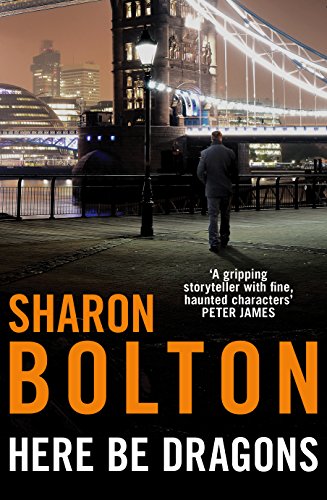
  • Lacey Flint by Sharon Bolton – I’ve read all 4 books and there is a novella, Here Be Dragons, which I haven’t read yet.
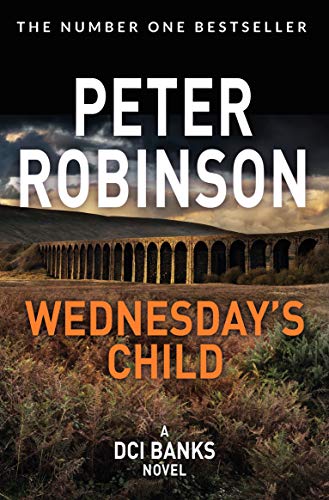
  • DCI Banks by Peter Robinson – another series I began reading out of order and am now filling in the gaps. There are 26 books and I’ve read 11 of them
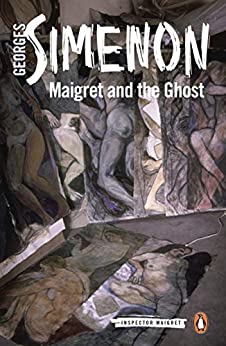
  • Inspector Maigret by Georges Simenon – there are 75 and I’ve read 11 of them.
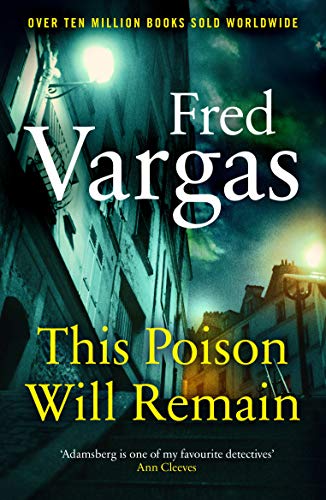
  • Commissaire Adamsberg by Fred Vargas – 9 books and I’ve read 5 of them.
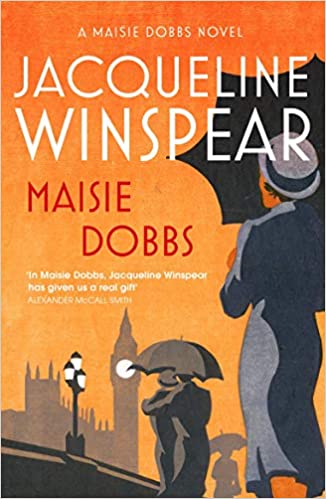
  • Maisie Dobbs by Jacqueline Winspear – 15 books and I’ve read just 3 of them.
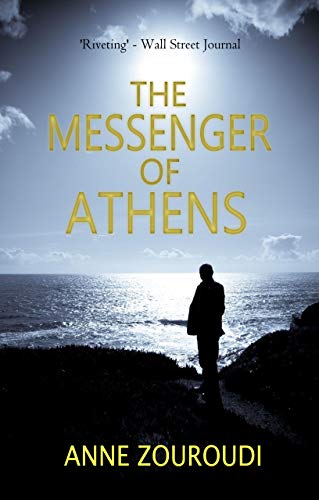
  • The Greek Detective by Anne Zouroudi – 9 books and I’ve read 3 of them.

R.I.P. XV

R.eaders I.mbibing P.eril (R.I.P.) is all about reading Mystery, Suspense, Thriller, Dark Fantasy, Gothic, Horror or Supernatural books. This year there are no rules – just read the books during September and October. You can join in with others if you have Instagram or on Twitter, where you can follow the event @perilreaders and if you post, use the tag #ripxv.

Here is a list of some of the choices I have on my TBR. I shan’t read all of these but I like to think I’ll read at least one or two of them – but if other books appeal to me I could very well read them instead.

  • The Ghost of the Mary Celeste by Valerie Gordon
  • The Wasp Factory by Iain Banks
  • Poirot Investigates by Agatha Christie
  • The Rottweiler by Ruth Rendell
  • The Chimney Sweeper’s Boy by Barbara Vine
  • With Our Blessing by Jo Spain
  • The Woman in Black by Susan Hill
  • The Haunting of Hill House by Shirley Jackson
  • Black Water Lilies by Michel Bussi
  • The Girl with the Dragon Tattoo by Stieg Larsson