Top Ten Tuesday: Books with Water on the Covers

Top Ten Tuesday is a weekly meme created by The Broke and the Bookish and now hosted by Jana at That Artsy Reader Girl. For the rules see her blog. The topic this week is Water (This can be covers with water on them, books with bodies of water in them, titles with bodies of water in them, etc.)

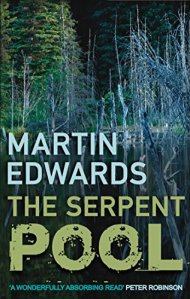
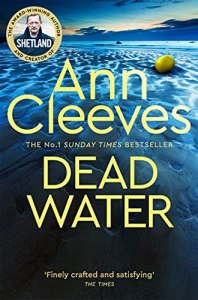
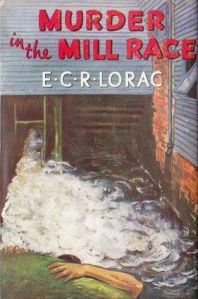
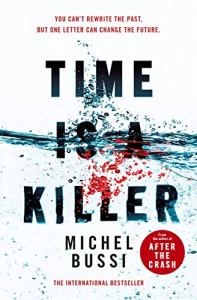
These are all books I’ve read. Some have the word Water in the title and all show scenes with bodies of water on their covers. And they are all crime fiction. It seems fictional murders at least often take place in or near water.

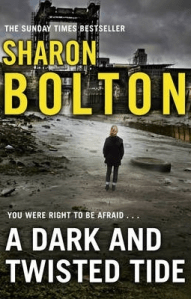
A Dark and Twisted Tide by Sharon Bolton – PC Lacey Flint is a police constable with the Metropolitan Police’s Marine Unit on the River Thames, living on a houseboat in Deptford Creek. Lacey loves swimming and is perfectly at home in water, so much so that she wild-swims in the Thames as often as tide and conditions allow, loving it so much that she feels she has become part of the river. It’s a multi-layered book, told from different characters’ perspectives, complex and chilling as it weaves its way through murders, people trafficking, and a mysterious character called ‘the swimmer’.

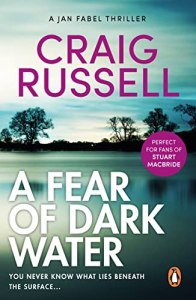
A Fear of Dark Water by Craig Russell – the sixth book in the Jan Fabel series, the head of Hamburg’s Murder Commission. A massive storm hits Hamburg, flooding the city, just as a major environmental summit is about to start.  A serial rapist and murderer is still at large in the city and when the flood waters recede a headless torso is found washed up. Initially it’s thought to be another victim of the killer, who had dumped his victims’ bodies in waterways around the city.

The Serpent Pool by Martin Edwards – the main characters are DCI Hannah Scarlet, in charge of the Cumbria’s Cold Case Team, her partner Marc Amos, a rare book dealer and Daniel Kind, a historian and the son of Hannah’s former boss, Ben Kind. Hannah is investigating the apparent suicide of Bethany Friend who had drowned 6 years earlier in the Serpent Pool, a lonely, isolated place below the Serpent Tower, a folly high on a ridge. The book begins with the death of George Saffell, one of Marc’s customers, stabbed and then burnt to death amidst his collection of rare and valuable books.The motive for his killing, the subsequent death of another of Marc’s customers, Stuart Wagg, and the connection with the cold case Hannah is investigating gradually become clear.

Dead Water by Ann Cleeves – the first book in her Shetland Quartet. Rhona Laing, the Fiscal, finds journalist Jerry Markham lying dead, drifting in a yoal, a traditional Shetland boat in Aith marina. Markham, a Shetlander visiting his parents, was apparently working on a story for a national newspaper – maybe about the development of renewable energy proposed for Shetland, or maybe his reason was more personal? Detective Inspector Jimmy Perez is not the man he once was, since the death of his fiancée and at first he takes a back seat in the investigations, led by Detective Inspector Willow Reeves (originally from the Hebrides) who is drafted in from the Inverness team to head up the investigation. But eventually his natural curiosity takes over and he decides to help the inquiry, and his knowledge of the local community is vital in catching the killer.

Murder in the Mill Race by E C R Lorac – Dr Raymond Ferens and his wife move to a practice at Milham in the Moor in North Devon. Everyone says that Sister Monica, warden of a children’s home, is a saint – but is she? A few months after the Ferens’ arrival her body is found drowned in the mill race. Chief Inspector Macdonald faces one of his most difficult cases in a village determined not to betray its dark secrets to a stranger.

Time is a Killer by Michel Bussi – Every summer Clotilde, her brother, Nicolas and her parents, Paul and Palma Idrissi visit Paul’s parents in Corsica. Twenty seven years earlier her parents and brother were killed in a car crash. Her grandparents are still alive but are reluctant to talk about the accident and the locals seem to resent her presence. She’d kept a diary, writing about her holiday, her family and friends, but had left it behind just before they all set off in the car and after the accident it had disappeared. As Clotilde delves into her memories she begins to realise that the past is not quite as she thought it was.

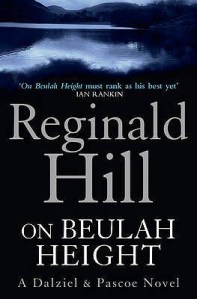
On Beulah Height by Reginald Hill, the 17th Dalziel and Pascoe novel, a complex book, that begins with a transcript written by Betsy Allgood, then aged seven, telling what had happened in the little village of Dendale in Yorkshire before the valley was flooded to provide a reservoir. That summer three little girls had gone missing. No bodies were ever found, and the best suspect, a strange lad named Benny Lightfoot, was held for a time, then released. Fifteen years later another little girl, Lorraine, also aged seven went out for a walk one morning with her dog before her parents got up and didn’t return home, reviving memories of the missing children from fifteen years earlier.

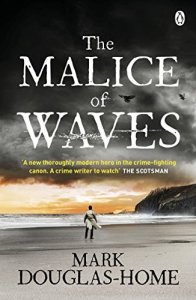
The Malice of Waves by Mark Douglas-Home, Cal McGill is an oceanographer, who works for environmental organisations tracking oil spills using wind speeds and data on ocean currents. Known as the Sea Detective he uses his expertise in tracking human bodies and sea-borne objects. So when the police investigations failed to discover what had happened to Max Wheeler who had disappeared from a remote Scottish island, his family asked Cal for his help. It is a fascinating book, not only an engrossing mystery, but also a study of the sea, of birds’ eggs (I had never heard of erythristic eggs before), of obsessions and of the way people cope, or don’t cope with grief.

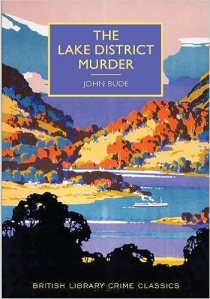
The Lake District Murder by John Bude – a police procedural, showing in intricate detail how the detectives investigate a crime. In this case a body is discovered in a car outside a lonely garage on a little used road. At first it appears that Jack Clayton one of the garage owners had committed suicide, but there are a couple of clues pointing to murder and when Inspector Meredith discovers that Clayton was planning to marry and move abroad it turns into a murder investigation. This book really takes you back in time. It was first published in 1935, which means that police methods of investigations particularly in rural areas were very different. Inspector Meredith uses buses or trains or travels the local roads on a motor cycle with a side car and pops into the local post office to use the telephone. It’s a slow process.

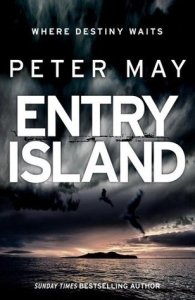
Entry Island by Peter May, set in the present day Magdalen Islands, part of the province of Quebec, in the Gulf of St Lawrence, and in the nineteenth century on the Isle of Lewis at the time of the Highland Clearances.  It mixes together two stories and two genres, crime fiction and historical fiction. It has a strong sense of place in both locations and beautiful descriptions of the landscape. Detective Sime Mackenzie, based in Montreal is part of the team sent to Entry Island to investigate the death of the wealthy businessman, James Cowell found stabbed to death. His wife, Kirsty is the obvious suspect. Sime is suffering from insomnia, a situation made worse by the fact that his ex-wife is also on the investigating team. 

Top Ten Tuesday: Crime Fiction

Top Ten Tuesday is a weekly meme created by The Broke and the Bookish and now hosted by Jana at That Artsy Reader Girl. For the rules see her blog. The topic this week is Genre Freebie and I’ve decided to list ten crime fiction books from my TBR lists (physical and e-books).

Links from each title will take you to the description on Goodreads.

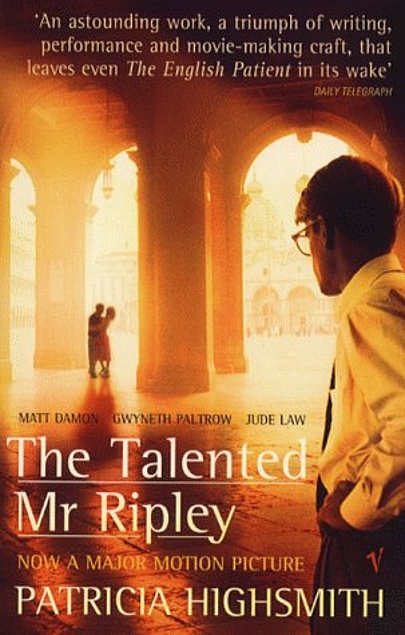
The Talented Mr Ripley by Patricia Highsmith

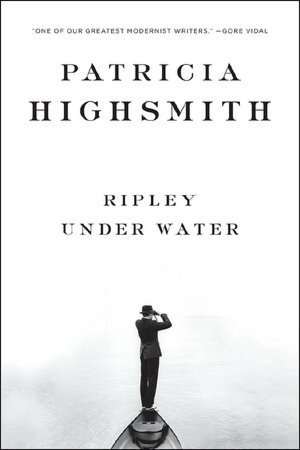
Ripley Under Water by Patricia Highsmith

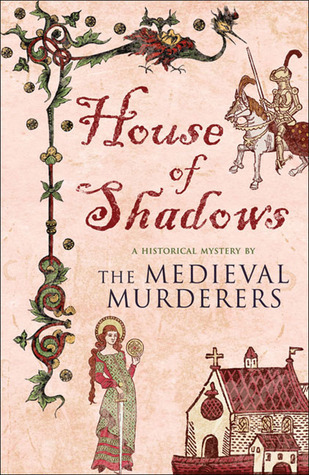
House of Shadows  by the Medieval Murderers

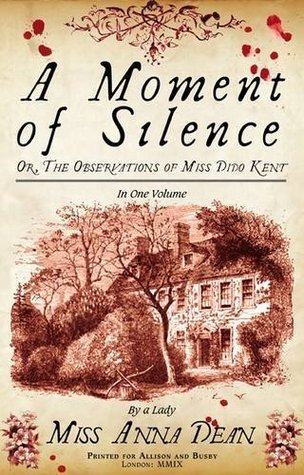
A Moment of Silence  by Anna Dean

The Twist of the Knife by Anthony Horowitz

Standing in the Shadows by Peter Robinson

As the Crow Flies by Damien Boyd

The Girl Next Door by Ruth Rendell

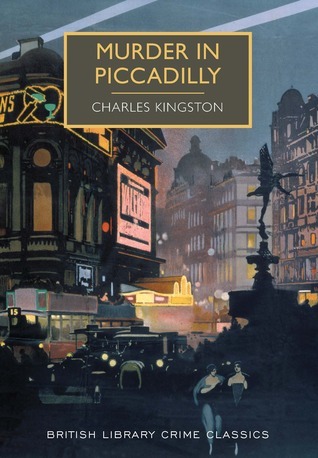
Murder in Piccadilly by Charles Kingston

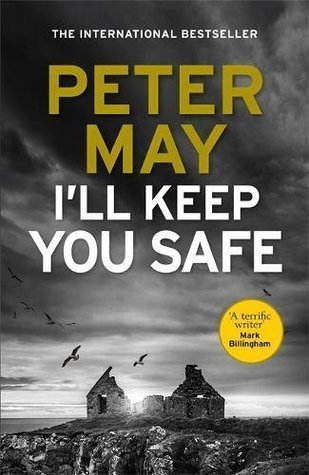
I’ll Keep You Safe by Peter May

Top Ten Tuesday: Books with One-Word Titles

Top Ten Tuesday is a weekly meme created by The Broke and the Bookish and now hosted by Jana at That Artsy Reader Girl. For the rules see her blog. The topic this week is Books with One-Word Titles. I last did a Top Ten post on this topic in March 2020, so the books I’ve chosen are all books I’ve read since then.

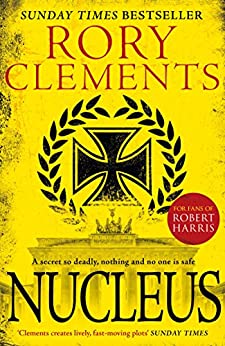
Nucleus by Rory Clements – the second book in his Tom Wilde spy thriller series. This one is set in 1939 on the eve of the Second World War. It is a fast-paced and gripping book, involving murder, IRA bombers, and espionage, with many twists and turns.

Undercurrent by Barney Norris, a novel telling the story of a family’s grief and loss as well as love. This is a quiet thoughtful book that explores the nature of our relationships and emotions.

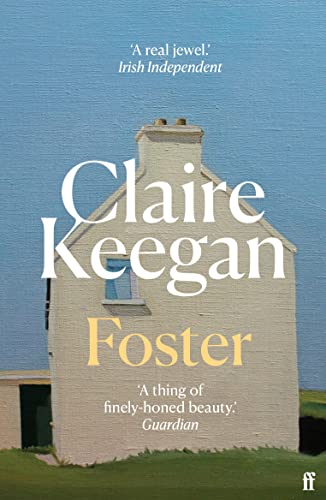
Foster by Claire Keegan, a novella about a young girl who is sent to live with foster parents on a farm in rural Ireland, without knowing when she will return home. Claire Keegan’s style of writing is precise, focused, and beautifully written bringing her characters to life – these are real, ordinary people, living ordinary lives.

Exit by Belinda Bauer – what initially looks like a novel considering the ethics of assisted suicide this turns into crime fiction and becomes a borderline ‘cosy’ murder mystery, verging on farce in places. The ending is bitter sweet. I began not sure I really wanted to read Exit and ended it feeling I’m glad I did. It’s unlike anything else I’ve read!

Orlando by Virginia Woolf is a fictionalised biography of Vita Sackville-West, based on her life. It tells the tale of an extraordinary individual who lives through centuries of English history, first as a man, then as a woman; and his/her struggle to find fame and immortality not through actions, but through the written word. 

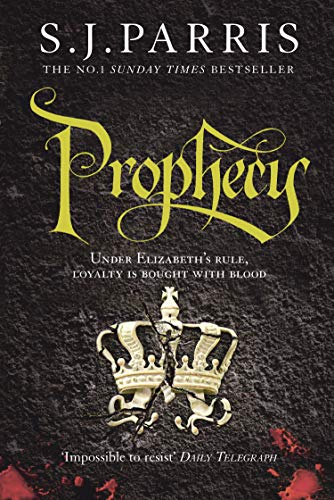
Prophecy by S J Parris is the second book in her Giordano Bruno series of historical thrillers. Giordano Bruno was a 16th century heretic philosopher and spy. It begins in the autumn of 1583, when Elizabeth the First’s throne is in peril, threatened by Mary Stuart’s supporters scheme to usurp the rightful monarch.

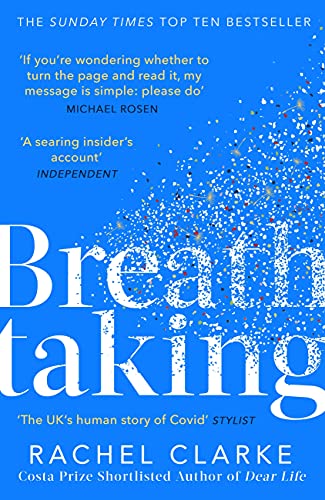
Breathtaking by Rachel Clarke. She is a palliative care doctor and her book recounts her experiences during the first four months of 2020, when she worked on the Covid-19 wards in the Oxford University Hospitals system. It records the compassion and kindness of numerous people, and pays tribute to both NHS staff and volunteers in dealing with such a distressing and immensely horrific situation.

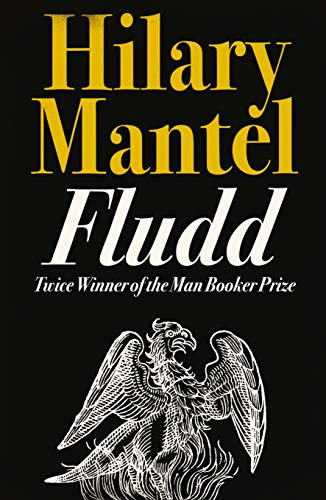
Fludd by Hilary Mantel, a fantasy, a fairy tale, told with wit and humour with brilliant characterisation. It is 1956, set in the north of England in the fictional village of Fetherhoughton, which is loosely based on the village where Mantel grew up. She was brought up as a Catholic and the idea for the story came from a conversation with her mother about her childhood.

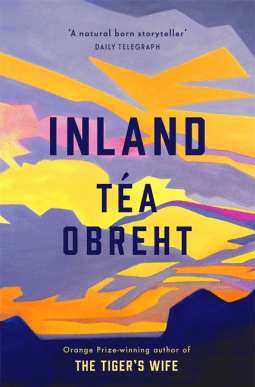
Inland by Téa Obreht is a book of two halves, alternating between two storylines. The first story about Lurie is slow and meandering as he makes an expedition across the American West. The second story of Nora Lark and her family, which is more interesting. They are living in Arizona in a homestead. There’s been no rain for months and their water supply is nearly exhausted.

Sword by Bogdan Teodorescu – set in Romania where a serial killer is on the loose. This is a complex novel, a political thriller focusing on the political and social dimensions of the racial conflict between the Romanians and the Roma or ‘gypsies’. 

Top Ten Tuesday: Ten Random Books from My Shelves

Top Ten Tuesday is a weekly meme created by The Broke and the Bookish and now hosted by Jana at That Artsy Reader Girl. For the rules see her blog. The topic this week is The First 10 Books I Randomly Grabbed from My Shelf (And tell us what you thought if you’ve read them!) It was difficult to be random as my bookshelves are mostly double stacked and in different rooms in the house but these are the ones I sort of picked randomly from my bookshelves. I’ve read some of them – see those marked with an * for my thoughts about them:

 * The Murder of Roger Ackroyd by Agatha Christie, one of my favourite of her books. Set in the village of King’s Abbot, the story begins with the death of Mrs Ferrars, a wealthy widow. The local doctor, Dr Sheppard suspects it is suicide. The following evening Roger Ackroyd, a wealthy widower who it was rumoured would marry Mrs Ferrars, is found murdered in his study. Poirot is asked to investigate the murder and he enlists Dr Sheppard, who lives next door with his sister Caroline, to help him.

Completely Unexpected Tales by Roald Dahl, described on the back cover as a collection of macabre tales of vengeance, surprise and dark delights. I used to enjoy these tales in the TV series, Tales of the Unexpected, years ago. I’ve read some of these.

*The Saints of the Shadow Bible by Ian Rankin, one of his best Rebus books– a realistic and completely baffling mystery, a complex, multi-layered case, linking back to one of Rebus’s early cases on the force as a young Detective Constable. There are suspicions that Rebus and his colleagues, who called themselves ‘The Saints of the Shadow Bible’ were involved in covering up a crime, allowing a murderer to go free.

*The Way Through the Woods by Colin Dexter. Morse and Sergeant Lewis investigate the case of a beautiful young Swedish tourist who had disappeared on a hot summer’s day somewhere near Oxford twelve months earlier. After unsuccessfully searching the woods of the nearby Blenheim Estate the case was unsolved, and Karin Eriksson had been recorded as a missing person. A year later more evidence comes to light and Morse re-opens the case.

*On Giants’ Shoulders: Great Scientists and Their Discoveries From Archimedes to DNA: by Melvyn Bragg. An excellent book for a non scientist like me. I read it years ago long before I had a blog, so no review. It focuses on 12 scientists and is compiled from a series of interviews with leading scientists and historians in each field, on BBC Radio 4 in 1998.

*Howards End is on the Landing by Susan Hill, an interesting little book which takes a look at some of the books in Susan’s three storey country house in Gloucestershire. She had decided to take a year off  from buying new books and to read or re-read books from her own collection. It’s full of lots of references to books and authors, some known to me and others not and Susan’s personal anecdotes.

Never Mind the Quantocks:How Country Walking Can Change Your Life by Stuart Maconie, a collection of essays from his monthly column in Country Walking, full of the beautiful places, magical moments and wonderful characters he has encountered on his travels. I haven’t read this yet. It covers a variety of topics – The Walking Bug, The Right to Roam, Oases of Calm and Sea Fever, to name but a few.

The Wood Beyond by Reginald Hill, another book I haven’t read yet. When animal-rights activists uncover a long-dead uniformed body in the grounds of Wanwood House, a research facility, Dalziel is presented with a seemingly insoluble mystery. And he is further perplexed when he’s attracted to one of the campaigners – now implicated in a murderous assault. Meanwhile, the death of his grandmother has led Peter Pascoe to the battlefields of World War 1 and the enigma of who his grandfather was – and why he had to die.

*Life After Life by Kate Atkinson. I wasn’t at all sure that I would like this book as I began reading it soon after I bought it (in 2013) and didn’t get very far before I decided to put it to one side for a while. A ‘while’ became years – and then at the end of 2016 I read A God in Ruins about Ursula’s brother Teddy, and loved it and decided to try Life After Life again and this time I loved it. During the book Ursula dies many deaths and there are several different versions that her life takes over the course of the twentieth century.

*Freedom in Exile the Autobiography by The Dalai Lama. He tells his story in English. He fled Tibet in 1959 and since then has lived in exile. This is another book I read years ago, long before I had a blog, so no review. He writes about his childhood, describing what it was like to grow up revered as a deity, and about his escape into India across the Himalayas along with the sense of loss in leaving his country behind.

Top Ten Tuesday: Books with Animals in the Titles/on the Covers

Top Ten Tuesday is a weekly meme created by The Broke and the Bookish and now hosted by Jana at That Artsy Reader Girl. For the rules see her blog. The topic this week is Books with Animals in the Titles/on the Covers

These are all books I’ve read.

 Magpie Murders by Anthony Horowitz

The Guest Cat by Takashi Hiraide

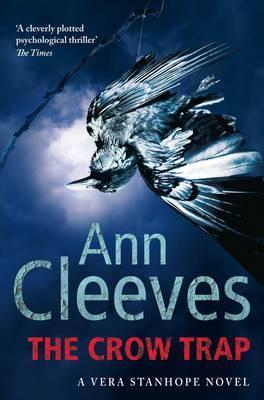
The Crow Trap by Ann Cleeves

To Kill a Mockingbird by Harper Lee

How to Catch a Mole by Marc Hamer

Cat Among the Pigeons by Agatha Christie

The Case of the Lame Canary by Erle Stanley Gardner

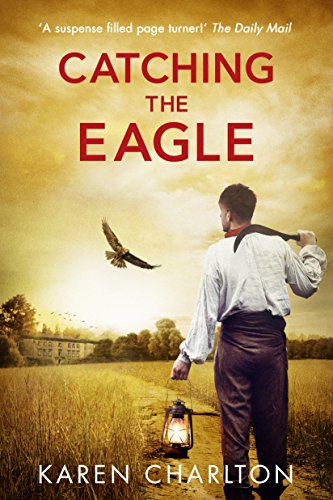
Catching the Eagle by Karen Charlton

The Raven’s Head by Karen Maitland

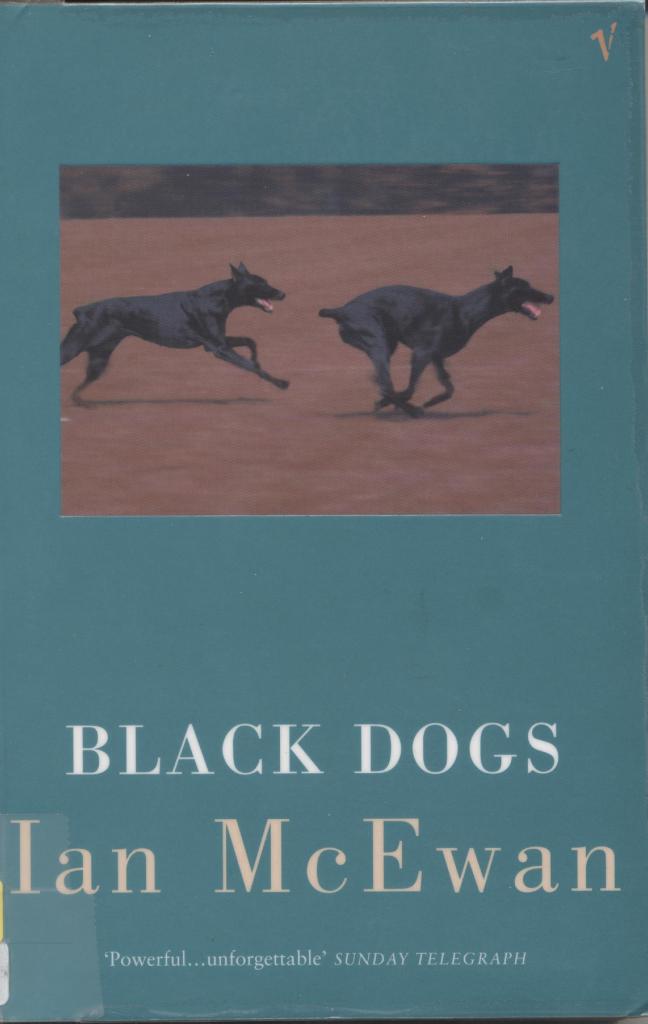
Black Dogs by Ian McEwan

Top Ten Tuesday: Books for People Who Like Historical Crime Fiction

Top Ten Tuesday is a weekly meme created by The Broke and the Bookish and now hosted by Jana at That Artsy Reader Girl. For the rules see her blog.

This week’s topic is Books for People Who Liked Author X but I’m changing it a bit to Books for People Who Like Historical Crime Fiction/thrillers. I haven’t included any of the authors I listed in an earlier TTT post on historical fiction.

  1. Death Comes as the End by Agatha Christie, set in 2000 BC Egypt, a novel of anger, jealousy, betrayal and murder in 2000 BC. A young woman, Nofret, is found dead, apparently having fallen from a cliff. More deaths follow.
  2. Night of the Lightbringer by Peter Tremayne – one of the Sister Fidelma mystery series, a medieval murder mystery, set in Ireland in AD 671 on the eve of the pagan feast of Samhain. featuring a Celtic nun who is also an advocate of the ancient Irish law system. (TBR)
  3. The Story Keeper, set on the Isle of Skye in 1857 where Audrey Hart has been employed to collect the folklore and fairy tales of the local community. One by one young girls go missing from their homes and the locals believe they have been taken by the spirits of the unforgiven dead.
  4. An Expert in Murder by Nicola Upson, set in the theatrical world of  the 1930s, one of her novels featuring novelist Josephine Tey (Elizabeth Mackintosh 1896-1952).
  5. The Franchise Affair by Josephine Tey, set in a post Second World War England but based on a real case from the 18th century of a girl who went missing and later claimed she had been kidnapped.
  6. Murder on the Eiffel Tower by Claude Izner, the Eiffel Tower opened in 1889. Eugénie Patinot and her nephew and niece sign the visitors’ book, and then Eugénie collapses and dies, apparently from a bee-sting. Victor Legris, a bookseller is determined to find out what had really happened. 
  7. The House of Silk by Anthony Horowitz, set in the late 19th century, capturing the spirit and tone of Conan Doyle’s original stories while devising a new mystery for modern readers. Horowitz’s plot is cunning, full of twists and turns, with allusions to Conan Doyle’s stories.
  8. Prophecy by S J Parris – one of the Giordano Bruno series of historical thrillers, set in Elizabethan England. Giordano Bruno was a 16th century heretic philosopher and spy. This book begins in the autumn of 1583, when Elizabeth’s throne is in peril, threatened by Mary Stuart’s supporters scheme to usurp the rightful monarch.
  9. The Seven Deaths of Evelyn Hardcastle by Stuart Turton – set in a 1920s English country house, where Evelyn Hardcastle, the young and beautiful daughter of the house, is killed. But Evelyn will not die just once as the day will repeat itself, over and over again. Every time ending with the fateful pistol shot. (a TBR)
  10. The Mistress of the Art of Death by Ariana Franklin, a murder/mystery book set in Cambridge in 1170 during the reign of Henry II. A child has been murdered and others have disappeared (also found murdered). The Jews are suspected and have been held in the castle for their own safety.