Highlanders’ Revenge by Paul Tors

Today is Remembrance Sunday, the closest Sunday to 11 November (Armistice Day), marking the anniversary of the end of the First World War in 1918. Remembrance Sunday is held to commemorate those who served the country in two world wars and in more recent conflicts. There will be the traditional two-minute silence at the Cenotaph on Whitehall at 11am today.

I think I should know more about the two world wars. There are many books and I’ve read some, mostly novels about the Second World War, but I haven’t read any military histories that go into the detail of the battles and the conditions the forces experienced. So when Victoria Richman emailed and asked me whether I would like to read Highlanders’ Revenge, a book that combines historical fiction and military history I accepted her offer. She is the co-author with her uncle, Paul Richman, writing under the pen name of ‘Paul Tors’.  Paul is a retired business man with a passion for military history and Victoria, also known as Tors, is a Creative Writing graduate who worked on a number of magazines before becoming a freelance writer.
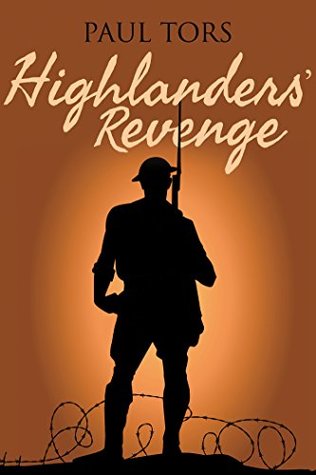
Highlanders' Revenge

Blurb:

Highlanders’ Revenge combines a riotous story of battle and life during World War Two with an insight into the world of a little known, but fierce fighting unit; the 5th Camerons. This fast-paced historical novel will appeal to fans of military fiction who also appreciate historical accuracy.

Highlanders’ Revenge tells the story of Mash, the nickname Highland soldiers give to an Englishman in their ranks. Scarred both from the retreat before the Blitzkrieg advance across France and from the murder of his first love, Mash has to integrate himself into a new section that is wary of the sullen and secretive ‘˜Mash Man’.

Together they journey to Egypt where they encounter a way of life that tests them to their limits as they prepare for one of the greatest battles of the Second World War; El Alamein. Scorched by day, frozen by night and plagued by insects, they have to learn how to live and fight in the desert as they prepare for one of the greatest battles of the Second World War. They are then cast into the thick of the fighting at El Alamein and the Allies’ tumultuous battle to break through the Axis defenses.

My thoughts:

Highlanders’ Revenge is a meticulously researched and very detailed historical novel, about ‘Mash’, an Englishman in a Highland regiment, first as he fought with the 4th Camerons at St Valery in June 1940 during the Battle of France and then in the 5th Camerons at the second Battle of El Alamein between 23 October and 4 November 1942.

This novel vividly portrays the horror of war. I think it combines historical fiction and military history well and there is an extensive glossary at the end of the book that explains a lot of the terms that I hadn’t come across before. I learnt a great deal about World War Two, particularly about the second Battle of El Alamein. It brought home to me the devastating conditions that the troops encountered, not just the reality of war but the physical presence of the heat, the multitude of insects, the dust and the sand, and the almost constant dysentery.

There is an excellent Author’s Note explaining where the novel diverges from the historical record. The central characters are fictional, but the book is based on real events. There are also maps, a bibliography and as I mentioned an extensive glossary.

Highlanders’ Revenge is the first step in a journey that will take Mash through North Africa and the invasion of Sicily, onto the D-Day landings, the battles around Caen before the liberation of the Low Countries, the Battle of the Bulge and the crossing of the Rhine before ending the war in Bremen.

My thanks to the authors for a digital copy, via NetGalley.

  • Format: Kindle Edition – also available in paperback
  • File Size: 2747 KB
  • Print Length: 369 pages
  • Publisher: Troubador (14 July 2016)

Amazon UK link

Amazon US link

Arrowood by Laura McHugh

ArrowoodArrowood promised a lot – a mystery set in a creepy old house, called Arrowood, in Keokuk, Iowa, one of the grand houses that line the Mississippi River. Arden Arrowood’s little twin sisters had disappeared from the house when Arden was eight and they were four. Arden had last seen them in the back of a gold coloured car driven away from the house. But their bodies had never been found and no evidence had been found to convict the owner of the car, Harold Singer. Seventeen years after her grandfather’s death Arden inherits the family home and returns, determined to discover what had actually happened to her sisters.

It had all the elements that should have made this story very spooky and full of psychological suspense – ghostly sounds, creaky floorboards, voices coming from the walls and bath water seeping from under the bath. But yet, I didn’t find it scary. As the family secrets are slowly revealed, drip fed through flashbacks, and the unreliability of memory surfaced I felt the tension ooze out of the book.

It’s a shame because at first the tension is great, the atmosphere convincing and the characters clearly formed. I like the historical aspects – the connection with the Underground Railway (used in the 19th century by slaves escaping from the southern states) – and the descriptive writing about the setting in Iowa, together with the sense of nostalgia for the time and place Arden had left behind. As a character study it worked very well but as a psychological and suspense filled novel it fell short for me. An enjoyable read nevertheless.

  • Format: Kindle Edition
  • File Size: 2294 KB
  • Print Length: 278 pages
  • Page Numbers Source ISBN: 1780891938
  • Publisher: Cornerstone Digital (11 Aug. 2016)
  • Source: review copy

Thanks to the publisher and Netgalley for giving me access to an advance copy.

The Blood Card by Elly Griffiths

The Blood Card (DI Stephens & Max Mephisto, #3)The Blood Card by Elly Griffiths is the third in the DI Stephens and Max Mephisto series. Known as the ‘Magic Men’ they had been part of a top-secret espionage unit during the War.

This book captures the atmosphere of 1953 – a time of great change and optimism. Britain is looking forward with eager anticipation to the new Queen’s coronation. The newspapers and newsreels are full of it and more than half the homes in the country have bought a television in order to watch the coronation live- it was the first British coronation to be broadcast on television, a momentous occasion. But there are fears that an anarchist group is plotting to disrupt the coronation.

Max, a magician, and his daughter Ruby, also a magician, are preparing for a TV Coronation Variety show, whilst Edgar is leading the investigation into death of Madame Zabini, a gypsy fortune teller, on Brighton pier.  However, when their former war-time commander is murdered both Edgar and Max are instructed to investigate his death. A playing card, the ace of hearts had been found on his body, next to the knife still in his chest. Magicians call it the ‘blood card‘.

Whilst Max investigates the show business connection, Edgar flies to the States to interview a witness who has links to an anarchist group, leaving Sergeant Emma Holmes to look into Madame Zabini’s death. At first it looked as though she had committed suicide when her body had been found washed up near the Palace Pier but Emma suspects it was not an accident or suicide. As the investigations progress it appears there may be a connection between the two deaths and also links to the plot to disrupt the coronation.,

I loved the way this book is so firmly set in 1953, and conveys the public’s excitement about the new Queen and the coronation, especially as it was being broadcast live on television. I enjoyed the insight into the history of television as Max is sceptical about performing magic on TV thinking the ‘smug grey box’ will be the death of the days of music hall, that magic tricks needed to be performed on stage not in close up with a camera over his shoulder. But he is persuaded to take part in a new show after the coronation – Those were the Days ( that is The Good Old Days). And I also liked the character progression as Edgar and Max continue their friendship. Edgar is engaged to Ruby, although Max is not too happy about it. And Edgar appears to be unaware of Emma’s feelings for him. How this will end is yet to be resolved.

The Blood Card is a most entertaining book, with a convincing cast of characters. The mystery is expertly handled, with plenty of suspense and lots of twists and turns as the separate plot strands are intricately woven together. I loved it.

Thanks Quercus Books and Netgalley for an advance review copy of this book ahead of publication on 3rd November.

Amazon UK link

The Dark Flood Rises by Margaret Drabble

Margaret Drabble’s latest book, The Dark Flood Rises explores the ending of life, the nature of aging, and life and death. But it is by no means depressing or morbid. It’s told from a number of viewpoints, centring around Fran (Francesca) Stubbs, set against a backdrop of rising floods in Britain and in the Canaries, both of the influx of immigrants arriving by boat to the Canaries from Africa and of the effect of the tremor off the small Canary Island of El Hierro on the tides.The ‘dark flood ‘ is also used to refer to the approach of death.

Fran, now in her seventies, is an expert on housing for the elderly. She keeps herself very busy, acting as a carer of sorts and cooking meals for her ex-husband Claude, and travelling around the country attending conferences on care for the elderly. She visits old friends and her daughter in the West Country. She keeps in touch with her son, Christopher, as he deals with the sudden death of Sara, his girlfriend, and is visiting friends in Lanzarote.

But this book is not plot-focused – it ponders the questions of what is a ‘good’ or even an ‘heroic’ death, the morality of suicide and in contrast the desire for the human race to go on living at all costs. It focuses on personal relationships, on love, on the vagaries of memory, on the ordinary, everyday aspects of life and on the ‘heroism’ needed for old age.

I liked it very much. It’s densely layered, thought provoking and moving. It’s a book to re-read.

And, incidentally I was intrigued to find that the pop artist, Pauline Boty who is mentioned in the last book I read, Autumn by Ali Smith, is also mentioned in The Dark Flood Rises when Sara’s death reminds Christopher of Boty who had died at the early age of twenty-eight.

My thanks to NetGalley and the publisher, Canongate Books, for letting me have an advance copy. The Dark Flood Rises is due to be published on 3 November 2016.

Amazon UK link

Autumn by Ali Smith

Autumn

Autumn is the first of Ali Smith’s books I’ve read and at first I wasn’t sure what to make of it. The blurb attracted me – it describes it as ‘a breathtakingly inventive new novel, a meditation on a world growing ever more bordered and exclusive, on what richness and worth are, on what harvest means.‘ I didn’t find it ‘breathtaking’ but I did enjoy it.

I liked the beginning which begins with a stream of consciousness as Daniel Gluck, a very old man, ponders his life and his approaching death. The main focus of Autumn is the relationship between Daniel and Elisabeth Demand who first met when Elisabeth was a child and moved into the house next door to Daniel’s. We see their friendship at various stages in their lives throughout the book.

As I expected from the blurb Autumn is not a straightforward story, so whilst I wanted to know more about the Daniel and Elisabeth story I was quite happy to diverge from their story through the different sections about a variety of different themes from death, aging, love and of course autumn.

I liked the wordplay and references to many other books from Dickens to Shakespeare, the details about Christine Keeler and the Profumo Affair, the life, work and death of the pop artist Pauline Boty, and the accurate and amusing accounts of the frustrations of everyday life such as those describing Elisabeth’s attempts to renew her passport.

It’s both poignant and cutting in its look at modern life, how we got to where we are, and the mood of the country post-Brexit (that word is never mentioned) – the confusion and the misery and rejoicing, the insanity, and the division. It’s a remarkable book.

Autumn is the first installment in Ali Smith’s novel quartet Seasonal: four standalone books, separate yet interconnected and cyclical (as the seasons are), exploring what time is, how we experience it, and the recurring markers in the shapes our lives take and in our ways with narrative.

Ali Smith was born in Inverness in 1962. She is the author of Free Love and Other Stories, Like, Other Stories and Other Stories, Hotel World, The Whole Story and Other Stories, The Accidental, Girl Meets Boy, The First Person and Other Stories, There but for the, Artful, How to be both, and Public library and other stories. Hotel World was shortlisted for the Booker Prize and the Orange Prize and The Accidental was shortlisted for the Man Booker and the Orange Prize. How to be both won the Baileys Women’s Prize for Fiction, the Goldsmiths Prize and the Costa Novel Award and was shortlisted for the Man Booker and the Folio Prize. Ali Smith lives in Cambridge.

  • Format: Kindle Edition
  • File Size: 5464 KB
  • Print Length: 243 pages
  • Page Numbers Source ISBN: 0241207010
  • Publisher: Penguin (20 Oct. 2016)

I received a copy of this book from the publisher, via NetGalley, for review.

The Plague Charmer by Karen Maitland

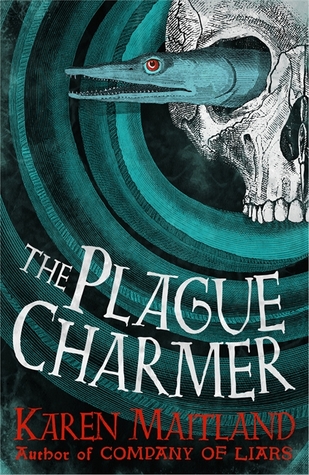
The Plague Charmer

Karen Maitland is a great storyteller.

The Plague Charmer is a fascinating medieval tale full of atmosphere and superstition. It’s a long but an unputdownable book, bringing the medieval world to life in all its brutality and hardship. I thoroughly enjoyed it. I received an uncorrected proof copy of this, her latest novel, from Lovereading. The book is set in Porlock Weir in 1361 where a village is isolated by the plague when the Black Death spreads once more across England.  Following an eclipse of the sun, as a storm rages along the coast, a ship is blown ashore bringing a dark stranger, Janiveer, to the village. She warns the villagers that the plague, raging in other parts of the country will soon spread to their village and offers to save them – but for a terrible price.

It’s a complex story, told from different characters’ perspectives, following the lives of Will, a ‘fake’ dwarf, Sara, a packhorse man’s wife and her family, Matilda, a religious zealot, and Christina at nearby Porlock Manor amongst others. It’s a tale of folklore, black magic, superstition, violence, torture, murder, and an apocalyptic cult – and also of love. As the plague spreads and more horrendous deaths pile up bringing  fear and hysteria, families are broken up, and hostilities surface as the village is isolated, left to fend alone.

I thought Will a fascinating character. He was not born a dwarf, but was subjected to horrific treatment as a baby, strapped into an iron bridle, compressed and deformed as he grew to form a squat little dwarf. He is remarkably free of bitterness and capable of more humanity than most of the other characters. Sara, too shows strength of character as she perseveres in her search for her two missing sons.

I like the Historical Notes, providing more detailed information about the period, the people and the location, as well as the legends, and the answers to the medieval riddles that head Will’s chapters. I particularly like the information about the plague and the various religious cults of the period. The Glossary is also invaluable, helping to flesh out the detail.

The Plague Charmer is a superb combination of historical fact and fiction. I really enjoyed reading this detailed and chillingly dark atmospheric book. It’s a memorable story with a colourful cast of characters, full of suspense and drama.

My thanks to Headline for also providing a proof copy via NetGalley.

  • Hardcover: 576 pages (also as an e-book)
  • Publisher: Headline Review (20 Oct. 2016)
  • Language: English
  • ISBN-10: 1472235827
  • ISBN-13: 978-1472235824

Amazon UK link