The Ghosts of Altona by Craig Russell

Last week I quoted the opening paragraphs and the description of The Ghosts of Altona by Craig Russell, a novel, which won this year’s Bloody Scotland Crime Novel of the YearIt’s an outstanding book, one of the best I’ve read this year. I suppose it can be called a modern Gothic tale as well as being a crime thriller. Russell is a new author to me, but by no means is he a new author, The Ghosts of Altona being his 7th book featuring Jan Fabel, the head of Hamburg’s Murder Commission. However, it didn’t spoil my enjoyment that I’d jumped into the series right at the end. And in a way it didn’t matter at all as in the first chapter Jan has a near-death experience when he is shot by a suspected child killer, which has a profound effect on his life and the way he views death.

Two years later his first case as a detective is resurrected when the body of Monika Krone is found under a car park, fifteen years after she disappeared. The prime suspect at that time was Jochen Hubner, a serial rapist, christened ‘Frankenstein’ by the press because of his monstrous appearance, but there was no conclusive evidence to connect him to her disappearance. Monika, beautiful, intelligent and cruel had been the centre of a group of students obsessed with the Gothic. Then ‘Frankenstein’ escapes from prison and there are more murders which Fabel thinks are linked to the discovery of Monika’s remains, all of men who were in the same Gothic set at university.

There are many allusions to the Gothic tradition and symbolism, the killings being reminiscent of Edgar Allan Poe’s macabre tales, as well as philosophising on the nature of near-death experiences, Schrödinger’s cat, Cotard’s Delusion (in which sufferers believe themselves to be dead), and the intertwining of the hallucinogenic, the psychedelic, the spiritual and the macabre. All absolutely fascinating and incorporated seamlessly into the crime investigation so that I was turning the pages as fast as possible to get to the solution. It’s all very cleverly plotted, multi-layered and complex and I loved it.

As well as the story and the characters I loved the setting – Hamburg, a city I knew very little about before reading The Ghosts of Altona, the second largest city in Germany, a member of the medieval Hanseatic League. It’s a city of water with two lakes and the river Elbe running through it and it has more canals than Amsterdam and Venice combined. Altona, one of the city boroughs had been under Danish administration for over two centuries.

The Author

Craig Russell is an award-winning, best-selling and critically-acclaimed author, published in twenty-five languages around the world. The Devil Aspect was acquired by Jason Kaufman, Dan Brown’s editor at Doubleday. The movie rights to the Devil Aspect have been bought by Columbia Pictures. Five Jan Fabel novels have been made into movies (in one of which Craig Russell makes a cameo appearance as a detective) for ARD, the German national broadcaster, and the Lennox series has been optioned for TV development. See his website for more information.
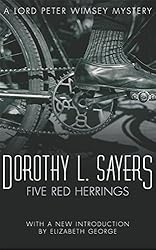
Five Red Herrings by Dorothy L Sayers

Five Red Herrings by Dorothy L Sayers  was first published in 1931, the seventh Lord Peter Wimsey murder mystery. Wimsey is on holiday in Kirkcudbright and Gatehouse of Fleet in Galloway, Scotland, in a fishing and painting community where he is known and where he is

… received on friendly and even affectionate terms. He could make a respectable cast, and he did not pretend to paint, and therefore, although English and an ‘incomer’, gave no cause of offence. The Southron is tolerated in Scotland on the understanding that he does not throw his weight about, and from this peculiarly English vice Lord Peter was laudably free. True, his accent was affected and his behaviour undignified to a degree, but he had been weighed in the balance over many seasons and pronounced harmless, and when he indulged in any startling eccentricity, the matter was dismissed with a shrug and a tolerant, ‘Christ, it’s only his lordship.’ (page 2)

When Campbell, a local landscape painter and fisherman is found dead in a burn near Newton Stewart, it seems he must have slipped whilst painting near to the edge of a ravine, a steep and treacherous granite slope. At first it looks as though it was an accident, but  Wimsey is convinced it was murder and an autopsy reveals that Campbell was dead before he fell into the burn. Campbell was not a popular man, described as ‘ a devil when he is drunk and a lout when he is sober.’ There are 6 possible suspects – all of whom had quarrelled with or been assaulted by Campbell, all of them artists.

What follows is an intricately plotted story as Wimsey and the police investigate the mystery. It is complicated by immense detail about train times, routes, bicycles, moving the body, alibis, and varying styles of painting – I gave up trying to understand it all and just read along enjoying the puzzle.

The five red herrings are, of course, the five innocent suspects, and Wimsey introduces another possibility that it might not be any of the six suspects, when having heard the case against each of them, he announces that all the theories are wrong, before he gives his verdict. And then he sets in motion a re-enactment of the crime from beginning to end to show how it was carried out, down to the most minute detail.

Sayers doesn’t play fair with the reader in not revealing a clue Wimsey noticed at the scene of the crime whilst he was searching through the contents of Campbell’s pockets and satchel and announced something was missing. In an added note Sayers explained that Wimsey

… told the Sergeant what he was look for and why, but as the intelligent reader will readily supply these details for himself, they are omitted from this page. (page 21)

I didn’t ‘readily supplied the details’  for myself but eventually I guessed what it was. But overall, that is just a minor complaint and I thoroughly enjoyed this mystery, the characters are striking and the setting is well grounded.

Five red herrings map 001

There is a map at the beginning of the book that helped me follow the action and in the Foreword Sayers explained that

All the places are real places and all the trains are real trains, and all the landscapes are correct, except that I have run up a few new houses here and there.

and goes to clarify that

… none of the people are in the least like real people, and that no Galloway artist would ever think of getting intoxicated or running away from his wife or bashing a fellow citizen over the head. All that is just for fun and to make it more exciting.

The Gateway of Fleet website has an interesting page on ‘Dorothy L Sayers in Galloway‘, which states that she and her husband Mac Fleming first visited  Galloway in 1928 when they stayed at the Anwoth Hotel (mentioned in Five Red Herrings) in Gatehouse of Fleet and from 1929 they rented a studio in The High Street, Kirkcudbright next door to the well-known artist Charles Oppenheimer. They got to know Galloway well, especially the artistic community in Kirkcudbright and Gatehouse, on which her detective novel Five Red Herrings is based.http://Dorothy L Sayers in Galloway

I realised after I’d read Five Read Herrings that it fits into a couple of reading challenges – the Colour Coded Challenge (a book with ‘red’ in the title) and the Read Scotland Challenge (a book set in Scotland).

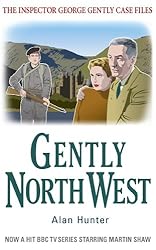
Gently North West by Alan Hunter

I first came across Inspector George Gently through the TV drama with Martin Shaw as Gently. There are 46 books in Alan Hinter’s Gently series and I’ve  read the first two , Gently Does It and Gently by the Shore and now the 14th book, Gently North West (first published in 1967). The full list of the Gently books is on Fantastic Fiction.  In the TV version Gently is based in Northumberland, whereas the books are mainly set in Norfolk.

Summary (Amazon)

There’s blood in the heather and a murderer on the loose when Gently pays a quiet visit to the Highlands of Scotland. Had Brenda Merryn not been such a strong-willed woman and had she not been so much in love with George Gently, driving all the way to Scotland for a holiday with Gently’s sister and brother-in-law might have been a bit of a challenge. Spying on a heavily armed private army of nationalists, being held at gunpoint on the hillside, being held prisoner in a filthy outhouse and becoming involved in a murder would be unthinkable. For Gently, it’s all in a day’s work and his holiday is put on hold while he stalks a murderer in the mountains, with Brenda by his side.

My view:

Gently North West is set in the fictitious village of Strathtudlem in Scotland in 1967 where Gently is on holiday with his friend, Barbara Merryn and his sister, Bridget and her husband. There is quite a lot of detailed descriptions not only of the Scottish Highlands but also of the route of Gently’s journey from London to Scotland. On their journey a man with a red beard nearly crashes into Gently’s car.

Then on their first evening in the Highlands, Gently and Brenda go for a walk and see the same man, standing high on a crag above the glen, peering at them through his binoculars.  The next morning, the body of Donnie Dunglass is found, stabbed in the back, face down on the heather near where Gently had seen the man with the red beard. He feels it is his duty to inform the local constabulary about the man he saw and so becomes involved in the search for the killer.

In this book there are several references that set the book firmly in the late 1960s with reference to the Scottish Nationalists ‘ activities during that time and even to Mary Quant. But what particularly interested me about Gently North West is not the actual murder mystery which I think is rather far-fetched, but the fact that Gently is no longer an Inspector working in Norfolk but is living in London, a Chief Superintendent with Scotland Yard. Obviously since the events in the second book Gently had been promoted several times!

Now I’m wondering if I want to read all the books to find out more about Alan Hunter’s Gently.

Alan Hunter was born in Hoveton, Norfolk in 1922. He left school at the age of fourteen to work on his father’s farm, spending his spare time sailing on the Norfolk Broads and writing nature notes for the Eastern Evening News. He also wrote poetry, some of which was published while he was in the RAF during the Second World War. By 1950, he was running his own book shop in Norwich and in 1955, the first of what would become a series of forty-six George Gently novels was published.  He died in 2005, aged eighty-two.

He dedicated Gently North West to his mother, Isabella Hunter, nee Andrews, who was from Culsalmond in Aberdeenshire. In his own words she ‘contrived to possess her son with an indelible prejudice for the land of heroes and poets. Rest her well where she lies and greetings to my unknown Scottish cousins.

Reading Challenge: this is the fifth book I’ve read that qualifies for the Read Scotland Challenge 2015.

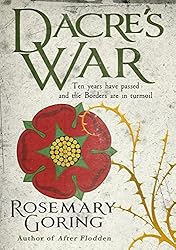
Dacre’s War by Rosemary Goring

Dacre’s War is compelling reading, a  thoroughly absorbing and beautifully written novel set in the Scottish and English Borders and London between 1523 – 1525 some ten years after the events described in Rosemary Goring’s earlier book, After Flodden. I wondered as I began reading whether it could equal After Flodden, a book I loved when I read it two years ago – it did. I think it even surpasses it.

I loved Dacre’s War and keen as I was to read to the end I didn’t want to leave the characters. Once again I was swept away by the story, re-living the scenes through Rosemary Goring’s vivid descriptions and the drama of the characters’ lives, people who came to life in the pages of this book.

Dacre’s War describes how Adam Crozier, the head of his clan, plots to take revenge on Lord Thomas Dacre, the Warden General of the English Marches and the Keeper of Carlisle, who had brought about the death of Adam’s father. Ten years after the Battle of Flodden, Dacre is the most powerful man in the north of England, but the Marches are a constant battlefield, dangerously out of control, and a hotbed of thieves and killers in thrall to the Warden. Without him Henry VIII believes the situation would be much worse.

It is against this background that Crozier forms an alliance with Dacre’s enemies, both English and Scots to inform Henry of Dacre’s crimes and bring about his downfall.

There are some remarkable scenes in this book, and amongst them are the scenes in the Star Chamber where Dacre is brought to answer the charges against him in front of Cardinal Wolsey and his imprisonment in the Fleet Prison. I felt as though I was there, watching, breathing the same air – not a pleasant experience. Similarly with Crozier, I could visualise his home, Crozier’s Keep, sense the tension and fear as his wife, Louise, is left at home, pregnant and in danger of losing the baby.

There is so much packed in this book, political intrigue, personal conflict and vengeance, and spies, manipulators and double crossers abound. It is impossible to write more without revealing the plot and the eventual ending. It’s a brilliant book.

Dacre’s War is due to be published in June 2015. My copy is a pre-publication review copy courtesy of www.lovereading.co.uk.

  • Hardcover: 352 pages
  • Publisher: Polygon (16 June 2015)
  • Language: English
  • ISBN-10: 1846973112
  • ISBN-13: 978-1846973116

Rosemary Goring was born in Dunbar and studied social and economic history at the University of St Andrews; and, after graduation, worked at W&R Chambers as a reference editor. Rosemary was the literary editor of Scotland on Sunday, followed by a brief spell as editor of Life & Work, the Church of Scotland’s magazine, before returning to newspapers as literary editor of the Herald, and later also of the Sunday Herald. In 2007 she published Scotland: The Autobiography: 2000 Years of Scottish History By Those Who Saw it Happen, which has since been published in America and Russia.

Reading Challenges: Read Scotland, Historical Fiction Challenge.

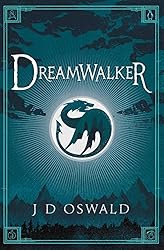
Dreamwalker: The Ballad of Sir Benfro Book 1

Dreamwalker

I read  Dreamwalker: The Ballad of Sir Benfro by James Oswald on my Kindle.  It has since been published by Penguin as Dreamwalker by J D Oswald.

So far there are three books in the series and there will eventually be five books published by Penguin. See James Oswald’s website for more information.

Synopsis from Amazon UK:

In a small village, miles from the great cities of the Twin Kingdoms, a young boy called Errol tries to find his way in the world. He’s an outsider – he looks different from other children and has never known his father. No one, not even himself, has any knowledge of his true lineage.

Deep in the forest, Benfro, the young male dragon begins his training in the subtle arts. Like his mother, Morgwm the Green, he is destined to be a great Mage. No one could imagine that the future of all life in the Twin Kingdoms rests in the hands of these two unlikely heroes.

But it is a destiny that will change the lives of boy and dragon forever …

My view:

I enjoyed this book, inspired by Welsh folklore. It’s very readable, each time I picked it up I just wanted to carry on reading this magical tale of the young dragon, Benfro and the young boy, Errol, born on the same day. I was drawn into their fantasy world.

But I wasn’t prepared for the ending – when you get to the end of the book it is not the end – it’s only the end of the first instalment! The tension builds throughout the book as both Benfro and Errol approach their fourteenth birthdays, Benfro in the dragon community, learning their magical powers and Errol,growing up thinking his mother was the village healer and then taken from his home by Melyn, the Inquisitor to train to be one of the warrior priest. Then there is the wicked Princess Beaulah, who is keeping her father the king alive until she reaches her 21st birthday.

And as the tension built I was eager to find out how it would end, only to be faced with the words ‘To be continued in The Ballad of Sir Benfro -Volume Two‘. I was so frustrated, as it just came to a full stop after a catastrophic event, that I couldn’t really believe had happened – a real cliff-hanger! I wish I’d realised before so that I’d been prepared – it was a complete let-down. So, if you are going to read it be warned!

Dreamwalker is followed by The Rose Cord and The Golden Cage. J. D. Oswald is also the author of the Detective Inspector McLean series of crime novels under the name James Oswald. In his spare time James runs a 350-acre livestock farm in North East Fife, where he raises pedigree Highland Cattle and New Zealand Romney Sheep.

Read more about Dreamwalker on the Penguin website.

Reading ChallengesDreamwalker is the perfect choice for Once Upon a Time IX. As it’s been on my Kindle since 2012 it’s also perfect for the Mount To Be Read Challenge and as James Oswald lives in Scotland it fits into the Read Scotland Challenge too.

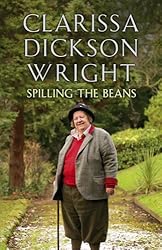
Spilling the Beans by Clarissa Dickson Wright

I’ve left it a bit too long to write about Spilling the Beans, Clarissa Dickson Wright’s autobiography because I’ve now forgotten much of the detail.  It’s a book I really enjoyed, but I finished it nearly two weeks ago! I’ve  been feeling a bit under the weather recently with a rotten cold and although I have been reading I haven’t been able to summon up enough mental energy to write much!

I quoted from the opening of the book in this post, with these details about Clarissa:

Clarissa Dickson Wright was an English celebrity chef ‘“ one of the Two Fat Ladies, a television personality, writer, businesswoman, and former barrister. She died last year on 15 March in the Edinburgh Royal Infirmary. Clarissa was a huge character in more than her size! Her autobiography is fascinating, coming from a privileged and wealthy background she had a difficult childhood- her father, a well respected surgeon was also an alcoholic who beat his wife and Clarissa.

After her mother died she took comfort from alcohol and at the mid point of the book she was as she described it ‘˜sunk in gin’ and homeless. I am looking forward to reading about her road to recovery.

In the rest of the book she described her period of homelessness, sleeping on benches in the Victoria Coach Station for two nights, but spending the rest of the time staying with friends, until she took jobs in domestic service, where she learned to cook. I liked her attitude to being a servant:

I have never understood the aversion to domestic service … I am not sufficiently bourgeoise to worry about my place in the class system and if you don’t understand this, well, that’s your problem. I had no sense of downshifting; maybe I should have had but pragmatism is the saving of many an alcoholic. (page 154)

She then went on to tell about her ‘dark night of the soul’ and her time at addiction centres, the treatment and her eventual recovery. All this took years and she was very honest and open.

She also wrote about her bookselling experience – all totally news to me – her time at ‘Cooks for Books’ changed her life and later after she had moved to Scotland in the late 1980s  she ran the Cook’s Bookshop in Edinburgh near the Grassmarket. She was declared bankrupt three times, was rector of Aberdeen University for six years. And then, of course, there were her TV shows – Two Fat Ladies, with Jennifer Paterson and Clarissa and The Countryman with Johnny Scott. She was a staunch supporter of the Countryside Alliance, against the ban on foxhunting .

Despite all her difficulties and her alcoholism this is an upbeat autobiography, ending on a positive note: “Believe me on one thing: I have a splendidly enjoyable life”. And believe me this is  a ‘splendidly enjoyable’ autobiography.

My copy is a hardback book, which I bought, but it is also available in paperback and ebook.

Note: I didn’t read this book to meet any challenges, but it does:

There is a spot just by the Scots Border at Berwick-upon-Tweed, where the train passes a stretch of the sea coast. Looking out of the window I felt, Oh it’s so lovely to be home, and if it’s home, I thought, I’d better stay and I have been here ever since. (page 225)

For another review see Cath’s blog Read Warbler.