Agatha Christie at Home by Hilary Macaskill

One of the things that struck me when I was reading Agatha Christie’s An Autobiography was her love of houses. It stemmed from her childhood dolls’ house. She enjoyed buying all the things to put in it – not just furniture, but all the household implements such as brushes and dustpans, and food, cutlery and glasses. She also liked playing at moving house, using a cardboard box as a furniture van.

Writing about her life with her husband, Max Mallowan she wrote:

We were always choosing sites for houses. This was mainly owing to me, houses having always been my passion – there was indeed a moment in my life, not long before the outbreak of the second war, when I was the proud owner of eight houses. (page 440 of An Autobiography)

Agatha Christie at Home Macaskill

So when I saw that Hilary Macaskill had written this book – Agatha Christie at Home – I knew immediately that I wanted to read it. It’s a beautiful book, with many photographs – more than 100 colour photos – illustrating Agatha’s life and homes. I took my time reading it, first of all looking at the photos, before reading the text.

There is a Foreword by Mathew Prichard, her grandson, explaining the love his grandmother had for Devon, in particular for Torquay, where she was born and Greenway, the house that had a special place in her heart.  He expressed his hope that this book will ‘transmit some of the magic that my whole family felt when they were there.’  And this book does indeed do that!

There is an overview of Agatha Christie’s life followed by descriptions of the houses and countryside she loved – from Ashfield in Torquay her first home, where she was born and brought up to Greenway, a Georgian mansion above the River Dart, now owned by the National Trust.

There are no spoilers in this book but Hilary Macaskill has identified the settings Agatha Christie used in her books and how some of the place names have been altered, but are still recognizable from her descriptions. I hadn’t realised that the names of some of her characters are taken from the names of streets or villages, such as Luscombe Road in Paignton which she adopted for Colonel Luscombe in At Bertram’s Hotel.

It’s a useful book too if you want to find out more about visiting Devon with tourist information and website addresses. The final chapter is about Agatha Christie’s legacy and her continuing popularity both nationally and internationally. As well as being able to visit Greenway, which has been restored to the way it was when Agatha lived there, there are events to celebrate her life and works, such as the annual Agatha Christie week that takes place in Torquay each September around her birthday.

I haven’t been to Greenway, although I have stayed in Torquay, but that was before Greenway was open to the public. It is enormously popular – on the first day it was opened over 400 visitors came to see the house. But Agatha Christie was a very private person and I can’t imagine what she would have thought about that. After all she had refused permission for an ‘authorized life’ to be written, stating:

‘I write books to be sold and I hope people will enjoy them but I think people should be interested in books and not their authors.’ (page 129)

Knowing that I think I’d feel I was invading her privacy if I did go to Greenway!
Saturday Snapshots

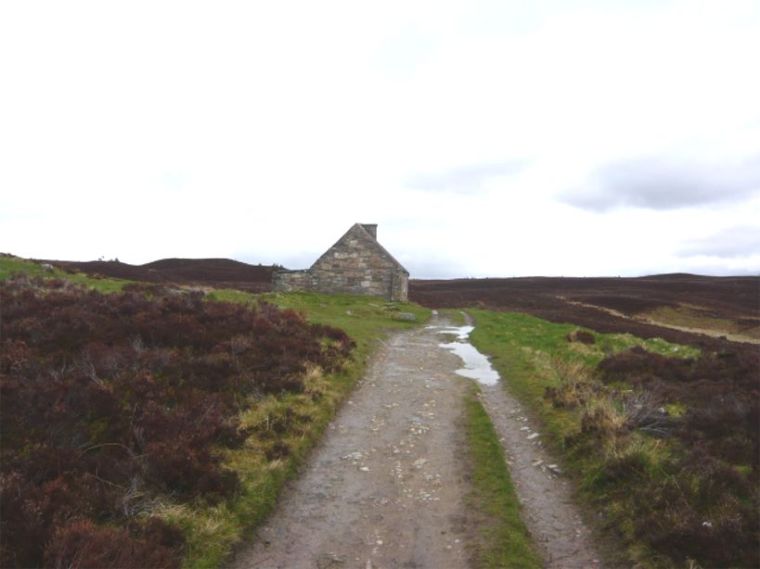
Last Saturday I posted photos of An Lochan Uaine near the path on our walk through Glenmore Forest Park. Today here are some more photos of our walk  after we left the lochan. The route continued along the Ryvoan Pass on the old Rathad nam Mearlach – or Thieves Road. Cattle raiders used hill tracks like this to move their spoils avoiding the more well-used routes.

As we went gradually up the hill this building came into view:

Bothy1 P1080705

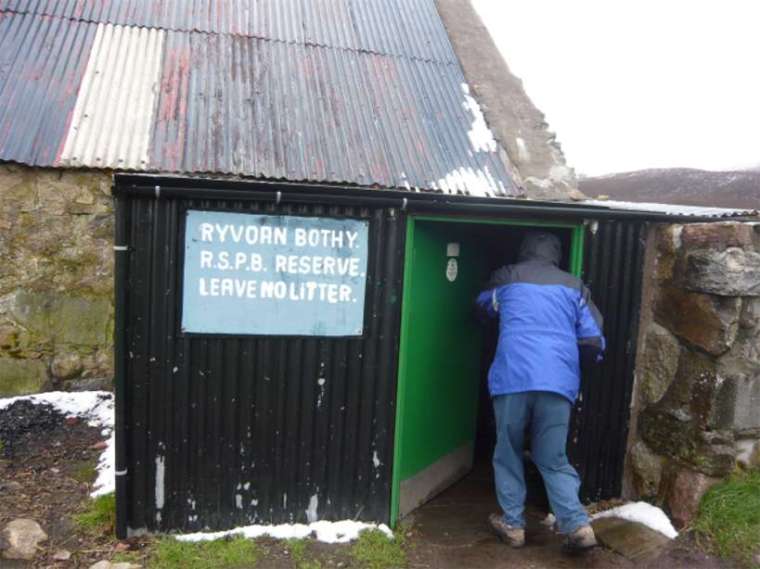
Bothy2P1080706It’s a bothy – see this article explaining what a bothy is. The photo below shows the entrance:

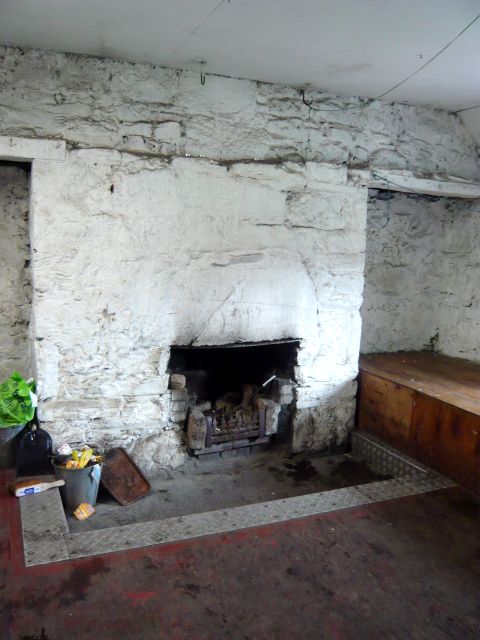
Bothy3P1080709and this is what is inside:

Bothy4P1080710 - Copy

There are some rules:

Bothy rules P1080722It’s a very welcome shelter – especially on a wet, windy day!

For more Saturday Snapshots see Melinda’s blog West Metro Mommy.

Berwick's Elizabethan Ramparts

Following on from last Saturday’s Saturday Snapshots here are a few more photos of Berwick-upon-Tweed, which is the northernmost town in England. It’s a Border town that changed hands between England and Scotland 14 times until it finally became part of England in 1482. It’s a walled town; the original medieval walls were built in the 13th century and the Elizabethan Ramparts, dating from 1558 are virtually intact.

Berwick Elizabethan Ramparts

The fortifications replaced the medieval wall on the North and East sides of the town. The photo above shows part of the Elizabethan wall that is now the boundary wall of a car park.

Below are two photos of sections of the walls:

Berwick Ramparts 1

Berwick walls & bridges

The photo below shows a Russian cannon, captured in the Crimea. Before the Second World War this part of part of the walls was once bristling with artillery. All that remains now is this cannon which was brought back as one of the trophies at the end of the Crimean War (1854-56). The top of the barrel of the gun is embossed with the double-headed eagle emblem of the Russian Tzar.

Berwick Ramparts Canon

For more Saturday Snapshots see Alyce’s blog At Home With Books.

Saturday Snapshots: Alnwick Treehouse

I’ve posted photos of our visit to Alnwick Castle in Northumberland before. Adjacent to the Castle is Alnwick Garden, a formal garden with a cascading fountain. Also in the Garden there is a fantastic Treehouse and a Poison Garden, safely secured behind locked gates. When we were there there a very long queue to go into the Poison Garden, so we left that for another day and went to Treehouse.

Treehouse Alnwick
Treehouse Alnwick

It’s an enormous structure made from sustainably sourced cedar, redwood and pine, extending high up into the trees.

Treehouse Alnwick
Treehouse Alnwick

There are wobbly walkways:

Wobbly Walkway
Wobbly Walkway
treehouse Alnwick P1050990
Wobbly Walkway

and a restaurant:

Treehouse restaurant

For more Saturday Snapshots see Alyce’s blog At Home With Books.

Saturday Snapshots – on Sunday

A few years ago we had a holiday in Gloucestershire – in Painswick. I’ve posted some photos in the past but not these of a walk in Frith Wood, which is on a ridge between Slad and Painswick. It’s a beautiful, magical wood of magnificent beech trees, with a mix of oak, ash and sycamore and it’s a Site of Special Scientific Interest.

Frith Wood

Frith Wood DSC_0106

Frith Wood DSC_0100 Frith Wood DSC_0109For more Saturday Snapshots see Alyce’s blog At Home With Books.

Saturday Snapshots

My snapshots today are of Inchree Wood and Righ Falls in Glen Righ, on the eastern side of Loch Linnhe, near Glencoe. It was a cool day in September this year when we walked up the woodland trail to see the waterfalls, but the views were still spectacular.

The walk is through woodland with views of Loch Linnhe below:

The waterfall comes into view:

It cascades down the hill side:

The trail continues uphill through broad-leaf and conifer trees:

It’s a good place to see red squirrels:

through the viewing holes:

But we were disappointed not to see one!

See more Saturday Snapshots on Alyce’s blog At Home With Books.