Top Ten Tuesday is a weekly meme created by The Broke and the Bookish and now hosted by Jana at That Artsy Reader Girl. For the rules see her blog.
This week’s topic is TTT Rewind (Pick a previous topic that you missed or would like to re-do/update) So, I’m updating my post Books On My Spring 2019 TBR, first posted on 19th March 2019.
I read three of them!
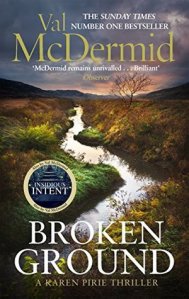
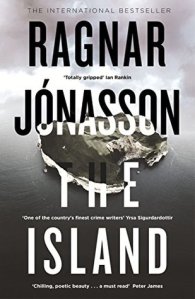
Broken Ground by Val McDermid, On the Beach by Nevil Shute, which I read only this year and have yet to write a review, and The Island by Ragnar Jónasson.
This leaves me with seven left to read:
In Cold Blood by Truman Capote – Capote reconstructs the crime and the investigation into the murders of the four members of the Clutter family on November 15, 1959, in the small town of Holcomb, Kansas.
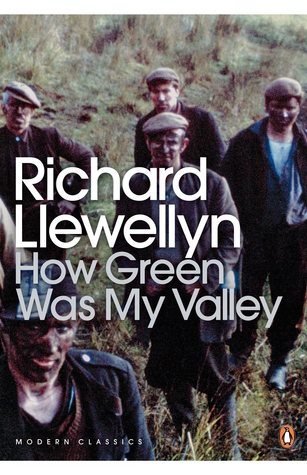
How Green Was My Valley by Richard Llewellyn – a story of life in a mining community in rural South Wales as Huw Morgan is preparing to leave the valley where he had grown up. He tells of life before the First World War.
Iris and Ruby by Rosie Thomas – the story of a teenage girl, Ruby, who runs away from home to live with her grandmother, Iris in Cairo.
Here Be Dragons by Sharon Penman – set in 13th century Wales this is the story of Llewelyn, the Prince of North Wales, and his rise to power and fame and his love for Joanna, the illegitimate daughter of King John.
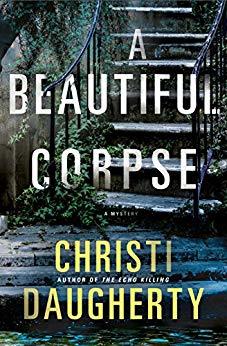
A Beautiful Corpse by Christi Daugherty – crime reporter Harper McClain unravels a tangled story of obsession and jealousy after a beautiful law student is shot in Savannah, Georgia.
A Snapshot of Murderby Frances Brody – set in Yorkshire in 1928, when amateur detective, Kate Shackleton investigates a crime in Brontë country.
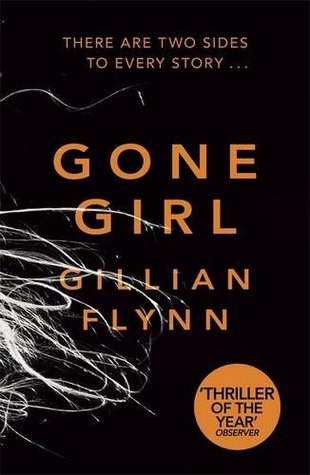
Gone Girl by Gillian Flynn – on the day of Nick and Amy’s fifth wedding anniversary, Amy suddenly disappears. The police suspect Nick. Amy’s friends reveal that she was afraid of him, that she kept secrets from him. He swears it isn’t true.
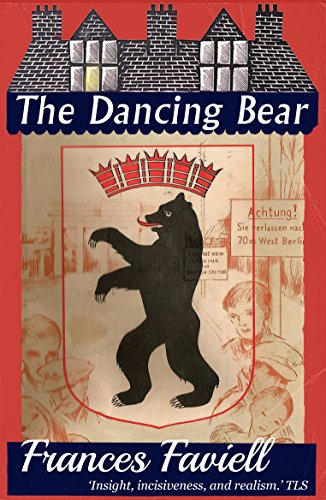
The Dancing Bear by Frances Faviell took me by surprise by how much I enjoyed it. I wasn’t expecting it to be so good.
Frances Faviell (1905-1959) was the pen name of Olivia Faviell Lucas, painter and author. After the war, in 1946, she went with her young son, John, to Berlin where Richard Parker, her second husband, had been posted as a senior civil servant in the post-war British Administration. It was here that she befriended the Altmann family, which prompted her first book The Dancing Bear (1954), a memoir of the Occupation seen through the eyes of both occupier and occupied. She later wrote three novels, A House on the Rhine (1955), Thalia (1957), and The Fledgeling (1958). These are now all available as Furrowed Middlebrow books.
The Dancing Bear covers the years from Autumn 1946 to Autumn 1949, with an Epilogue dated Autumn 1953 and, in this edition, an Afterword by John Parker, Faviell’s son. Her memoir is mainly about her friendship with the Altmann family – Frau Maria Altmann, her husband, Oskar and her children, Ursula, who works for a group of American service men, Lilli, a ballet dancer and son, Fritz, who was a member of the Hitler Youth and is now involved in the Black Market. Their eldest son. Kurt. is missing in Russia. Berlin had been divided into four sectors by the Allies – Britain, the United States, France and the Soviet Union – and Frances is horrified by the conditions she found. There were deaths from hunger and cold as the winter approached and queues for bread, milk, cigarettes, cinemas, buses and trams.
The complete and utter devastation of Berlin had shaken me profoundly. Nothing … had prepared one for the dead horror of this city. (page 15)
…
The complete absence of shops was something the Allied and German women felt. There was scarcely a single shop left standing in Berlin. The great stores and emporiums lay in dust, as did the great blocks of flats. One could not get the simplest articles except on the Black Market, and then only in exchange for cigarettes and coffee which had taken the place of money. (page 166)
The Altmanns live on the ground floor of a large ruined house – the upper storeys had disappeared and just the twisted iron girders remained, sticking up grotesquely against the sky. The ground floor looked very shaky and the windows were covered in cardboard and the door had been repaired from odd pieces of wood. It was freezing cold, and although they had a stove they had no fuel to light it and because electricity was rationed they had to use candles. There were two bedrooms, a small kitchen, a sitting room and a bathroom. With the help of her driver, Stampie, she does what she can to help them.
The British, unlike the Americans were forbidden to be friendly with the Germans, or to allow them in their homes or any of their buildings, clubs or messes and also to give them lifts, but these rules were frequently broken. At night Berlin ‘became a whirl of revelry’:
But if Berlin was a tragic city by day; at night it became a whirl of revelry. The Allies entertained on a scale which was extraordinary in a starving town, and if one went down to the Kurfurstendamm or the Kaiserdamm at night every cafe and night club was packed with revellers. (page 63)
I have only touched the surface of this book in this short post. It’s a moving memoir and I was fascinated by it all – the people, their situations, and their morale and attitudes as well as the condition of Berlin in the aftermath of World War Two. The realities of living under occupation are clearly shown, as well as the will to survive despite all the devastation and deprivation. I now want to read more of Frances Faviell’s books.
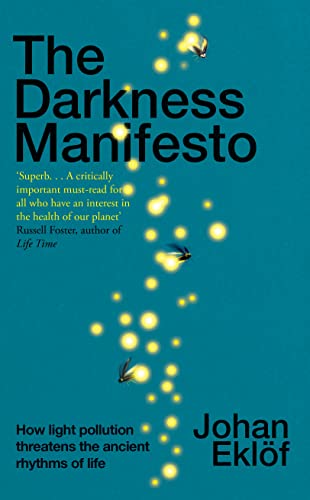
How much light is too much light? The Darkness Manifesto urges us to cherish natural darkness for the sake of the environment, our own wellbeing, and all life on earth.
The world’s flora and fauna have evolved to operate in the natural cycle of day and night. But constant illumination has made light pollution a major issue. From space, our planet glows brightly, 24/7. By extending our day, we have forced out the inhabitants of the night and disrupted the circadian rhythms necessary to sustain all living things. Our cities’ streetlamps and neon signs are altering entire ecosystems.
Johan Eklöf encourages us to appreciate natural darkness and its unique benefits. He also writes passionately about the domino effect of damage we inflict by keeping the lights on: insects failing to reproduce; birds blinded and bewildered; bats starving as they wait in vain for insects that only come out in the dark. And humans can find that our hormones, weight and mental well-being are all impacted.
Johan Eklöf, PhD, is a Swedish bat scientist and writer, most known for his work on microbat vision and more recently, light pollution. He lives in the west of Sweden, where he works as a conservationist and copywriter. The Darkness Manifesto is his first book to be translated into English.
~~~
Until I read The Darkness Manifesto: How Light Pollution Threatens the Ancient Rhythms of Life all I knew about light pollution was its effect on the night sky, how artificial light impairs our view of the sky, the stars and the planets. But I hadn’t realised just how much it adversely affects our environment, wildlife and our own health. This book is full of fascinating facts about the impact that darkness and the night have on all living creatures, including ourselves.
Artificial lighting today makes up a tenth of our total energy usage but most of it is of little benefit to us, spilling out into the sky. Animals cannot distinguish between artificial light and natural daylight which means their circadian rhythms are disrupted, sending body clocks awry, disrupting our sleep.
There is, of course, the need for safety and security, and Eklöf cites several examples of places around the world that have projects that promote darkness, and have established light pollution laws, such as France where there are regulations to limit how much light, and what kind of light, can be emitted into the atmosphere. The light needs to be adapted to suit the needs of both animals and humans.
Eklöf ends his book with his Darkness Manifesto, urging us to become aware of the darkness, to protect and preserve it individually by turning off lights when not in a room, and letting your garden rest in darkness at night; to discover nocturnal life; to observe the different phases of twilight and how the sun gives way to the moon and stars; and to learn more about the darkness and its importance for the survival of animals and plants. He also asks us to inform local authorities about the dangers of light pollution. To my mind the current energy crisis is another reason to reduce our use of lighting and electricity.
My thanks to the publishers for a review copy via NetGalley.
Osprey Publishing| May 2021| 241 pages| e-book Review Copy| 3.5*
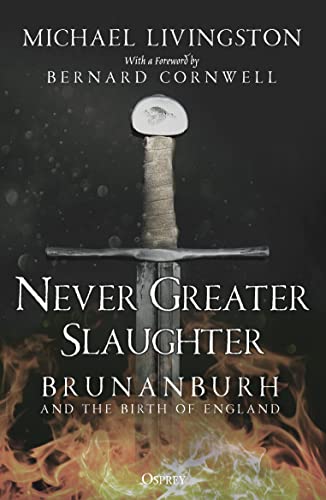
I had heard of the Battle of Brunanburh before I read Never Greater Slaughter by Michael Livingston, but my knowledge was limited to the fact that this had taken place in 937 between Æthelstan, King of England, King Alfred’s grandson, and an alliance led by Anlaf, a Viking chieftain, other chieftains and Constantine King of the Scots, in which Æthelstan was victorious. So I was very keen to find out more.
Synopsis from Amazon:
Late in AD 937, four armies met in a place called Brunanburh. On one side stood the shield-wall of the expanding kingdom of the Anglo-Saxons. On the other side stood a remarkable alliance of rival kings – at least two from across the sea – who’d come together to destroy them once and for all. The stakes were no less than the survival of the dream that would become England. The armies were massive. The violence, when it began, was enough to shock a violent age. Brunanburh may not today have the fame of Hastings, Crécy or Agincourt, but those later battles, fought for England, would not exist were it not for the blood spilled this day. Generations later it was still called, quite simply, the ‘great battle’. But for centuries, its location has been lost.
The title is taken from the poem in the Anglo-Saxon Chronicle describing the battle thus:
Never greater slaughter Was there on this island, never as many Folk felled before this By the Swords edges.
The location of the battle has been lost. Historians, archaeologists, linguists and other researchers have studied the little evidence that remains about the battle and put forward ideas about that location. In this book Livingston concludes that the only ‘certain pieces of information about the field at Brunanburgh – the place-names by which it was known in the immediate years afterwards – unquestionably point us to blood being shed in the mid-Wirral.’ (location 76%)
It seems to me that this is a very thorough and detailed book describing the battle and the various theories about its location. But not only that Livingston sets out his definition of history and its limitations. For example he says that whilst some facts will be known, a great many through the passage of time are lost, and some are facts that people have chosen to record to suit their own needs – their own bias in other words – or are simply not true.
Then Livingston describes what is known about the period leading up to the battle, describes the battle itself, and, having stated his objections to other possible locations, explains the reasons he concludes the location is in the Wirral, which seems convincing to me.
I found this a well researched and fascinating book that gave me a much better understanding of the period.
My thanks to the publishers for a review copy via NetGalley.
Every Friday Book Beginnings on Friday is hosted by Gillion at Rose City Readerwhere you can share the first sentence (or so) of the book you are reading. You can also share from a book you want to highlight just because it caught your fancy.
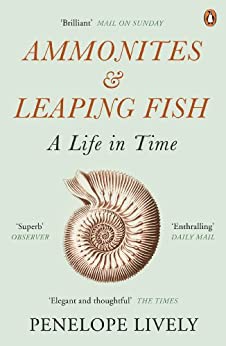
I was on holiday in the Lake District last week, overlooking Esthwaite Water. There were two shelves of books in our apartment and one of them was Ammonites and Leaping Fish: a Life in Time by Penelope Lively, so I read it whilst we were away. I’ll write more about it in a later post (although I’ve not been keeping up with reviewing the books I’ve read this summer).
This is not quite a memoir. Rather it is a view from old age.
And a view of old age itself, this place at which we arrive with a certain surprise – ambushed, or so it can seem. The view from eighty for me. One of the few advantages of age is that you can report on it with a certain authority; you are a native now and know what goes on here.
Also every Friday there is The Friday 56, hosted by Freda at Freda’s Voice, where you grab a book and turn to page 56 (or 56% of an eBook), find one or more interesting sentences (no spoilers), and post them.
Page 56:
When I was on the other side of the Atlantic a few years ago staying with my best friend in America, she produced a photo she had found of the two of us taken in the early 1980s. We gazed at it with surprised respect; ‘Weren’t we young!’ said Betty. Actually verging on middle age, but never mind – our reaction was in perfect accord: an acknowledgement of those other selves.
Penelope Lively is one of my favourite authors and I’ve been reading her books for years, all of them are enjoyable and this one is no exception. I thoroughly enjoyed it.
Synopsis from Amazon:
In this charming but powerful memoir, Penelope Lively reports from beyond the horizon of old age. She describes what old age feels like for those who have arrived there and considers the implications of this new demographic. She looks at the context of a life and times, the history and archaeology that is actually being made as we live out our lives in real time, in her case World War II; post war penny-pinching Britain; the Suez crisis; the Cold War and up to the present day. She examines the tricks and truths of memory. She looks back over a lifetime of reading and writing. And finally she looks at her identifying cargo of possessions – two ammonites, a cat, a pair of American ducks and a leaping fish sherd, amongst others. This is an elegant, moving and deeply enjoyable memoir by one of our most loved writers.
Every Friday Book Beginnings on Friday is hosted by Gillion at Rose City Readerwhere you can share the first sentence (or so) of the book you are reading. You can also share from a book you want to highlight just because it caught your fancy.
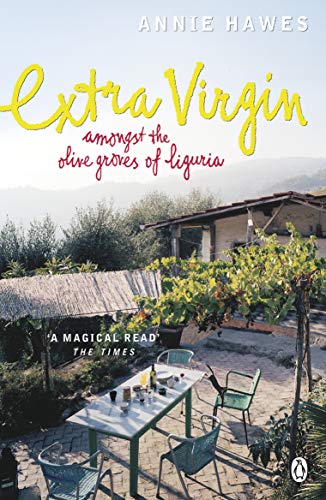
My book this week is Extra Virgin: Amongst the Olive Groves of Liguria by Annie Hawes. I had completely forgotten that I had bought this book; I have no idea when or where I bought it, but it’s there on my bookshelves waiting to be read. I’m guessing I bought it after reading other books about life in Italy by Frances Mayes, Bella Tuscany and Under the Tuscan Sun about restoring a crumbling villa and building a new life in the Italian countryside, full of the pleasures of living in Tuscany – the sun, the food, the wine and the local people.
It begins with a Prologue:
Hearing the racket from above, Franco wades through his pile of prunings and peers up through the trailing branches. A pair of foreign females, skin so white it’s blinding in the glare of the sun, are messing about outside Pompeo’s old place, a few terraces uphill, shouting and giggling.
Followed by Chapter I :
Glamour , we soon spotted was not the outstanding feature of the village of Diano San Pietro.
Also every Friday there is The Friday 56, hosted by Freda at Freda’s Voice, where you grab a book and turn to page 56 (or 56% of an eBook), find one or more interesting sentences (no spoilers), and post them.
Page 56:
Here in Liguria you are surrounded by life-threatening terrors.
Synopsis from Amazon
A small stone house deep among the olive groves of Liguria, going for the price of a dodgy second-hand car. Annie Hawes and her sister, on the spot by chance, have no plans whatsoever to move to the Italian Riviera but find naturally that it’s an offer they can’t refuse. The laugh is on the Foreign Females who discover that here amongst the hardcore olive farming folk their incompetence is positively alarming. Not to worry: the thrifty villagers of Diano San Pietro are on the case, and soon plying the Pallid Sisters with advice, ridicule, tall tales and copious hillside refreshments …






 BooksPlease