The Monocled Mutineer by John Fairley & William Allison

When I was asked if I would read and review a revised edition of The Monocled Mutineer by John Fairley and William Allison, the book on which the 1986 BBC TV series was based I was immediately interested as I had watched the TV series.

Description from the Press Release:

In 1917 British, New Zealand and Australian troops stationed at the Étaples Training Camp in northern France protested against the inhuman conditions and the protest erupted into mutiny. Private Percy Toplis was named by the authorities as a leader of this mutiny. While several of the mutineers were executed in its aftermath, Toplis escaped and remained at large for three years. The Army immediately covered up the mutiny, thousands of the participants died shortly afterwards in the Passchendaele offensive while the survivors remained silent for over fifty years. After three years as Britain’s most wanted man Percy Toplis was killed in 1920 by a policeman.

My thoughts:

This is the 2nd and updated edition of The Monocled Mutineer, which  includes a new introduction and epilogue that expand on newly discovered information about the events of the mutiny and the government’s response to it. It is primarily based on interviews and correspondence with survivors of the First World War nearly sixty years after the events they describe. In 1976 the authors advertised in newspapers asking whether any veterans from the First World War had recollections of the events in Étaples in September 1917. They received many replies containing:

  … sharp, bitter accounts of events long ago, but far from forgotten. Inevitably they were careful handwritten stories in old men’s script, teased out without any other prompting than the brief enquiry in their local paper. (page 2)

In addition to the anecdotal evidence the authors have used other sources including the published personal reminiscences of Edwin Woodhall,  Detective and Service Days and Lady Angela Forbes. Memories and Base Details; journalists’ accounts in various periodicals; and have drawn background material from records about the First World War in the  Imperial War Museum, The Public Record Office and the British Newspaper Library.

Not many contemporary records have survived that relate to the mutiny. One of the surviving records is the war diary of the Commandant at the Étaples Camp,  Brigadier-General Andrew Graham Thomson. Thompson describes what happened as a ‘disturbance’ and as ‘riots’ and ‘breakouts’:

Disturbance in Reinforcement Camp between military police and troops, Corporal Wood, 4th Gordons being accidentally shot … a crowd of about 1,000 gathered at Ã‰taples town, and about 7.30 pm tried to break into the Sevigne cafe where two policemen were hiding. (page 1)

But in 1978, after the publication of the 1st edition and the BBC dramatisation, the British government admitted that the events that took place at Ã‰taples had been a mutiny and also that  it was probable that the records relating to the board of inquiry into the events had been destroyed many years ago. The files on the mutiny and Percy Toplis’ military records are closed until 2017.

Historical accuracy is never easy to obtain, especially where records have been lost and where there is a limited number of sources to compare one against the other. In this case the main sources of information are the personal accounts from the veterans as they remembered them many years later.

And the picture they paint is a most remarkable and shocking one of the brutal and inhuman conditions which were in operation at the camp. As for Toplis’ part in the mutiny, the letters from the veterans occasionally mentioned him and whilst some thought he was the main ringleader, few thought he was the only one, but that there were a number of soldiers involved. One remembered Toplis’ name on a wanted poster and wrote:

If he was a villain then he was not the only one around Étaples. Maybe he too was tired of being humiliated, deprived, brutalized and treated like a dog. We had all got tired of being treated with less consideration than that given to horses. (page 91)

Another reported that Toplis, heading a mob of about 1,000 deserters confronted Thompson, surrounding his car. Toplis climbed on the running board and dictated the terms for ending the mutiny (page 93). After the mutiny ended, whilst some of the ringleaders were executed, Toplis escaped. Others were killed in the battle for Passchendale which began on 20th September.

Maybe more information will be available in 2017 when the files are opened and a fuller picture of what happened will emerge.

The Monocled Mutineer also goes into detail about Percy Toplis’ life before and after the war. Coming from a working-class background, by the age of eleven he was already a con artist and a thief. He must have been a charismatic character, able to both charm and deceive people, successfully impersonating officers, able to melt into the background deserting and then rejoining the army seemingly at will, not sentenced to execution by the firing squad (the penalty for desertion). But after the war ended in 1920 his luck ran out as he was accused of murdering a taxi-driver. The inquest held that he was guilty in his absence. Toplis fled, evading capture for six weeks and he was eventually shot down in a police ambush near Plumpton in Cumberland.

  • Paperback: 208 pages
  • Publisher: Souvenir Press Ltd; 2nd Revised edition edition (7 Sept. 2015)
  • Language: English
  • ISBN-10: 028564310X
  • ISBN-13: 978-0285643109
  • Source: review copy from the publisher

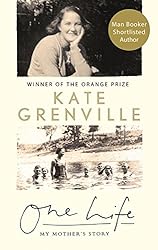
One Life: My Mother’s Story by Kate Grenville

One Life: My Mother’s Story

Australian author, Kate Grenville has written a beautiful biography of her mother Nance Russell. A book that casts light not only on Nance’s life but also on life in Australia for most of the 20th century. Nance was born in 1912 and died in 2002, so she lived through two World Wars, an economic depression and a period of great social change. Nance wasn’t famous, the daughter of a rural working-class couple who became pub-keepers, but she was a remarkable woman.

Kate’s mother had wanted to write her own story and had left fragments of stories about her ancestors, stories her mother had told her, about her childhood, but most about her adult life up to her mid-forties. (Kate Grenville has used some of the stories of her ancestors in her own novels – such as The Secret River, a wonderful historical novel).

So this biography reads like a novel, but is based on Nance Russell’s memories, making it much more than a factual account of a person’s life. It’s is a vivid portrait of a real woman, a woman of great strength and determination, who had had a difficult childhood, who persevered, went to University, became a pharmacist, opened her own pharmacy, brought up her children, and helped build the family home. She faced sex discrimination and had to sell her pharmacy in order to look after her children at home.

Nance had wanted to be a teacher, but when she said this to her mother she ‘exploded. Over her dead body Nance was going to be a teacher!‘  But her parents thought that pharmacy was ‘good for a girl‘. It was 40  years later, after her own children were grown up, that Nance took an arts degree, then a teaching diploma and a diploma in teaching English as a foreign language. ‘She taught French in schools, taught English to newly arrived migrant children, and ran her own business teaching English to the wives of Japanese business men.

My bare account of Nance’s life doesn’t do justice to this book, in which Kate Grenville brings to life both the good times and the bad times, writing about her mother’s heartache, worries, joys and sorrows, of the hard times during the economic depression, all of it as a whole making a rich and fulfilled life. Very near to the end of the book Kate Grenville writes:

One of her last trips [to Europe] was to Florence, where she stood in front of the frescoes that Dante had seen. A line came into her mind from somewhere in all her reading: Suffering pierces the shield of habit. It was a thought that made sense of the unhappiness she’d known, and also the happiness. She knew that ultimately it didn’t matter what happened to you. In the light of eternity, in the light of all those dead writers in whose work she’d recognised the great truths, only one thing mattered. What other people did was up to them. Your job was to live – as richly and honestly as you could – your one life. (page 246)

Reading Challenges: Non Fiction Reading Challenge 2015 and What’s in a Name? 2015 in the category of a book with a familial relation in the title.

The Golden Age of Murder by Martin Edwards

Although I read a lot of crime fiction my knowledge of the authors and their books written during the ‘Golden Age’ so far has been limited to Agatha Christie, Dorothy L Sayers, Margery Allingham, and Michael Innes so when I saw that Martin Edwards had written The Golden Age of Murder: The Mystery of the Writers Who Invented the Modern Detective Story I thought it would be the ideal book to find out more. And I was absolutely right and the works of a whole host of authors has been opened up to me.

This is the story of the writers who formed the Detection Club between the two World Wars. Edwards sets the authors and their works in context – that period when Britain was recovering from the horrors of the First World War, living through an age of austerity as unemployment grew, the cost of living soared leading to the General Strike whilst the rich partied and saw the beginnings of the end of the British Empire. But the writers and the works although well grounded in their own time and culture have a lasting appeal and influence on current story telling and film and television.

The Club grew out of the dinners Anthony Berkeley and his wife Peggy hosted at their home in the late 1920s, attended by people including Agatha Christie, Dorothy L Sayers, Douglas and Margaret Cole, Ronald Knox, Henry Wade, H C Bailey and John Rhode. Eventually the Club was formed, with Rules and a Constitution and a Committee. The members benefited in various ways, meeting fellow detective novelists, discussing ideas, supporting each other and even working together on collaborative writing projects – such as The Floating Admiral, in which a dozen writers each wrote one chapter. The main aim of the Club was to encourage and maintain a high standard of work in writing detective novels.

I was fascinated by the number of real crimes that influenced the writers, both current at the time and crimes from the past. Their interest as they discussed these cases, such as Dr Crippen’s poisoning of his wife, in turn inspired them not only to write but also to play the detective themselves. Indeed, Edwards shows that the image of the Golden Age as ‘cosy’ murder mysteries is false:

Their novels are often sneered at as ‘cosy’, and the claim that their characters were made from cardboard has become a lazy critical cliché. The very idea that detective fiction between the wars represented a ‘Golden Age’ seems like a misty-eyed nostalgia of an aged romantic hankering after a past that never existed.

The best detective novels of the Thirties

were exhilarating, innovative and unforgettable. They explored miscarriages of justice, forensic pathology and serial killings long before these topics became fashionable (and before the term’serial killer’ was invented). …

The climax of one of Berkeley’s novels was so shocking that when Alfred Hitchcock came to film it, even the legendary master of suspense, the man who would direct Psycho, lost his nerve. He substituted a final scene that was a feeble cop-out in comparison to Berkeley’s dark and horrific vision. (page 9)

There is no way I can do justice to this book in a short post; it is simply a tour de force, comprehensive, crammed full of fascinating information about the period and the authors.

Martin Edwards’ love of Golden Age fiction shines throughout the book, (skilfully writing about books without giving away any spoilers) and has spurred me on to read more books from this period.

Book Beginnings: An Astronaut’s Guide to Life on Earth

Book Beginnings ButtonEvery Friday Book Beginnings on Friday is hosted by Gillion at Rose City Reader where you can share the first sentence (or so) of the book you are reading, along with your initial thoughts about the sentence, impressions of the book, or anything else the opener inspires.

This morning I have started to read An Astronaut’s Guide to Life on Earth by Chris Hadfield.

It begins with an Introduction: Mission Impossible

The windows of a spaceship casually frame miracles. Every 92 seconds, another sunrise: a layer cake that starts with orange, then a thick wedge of blue, then the richest, darkest icing decorated with stars.

Moving on to the first chapter:The Trip Takes a Lifetime

One morning a strange thought  occurs to me shortly after waking: the socks I am about to put on are the ones I’ll wear to leave Earth. That prospect feels real yet surreal, the way a particularly vivid dream does. The feeling intensifies at breakfast, when reporters jostle each other to get a good photo, as though I’m a condemned man and this is my last meal.

I first heard of this book when Chris Hadfield appeared on Sunday Brunch and then Jackie of Farm Lane Books Blog wrote about his book, which reminded me I wanted to read it.

What an amazing  experience to be looking down on Earth, seeing its entirety and beauty from a totally different perspective!

Stephen Hawking: His Life and Work by Kitty Ferguson

Blurb:

Stephen Hawking is one of the most remarkable figures of our time, a Cambridge genius who has earned international celebrity as a brilliant theoretical physicist and become an inspiration and revelation to those who have witnessed his courageous triumph over disability. This is Hawking’s life story by Kitty Ferguson, who has had special help from Hawking himself and his close associates and who has a gift for translating the language of theoretical physics for non-scientists.

Twenty years ago, Kitty Ferguson’s Stephen Hawking: Quest for a Theory of Everything became a Sunday Times bestseller and took the world by storm. She now returns to the subject to transform that short book into a hugely expanded, carefully researched, up-to-the-minute biography.

Recently I watched The Theory of Everything, with Eddie Redmayne playing the part of Stephen Hawking. I think it’s a brilliant film and it made me want to know more about Stephen Hawking. Stephen Hawking: His Life and Work by Kitty Ferguson, subtitled The Story and Science of One of the Most Extraordinary, Celebrated and Courageous Figures of Our Time, has certainly expanded my knowledge, even if some of the science is beyond me.

At first I read the scientific explanations carefully and felt I understood them until about half way into the book, when I struggled and ended up skim reading passages. I could cope on an elementary level with quantum mechanics, the uncertainty principle is not new to me, nor the theory of black holes, and singularity. I learnt about the ‘event horizon’, which is the ‘radius-of-no-return where velocity becomes greater than the speed of light’, and about Hawking Radiation, the radiation produced by a black hole. But when I got up to ‘brane’ theory and p-branes, I was lost – it’s too mathematical for my pea-brain! But I still think I learned a lot. It helps that there is not only an index, but also a glossary that explains many of the scientific terms (not p-branes, unfortunately).

The book moves between biography and Hawking’s work, painting a picture of a warm, likeable, humorous, and courageous man with an exuberance for life. There’s a lot about his health, his career, his trips abroad and his relationships with colleagues. But not much about his marriages or divorces; I expect that was Hawking’s preference. I hadn’t known that he liked Marilyn Monroe, having a life-size picture of her on the door of his office, or that he has co-written children’s books with his daughter Lucy. They look very good!

Details from Fantastic Fiction:
1. George’s Secret Key to the Universe (2007)
2. George’s Cosmic Treasure Hunt (2009)
3. George and the Big Bang (2011)
4. George and the Unbreakable Code (2014)
5. George and the Blue Planets (2016)


I was fascinated, as I was when watching the film, with how he lives with Amyotrophic Lateral Sclerosis (ALS) a form of motor neurone disease and the remarkable fact that he has lived so long with this condition and yet can say, ‘ Although I cannot move, and I have to speak through a computer, in my mind I am free.‘ (page 434)

Kitty Ferguson writes:

Hawking’s life and his science continue to be full of paradoxes. Things are often not what they seem. Pieces that fit together refuse to do so. Beginnings may be endings; cruel circumstances can lead to happiness, although fame and success may not; two brilliant and highly successful scientific theories taken together yield nonsense; empty space isn’t empty; black holes aren’t black; the effort to unite everything in a simple explanation reveals, instead a fragmented picture; and a man whose appearance inspires shock and pity takes us joyfully to where the boundaries of time and space ought to be – and are not. (page 17)

  • Paperback: 528 pages
  • Publisher: Bantam (5 July 2012)
  • Language: English
  • ISBN-10: 0857500740
  • ISBN-13: 978-0857500748
  • Source: library book

I have an e-book of Jane Hawking’s book, Travelling to Infinity; My Life with Stephen, which I’ll be reading sometime soon.

First Chapter ˆ¼ First Paragraph Intros

First chapterEvery Tuesday Diane at Bibliophile by the Sea hosts First Chapter ˆ¼ First Paragraph Tuesday Intros, where you can share the first paragraph, or a few, of a book you are reading or thinking about reading soon.

I’m currently reading The Golden Age of Murder by Martin Edwards, described on the back cover as

‘the extraordinary story of British detective fiction between the two World Wars, and the fascinating people who wrote it. A gripping real-life detective story, this book investigates how Agatha Christie and her colleagues in the mysterious Detection Club transformed crime fiction. Their work cast new light on unsolved murders, whilst hiding clues to their authors’ darkest secrets, and their complex and sometimes bizarre private lives.

First Chapter:

Chapter I, The Ritual in the Dark

On a summer evening in 1937, a group of men and women gathered in the darkness to perform a macabre ceremony. They had invited a special guest to witness their ceremony. She was visiting London from New Zealand and a thrill of excitement ran through her as the appointed time drew near. She loved drama, and at home she worked in the theatre. Now she felt as tense as when the curtain was about to rise. To be a guest at this dinner was a special honour. What would happen next she could not imagine.

Many congratulations to Martin Edwards who is to be the next President of  the Detection Club when Simon Brett, the current President retires in November. I really cannot think of a better choice than Martin, a well-deserved honour indeed!