My Week in Books: 13 April 2016

This Week in Books is a weekly round-up hosted by Lypsyy Lost & Found, about what I’ve been reading Now, Then & Next.

IMG_1384-0

A similar meme,  WWW Wednesday is run by Taking on a World of Words.

Now: Currently I’m reading three books, because I like to vary my reading. So, I have a classic, a crime fiction and a non-fiction book on the go:

Blurb:

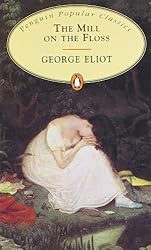
George Eliot drew on her own anguished childhood when she depicted the stormy relationship between Maggie and Tom Tulliver. Maggie’s often tormented battle to do her duty and belong on the one hand, and to be  herself, wild and natural, on the other, propels her from one crisis to another. As the Tulliver fortunes decline and fall, the rift between Maggie and her family becomes almost irreconcilable. But Maggie’s biggest mistake of all is to fall in love with Stephen Guest who is engaged to another woman.

Both a sharp and observant picture of English rural life and a profoundly convincing analysis of a woman’s psychology, The Mill on the Floss is a novel that tackles the complexities of morality versus desire.

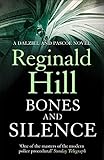
  • Bones and Silence by Reginald Hill – a Dalziel and Pascoe crime fiction novel. It’s book 11 in the series, which I’m reading totally out of order (there are over 20 in the series) and it is really good.

Blurb:

When Detective Superintendent Andy Dalziel witnesses a bizarre murder across the street from his own back garden, he is quite sure who the culprit is. After all, he’s got to believe what he sees with his own eyes. But what exactly does he see? And is he mistaken? Peter Pascoe thinks so.

Dalziel senses the doubters around him, which only strengthens his resolve. To make matters worse, he’s being pestered by an anonymous letter-writer, threatening suicide. Worse still, Pascoe seems intent on reminding him of the fact.

Meanwhile, the effervescent Eileen Chung is directing the Mystery Plays. And who does she have in mind for God? Daziel, of course. He shouldn’t have too much difficulty acting the part’¦

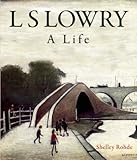
  • L S Lowry: A Life by Shelley Rohde. Lowry is one of my favourite artists, well known for his urban paintings of industrial towns but his work covers a wide range of themes and subjects, from landscapes and seascapes to portraits. This biography is based on collections of private papers held in The Lowry, Salford Quays.
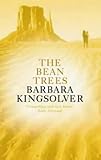
  • Then: I’ve recently finished The Bean Trees by Barbara Kingsolver, her first novel. I’ve read some of her other books –  loved The Poisonwood Bible which I’ve read a few times, and Homeland, a book of short stories, but wasn’t so taken with The Lacuna. I thoroughly enjoyed The Bean Trees – my review will follow shortly:

Blurb:

Plucky Taylor Greer grows up poor in rural Kentucky with two goals: to avoid pregnancy and to get away. She succeeds on both counts when she buys an old car and heads west. But midway across the country motherhood catches up with her when she becomes the guardian of an abandoned baby girl she calls Turtle. In Tuscon they encounter an extraordinary array of people, and with their help, Taylor builds herself and her sweet, stunned child a life.

Next: I really don’t know.

What about you? What are you reading this week?

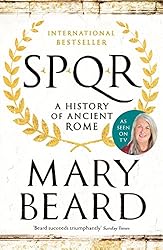
SPQR: A History of Ancient Rome by Mary Beard

Mary Beard is a Professor of Classics at Newnham College, Cambridge and is the Classics editor of the TLS. She is a fellow of the British Academy and a member of the American Academy of Arts and Sciences. And she writes a blog – A Don’s Life, which appears in The Times. I’ve enjoyed watching her TV programmes and so it doesn’t surprise me at all  that SPQR is just as entertaining and informative as the programmes – and very readable, even for someone, like me, who only has a smattering of knowledge about Roman history.
I took my time reading SPQR; some of it covered familiar ground and some was new to me. It’s a fascinating account of how Rome grew and sustained its position for so long, covering the period from the fourth century BCE when Rome was expanding from a small village, up to the moment in 212 CE when the emperor Caracalla made every free inhabitant of the Roman Empire a full Roman citizen.

The title, SPQR, is taken from the Roman catchphrase, Senatus Populusque Romanus meaning the Senate and People of Rome and it is on these two elements – the Senate and the People that Mary Beard concentrates, focussing on the city of Rome, on Roman Italy and also looking at Rome from the outside, from the point of view of those living in the wider territories of the Roman empire.

The book is not strictly chronological and begins with an event I know a bit about through reading Robert Harris’ Lustrum. It’s the Catiline conspiracy in 63 BC, which concerned a plot, or so it was rumoured to overthrow the Roman Empire and Cicero’s part in uncovering the plot and saving the state. Mary Beard begins with this event, because:

it is only in the first century BCE that we can start to explore Rome, close up and in vivid detail through contemporary eyes. An extraordinary wealth of words survives from this period: from private letters to public speeches, from philosophy to poetry – epic and erotic, scholarly and straight from the street.’ (location 143)

She highlights the effect Cicero had, not just on the politics of his own time but also on the language of modern politics. And it is from Cicero’s speeches, essays, letters, jokes and poetry and other Roman writers that we see the Roman world not just in 63 BCE but throughout the city’s history.

For the earlier period however, there are no contemporary accounts and so the early years of the city and of the earliest Romans has to be reconstructed  from individual pieces of evidence from fragments of pottery or letters inscribed on stone.

There are also, of course the myths and stories as well and Beard refers to these, such as the story of Romulus and Remus, who are said to have founded the city, told by Livy and several other Roman writers. Tradition has it that Romulus and his tiny community fought against their neighbours, the Sabines, and erected a temple on the site of the battle, which later became the Forum, but there is no archaeological evidence to identify the remains of this temple. Archaeology, in fact, only sketches what Rome in the earliest period was like and it is very different from the myths. Later Roman writers and modern historians alike have debated intensely the stories of Romulus and Remus, raising the questions of what it was to be Roman. And Beard states:

There is often a fuzzy boundary between myth and history … and … Rome is one of those cultures where the boundary is particularly blurred. … For a start there was almost certainly no such thing as a founding moment of the city of Rome. … Although Romans usually assumed that he [Romulus] had lent his name to his newly established city, we are now fairly confident that the opposite was the case: ‘Romulus’ was an imaginative construction out of ‘Roma’. ‘Romulus was the archetypal ‘Mr Rome.’ (locations 844 – 850)

From that point Beard goes on to discuss the basics of Roman culture, including the nature of Roman marriage, Roman slaves, the Republican system, the principle of freedom, or ‘libertas’, the changing definition of what it meant to be ‘Roman’, Roman domination of the Mediterranean, dictatorship, civil war, taxation, the modern Western system of timekeeping, the emperors and their imperial successes and military victories and the army – and so much more!

SPQR is an immense  achievement, covering 1,000 years of the history of Ancient Rome, and not only the history but also explaining Roman values, what they thought about themselves, and the way of life of both the People and the Senate.

  • Format: Kindle Edition
  • File Size: 22379 KB
  • Print Length: 608 pages
  • Publisher: Profile Books; Main edition (20 Oct. 2015)
  • Source: I bought it

Reading Challenges: Mount TBR 2016 – an e-book I’ve owned since November 2015

My Week in Books: 10 February 2016

This Week in Books is a weekly round-up hosted by Lypsyy Lost & Found, about what I’ve been reading Now, Then & Next.

IMG_1384-0

A similar meme,  WWW Wednesday is run by Taking on a World of Words.

Currently I’m reading two books:

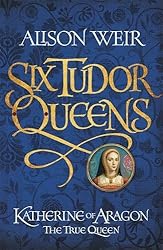
Six Tudor Queens: Katherine of Aragon, the True Queen by Alison Weir, a proof copy – expected publication 5 May 2016. This is the first novel of the Six Tudor Queens series.

Blurb:

A Spanish princess. Raised to be modest, obedient and devout. Destined to be an English Queen. Six weeks from home across treacherous seas, everything is different: the language, the food, the weather. And for her there is no comfort in any of it. At sixteen years-old, Catalina is alone among strangers. She misses her mother. She mourns her lost brother. She cannot trust even those assigned to her protection.

Acclaimed, bestselling historian Alison Weir has based her enthralling account of Henry VIII’s first wife on extensive research and new theories. She reveals a strong, spirited woman determined to fight for her rights and the rightful place of her daughter. A woman who believed that to be the wife of a King was her destiny.

History tells us how she died. This captivating novel shows us how she lived.

I’m also reading SPQR: a History of Ancient Rome by Mary Beard, the Kindle edition.

Blurb:

Ancient Rome matters. Its history of empire, conquest, cruelty and excess is something against which we still judge ourselves. Its myths and stories – from Romulus and Remus to the Rape of Lucretia – still strike a chord with us. And its debates about citizenship, security and the rights of the individual still influence our own debates on civil liberty today. 

SPQR is a new look at Roman history from one of the world’s foremost classicists. It explores not only how Rome grew from an insignificant village in central Italy to a power that controlled territory from Spain to Syria, but also how the Romans thought about themselves and their achievements, and why they are still important to us.

Covering 1,000 years of history, and casting fresh light on the basics of Roman culture from slavery to running water, as well as exploring democracy, migration, religious controversy, social mobility and exploitation in the larger context of the empire, this is a definitive history of ancient Rome.

SPQR is the Romans’ own abbreviation for their state: Senatus Populusque Romanus, ‘the Senate and People of Rome’.

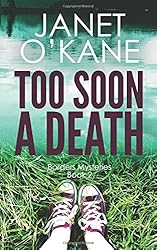
I’ve recently finished Too Soon a Death by Janet O’Kane, crime fiction set in the Scottish Borders.

You can read my thoughts on this book in my previous post.

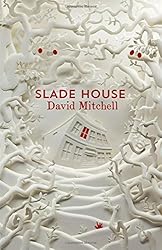
And next I’ll be reading Slade House by David Mitchell, or at least I think I’ll be reading this next. When the time comes I could fancy something completely different.

Blurb:

Born out of the short story David Mitchell published on Twitter in 2014 and inhabiting the same universe as his latest bestselling novel The Bone Clocks, this is the perfect book to curl up with on a dark and stormy night.

Turn down Slade Alley – narrow, dank and easy to miss, even when you’re looking for it. Find the small black iron door set into the right-hand wall. No handle, no keyhole, but at your touch it swings open. Enter the sunlit garden of an old house that doesn’t quite make sense; too grand for the shabby neighbourhood, too large for the space it occupies.

A stranger greets you by name and invites you inside. At first, you won’t want to leave. Later, you’ll find that you can’t.

This unnerving, taut and intricately woven tale by one of our most original and bewitching writers begins in 1979 and reaches its turbulent conclusion around Hallowe’en, 2015. Because every nine years, on the last Saturday of October, a ‘guest’ is summoned to Slade House. But why has that person been chosen, by whom and for what purpose? The answers lie waiting in the long attic, at the top of the stairs…

What have you been reading this week and what have got in mind to read next?

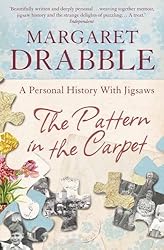
The Pattern in the Carpet by Margaret Drabble

I began reading The Pattern in the Carpet: A Personal History With Jigsaws in December and finished it this morning. It took me a long time not because it’s difficult reading (it isn’t) but because I only read short sections each day – I often read non-fiction like that.

FOREWORD

This book is not a memoir, although parts of it may look like a memoir. Nor is it a history of the jigsaw puzzle, although that it was what it was once meant to be. It is a hybrid. … This book started off as small history of the jigsaw, but it has spiralled off in other directions and now I am not sure what it is.

It is not the book she meant to write and it is not the book I expected to read. I enjoyed parts of immensely – those parts about her childhood, and life at Bryn, her grandparents’ house in Long Bennington and about her beloved Aunt Phyl (Phyllis Boor) and of course those parts about jigsaws, both personal and historical, about mosaics (looking at them as a form of jigsaw), the history of children’s games and puzzles and amusements. She does ‘spiral off in other directions’ which meant in parts it lacks a clear structure in a sort of ‘stream of conciousness’ style, particularly in her reminiscences and nostalgia about life (reproduced in some jigsaws) in a rural community that no longer exists.

I noted down a few points she made about jigsaws:

  • jigsaws renew the brain cells – that’s good! (page 66)
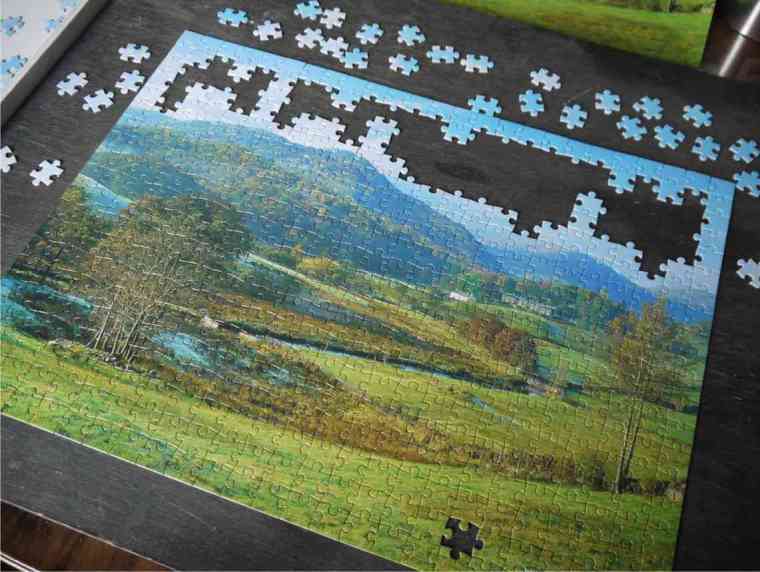
  • putting away a finished jigsaw can be a sad moment – I agree and usually leave mine for a while before dismantling them. These days I take a photo. (page 94)
  • because they have no verbal content they exercise a different part of the brain, bringing different neurons and dendrites into play. (that’s good too) (page 122)
  • some people disapprove of jigsaws, some of knitting, of card games and other activities and artistic traits. (page 187)
  • jigsaws maybe connected with depression and used as time-killers, filling empty days and evenings (page 242)
  • people can be addicted to jigsaws (page 244)
  • doing a jigsaw is like creating order out of chaos (page 245)
  • jigsaws reproducing works of art helps you learn about art (pages 250-1)
  • jigsaws as metaphors  and simile are everywhere eg wikipedia etc (page 267)

I don’t think I’m a jigsaw addict, in the same way as I am a book addict, after all I do just a few jigsaws now and then, whereas reading is a constant and I feel lost if I don’t have a book on the go. And you may have noticed (from the side bar) that I am not currently reading a book! Time to find the next one to read …

Nonfiction Challenge 2015 Wrap Up

The Nonfiction Reading Challenge was hosted by The Introverted Reader It ran between 1 January to 31 December 2015.

Nonfiction Reading Challenge hosted at The Introverted Reader
Image courtesy of Serge Bertasius Photography at FreeDigitalPhotos.net

The Challenge:  Read any non-fiction book(s), adult or young adult.. You could choose anything. Memoirs, History, Travel ‘“ absolutely anything that is classified as non-fiction counts for this challenge.

The levels:

Dilettante‘“Read 1-5 non-fiction books

Explorer‘“Read 6-10

Seeker‘“Read 11-15

Master‘“Read 16-20

I reached the Seeker level and read more than in previous years.

I read mainly autobiography/biography/memoir, and history:

  1. Wilkie Collins by Peter Ackroyd (Biography)
  2. An Autobiography by Anthony Trollope
  3. Spilling the Beans by Clarissa Dickson Wright (Autobiography)
  4. Burying the Typewriter: Childhood Under the Eye of the Secret Police by Carmen Bugan (Autobiography)
  5. Nothing To Be Frightened Of by Julian Barnes (Memoir, philosophy, reflection on the fear of death, belief)
  6. H is for Hawk by Helen Macdonald (Memoir, Falconry, Goshawk, T H White)
  7. Poirot and Me by David Suchet (Autobiography, Agatha Christie’s Poirot)
  8. The Golden Age of Murder by Martin Edwards (Crime Fiction, History, Biography)
  9. Stephen Hawking: His Life and Work by Kitty Ferguson (Biography, Science)
  10. One Life: My Mother’s Story by Kate Grenville (Biography)
  11. Come, Tell Me How You Live by Agatha Christie Mallowan (Memoir, Syria, 1930s)
  12. Alan M Turing by Sara Turing (Biography)
  13. Watching War Films with My Father by Al Murray (Memoir, History, Second World War)
  14. Alan Turing:Unlocking the Enigma by David Boyle (Biography, History)
  15. The Monocled Mutineer by John Fairley and William Allison (History, First World War)
  16. Mrs Jordan’s Profession: the Story of a Great Actress and a Future King by Claire Tomalin (Biography, History)
  17. Nagasaki: Life After Nuclear War by Susan Southard (Japan, Nuclear Weapons, History, World War Two)
  18. A Walk in the Woods by Bill Bryson (Appalachian Trail, USA)
  19. The Churchill Factor by Boris Johnson (History, Biography)

Nagasaki: Life After Nuclear War by Susan Southard

Nagasaki: Life after Nuclear War by Susan Southard is an amazing, heart-wrenching book.

The facts are horrendous – on August 9th 1945, two days after the atomic bombing of Hiroshima, a five-ton plutonium bomb was dropped on the small coastal town of Nagasaki. The effects were cataclysmic.

This must be one of the most devastatingly sad and depressing books I’ve read and yet also one of the most uplifting, detailing the dropping of the bomb, which killed 74,000 people and injured another 75,000. As the subtitle indicates this book is not just about the events of 9 August 1945 but it follows the lives of five of the survivors from then to the present day. And it is their accounts which make this such an emotive and uplifting book, as it shows their bravery, how they survived, and how they were eventually able to tell others about their experiences. Along with all the facts about the after effects of the bombing, the destruction, and radiation, it exposes the true horror of atomic warfare, making it an impressive and most compelling account of pain, fear, bravery and compassion.

Throughout the book the black and white photos illustrate the true horror of the effects of the bomb – photos of Nagasaki both before and after the bomb was dropped, of five survivors – Wada Kohi (aged 18 in August 1945), a street car operator; Nagano Etsuko (aged 16), who worked on a production line in a Mitsubishi airplane parts factory;  Taniguchi Sumiteru (aged 16), who worked at Minchino-o Post Office; Yoshida Katsuji (aged 13), a student at Nagasaki Prefecture Technical School on a ship building course; and Do-oh Mineko (aged 15), formerly a student at Keiho Girls High School, working at the Mitsubishi Arms Factory Onashi Plant. There are also maps showing Japan today and of Nagasaki 1945 showing the Scope of Atomic Bomb Damage.

Susan Southard’s ten years of research has resulted in this impressive book as she reveals what happened in particular to these five survivors, their immediate injuries, the radiation-related cancers and illnesses they have suffered, and their difficulties of daily living still in pain both physical and emotional.

In addition to all that Nagasaki ‘reveals the censorship that kept the suffering endured by the hibakusha [atomic bomb-affected people] hidden around the world. For years after the bombings news reports and scientific research were censored by U.S. occupation forces and the U.S. government led an efficient campaign to justify the necessity and morality of dropping the bombs’ (from the jacket sleeve).

I knew a bit about Hiroshima and Nagasaki before I read this book but it has opened my eyes to the true horror of nuclear war and the need to prevent anything like this happening again.

Many thanks to Souvenir Press Ltd for sending me a complimentary copy for review.

  • Hardcover: 416 pages
  • Publisher: Souvenir Press Ltd (2 Nov. 2015)
  • Language: English
  • ISBN-10: 0285643274
  • ISBN-13: 978-0285643277