Top Ten Tuesday: Books On My Spring 2020 TBR

top-ten-tuesday-new

Top Ten Tuesday is a weekly meme created by The Broke and the Bookish and now hosted by Jana at That Artsy Reader Girl. For the rules see her blog.

This week’s topic is Books On My Spring 2020 TBR. Some of these books have been on my shelves unread for a long time, some are new additions and others are e-books from NetGalley. These are just the tip of the iceberg and when the time comes to start a new book it might be one of these – or any of the other TBRs on shelves.

First the physical books
Spring 20 tbr

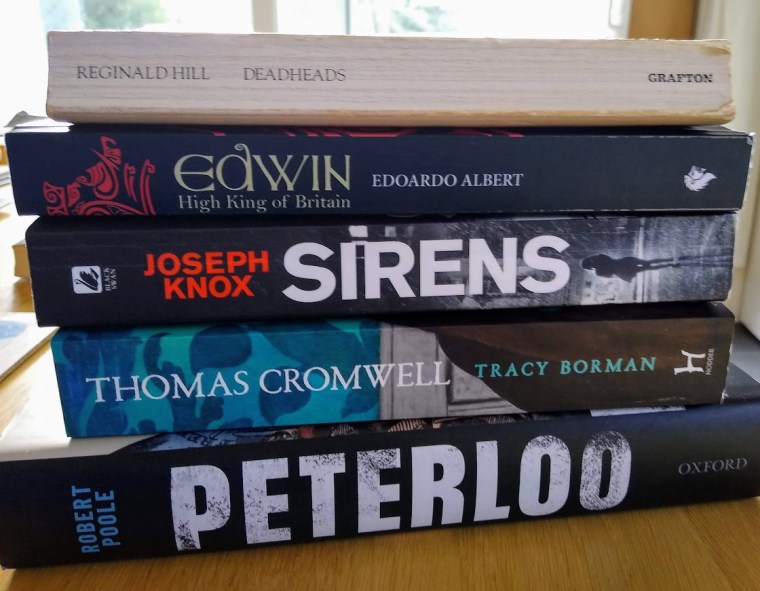
Deadheads by Reginald Hill, the 7th Dalziel and Pascoe novel. Patrick Alderman’s Great Aunt Florence collapsed into her rose bed leaving him Rosemont House with its splendid gardens. But was it murder?

Edwin: High King of Britain by Edoardo Albert, book 1 of 3 in the Northumbrian Thrones series. Historical fiction set in the 7th century-  Edwin, the deposed king of Northumbria, seeks refuge at the court of King Raedwald of East Anglia. But Raedwald is urged to kill his guest by Aethelfrith, Edwin’s usurper.

Sirens by Joseph Knox, the first Detective Aidan Waits thriller, set in Manchester. I’ve read books two and three, so it’s about time I read the first. It’s described on the back cover as a powerhouse of noir by Val McDermid.

The next two books are historical nonfiction:

As I’m currently reading Hilary Mantel’s third book in her Thomas Cromwell trilogy, it reminded me that I haven’t read historian, Tracy Borman’s biography of him – Thomas Cromwell: the untold story of Henry VIII’s most faithful servant.

Peterloo: the English Uprising by Robert Poole, about the ‘Peterloo massacre’ in St Peter’s field, Manchester on 16th August 1819 when armed cavalry attacked a peaceful rally of some 50,000 pro-democracy reformers. This is described on the back cover as a landmark event in the development of democracy in Britain – the bloodiest political event of the nineteenth century on English soil.

Next e-books

The Last Protector by Andrew Taylor, book 4 in his James Marwood & Cat Lovett series, historical crime fiction set in Restoration England. I loved the first three books, so I have high hopes that I’ll love this one too. It will be published on 2 April.

The Lost Lights of St Kilda by Elisabeth Gifford, historical fiction, a love story that crosses oceans and decades. It’s set on a Scottish island in 1927 and in worn-torn France in 1940.

Fresh Water for Flowers by Valérie Perrin and translated from the French by Hildegarde Serle, to be published in June. A funny, moving, intimately told story of Violette, the caretaker of a cemetery who believes obstinately in happiness.

The Measure of Malice: Scientific Detection Stories edited by Martin Edwards. A collection of classic mystery stories using scientific methods of detection.

The Deep by Alma Katsu, historical fiction set on the Titanic and its sister ship The Britannic. It’s a sinister tale of the occult. Anna Hebbley was a passenger on the Titanic who survived the 1912 disaster and four years later was a nurse on the Britannic, refitted as a hospital ship.
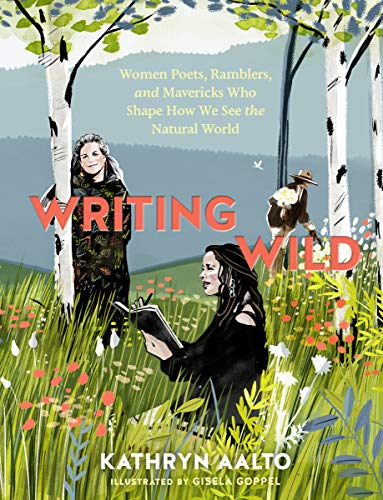
Writing Wild by Kathryn Aalto

Writing Wild

3.5*

‘An exciting, expert, and invaluable group portrait of seminal women writers enriching a genre crucial to our future.’ —Booklist

Blurb:

In Writing Wild, Kathryn Aalto celebrates 25 women, both historical and current, whose influential writing helps deepen our connection to and understanding of the natural world. These inspiring wordsmiths are scholars, spiritual seekers, conservationists, scientists, novelists, and explorers. They defy easy categorization, yet they all share a bold authenticity that makes their work both distinct and universal.

Part travel essay, literary biography, and cultural history, Writing Wild ventures into the landscapes and lives of extraordinary writers and encourages a new generation of women to pick up their pens, head outdoors, and start writing wild.

My thoughts:

Writing Wild: Women Poets, Ramblers and Mavericks Who Shape How We See The Natural World is by Kathryn Aalto and illustrated by Gisela Goppel. Published by Timber Press it will be released in paperback on 1 April, with a Kindle edition to follow on 14 April 2020.

I don’t read a lot of nonfiction, but I do enjoy reading books about nature, so Writing Wild appealed to me. Kathryn Aalto’s reason for writing her book was to highlight what these 25 women writers have written, their historical significance and the barriers, biases and bullying they overcame to write. It covers two hundred years of women’s history through nature writing, including natural history, environmental philosophy, country life, scientific writing, garden arts, memoirs and meditations and does not aim to dismiss men’s contributions. Gisela Goppel’s portraits of each writer head each chapter. Aalto writes an introduction to each writer and includes excerpts of prose, poems and essays with added recommendations for further reading, plus a list of sources and an index.

Predominantly American and British, some of these women writers are familiar to me, such as Dorothy Wordsworth, Vita Sackville West, Nan Shepherd, Rachel Carson, Mary Oliver, Annie Dillard and Helen Macdonald. Others are new to me, but I would like to read several of their works, such as Andrea Wulf’s book The  Brother Gardeners in which  she explores how England became a nation of gardeners. Wulf, a design historian, writes horticultural and historical history through narrative nonfiction, borrowing techniques from fiction to make nonfiction come alive. Elena Passarello’s Animals Strike Curious Poses essay collection, which Aalto describes as written with  laugh-out-loud humour and depth of empathy, also particularly appeals to me.

One of the things I learned reading this book is the name ‘Cli-fi’. I hadn’t come across it before but of course, it is not a new genre. As Aalto points out it goes back at least to Jules Verne’s 1889 The Purchase of the North Pole. Contemporary examples including Oryx and Crake by Margaret Atwood and Barbara Kingsolver’s Flight Behaviour. The writer she chooses to illustrate this genre is Saci Lloyd, an acclaimed writer of cli-fi, whose vivid and action packed books include The Carbon Diaries, about the effects of carbon reduction policies. They are gritty eco-thrillers featuring Laura Brown a 16 year old trying to manage life with a carbon deficit card.

Kathryn Aalto is a writer, designer, historian and lecturer. For the past twenty-five years, her focus has been on places where nature and culture intersect: teaching literature of nature and place, designing gardens, and writing about the natural world. Her work explores historic and horticultural themes with a contemporary twist. She is the author of The Natural World of Winnie-the-Pooh: A Walk Through the Forest that Inspired the Hundred Acre Wood (2015) and Nature and Human Intervention (2011). Her website is kathrynaalto.com.

My thanks to Timber Press for a review copy via NetGalley.

Library Loans 27 February 2020

The mobile library van visit was this week and I borrowed these books:

Library bks Feb 2020

The Mystery of Princess Louise by Lucinda Hawksley, subtitled Queen Victoria’s Rebellious Daughter. On the back cover it says that this is ‘packed with intrigues, scandals and secrets’. I know very little about Princess Louise, Queen Victoria’s sixth child, so I’m keen to find out about her. From the opening page I’ve already found out she was a friend to artists, such as Dante Rossetti, James Whistler and John Millais and that she was a sculptor.

Caught Out in Cornwall by Janie Bolitho. I’ve read two of her books before. This is the seventh book in her Rose Trevelyan series of mysteries, in which she sees four year old Beth Jones being carried away from the beach at Marazion by someone she assumes is her father. But her mother insists he is a stranger.

A Body in the Bath House by Lindsey Davis the 13th book in her Marcus Didio Falco series of historical crime fiction mysteries. It’s set in Rome and Britain in AD 75. Falco is Britain and he hates it. A thousand miles from home he realises someone with murderous intentions is after him.

The Hunting Party by Lucy Foley. A while ago I kept seeing reviews of this book and wondered about reading it, so when I saw it on the library van shelves I decided to see what it’s like for myself. It’s a murder mystery set in a remote hunting lodge in the Scottish wilderness where old friends gather for New Year. The description makes me wonder if it is like In a Dark, Dark Wood by Ruth Ware about a group of friends who spend a weekend in a remote cottage and everything goes wrong. I’m not sure I’ll like it …

I think I’ll start with The Mystery of Princess Louise – a friend borrowed it before me and said it’s very good, but first I’ll have to finish The Sleepwalker by Joseph Knox, his latest instalment in the Detective Aidan Waits series.

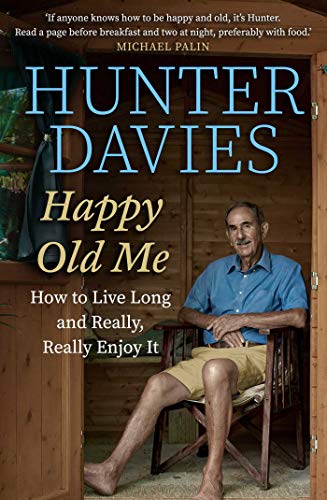
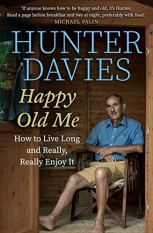
Happy Old Me by Hunter Davies

Happy Old Me

Simon & Schuster UK (21 Mar. 2019) | Hardback |291 pages |  4*

Blurb:

On 8th February 2016,Margaret Forster lost her life to cancer of the spine. The days that followed for her husband, Hunter Davies, were carried out on autopilot: arrangements to be made, family and friends to be contacted. But how do you cope after you have lost your loved one? How do you carry on?

As Hunter navigates what it means to be alone again after 55 years of marriage, coping with bereavement and being elderly (he still doesn’t believe he is), he shares his wisdom and lessons he has learnt living alone again. Revealing his emotional journey over the course of one year, as well as the often ignored practical implications of becoming widowed, he learns that, ultimately, bricks and mortar may change but the memories will remain. 

Part memoir, part self-help, Happy Old Me is a fitting, heart-felt tribute to the love of his life and a surprisingly amusing and informative book about an age, and stage in life, which we might all reach someday. The third book in Hunter Davies’ much-loved memoir series, which includes The Co-Op’s Got Bananas and A Life in the Day. 

Hunter Davies wrote Happy Old Me: How to Live a Long Life and Really Enjoy It in 2018 when he was in his eighty-second year. After fifty-five years of marriage he found he suddenly had to cope with living on his own, doing all the ‘domestic stuff he had never bothered to learn’ and get to grips with being old.

It tells of what he did during his first year after Margaret Forster, his wife died and also looks back at their time together and their family and careers. It is so readable, it’s like listening to him talking. I’ve read several of Margaret Forster’s books so it was good to ‘see’ her from his perspective.

I knew less about Hunter Davies, other than that he’s a journalist and has written several books on a variety of subjects. I’m reading The John Lennon Letters, that Davies edited  and my husband is reading his biography of Alfred Wainwright (I’ll read it later) and we have a copy of his book, A Walk Along the Wall, about Hadrian’s Wall (I’ll be reading that later too). Other books by him that interest me are his biographies of the Beatles and of William Wordsworth and also Lakeland: A Personal Journey. 

Amazon tells me that ‘Hunter Davies was at the heart of London culture in the Swinging Sixties, becoming close friends with The Beatles, and especially Sir Paul McCartney. He has been writing bestselling books, as well as widely read columns for over fifty years for major newspapers and magazines.’

In Happy Old Me he writes openly and frankly, with a sense of humour and a zest for life. I really enjoyed it.

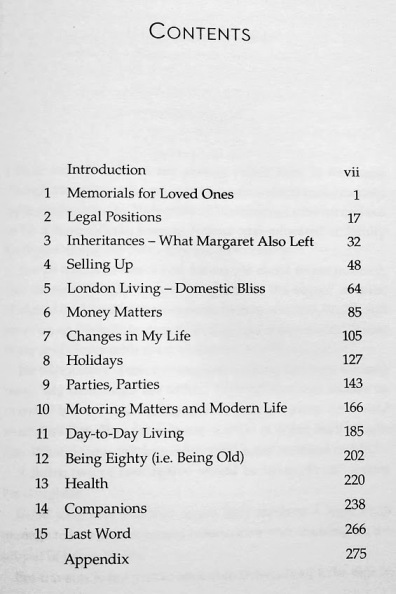
Happy Old Me Contents

When was I happiest? People often get asked that, or ask themselves, especially when they get into their eighties, as if all happiness must be in the past, gone for ever. I always say now. And I mean it. I am happy. I am happy to have had my past and I am happy looking forward to tomorrow. (page 267)

WWW Wednesday: 12 February 2020

IMG_1384-0

WWW Wednesday is run by Taking on a World of Words.

The Three Ws are:

What are you currently reading?
What did you recently finish reading?
What do you think you’ll read next?

A killing kindnessSaving MisseyCurrently reading: I’m reading A Killing Kindness, a murder mystery, the 6th Dalziel and Pascoe book by Reginald Hill and enjoying it very much.  I’m also reading Saving Missy by Beth Morrey, which I’m also enjoying. It’s a feel good story and very different from A Killing Kindness. Missy Carmichael’s life has become small. Grieving for a family she has lost or lost touch with, she’s haunted by the echoes of her footsteps in her empty home; the sound of the radio in the dark; the tick-tick-tick of the watching clock.

Happy Old Me

Recently Finished: Happy Old Me: How to Live a Long Life and Really Enjoy It by Hunter Davies. This is an account of one year in his life after his wife, Margaret Forster died – poignant, moving and very interesting. I’ll write more about later on.

Reading Next: This is a movable feast, as I rarely decide until the time comes.

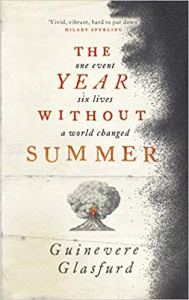
It could be The Year Without Summer by  Guinevere Glasfurd. 

Year without summer

Blurb:

1815, Sumbawa Island, Indonesia
Mount Tambora explodes in a cataclysmic eruption, killing thousands. Sent to investigate, ship surgeon Henry Hogg can barely believe his eyes. Once a paradise, the island is now solid ash, the surrounding sea turned to stone. But worse is yet to come: as the ash cloud rises and covers the sun, the seasons will fail.

1816
In Switzerland, Mary Shelley finds dark inspiration. Confined inside by the unseasonable weather, thousands of famine refugees stream past her door. In Vermont, preacher Charles Whitlock begs his followers to keep faith as drought dries their wells and their livestock starve.

In Suffolk, the ambitious and lovesick painter John Constable struggles to reconcile the idyllic England he paints with the misery that surrounds him. In the Fens, farm labourer Sarah Hobbs has had enough of going hungry while the farmers flaunt their wealth. And Hope Peter, returned from the Napoleonic wars, finds his family home demolished and a fence gone up in its place. He flees to London, where he falls in with a group of revolutionaries who speak of a better life, whatever the cost. As desperation sets in, Britain becomes beset by riots – rebellion is in the air.

The Year Without Summer is the story of the books written, the art made; of the journeys taken, of the love longed for and the lives lost during that fateful year. Six separate lives, connected only by an event many thousands of miles away. Few had heard of Tambora – but none could escape its effects.

Or it could be one of my TBRs – I simply don’t know yet.

Have you read any of these books?  Do any of them tempt you? 

Six Degrees of Separation: from Fleishman is in Trouble to …

I love doing Six Degrees of Separation, a monthly link-up hosted by Kate at Books Are My Favourite and Best. Each month a book is chosen as a starting point and linked to six other books to form a chain. A book doesn’t need to be connected to all the other books on the list, only to the one next to it in the chain.

Fleishman

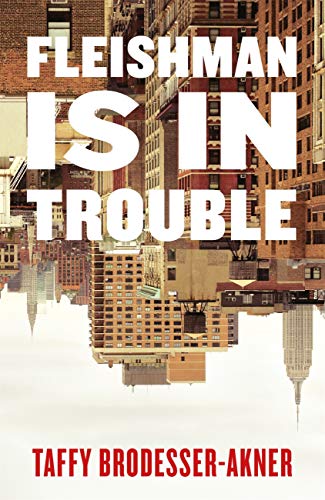
This month the chain begins with Fleishman is in Trouble by Taffy Brodesser-Akner,  a novel described as ‘a blistering satirical novel about Marriage, Divorce and Modern relationships‘. It’s a book that so many people declare is incredibly wise, a powerful feminist book, with depth, wit, nuance and life, shrewdly observed and and utterly of this moment. It is a book I have not read and also one that I doubt I will read.

Where to go from there? I had trouble deciding!

In the end I decided to go with the word ‘trouble‘ and that made me think of Bill Bryson’s book Troublesome Words, a book about the use of words, which is probably as far removed from Fleishman is in Trouble that you could get. It’s arranged like a dictionary, so a book to dip into rather than one to read straight through. For example if you want to know the difference between ‘that’ and ‘which’ this is the book to go to. And how about starting a sentence with the word ‘and’?  I was taught at school that you should never do that, not so says Bryson.

From Troublesome Words my mind jumped to The Sentence is Death by Anthony Horowitz, as a sentence is made up of words. Rosemary, the wife of wealthy George Barton dies suddenly at her birthday party at a West End Restaurant, the Luxembourg, after drinking a glass of champagne laced with cyanide.

And so onto Sparkling Cyanide by Agatha Christie. Rosemary, the wife of wealthy George Barton dies suddenly at her birthday party at a West End Restaurant, the Luxembourg, after drinking a glass of champagne laced with cyanide.

A birthday party features in Nicola Upson’s Fear in the Sunlight, the fourth novel featuring Josephine Tey. Summer, 1936. The writer, Josephine Tey, joins her friends in the holiday village of Portmeirion in Wales to celebrate her fortieth birthday. Alfred Hitchcock and his wife, Alma Reville, are there to sign a deal to film Josephine Tey’s novel, A Shilling for Candles.

So, my next link is to another book set in Wales, but in the Brecon Beacons not the coast. It’s Do Not Disturb by Claire Douglas. It also links back to Fleishman is in Trouble in that it’s about the trouble caused when Selena, Kirsty’s cousin, arrives at their new guesthouse and murder follows.

Finally, another troublesome character called Selena appears in Sweet Tooth by Ian McEwan. She was a spy whose mission failed – a story of deception, about writers and writing and readers and reading, with multiple stories within stories.

My chain begins and ends with a book about trouble, linked by a book about troublesome words, and murder mysteries involving the use of cyanide, birthday parties, books set in Wales and books with even more troublesome characters – a real mixed bag of connections.

Next month (7 March 2020), we’ll begin with Lucy Treloar’s Wolfe Island, a book that I know nothing about. (Bryson says it’s OK to end  sentence with a preposition).