Caedmon’s Song by Peter Robinson

Peter Robinson writes the Inspector Banks books, but he has also written short stories and a couple of standalone books including Caedmon’s Song, described as a psychological thriller.

Summary (from Peter Robinson’s website)

One warm June night, a university student called Kirsten is viciously attacked in a park by a serial killer. He is interrupted, and Kirsten survives, but in a severe physically and psychologically damaged state. As the killer continues, leaving a trail of mutilated corpses, Kirsten confronts her memories and becomes convinced not only that she can, but that she must remember what happened. Through fragments of nightmares, the details slowly reveal themselves. Interwoven with Kirsten’s story is that of Martha Browne, a woman who arrives in the Yorkshire coastal town of Whitby with a sense of mission. Finally, the two strands are woven together and united in a startling, chilling conclusion. 

My thoughts

Overall I liked Caedmon’s Song, but I wouldn’t describe it as a thriller, even though the attack on Kirsten is particularly vicious. It is set mainly in Whitby a seaside town in Yorkshire. The ruins of Whitby Abbey, Bram Stoker’s inspiration for Dracula, stand on the East Cliff overlooking the North Sea, with St Mary’s Church and Caedmon’s Cross nearby. I wondered as I began reading whether Martha’s visit to Whitby had any connection to Dracula, but although these places are described as she finds her way around the town they are just incidental to the plot.

Then I began to wonder about the connection between Kirsten and Martha because Robinson drops in quite a few clues early on in the book, which become explicit in the second half of the book. So, the links between them are quite easy to see, which disappointed me at first and lessened the tension. I wasn’t too convinced either by how Kirsten discovered her attacker’s identity and even considering the horrific details of her injuries I didn’t really feel sympathetic towards her as she comes across as rather cold-blooded. But as the narrative developed I began to enjoy the story and to wonder how it would end.

Kirsten considers whether she is a ‘born victim‘ or not, questioning her actions on the night of the attack, and wondering whether she had been inviting destruction. Her conclusion is that she wasn’t at all clear about it, but felt that it was her destiny, that she had been chosen as her attacker’s nemesis. All she knew was that she had to find him and face him. The ending is dramatic, but what would happen next is left open.

In his afterword Peter Robinson (written in 2003 when a new edition was published) explains that he had the idea for writing Caedmon’s Song in the late 1980s after he had written the first four Inspector Banks novels. He had felt he needed a change and wanted to write a novel in which the police played a subsidiary role. Then in September 1987 when he saw Whitby as he approached it on the coast road the idea for the setting and opening of the book came to him:

There lay Whitby, spread out below. The colours seemed somehow brighter and more vibrant than I remembered: the greens and blues of the North Sea, the red pantile roofs. Then the dramatic setting of the lobster-claw harbour and the two opposing hills, one capped with a church, the other with Captain Cook’s statue and the massive jawbone of a whale. I knew immediately that this was where the story had to take place, and that it began with a woman getting off a bus, feeling a little travel-sick, trying the place on for size. (pages 326-7)

I feel a trip to Whitby coming on – a place I’ve been wanting to visit for some years now.

Amazon UK link

  • Paperback: 336 pages
  • Publisher: Pan; Reprints edition (1 Aug. 2013)
  • Language: English
  • ISBN-10: 1447225473
  • ISBN-13: 978-1447225478
  • Source : I bought the book
  • Rating: 3*

Reading challenges: Mount TBR Reading Challenge 2017

The Kill Fee by Fiona Veitch Smith

The Kill Fee (Poppy Denby Investigates #2)

The Kill Fee is the second book in the Poppy Denby Investigates series. I haven’t read the first book, The Jazz Files, but I had no difficulty reading this second book as it reads well as a standalone, with enough detail of previous events for me to follow the story.

It is set in London in 1920 with flashbacks to Russia in 1917. Poppy is the Arts and Entertainments Editor at the Daily Globe and whilst she is covering an exhibition of Russian Art at the Crystal Palace a guard is shot and injured and one of the Fabergé Eggs on display is stolen. It’s not just an extremely valuable Egg, one that had been owned by a member of the Tsar’s family, but one that is said to contain a secret that could threaten royal families throughout Europe.

This is reminiscent of the Golden Age crime fiction as Poppy sets about finding who stole the Egg and there are plenty of suspects. The theft is followed by a couple of murders and a poisoning, and a secret passageway as Poppy chases around London in hot pursuit of the killer.

Its an enjoyable read that kept me entertained with a mix of fictional and historical characters and a look at 1920s’ society. I particularly liked the Russian connection and the information about White and Red Russians and the Russian Revolution of 1917 – by 1920 this was coming to a head in the Crimea. The book begins with an episode in Moscow in 1917 as an unnamed man in a bearskin coat enters the house of an aristocratic family to find a scene of carnage. Most of the family have been murdered, but he rescues a small girl, her little dog and her English nanny. How this fits into the rest of the book only gradually becomes clear.

There is a map of 1920s London that helps to follow the action and a list of the fictional and historical characters that I found useful. Fiona Veitch Smith explains in her historical Note at the end of the book how she got the idea for The Kill Fee and how she blended fact with fiction. Apart from a few ‘tweaks’ she has stuck to the historical timeline, as far as she is aware, moving the Russian Embassy to Kensington Gardens seven years earlier than it really did and bringing forward the selling of paper poppies by one year – these were launched by the British Red Cross in 1921. The plotline of the theft of the Fabergé Egg and the exhibition at the Crystal Palace is a figment of her imagination. She apologises for ‘any unintentional errors you may find.’

Well, I did find another anachronism. At one point (page 209 in my paperback copy) Poppy and Daniel are arguing as he drives across London approaching the Victoria Embankment when he had to slow down ‘to allow a family to cross the road at a pelican crossing.‘ I think this must be a typing error as although pedestrian crossings existed more than 2000 years ago, (as can be seen in the ruins of Pompeii), pelican crossings weren’t introduced in the United Kingdom until 1969.

None of this affected my enjoyment of the book as the world of London in the 1920s came to life and the complex plot and fast pace kept my brain ticking over, keeping track of the different sub-plots and characters. The kill fee in the title refers to the money offered to Rollo, the Daily Globe owner and editor-in-chief, to stop him from publishing the story concerning the theft of the Fabergé Egg.

My thanks to LibraryThing Early Reviewers for my copy of this book.

  • Paperback: 320 pages
  • Publisher: Lion Fiction (16 Sept. 2016)
  • Language: English
  • ISBN-10: 1782642188
  • ISBN-13: 978-1782642183

This is my 10th book for the Mount TBR Challenge.

Mount TBR: Checkpoint 1

It’s time for the first quarterly check-in for Bev’s Mount TBR Challenge (TBRs for this challenge must be books you’ve owned prior to January 1, 2017). Here are my answers to her questions:

  • How many miles (books) up the mountain are you?

I’m still climbing Pike’s Peak, so I’m behind if I want to reach my target of 48 books, ie reach the top of Mount Ararat, as I’ve only read 9 books (see this page for details). I’ve been sidetracked by reading new-to-me books so far this year! 

  • Post a picture of your favourite cover so far

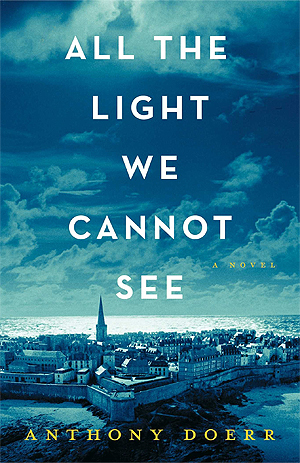
All the Light We Cannot See

  • Title Scrabble: See if you can spell a word using the first letter of the first word in the titles of some/all of the books you have read so far. Feel free to consider “A,” “An,” or “The” as the first word or not as it helps you with your word hunt.

My word: Tablet:

T –The Dead of Jericho by Colin Dexter (Morse)
A –All the Light We Cannot See by Anthony Doerr
B –The Buttonmaker’s Daughter by Merryn Allingham
L –Last Seen Wearing by Colin Dexter
EThe Eagle of the Ninth by Rosemary Sutcliff
TThe Gathering by Anne Enright


The Gathering by Anne Enright

The Gathering by Anne Enright is her fourth book. It won the Man Booker Prize in 2007.

The Gathering

Blurb:

The nine surviving children of the Hegarty clan gather in Dublin for the wake of their wayward brother Liam. It wasn’t the drink that killed him ‘“ although that certainly helped ‘“ it was what happened to him as a boy in his grandmother’s house, in the winter of 1968.

The Gathering is a novel about love and disappointment, about thwarted lust and limitless desire, and how our fate is written in the body, not in the stars.

I’m sorry to say that I think The Gathering is one of the most dreary books I’ve read. It’s a dark and disturbing novel about a dysfunctional family. I didn’t enjoy it, which is a shame as it’s a book that’s been on my shelves since 2008 and one I chose to read this month as part of Reading Ireland Month, an event to ‘˜to celebrate the wealth and breadth and general awesomeness of Irish cultural life.’ 

It begins:

I would like to write down what happened in my grandmother’s house the summer I was eight or nine, but I am not sure if it really did happen. I need to bear witness to an uncertain event. I feel it roaring inside me – this thing that may not have taken place. I don’t even know what name to put on it. I think you might call it a crime of the flesh, but the flesh is long fallen away and I am not sure what hurt may linger in the bones.

The narrator is Veronica Hegarty and it is through her eyes that the Hegarty family story is told as they gather at her brother’s wake in Dublin. Liam, an alcoholic, had committed suicide by putting rocks into his pockets and walking into the sea at Brighton. The characterisation is fantastic and I had no difficulty seeing the people in my mind’s eye; the descriptions of their appearance and personalities are strong and detailed.

But how reliable is Veronica’s memory? She mixes up memories of herself and her sister for example and there is quite a lot that you have to read between the lines. There aren’t many certain facts, for example how much truth is there in Veronica’s account of the early years of her grandparents’ married life and of their friend Lambert Nugent? She relates episodes that I’m sure they wouldn’t have told their granddaughter. At one point Veronica does say:

It is time to put an end to the shifting stories and the waking dreams. It is time to call an end to romance and just say what happened in Ada’s house, the year that I was eight and Liam was barely nine.

It takes a long time before Veronica finally gets to say what happened and even then there is ambiguity. Veronica cannot stick to a chronology and describes events haphazardly just as they come to her mind. A stream of thoughts just pour out of her – which is all very well because that is how the mind works.  But I found it made the text disjointed as it moved swiftly backwards and forwards.

As the blurb says it is about ‘thwarted lust and limitless desire‘ and the focus is on the body, on death, on sex and sexual abuse, on alcoholism, on insanity and on secrets and betrayal, but not much about love. At times I found it depressing or boring.

  • Paperback: 272 pages
  • Publisher: Vintage; Reprint edition (20 Mar. 2008)
  • Language: English
  • ISBN-10: 0099501635
  • ISBN-13: 978-0099501633

When I finished The Gathering I wondered about the other books that were listed for the Man Booker Prize in 2007 – were the other books equally as depressing? This is what the judges thought about The Gathering:

Judges applauded The Gathering for its controlled prose, sentence by sentence. They were impressed by its figurative language. They wondered at how unflinching Enright was in the face of what was pretty grim, unappealing material. Would the subject matter deter readers? asked one judge. Was that a literary question? asked another.

So, it was the language they liked and I can see what they found to applaud there.  But I also thought that I had found the unappealing material a deterrent.

They concluded:

Enright’s novel had the support in depth and range other titles were not able to muster. It is, perhaps, a book people admire rather than immediately warm to, and this admiration won the day for her. Admiration for the unflinching ferocity of her vision and her skill with figurative language, admiration for the way in which she conveys feeling in carefully modulated prose which, sentence for sentence, matches anything being written in English today. Together we were happy to award her the prize on that basis. It was a collegiate decision. That is how it should be for the Man Booker.

Again I can see where they are coming from, but I prefer books that I can warm to as well as admire and I’m sorry but I just couldn’t warm to The Gathering, although I can admire its skill.

The other books on the shortlist were:

  • Darkmans by Nicola Barker – a book about love and jealousy and also about invasion, obsession, displacement and possession, about comedy, art, prescription drugs and chiropody.
  • The Reluctant Fundamentalist by Moshin Hamid – it traces the life and love of Changez, an idealistic young Muslim man who leaves Pakistan to pursue his education in the US.
  • Mister Pip by Lloyd Jones – a tale of survival by story set in Bougainville in 1991, a small village on a lush tropical island in the South Pacific where the horror of civil war lurked. Mr Watts introduces the children to Mr Dickens’ Great Expectations.
  • Animal’s People by Indra Sinah – ever since he can remember, Animal has gone on all fours, the catastrophic result of what happened on That Night when, thanks to an American chemical company, the Apocalypse visited his slum.
  • On Chesil Beach by Ian McEwan – It is June 1962. In a hotel on the Dorset coast, overlooking Chesil Beach, Edward and Florence, who got married that morning, are sitting down to dinner in their room. Neither is entirely able to suppress their anxieties about the wedding night to come.

They sound mainly a depressing bunch of books. I read On Chesil Beach,  in 2007 and didn’t blog about it in detail. As I remember it, it is a sad book too, but I loved it. I have Mister Pip waiting to be read.

All the Light We Cannot See by Anthony Doerr

All the Light We Cannot See

Synopsis:

A beautiful, stunningly ambitious novel about a blind French girl and a German boy whose paths collide in occupied France as both try to survive the devastation of World War II

Marie-Laure has been blind since the age of six. Her father builds a perfect miniature of their Paris neighbourhood so she can memorize it by touch and navigate her way home. But when the Nazis invade, father and daughter flee with a dangerous secret.

Werner is a German orphan, destined to labour in the same mine that claimed his father’s life, until he discovers a knack for engineering. His talent wins him a place at a brutal military academy, but his way out of obscurity is built on suffering.

At the same time, far away in a walled city by the sea, an old man discovers new worlds without ever setting foot outside his home. But all around him, impending danger closes in.

Doerr’s combination of soaring imagination and meticulous observation is electric. As Europe is engulfed by war and lives collide unpredictably, ‘˜All The Light We Cannot See’ is a captivating and devastating elegy for innocence.

I have just finished reading All the Light We Cannot See by Anthony Doerr. I’m not going to write a review but want to jot down some thoughts:

  • It began well and I liked it straight away – see this Friday post.
  • There are three story lines – that of Marie-Laure, of Werner, and of a diamond that has magical powers.
  • But my overall picture of the book is of a blur, of confusion as it moved not only between characters but also backwards and forwards in time and I couldn’t work out the time sequence. I kept going back to the contents list to try to work it out was I in 1944 when the book began or in 1942, or 43. Had I met this character before in the future, or in the past and where was I -in France, Germany, Vienna or Russia? How did the characters relate to each other? I was hopelessly puzzled for quite a large portion of this book. For a while the fog in my mind cleared and I thought I’d got it, only to find a few chapters later I was lost again.
  • So I gave up trying to work out dates; places and people became clearer to me and I did (I think) follow the story, but it wasn’t easy as Marie-Laure’s and Werner’s time-lines were so fragmented.
  • The writing in parts is beautiful, great descriptions giving me some insight into what it was liked for ordinary people from both sides during the 2nd World War and what it must be like to be blind.
  • I liked all the detail of the model of Saint-Malo that Marie-Laure’s father made to help her find her way around, models of the buildings and roads.
  • The title refers (I think) to the how the brain, which is enclosed within the scull – ie in darkness – is yet full of light, brimming with colour and movement. And also to the light transmitted by radio wavelengths; light caught from the sun within plants and within gem stones such a diamonds; light beyond our ability to see it within the electromagnetic spectrum.
  • I was glad to get to the end. I think it is over-long, and very slow. But overall, mainly because of its descriptive prose; the way it conveys what being involved in war is like; and the character of Marie-Laure, I liked it and gave it 3 stars on Goodreads.

A book for Bev’s Mount TBR Reading Challenge, a book I’ve owned since 2016.

My Friday Post: All the Light We Cannot See

Book Beginnings Button

Every Friday Book Beginnings on Friday is hosted by Gillion at Rose City Reader where you can share the first sentence (or so) of the book you are reading, along with your initial thoughts about the sentence, impressions of the book, or anything else the opener inspires.

18143977

This morning I began reading All the Light We Cannot See by Anthony Doerr (one of the TBRs on my Kindle) and already I think I’m going to like it very much.

It begins:

Zero

7 August 1944

Leaflets

At dusk they pour from the sky. They blow across the ramparts, turn cartwheels over rooftops, flutter into the ravines between houses. Entire streets swirl with them, flashing white against the cobbles. Urgent message to the inhabitants of this town, they say. Depart immediately to open country.

A dramatic opening, immediately alerting me to the danger that is to come.

Also every Friday there is The Friday 56, hosted by Freda at Freda’s Voice.

Friday 56

These are the rules:

  1. Grab a book, any book.
  2. Turn to page 56, or 56% on your eReader.
  3. Find any sentence (or a few, just don’t spoil it) that grabs you.
  4. Post it.
  5. Add the URL to your post in the link on Freda’s most recent Friday 56 post.

Page 56:

All day Marie-Laure lies on her stomach and reads. Logic, reason, pure science: these Aronnax insists, are the proper ways to pursue a mystery. Not fables and fairy tales.

Synopsis:

A beautiful, stunningly ambitious novel about a blind French girl and a German boy whose paths collide in occupied France as both try to survive the devastation of World War II

Marie-Laure has been blind since the age of six. Her father builds a perfect miniature of their Paris neighbourhood so she can memorize it by touch and navigate her way home. But when the Nazis invade, father and daughter flee with a dangerous secret.

Werner is a German orphan, destined to labour in the same mine that claimed his father’s life, until he discovers a knack for engineering. His talent wins him a place at a brutal military academy, but his way out of obscurity is built on suffering.

At the same time, far away in a walled city by the sea, an old man discovers new worlds without ever setting foot outside his home. But all around him, impending danger closes in.

Doerr’s combination of soaring imagination and meticulous observation is electric. As Europe is engulfed by war and lives collide unpredictably, ‘˜All The Light We Cannot See’ is a captivating and devastating elegy for innocence.