Six Degrees of Separation from  After Story by Larissa Behrendt to The Butterfly Room by Lucinda Riley

It’s time again for Six Degrees of Separation, a monthly link-up hosted by Kate at Books Are My Favourite and Best. Each month a book is chosen as a starting point and linked to six other books to form a chain. A book doesn’t need to be connected to all the other books on the list, only to the one next to it in the chain.
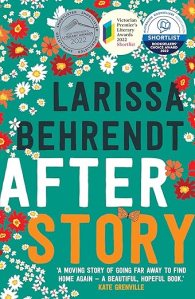
This month starts  After Story by Larissa Behrendt. This is the description on Amazon UK:

When Indigenous lawyer Jasmine decides to take her mother, Della, on a tour of England’s most revered literary sites, Jasmine hopes it will bring them closer together and help them reconcile the past. Twenty-five years earlier the disappearance of Jasmine’s older sister devastated their tight-knit community. This tragedy returns to haunt Jasmine and Della when another child mysteriously goes missing on Hampstead Heath. As Jasmine immerses herself in the world of her literary idols – including Jane Austen, the Brontë sisters and Virginia Woolf – Della is inspired to rediscover the wisdom of her own culture and storytelling. But sometimes the stories that are not told can become too great to bear. Ambitious and engrossing, After Story celebrates the extraordinary power of words and the quiet spaces between. We can be ready to listen, but are we ready to hear?
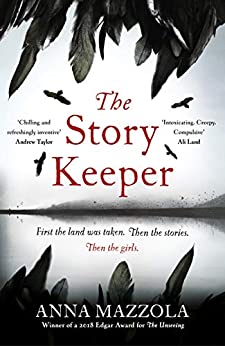
My first link is using the word Story, in the title, and it’s also a book about storytelling – The Story Keeper, set on the Isle of Skye in 1857, by Anna Mazzola. It stresses the importance of folk tales – stories that have been told to make sense of the world and reflect people’s strengths, flaws, hopes and fears. 

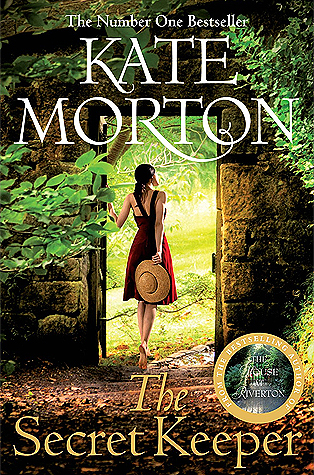
My second link is The Secret Keeper by Kate Morton, a story moving between time periods from 2011, back to the 1960s and also to the 1940s. It begins in 1961 in Suffolk when sixteen-year old Laurel is shocked when she sees her mother stabbing a stranger who had come to their farm. 

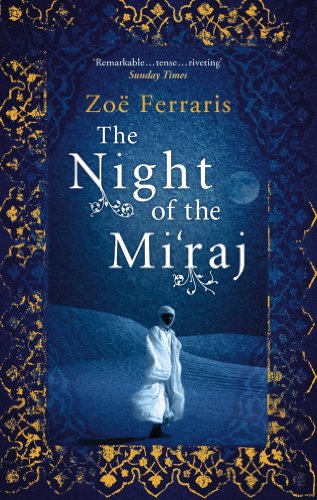
In my third link another sixteen year old girl, Nouf ash-Shrawi, disappears from her home in Jeddah, in The Night of the Mi’raj by Zoë Ferraris, just before her arranged marriage. Her body is eventually found in a desert wadi. It appears that her death was an accident and that she died by drowning in the wadi after a sudden storm.

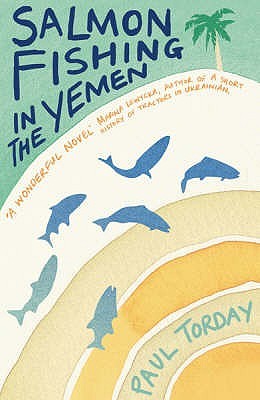
My fourth link is Salmon Fishing in the Yemen by Paul Torday about a project to introduce salmon fishing in the waters of the Wadi Aleyn in the heart of the mountains of Heraz, in Yemen.

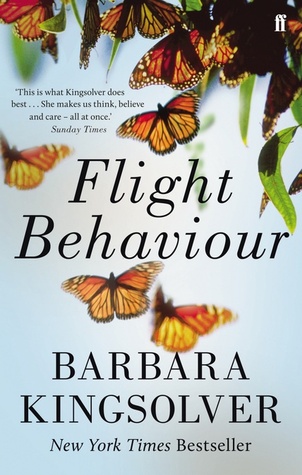
My fifth link takes the chain from the mountains of Heraz to the Appalachian Mountains in Flight Behaviour by Barbara Kingsolver in which a young mother discovers a beautiful and terrible marvel of nature: the monarch butterflies have not migrated south for the winter that year.

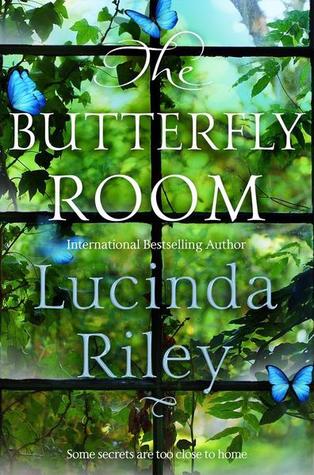
My final link is to The Butterfly Room by Lucinda Riley. The story revolves around Posy Montague and her family home, Admiral House in the Suffolk countryside. Her father encouraged her to draw plants and showed her how to catch butterflies. As a child Posy thought The Butterfly Room in the Folly in the grounds of Admiral House  looked like a fairy-tale castle with its turret made of yellow sandy brick. But the Folly was not the wonderful place she imagined – and there is a dark secret hidden behind its locked door.

The books in my chain are all fiction including historical fiction, mysteries and crime fiction. The chain travels through Australia, the UK, Saudi Arabia, Yemen and the USA,

Next month (October 5, 2024), we’ll start with Colm Tóibín’s Long Island.
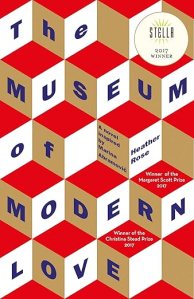
Six Degrees of Separation from The Museum of Modern Love to:

It’s time again for Six Degrees of Separation, a monthly link-up hosted by Kate at Books Are My Favourite and Best. Each month a book is chosen as a starting point and linked to six other books to form a chain. A book doesn’t need to be connected to all the other books on the list, only to the one next to it in the chain.

This month starts with The Museum of Modern Love by by Heather Rose (Kate’s pick was inspired by Sue’s recent post about writers and artists). I haven’t read this, but I would like to. This is the description on Amazon UK:

Arky Levin, a film composer in New York, has promised his wife that he will not visit her in hospital, where she is suffering in the final stages of a terminal illness. She wants to spare him a burden that would curtail his creativity, but the promise is tearing him apart. One day he finds his way to MOMA and sees Mariana Abramovic in The Artist is Present. The performance continues for seventy-five days and, as it unfolds, so does Arky. As he watches and meets other people drawn to the exhibit, he slowly starts to understand what might be missing in his life and what he must do.

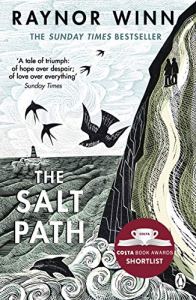
My first link is via a terminal illness to The Salt Path, Raynor Winn’s memoir about walking the South Coast Path when Moth her husband was diagnosed with a terminal illness. They were homeless, with no means of income except for £48 pounds a week. They had lost their home, business and livelihood, after investing in one of a friend’s companies that had failed. It is about the determination to live life, about overcoming pain and hardship, and the healing power of nature. It is about homelessness and the different reactions and attitudes of the people they met when they told them they were homeless.

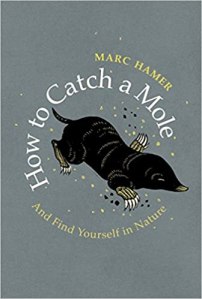
My second link is How to Catch a Mole by Marc Hamer, part memoir, part a nature study of the British countryside, part poetry, and, of course, about moles. After leaving school Marc Hamer was homeless for a while. He has worked in art galleries, marketing, graphic design and taught creative writing in a prison before becoming a gardener. And before writing this book he had been a traditional molecatcher for years.

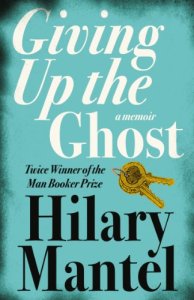
My third link is Hilary Mantel’s Giving Up the Ghost, a remarkable memoir. It came across to me as being clear, honest and very moving. She thought it was because of her that her parents were not happy and that without her they would have had a chance in life. It didn’t get any better when her father left home and she was left to live with two younger brothers, their mother and her mother’s lover. Home was a place where secrets were kept and opinions were not voiced. Her experience of ghosts at the age of 7 was horrifying as she felt as though something came inside her, ‘some formless, borderless evil’.

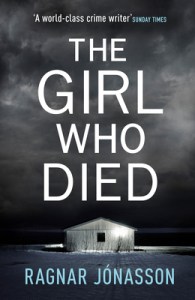
My fourth link is The Girl Who Died by Ragnar Jonasson, Icelandic noir, a mix of horror and psychological thriller, with a strong sense of place. Skálar is a close-knit community that doesn’t welcome newcomers, keeping its secrets well hidden. The only person who welcomes Una, to the village is Salka, the mother of Edda, one of the two girls Una is to teach. Her house is said to be haunted by the ghost of a young girl who had died fifty years earlier,

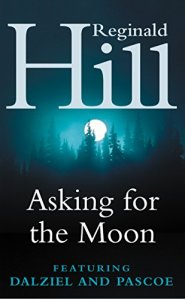
My fifth link is Asking for the Moon by Reginald Kill, a collection of four novellas. Two of them feature ghosts, Pascoe’s Ghost and Dalziel’s Ghost. But I think that the best one is the first story, The Last National Service Man which tells how Dalziel and Pascoe first met. Neither of them are impressed by the other. Dalziel thinks Pascoe is everything he dislikes – a graduate, well spoken, and a Southerner from south of Sheffield. Pascoe thinks Dalziel is an archetypical bruiser who got results by kicking down doors and beating out questions in Morse code on a suspect’s head.

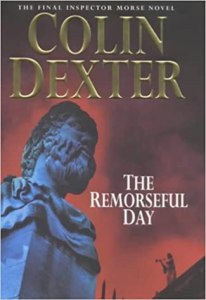
My final link is to the final Inspector Morse novel, The Remorseful Day by Colin Dexter. The plot is detailed, complex and as usual, with Morse, a puzzle type murder mystery with plenty of challenging clues. Sergeant Lewis is left to investigate the murder of nurse Yvonne Harrison that had remained unsolved for a year. When Morse phones to say he is feeling unwell Lewis is most concerned – Morse seldom mentioned his health, what is wrong with him?

The main focus of the book is on Morse and how he copes with his illness and his drinking habits. It becomes obvious just how alone he is in the world and how devastating his situation is to Lewis.

The first three books in my chain are memoirs and the other three are crime fiction/psychological thriller novels. Beginning in America it travels to the UK, then to Iceland, before ending back in the UK.

Next month (September 7, 2024), we’ll start with  After Story by Larissa Behrendt.

Six Degrees of Separation from Kairos to The One I Was: July 2024

It’s time again for Six Degrees of Separation, a monthly link-up hosted by Kate at Books Are My Favourite and Best. Each month a book is chosen as a starting point and linked to six other books to form a chain. A book doesn’t need to be connected to all the other books on the list, only to the one next to it in the chain.

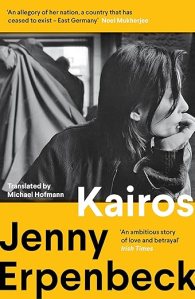
This month starts with Kairos by Jenny Erpenbeck. Kairos is the winner of the International Booker Prize 2024. An intimate and devastating story of the path of two lovers through the ruins of a relationship, set against the backdrop of a seismic period in European history. Translated from German by Michael Hofmann.

Berlin. 11 July 1986. They meet by chance on a bus. She is a young student, he is older and married. Theirs is an intense and sudden attraction, fuelled by a shared passion for music and art, and heightened by the secrecy they must maintain. But when she strays for a single night he cannot forgive her and a dangerous crack forms between them, opening up a space for cruelty, punishment and the exertion of power. And the world around them is changing too: as the GDR begins to crumble, so too do all the old certainties and the old loyalties, ushering in a new era whose great gains also involve profound loss.

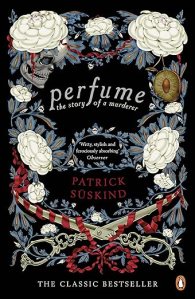
My first link is another novel translated from German, Perfume:the story of a murderer by Patrick Süskind, translated from German by John E Woods. It is an extraordinary novel, a Gothic work in the vein of Edgar Allen Poe, or Oscar Wilde’s The Picture of Dorian Grey. It depicts the strange life of Jean-Baptiste Grenouille and is a book of smells. This is a horror story, one that made me not want to read it and yet also want to read it to the bitter end.

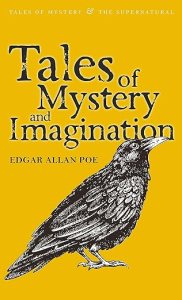
My second link is Tales of Mystery and Imagination by Edgar Allan Poe, which is a collection of Poe’s best stories containing all the terrifying and bewildering tales that characterise his work. As well as the Gothic horror of such famous stories as ‘The Pit and the Pendulum’, ‘The Fall of the House of Usher’, ‘The Premature Burial’ and ‘The Tell-Tale Heart’, all of Poe’s Auguste Dupin stories are included.

These are the first modern detective stories and include ‘The Murders in the Rue Morgue’, ‘The Mystery of Marie Roget’ and ‘The Purloined Letter’.

My third link stays on the theme of tales of horror with Tales of Terror by Robert Louis Stevenson, which are published in my copy of The Strange Case of Dr. Jekyll and Mr Hyde. It consists of two short stories, both written for the Christmas “crawler” tradition in 1884 and 1885. Christmas was a season traditionally associated with supernatural and creepy tales. The Body Snatcher is very much a traditional Christmas ghost story, beginning with four men gathered in an inn on a dark winter’s night telling tales round the fireside of grisly deeds. The other story is Olalla, a Gothic tale, set in an ancient Spanish castle surrounded by deep woodland, about a young man recovering from his war wounds and to “renew his blood”, who finds himself living with a strange family.

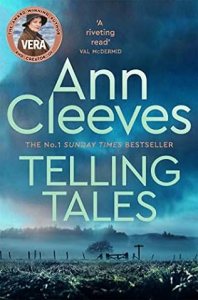
My fourth link moves away from horror stories to crime fiction, linked by the word ‘tales’ in the title. It is Telling Tales by Ann Cleeves, a book I have read but I didn’t write a review. It’s the 2nd of her Vera Stanhope series in which the residents of an East Yorkshire village are revisited with the nightmare of a murder that happened 10 years before. There was some doubt about the guilty verdict passed on Jeanie Long and now it would seem that the killer is still at large. Inspector Vera Stanhope builds up a picture of a community afraid of itself and of outsiders.

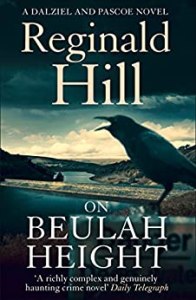
My fifth link is On Beulah Height, Reginald Hill’s 17th Dalziel and Pascoe novel. It’s also set in a Yorkshire village, Dendale. Three little girls had gone missing from the village one summer. Their bodies were never found, and the best suspect, a strange lad named Benny Lightfoot, was held for a time, then released. Fifteen years later another little girl, Lorraine, aged seven went out for a walk one morning with her dog before her parents got up and didn’t return home, reviving memories of the missing children from fifteen years earlier.

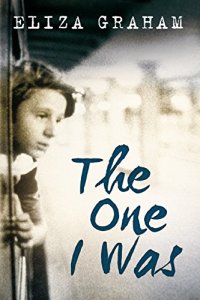
My final link is to a another book featuring a character called Benny – The One I Was by Eliza Graham – historical fiction split between the present and the past following the lives of Benny Gault and Rosamund Hunter. Benny first came to Fairfleet in 1939, having fled Nazi Germany on a Kindertransport train. As an adult he bought the house and now he is dying of cancer. Rosamund returns to Fairfleet, her childhood home, to nurse Benny. I was totally engrossed in both their life stories as the various strands of the story eventually combined.

Half of my chain consists of horror stories, not a genre I often read and the other half is made up of crime fiction novels, as usual.

Next month (August 3, 2024), we’ll start with  The Museum of Modern Love by Heather Rose (Kate’s pick was inspired by Sue’s recent post about writers and artists).

My Friday Post: The Stranger Diaries by Elly Griffiths

Book Beginnings Button

Every Friday Book Beginnings on Friday is hosted by Gillion at Rose City Reader where you can share the first sentence (or so) of the book you are reading, along with your initial thoughts about the sentence, impressions of the book, or anything else the opener inspires.

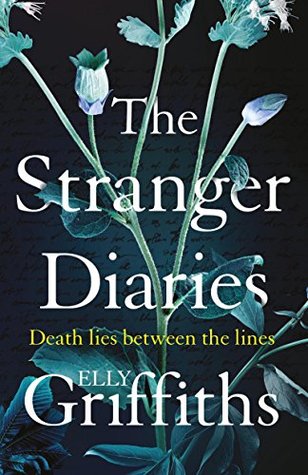
I’m currently reading The Stranger Diaries by Elly Griffiths.

The Stranger Diaries

‘If you’ll permit me,’ said the Stranger, ‘I’d like to tell you a story.’

Also every Friday there is The Friday 56, hosted by Freda at Freda’s Voice.

30879-friday2b56These are the rules:

  1. Grab a book, any book.
  2. Turn to page 56, or 56% on your eReader. If you have to improvise, that is okay.
  3. Find any sentence (or a few, just don’t spoil it) that grabs you.
  4. Post it.
  5. Add the URL to your post in the link on Freda’s most recent Friday 56 post.

Page 54 and page 56:

Ty could be drunk or on drugs for all I know. high on something, the modern equivalent of opium, like Wilkie Collins.

Blurb:

A dark story has been brought to terrifying life. Can the ending be rewritten in time?

Clare Cassidy is no stranger to murder. As a literature teacher specialising in the Gothic writer RM Holland, she teaches a short course on it every year. Then Clare’s life and work collide tragically when one of her colleagues is found dead, a line from an RM Holland story by her body. The investigating police detective is convinced the writer’s works somehow hold the key to the case.

Not knowing who to trust, and afraid that the killer is someone she knows, Clare confides her darkest suspicions and fears about the case to her journal. Then one day she notices some other writing in the diary. Writing that isn’t hers…

What do you think? Would you keep reading?

Slade House by David Mitchell

I was in the middle of reading two books on my Kindle, Doctor Thorne by Anthony Trollope and SPQR: a History of Ancient Rome by Mary Beard, when the battery died and I know I could still have continued reading whilst it was re-charging, but I didn’t. Instead I picked up Slade House by David Mitchell, a book I’d been thinking of reading soon and once I started it I didn’t want to stop. It’s not long, just 233 pages and they just whizzed past my eyes in no time.

Apparently it began as a short story on Twitter – but I didn’t know that – and is a sort of sequel to The Bone Clocks – but I haven’t read that, and there is a character near the end who also appears in The Thousand Autumns of Jacob de Zoet – but I haven’t read that yet either!

None of that mattered. I suppose it’s the sort of book to read at Hallowe’en, but that doesn’t matter either, because I read it, devoured it I could say, yesterday and was thoroughly entertained. It’s a mixture of a ghost story, science fiction and horror. Something nasty happens every nine years at the end of October at Slade House. I read it as a fantasy, something that I couldn’t believe could ever happen (or at least, I hope not) – but that didn’t stop me enjoying it immensely.

It’s not easy to find Slade House. It’s down Slade Alley, which doesn’t normally exist and it only appears to those who have been invited, or are drawn to it. There is a door set into the right hand wall of the alley, a small black iron door with no handle or keyhole, that opens if you’re meant to enter. There you meet a stranger, are invited into the House, and find yourself in a strange and dangerous situation, and there is no way out – eventually you find yourself in a long attic at the top of the stairs – where something terrible happens to you.

The stories begin in 1979 (although in fact it begins much earlier than that) and ends in a strange and mystifying way in 2015. Each story is complete in itself; the people who enter Slade House do not seem to be connected in anyway – a young teenage boy and his mother, a recently divorced Detective Inspector, students on a Paranormal Society field trip, and then the sister of one of the students. The connection is the House and the brother and sister who occupy it – and to say what they were would be to reveal too much. Needless to say that I was hoping each time that the victims would escape their fate. I was gripped both by the individual stories and by Slade House itself, enchanting and darkly sinister. The sense of menace just grew as each victim succumbed and yet tried to warn those who followed.

Now, I’m keen to read both The Thousand Autumns of Jacob de Zoet, which I bought a few years ago and is still sitting in my TBR piles and The Bone Clocks, which I haven’t got yet. It just shows how reading one book can seriously disrupt whatever reading plans I had!

Two R.I.P. IX Books

So far I’ve read five books that fit into the R.I.P. Challenge categories of Mystery, Suspense, Thriller, Dark Fantasy, Gothic, Horror, or Supernatural. As I’m behind with writing about these books here are just a few notes on two of them:

Wycliffe and the House of Fear by W J Burley. Like the other Wycliffe books this is set in Cornwall. Detective Superintendent Wycliffe is on holiday recuperating from an illness when he meets the intriguing Kemp family and visits Kellycoryk, their decaying ancestral home.  The Kemps’ behaviour is odd to say the least and when Roger Kemp’s second wife, Bridget disappears people remember  that his first wife had also disappeared in what had been assumed was a boating accident. Wycliffe is inevitably drawn into the investigation.

I have yet to read a Wycliffe book and be disappointed and this one is no exception. It’s a complex story with sinister undercurrents and good depiction of a dysfunctional family. It kept me guessing almost to the end. This fits into the ‘Mystery’ category.

The next one I read is the short story (just 27 pages), The Yellow Wallpaper by Charlotte Perkins Gilman, which is definitely a suspense story of a young woman slowly but surely losing her mind – or is it a case of a woman suffering from post-natal depression most cruelly treated by her doctor husband? Her husband believes she has just a ‘slight hysterical tendency‘ and prescribes rest and sleep, scoffing at what he considers are her fantasies.

The un-named woman has just had a baby, which she is unable to bear to be near her. She spends most of her time in an attic bedroom, with barred windows and a bed fixed to the floor. The walls are covered in a hideous yellow wallpaper which has been torn off in places. It’s not a beautiful yellow like buttercups but it makes her think of old, foul bad yellow things – and it smells.  The pattern is tortuous and she sees a woman trapped behind the wallpaper as though behind bars, crawling and shaking the pattern attempting to escape. Definitely a creepy and disturbing story!

It reminded me of Marghanita Laski’s The Victorian Chaise-Longue with a similar sense of claustrophobia and helplessness. But The Yellow Wallpaper is much more horrific and by the end I began to question just what was real and what was imagination – it’s psychologically scary!

These two are both books from my to-be-read piles.