The Good People by Hannah Kent

A heart-wrenching and beautiful novel.

I loved The Good People by Hannah Kent. It’s an intensely moving and beautifully written tale of Irish rural life in the early 19th century.

The Good People

Blurb:

County Kerry, Ireland, 1825.

Nóra bereft after the sudden death of her beloved husband, finds herself alone and caring for her young grandson Micheál. Micheál cannot speak and cannot walk and Nóra is desperate to know what is wrong with him. What happened to the healthy, happy grandson she met when her daughter was still alive?

MARY arrives in the valley to help Nóra just as the whispers are spreading: the stories of unexplained misfortunes, of illnesses, and the rumours that Micheál is a changeling child who is bringing bad luck to the valley.

NANCE’s knowledge keeps her apart. To the new priest, she is a threat, but to the valley people she is a wanderer, a healer. Nance knows how to use the plants and berries of the woodland; she understands the magic in the old ways. And she might be able to help Micheál.

As these three women are drawn together in the hope of restoring Micheál, their world of folklore and belief, of ritual and stories, tightens around them. It will lead them down a dangerous path, and force them to question everything they have ever known.

Based on true events and set in a lost world bound by its own laws, The Good People is Hannah Kent’s startling new novel about absolute belief and devoted love. Terrifying, thrilling and moving in equal measure, this long-awaited follow-up to Burial Rites shows an author at the height of her powers.

My thoughts:

I grew up reading fairy stories but The Good People gives a frighteningly realistic view of what belief in fairies meant to people dealing with sickness, disease, evil and all the things that go wrong in our lives. It’s set in 1825/6, a long gone world of people living in an isolated community, a place where superstition and a belief in fairies held sway. People talk of others being ‘fairy-swept’ or ‘away with the fairies’, and kept with the music and lights, dancing under the fairy hill.

Nóra is overcome with grief when her husband, Martin, died, feeling as though she was drowning and abandoned, completely unable to cope with Micheál, her four-year old grandson. There is talk that he is ‘fairy-struck’, unable to walk or talk and screaming uncontrollably when he is in pain or upset. She needed someone else to help her and so she hired Mary to look after Micheál. But Micheál did not improve and soon she comes to believe that he is a changeling. After both the doctor and the priest are unable to cure Micheál, Nóra appeals to Nance, the valley’s ‘handy woman’ for help.

This is a beautifully written book. It is not a fairy story, but one in which their existence is terrifyingly real to the people of the valley. The villagers believe that the fairies live in Piper’s Grave, ‘the lurking fairy fort’, at the end of the valley, a place where few people went, a neglected and wild place. People see lights there, glowing near a crooked whitethorn tree that stood in a circle of stone. Nance lives in a cabin in front of the wood a short distance from Piper’s Grave and not far from the river. She was the woman they wanted to help them bring their babies into the world, and who was the ‘gatekeeper’ at the end of their lives, the ‘keener’ when they died. She is the person Nance went to believing she could help bring back the little boy she loved.

I loved everything about The Good People, Hannah Kent is an excellent storyteller. The characters all spring to life, Nóra, Nance and Mary in particular. It’s not a world I know and yet I felt I did, with its mix of characters, old Peg O’Shea, Nóra’s nearest neighbour who helps when she can and the younger men and women who gossip and are quick to blame Micheál for bringing bad luck to the valley and to condemn Nance, who whilst they go to her for cures, also frightens them.

It is a heart breaking story and as it drew to its inevitable end I was really moved by the effect of fear, ignorance and superstition that brought about such a tragedy. The Author’s Note at the end of the book  explains that she drew on a real event from 1826 in writing The Good People. She has researched and listed many works of both fiction and non-fiction and also consulted many historians, curators and academics whilst writing the book.

Many thanks to the publishers and NetGalley for a review copy.

  • Format: Kindle Edition
  • File Size: 3007 KB
  • Print Length: 400 pages
  • Publisher: Picador; Main Market Ed. edition (9 Feb. 2017)

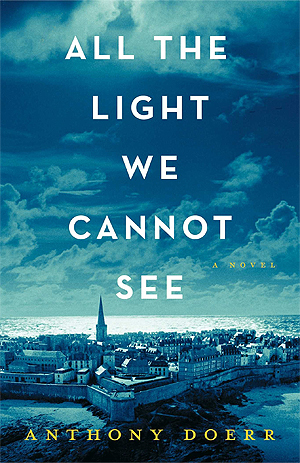
All the Light We Cannot See by Anthony Doerr

All the Light We Cannot See

Synopsis:

A beautiful, stunningly ambitious novel about a blind French girl and a German boy whose paths collide in occupied France as both try to survive the devastation of World War II

Marie-Laure has been blind since the age of six. Her father builds a perfect miniature of their Paris neighbourhood so she can memorize it by touch and navigate her way home. But when the Nazis invade, father and daughter flee with a dangerous secret.

Werner is a German orphan, destined to labour in the same mine that claimed his father’s life, until he discovers a knack for engineering. His talent wins him a place at a brutal military academy, but his way out of obscurity is built on suffering.

At the same time, far away in a walled city by the sea, an old man discovers new worlds without ever setting foot outside his home. But all around him, impending danger closes in.

Doerr’s combination of soaring imagination and meticulous observation is electric. As Europe is engulfed by war and lives collide unpredictably, ‘˜All The Light We Cannot See’ is a captivating and devastating elegy for innocence.

I have just finished reading All the Light We Cannot See by Anthony Doerr. I’m not going to write a review but want to jot down some thoughts:

  • It began well and I liked it straight away – see this Friday post.
  • There are three story lines – that of Marie-Laure, of Werner, and of a diamond that has magical powers.
  • But my overall picture of the book is of a blur, of confusion as it moved not only between characters but also backwards and forwards in time and I couldn’t work out the time sequence. I kept going back to the contents list to try to work it out was I in 1944 when the book began or in 1942, or 43. Had I met this character before in the future, or in the past and where was I -in France, Germany, Vienna or Russia? How did the characters relate to each other? I was hopelessly puzzled for quite a large portion of this book. For a while the fog in my mind cleared and I thought I’d got it, only to find a few chapters later I was lost again.
  • So I gave up trying to work out dates; places and people became clearer to me and I did (I think) follow the story, but it wasn’t easy as Marie-Laure’s and Werner’s time-lines were so fragmented.
  • The writing in parts is beautiful, great descriptions giving me some insight into what it was liked for ordinary people from both sides during the 2nd World War and what it must be like to be blind.
  • I liked all the detail of the model of Saint-Malo that Marie-Laure’s father made to help her find her way around, models of the buildings and roads.
  • The title refers (I think) to the how the brain, which is enclosed within the scull – ie in darkness – is yet full of light, brimming with colour and movement. And also to the light transmitted by radio wavelengths; light caught from the sun within plants and within gem stones such a diamonds; light beyond our ability to see it within the electromagnetic spectrum.
  • I was glad to get to the end. I think it is over-long, and very slow. But overall, mainly because of its descriptive prose; the way it conveys what being involved in war is like; and the character of Marie-Laure, I liked it and gave it 3 stars on Goodreads.

A book for Bev’s Mount TBR Reading Challenge, a book I’ve owned since 2016.

My Friday Post: All the Light We Cannot See

Book Beginnings Button

Every Friday Book Beginnings on Friday is hosted by Gillion at Rose City Reader where you can share the first sentence (or so) of the book you are reading, along with your initial thoughts about the sentence, impressions of the book, or anything else the opener inspires.

18143977

This morning I began reading All the Light We Cannot See by Anthony Doerr (one of the TBRs on my Kindle) and already I think I’m going to like it very much.

It begins:

Zero

7 August 1944

Leaflets

At dusk they pour from the sky. They blow across the ramparts, turn cartwheels over rooftops, flutter into the ravines between houses. Entire streets swirl with them, flashing white against the cobbles. Urgent message to the inhabitants of this town, they say. Depart immediately to open country.

A dramatic opening, immediately alerting me to the danger that is to come.

Also every Friday there is The Friday 56, hosted by Freda at Freda’s Voice.

Friday 56

These are the rules:

  1. Grab a book, any book.
  2. Turn to page 56, or 56% on your eReader.
  3. Find any sentence (or a few, just don’t spoil it) that grabs you.
  4. Post it.
  5. Add the URL to your post in the link on Freda’s most recent Friday 56 post.

Page 56:

All day Marie-Laure lies on her stomach and reads. Logic, reason, pure science: these Aronnax insists, are the proper ways to pursue a mystery. Not fables and fairy tales.

Synopsis:

A beautiful, stunningly ambitious novel about a blind French girl and a German boy whose paths collide in occupied France as both try to survive the devastation of World War II

Marie-Laure has been blind since the age of six. Her father builds a perfect miniature of their Paris neighbourhood so she can memorize it by touch and navigate her way home. But when the Nazis invade, father and daughter flee with a dangerous secret.

Werner is a German orphan, destined to labour in the same mine that claimed his father’s life, until he discovers a knack for engineering. His talent wins him a place at a brutal military academy, but his way out of obscurity is built on suffering.

At the same time, far away in a walled city by the sea, an old man discovers new worlds without ever setting foot outside his home. But all around him, impending danger closes in.

Doerr’s combination of soaring imagination and meticulous observation is electric. As Europe is engulfed by war and lives collide unpredictably, ‘˜All The Light We Cannot See’ is a captivating and devastating elegy for innocence.

The Eagle of the Ninth by Rosemary Sutcliff

149405

Rosemary Sutcliff was one of my favourite authors when I was a child and I particularly loved Brother Dusty Feet, about a boy who joined a group of strolling players set in Elizabethan England. I bought The Eagle of the Ninth in a library book sale several years ago because I remembered my love of Brother Dusty Feet and had meant to read it well before now. I got round to it this month and thoroughly enjoyed it, so it’s one of my TBRs for Bev’s Mount TBR Reading challenge.

The first half of the book tells of how Marcus Flavius Aquila, a young Roman officer arrived in Britain as a centurion and was injured in a battle and then, unfit for duty, was discharged. Some years earlier, sometime in 117 AD, the Ninth Hispana Legion, led by his father had marched north from its base at Eburacum (York) into the mists of Northern Britain to deal with a rising among the Caledonian tribes and was never heard of again – their Eagle Standard was also lost.

Marcus then sets out to discover the truth about his father’s disappearance, what had happened to the Legion and if possible, to recover the Eagle, and thus to redeem his father’s honour. For an Eagle standard taken in war meant so much:

To the Outland tribes it must seem that they have captured the god of the Legion: and so they carry it home in triumph, with many torches and perhaps the sacrifice of a black ram, and house it in the temple of their own god to make the young men strong in war and help the grain to ripen.

If trouble were to break out again in the north, a Roman Eagle in the hands of the Painted People might well become a weapon against us, owing to the power it would undoubtedly have to fire the minds and hearts of the Tribes. (pages 121 – 122)

He disguises himself as a Greek occulist, and with his freed ex-slave, Esca, travels beyond Hadrian’s Wall. The rest of the book is about their search through the wild borderlands north of the Wall in what was then the province of Valentia and over the Northern Wall (the Antonine Wall), into Caledonia, along the shores of Loch Lomond to the base of Ben Cruachan overlooking Loch Awe.

Rosemary Sutcliff was a wonderful storyteller, bringing Roman Britain to life  in beautifully descriptive prose, so vivid that it’s easy to picture the scenery and the characters. It’s a powerful adventure story, full of detail particularly about Marcus and Esca – their friendship and courage in the face of danger and hardship. There is plenty of suspense as they fight their way through mountains and bogs, pursued by the hostile tribes. It’s also a novel about honour, duty and love.

She based The Eagle of the Ninth on two facts. First, the disappearance of the Ninth Legion. And second, the discovery of a cast bronze figure of an eagle found in the Basilica of the Roman town of Calleva, near Silchester. The eagle’s original wings are missing and its origin is unknown. Although it was not a legionary eagle, it inspired Rosemary Sutcliff to write her book.

File:Silchester eagle.JPG
Silchester Eagle Cast in Reading Museum

There is a map at the front of the book showing the route Marcus and Esca took and some of the places described, including Trinomontium (Melrose), Luguvalium (Carlisle), Segedunum (Wallsend) and Borcovicus on Hadrian’s  Wall (Housesteads Roman Fort) and the Northern Wall.

I loved all the detail of the mix of peoples living in Britain, their religious beliefs and ceremonies and their social and cultural background. It’s described as a children’s/YA book but I think it’s suitable for adults too – the writing style is certainly not simplistic and the vocabulary is extensive.

It is quite simply a gem of a book.

  • Paperback: 304 pages
  • Publisher: OUP Oxford; Revised edition edition (7 Oct. 2004)
  • Language: English
  • ISBN-10: 0192753924
  • ISBN-13: 978-0192753922
  • Source: my own copy

About Rosemary Sutcliff (1920 – 1975), born in Surrey

At the age of two she contracted Still’s disease and spent most of her life in a wheelchair. At 14 she left school having made little progress in anything except reading and went to an art school, specialising in miniature painting, becoming a member of the Royal Society of Miniature Painters just after the Second World War. She wrote very many books, both fiction and non-fiction, and won several awards.

My Week in Books: 25 January

This Week in Books is a weekly round-up hosted by Lypsyy Lost & Found, about what I’ve been reading Now, Then & Next.

IMG_1384-0

A similar meme,  WWW Wednesday is run by Taking on a World of Words.

Now: I’m reading two books, one I’ve just started – Eyes Like Mine by Sheena Kamal, which will be published on 9 February 2017.

Blurb:

It’s late. The phone rings.
The man on the other end says his daughter is missing.
Your daughter.
The baby you gave away over fifteen years ago.
What do you do?

Nora Watts isn’t sure that she wants to get involved. Troubled, messed up, and with more than enough problems of her own, Nora doesn’t want to revisit the past. But then she sees the photograph. A girl, a teenager, with her eyes. How can she turn her back on her?

But going in search of her daughter brings Nora into contact with a past that she would rather forget, a past that she has worked hard to put behind her, but which is always there, waiting for her . . .

In Eyes Like Mine, Sheena Kamal has created a kick-ass protagonist who will give Lisbeth Salander a run for her money. Intuitive, not always likeable, and deeply flawed, Nora Watts is a new heroine for our time.

The other book is The Eagle of the Ninth by Rosemary Sutcliff, which I’ve nearly finished.

The Eagle of the NinthBlurb:

The Ninth Legion marched into the mists of northern Britain ‘“ and they were never seen again. Four thousand men disappeared and their eagle standard was lost. Marcus has to find out what happened to his father, who led the Ninth Legion. So he sets out into the unknown, on a quest so hazardous that no one expects him to return ‘¦

Then: The last book I’ve read is If Ever I Fall by S D Robertson – my post will follow.


Blurb:

Dan’s life has fallen apart at the seams. He’s lost his house, his job is on the line, and now he’s going to lose his family too. All he’s ever wanted is to keep them together, but is everything beyond repair?

Maria is drowning in grief. She spends her days writing letters that will never be answered. Nights are spent trying to hold terrible memories at bay, to escape the pain that threatens to engulf her.

Jack wakes up confused and alone. He doesn’t know who he is, how he got there, or why he finds himself on a deserted clifftop, but will piecing together the past leave him a broken man?

In the face of real tragedy, can these three people find a way to reconcile their past with a new future? And is love enough to carry them through?

Next: I anticipated in last week’s post that I’d be reading The Elephant Keeper’s Children by Peter Hoeg next and I did start it. But I didn’t get very far before I decided it’s not the book for me, so I’m not sure about what predicting what I’ll read next.

It could be The Chalk Pit by Elly Griffiths, which will be published on 23 February 2017. It’s the 9th Dr Ruth Galloway Mystery. Reading the blurb I think it’s safe to say this is the book I’ll be reading next …

Blurb:

Boiled human bones have been found in Norwich’s web of underground tunnels. When Dr Ruth Galloway discovers they were recently buried, DCI Nelson has a murder enquiry on his hands. The boiling might have been just a medieval curiosity – now it suggests a much more sinister purpose.

Meanwhile, DS Judy Johnson is investigating the disappearance of a local rough sleeper. The only trace of her is the rumour that she’s gone ‘underground’. This might be a figure of speech, but with the discovery of the bones and the rumours both Ruth and the police have heard that the network of old chalk-mining tunnels under Norwich is home to a vast community of rough sleepers, the clues point in only one direction. Local academic Martin Kellerman knows all about the tunnels and their history – but can his assertions of cannibalism and ritual killing possibly be true?

As the weather gets hotter, tensions rise. A local woman goes missing and the police are under attack. Ruth and Nelson must unravel the dark secrets of The Underground and discover just what gruesome secrets lurk at its heart – before it claims another victim.

The Buttonmaker’s Daughter by Merryn Allingham

The Buttonmaker's Daughter by [Allingham, Merryn]

Historical fiction is one of my favourite genres, so I was pleased when I was offered a review copy of The Buttonmaker’s  Daughter by Merryn Allingham. It will be published on 12 January. I hadn’t come across any of the author’s books before, but this is the 5th book she has written under the name of Merryn Allingham. She has also written a Regency series under the name Isobel Goddard.

Blurb:

As events in Europe and news of the impending threat of war trickle through, this is a novel that looks at the personal dramas that took place in a society already navigating huge social and political change. Born to an industry-owning father and an aristocratic mother, Elizabeth must juggle her own dreams of independence, her parents’ wishes for her ‘˜good marriage’, and the responsibility of reuniting her feuding family. Housemaid Ivy is desperate to marry before her love is pulled away to war, William is struggling with his own feelings towards his schoolboy friend, and Elizabeth is drawn to the promise a new life with a charming young architect. Everyone’s life hangs on the brink of change, and if war is declared, will there even be a future for the Summerhayes estate?

My thoughts:

The Buttonmaker’s Daughter is set in Sussex in the summer of 1914 just before the start of the First World War, a summer of sweltering heat and of rising tension not only nationally and internationally but also personally for Elizabeth Summer and her family. The novel covers just a few months, but those few months contain so much tension and heartbreak as the feud in the Summers family comes to a climax over the question of who Elizabeth should marry and war on the continent becomes inevitable.

Alice, Elizabeth’s mother was brought up on the Amberley estate which her brother, Henry inherited. But she had made a ‘marriage of convenience’ with industrialist Joshua Summer which had brought the much needed money to save Amberley and at the same time had triggered Henry’s enmity. So when Elizabeth falls in love with Aiden Kellaway, an architect’s assistant working on the landscaping of the Summerhayes gardens both her parents and uncle appear united in finding her a ‘suitable’ husband, one with the proper connections.

The Buttonmaker’s Daughter is a beautiful book. I was completely immersed in the story as the relationship between the two families deteriorates and Elizabeth becomes increasingly aware of the danger both to herself and her younger brother William. The setting is idyllic, the characters are clearly drawn and the sense of life in the immediate pre-war period made me feel I was there in the midst of it all, experiencing the social conventions and class distinctions.

I hope Merryn Allingham will write a sequel as I would like to know more about what happened to them all during the war.

  • Paperback: 384 pages
  • Publisher: HQ; First edition edition (12 Jan. 2017)
  • Language: English
  • ISBN-10: 0008193835
  • ISBN-13: 978-0008193836
  • Source: review copy