My Wednesday Post: 9 May 2018

There are two memes I take part in on Wednesdays:

This Week in Books is a weekly round-up hosted by Lypsyy Lost & Found, about what I’ve been reading Now, Then & Next.

IMG_1384-0

A similar meme,  WWW Wednesday is run by Taking on a World of Words.

The Three Ws are:

What are you currently reading?
What did you recently finish reading?
What do you think you’ll read next?

Currently reading: I have three books on the go at the moment,  – The Grapes of Wrath by John Steinbeck, from my TBR shelves.  I’m only up to chapter 3 so far but I’m enjoying his descriptive writing so much as Tom Joad returns to his family home in Oklahoma during a drought as a storm blew up and dust clouds covered everything. Tom, convicted of homicide has just been released from prison after serving four years of a seven year sentence.

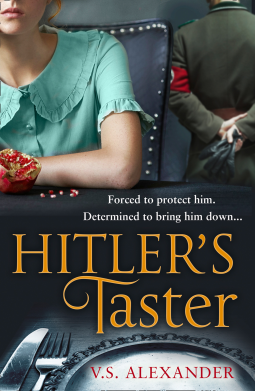
I’m also reading Her Hidden Life by V S Alexander, a novel set in Germany during the Second World War, about the life of Magda, one of Hitler’s food tasters. See yesterday’s post for the opening paragraph and synopsis. I’m in chapter 6 at the moment when Magda sees photos taken by an SS officer at Auschwitz, that show that Hitler is lying about how the Reich is dealing with Jews and prisoners of war near the Eastern front.

The Summer Before the War

The third book I’m reading is The Summer Before the War by Helen Simonson, about the  summer of 1914, set in Rye in East Sussex when spinster Beatrice Nash arrived to teach at the local grammar school. Her appointment was the result of Agatha Kent’s and Lady Emily Wheaton’s wish to have a female teacher as a Latin teacher. I’m in the middle of chapter 5 in which Beatrice is at Lady Emily’s annual garden party with the school governors, the Headmaster and staff and some of the local dignitaries. I’m finding it rather slow-going so far.

The last book I finished is Belinda Bauer’s latest book Snap, one of my NetGalley books. It’s crime fiction about Jack and his sisters and what happens to them after their mother is murdered. Belinda Bauer’s books are so original, full of tension and suspense. I’ll write more about it in a later post.

What do you think you’ll read next: I shall probably read The Inheritance by Louisa May Alcott next, or if not next then by the end of the month as it’s the book chosen by my book group for our May meeting.

The Inheritance

Synopsis:

Written in 1849, when Louisa May Alcott was just seventeen years old, this is a captivating tale of Edith Adelon, an impoverished Italian orphan who innocently wields the charms of virtue, beauty, and loyalty to win her true birthright. Her inheritance, nothing less than the English estate on which she is a paid companion, is a secret locked in a long-lost letter. But Edith is loath to claim it _ for more important to her by far is the respect and affection of her wealthy patrons, and the love of a newfound friend, the kind and noble Lord Percy. This novel is Alcott writing under the influence of the gothic romances and sentimental novels of her day. The introduction considers early literary influences in the light of Alcott’s mature style

Have you read any of these books?  Do any of them tempt you? 

First Chapter First Paragraph: Her Hidden Life by V S Alexander

Every Tuesday First Chapter, First Paragraph/Intros is hosted by Vicky of I’d Rather Be at the Beach sharing the first paragraph or two of a book she’s reading or plans to read soon.

This week I’m featuring one of my NetGalley books,  Her Hidden Life by V S Alexander, a newly published book (3 May 2018), that I’m currently reading.

It begins with a Prologue:

Berlin, 2013

Who killed Adolf Hitler? The answer lies within these pages. The circumstances surrounding his death have been disputed since 1945, but I know the truth. I was there.

Synopsis:

A forbidden love. A deadly secret.

‘An absorbing, well-researched story that brings to life an extraordinary period in history’ GILL PAUL, bestselling author of The Secret Wife

It’s 1943 and Hitler’s Germany is a terrifying place to be.
But Magda Ritter’s duty is the most dangerous of all…

Assigned to The Berghof, Hitler’s mountain retreat, she must serve the Reich by becoming the Führer’s ‘Taster’ – a woman who checks his food for poison. Magda can see no way out of this hellish existence until she meets Karl, an SS officer who has formed an underground resistance group within Hitler’s inner circle.

As their forbidden love grows, Magda and Karl see an opportunity to stop the atrocities of the madman leading their country. But in doing so, they risk their lives, their families and, above all, a love unlike either of them have ever known…

∼ ∼ 

I like it when an author clearly distinguishes what is real and what is fictional in a historical novel and she has done so in this case in her Author’s Note. Her Hidden Life is loosely based on the life of Margot Woelk, one of Hitler’s tasters, a woman who kept her former job a secret until she was ninety-five. It is not intended to be a strictly historical account of the Third Reich and the author states that she has relied on many sources, some of  which differed.

What do you think – would you read on?

Six Degrees of Separation from The Poisonwood Bible to …

I love doing Six Degrees of Separation, a monthly link-up hosted by Kate at Books Are My Favourite and Best. Each month a book is chosen as a starting point and linked to six other books to form a chain. A book doesn’t need to be connected to all the other books on the list, only to the one next to it in the chain.

This month the chain begins with The Poisonwood Bible by Barbara Kingsolver, one of my favourite books. I’ve read it several times.

The Poisonwood Bible

Told by the wife and four daughters of Nathan Price, a fierce evangelical Baptist who takes his family and mission to the Belgian Congo in 1959, The Poisonwood Bible is the story of one family’s tragic undoing and remarkable reconstruction over the course of three decades in postcolonial Africa.

I bought The Poisonwood Bible in Gatwick airport bookshop just before boarding a plane to go on holiday. So my first link in the chain is to another book I bought in an another airport bookshop waiting to board another plane:

Fortune's Rocks

It’s Fortune’s Rocks by Anita Shreve. I had never heard of Anita Shreve, but I liked the look of this book – and the fact that it’s a chunky book of nearly 600 pages, good to read on holiday. It’s set in the summer of 1899 when Olympia Biddeford and her parents are on holiday at the family’s vacation home in Fortune’s Rocks, a coastal resort in New Hampshire. She is fifteen years old and this is the story of her love affair with an older man.

When I looked at it today, I saw that it’s written in the present tense. Recently I’ve been writing about my dislike of the present tense – but I obviously haven’t always disliked it, because I remember really enjoying this book.

Wolf Hall (Thomas Cromwell, #1)

Another book written in the present tense that I loved is Wolf Hall by Hilary Mantel, the story of Thomas Cromwell, the son of a blacksmith, and his political rise, set against the background of Henry VIII’s England and his struggle with the Pope over his desire to marry Anne Boleyn. Historical fiction is one of my favourite genres, which takes me to my next link, another book set in the reign of Henry VIII –

Lamentation (Matthew Shardlake, #6)

Lamentation by C J Sansom set in 1546, the last year of Henry VIII’s life. Shardlake, a lawyer is asked by Queen Catherine (Parr) for help in discovering who has stolen her confessional book, Lamentation of a Sinner. It evokes the people, the sights, smells and atmosphere of Henry’s last year and at the same time it’s an ingenious crime mystery, full of suspense and tension.

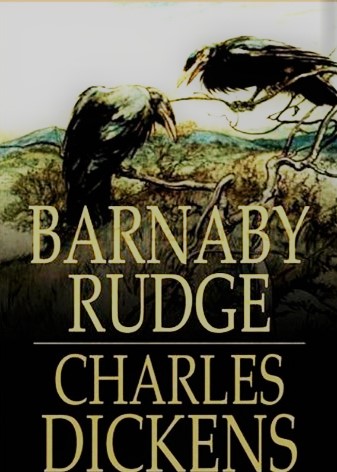
Barnaby Rudge

The next book also combines historical and crime fiction – Barnaby Rudge by Charles Dickens, set in 1780 at the time of the Gordon Riots.  It’s a story of mystery and suspense which begins with an unsolved double murder and goes on to involve conspiracy, blackmail, abduction and retribution.

Barnaby Rudge is a simple young man, living with his mother. His pet raven, Grip goes everywhere with him. He’s a most amazing bird who can mimic voices and seems to have more wits about him than Barnaby. Grip is based on Dickens’s own ravens, one of whom was also called Grip.

Ravens form the next link-

The Raven's Head

to The Raven’s Head by Karen Maitland, set in 1224 in France and England about Vincent, an apprentice librarian who stumbles upon a secret powerful enough to destroy his master. He attempts blackmail but when this fails Vincent goes on the run in possession of an intricately carved silver raven’s head. The plot revolves around the practice of alchemy – the search for a way to transform the base soul of man into pure incorruptible spirit, as well as the way to find the stone, elixir or tincture to turn base metals into precious metals.

And finally to the last link in this chain another book featuring alchemy –

Crucible (Alexander Seaton, #3)

Crucible by S G MacLean, the third of her Alexander Seaton books. Set in 1631 in Aberdeen Robert Sim, a librarian is killed. Alexander investigates his murder and finds, amongst the library books, works on alchemy and hermetics – the pursuit of ancient knowledge and the quest for ‘a secret, unifying knowledge, known to the ancients’ since lost to us. S G MacLean’s books are full of atmosphere. I think her style of writing suits me perfectly, the characters are just right, credible well-rounded people, and the plot moves along swiftly with no unnecessary digressions.

My chain this month has travelled from Africa to Scotland via America and England, and spans the years from the 13th century to the mid 20th century. It has followed a missionary and his family, a teenager in love with an older man, and looked in on power struggles in Tudor England, and the pursuit of the secret to turn metal into gold.

Links are: books I bought to read on holiday, books in the present tense, crime fiction and historical fiction (and a combination of these genres), ravens and alchemy.

Next month  (June 2, 2018), we’ll begin with  Malcolm Gladwell’s debut (and best seller), The Tipping Point, a book and author I’ve never come across before.

My Tuesday Post: The Chymical Wedding by Lindsay Clarke

Every Tuesday First Chapter, First Paragraph/Intros is hosted by Vicky of I’d Rather Be at the Beach sharing the first paragraph or two of a book she’s reading or plans to read soon.

Teaser Tuesdays is hosted by The Purple Booker. Post two sentences from somewhere in a book you’re reading. No spoilers, please! List the author and book title too.

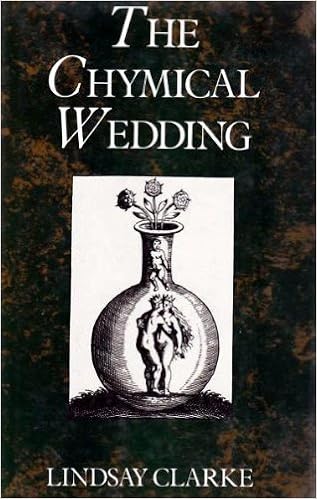
I’ve been looking at some of my TBRs this week, wondering whether or not I really want to read all of them. One of the books I’ve had for a long time is The Chymical Wedding by Lindsay Clarke, a long book of over 500 pages. It won the Whitbread Prize for fiction in 1989.

It begins:

In that part of the world the sky is everywhere, and the entire landscape seems to lie in abasement under its exacting light. It gets into church towers and between the narrow reeds along the river’s edge. It glances across undulant acres of barley and beet, and takes what little the flints have to give. Everything there feels exposed, so keeping secrets is hard. It’s not the easiest place in which to hide.

Here is a teaser from page 98. 

‘How did you meet?

‘I was a student at a crazy college in Connecticut. Edward was visiting professor.’

‘Creative writing?’ I tried to keep the distaste from my voice. In the light of his remarks the previous night, it seemed an unlikely profession for the old poet. ‘Is that what you were studying?’

‘Parapsychology,’ she corrected, and smiled at my frown. ‘I told you it was a crazy college.’

Description from inside flap:

In the early 1980s Alex Darken retreats to the isolation of a Norfolk village only to become increasingly intrigued by Edward Nesbit and the extraordinary project on which this ageing poet and Laura, his young American lover, are working. in 1848 a new Rector, the Revd Edwin Frere, and his wife Emilia are welcomed to the same village by the querulous Henry Agnew and his devoted and brilliant daughter, Louise Anne.

Though set more than a century apart, these two stories are on a collision curse as both the Victorians and their latter-day researchers are caught up in the rites invoked across time by their enquiries into ‘the great experiment of Nature’.

The Chymical Wedding is a novel in which human passion and intellectual obsession reverberate through two interwoven narratives, a compelling work of imagination which establishes Lindsay Clarke as one of the most provocative and gifted authors writing in Britain today.

If you have read it I’d love to know what you think about it. If you haven’t read it, would you keep reading? 

New-to-Me Books from Barter Books

On Tuesday it was time for another visit to my favourite bookshop Barter Books, one of the largest secondhand bookshops in Britain. This is where you can ‘swap’ books for credit that you can then use to get more books from the Barter Books shelves.

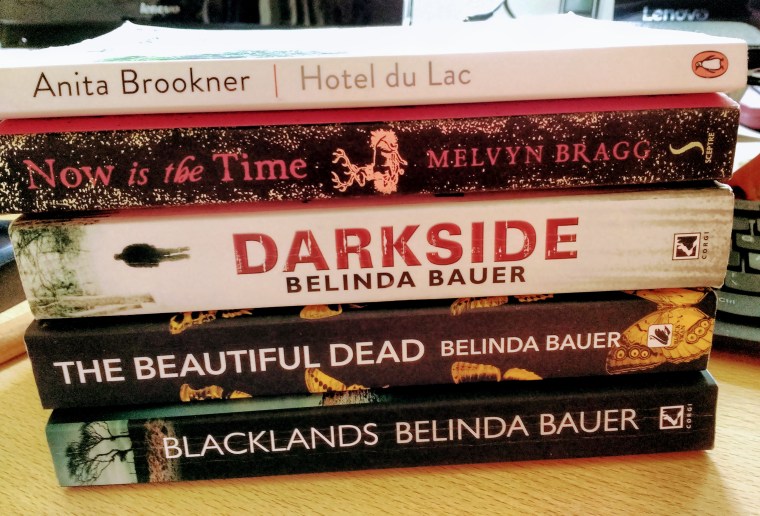
These are the books I brought home:

IMG_20180425_153217932.jpg


Hotel du Lac by Anita Brookner. I first read this many years ago and want to reread it – and hope I still like it as much. It won the Booker Prize in 1984. From the back cover: ‘Into the rarefied atmosphere of the Hotel du Lac timidly walks Edith Hope, romantic novelist and holder of modest dreams. Edith has been exiled from home after embarrassing herself and her friends. She has refused to sacrifice her ideals and remains stubbornly single. But among the pampered women and minor nobility Edith finds Mr Neville, and her chance to escape from a life of humiliating spinsterhood is renewed . . .’ 

Now is the Time by Melvyn Bragg. I loved his Soldiers Return quartet amongst some of his other books, so I’m hoping this historical fiction set in 1381 at the time of  the Peasants’ Revolt will be as good. Richard II was on the throne of England when a vast force of people led by Wat Tyler and John Ball demanded freedom, and equality. 

Then, three books by Belinda Bauer that I’ve been wanting to read for some time now:

Blacklands, her first novel – this tells the story of a game of cat and mouse between a 12 year old boy, Steven, and Arnold Avery, a serial killer and an abuser of children, who murdered Steven’s Uncle Billy, when he was 11 years old, twenty years ago.

Her second book, Darkside is set in the middle of winter time, when the people who live in a peaceful place, Shipcott, are shocked by the murder of an old woman in her bed.

The Beautiful Dead is about Eve Singer, a TV crime reporter, who will go to any length to get the latest scoop. But when a twisted serial killer starts using her to gain the publicity he craves, Eve must decide how far she’s willing to go – and how close she’ll let him get.

I’d love to start all these books straight away but I think I’ll begin with Belinda Bauer’s books, especially as I also have a review copy of her latest book, Snap which is due to be published as an e-book on 3 May 2018, with the hardback and paperback editions coming out later this year.

What do you think? Have you read any of these? Do they tempt you too?

A – Z of TBRs: U, V and W

I’m now up to U, V and W in my A – Z of TBRs, a series of posts in which I take a fresh look at some of my TBRs to inspire me to read more of them, or maybe to decide not to bother reading them after all. These are books I bought full of enthusiasm to read each one – and mainly because I wanted to finish books I was already reading, they have sat on the shelves ever since. And then other books claimed my attention.

U V W books

– is for The Unlikely Pilgrimage of Harold Fry by Rachel Joycea novel I bought five years ago. It appealed to me because it’s about a man, Harold Fry, who walks from Kingsbridge in South Devon to Berwick-upon Tweed in Northumberland and I liked the idea of following his journey – on paper, that is.

Harold receives a letter from an old friend who is dying from cancer, writing to say goodbye. Feeling he can’t say what he wants to say in a letter he decides he needs to speak to her in person and phones the hospice where she is a patient:

‘Tell her Harold Fry is on his way. All she has to do is wait. Because I am going to save her, you see. I will keep walking and she must keep living. ‘ (page 28)

~~~

Harold Fry was a tall man who moved through life with a stoop, as if expecting a low beam, or a screwed-up paper missile, to appear out of nowhere. The day he was born his mother had looked at the bundle in her arms, and felt appalled. She was young, with a peony bud mouth and a husband who had seemed a good idea before the war and a bad one after it. A child was the last thing she wanted or needed. The boy learned quickly that the best way to get along in life was to keep a low profile; to appear absent even when present. He played with neighbours’ children, or at least he watched them from the edges. At  school he avoided attention to the point of appearing stupid. Leaving home when he was sixteen, he had set out on his own, until one night he caught Maureen’s eye across a dance hall and fell wildly in love. It was the brewery that had brought the couple to Kingsbridge. (page 36)

V – is for The Various Flavours of Coffee by Anthony Capella. I’ve had this book for nearly 10 years and started it not long after I bought it. My book mark is at the start of chapter twenty seven, so I’ve read about a third of the book. I can’t remember now why I stopped reading it. If I am going to read it I’ll have to start again.

It’s historical fiction and a love story beginning in 1896 in London where a struggling poet, Robert Wallis, accepts a commission from a mysterious coffee merchant, Samuel Pinker, to compose a ‘vocabulary of coffees’ that can capture their elusive fragrances. Robert is then dispatched to Africa in search of the world’s finest coffee.

In this extract Robert is considering how to describe black coffee beans:

… ‘these ones over here are as black as despair, whereas these are as golden as virtue -‘

‘No, no, no,’ Pinker interjected. ‘this is far too poetical. One man’s despair is another man’s gloom, and who is to say whether gloom and despair are the same colour?’

I saw his point. ‘Then we shall have to decide on words for several different shades of black.’

‘Exactly, sir – that is my purpose entirely.’

‘Hmm.’ I considered. It was, when one thought about it a rather vexing issue. ‘We shall begin,’ I declared, ‘by fixing the very blackest form of black there is.’

‘Very well.’

A silence fell upon us. It was in fact, quite hard to think of a word to describe the pure blackness of the darkest beans. ‘The pure black of a cow’s nose, I said at last. Pinker made a face. ‘Or the glistening black of a slug at dawn -‘

‘Too fanciful’ And if I may say so, hardly appetising.’

‘The black of a bible.’

‘Too objectionable.’

‘The black of a moonless night.’

Pinker tutted. (page 38)

and so it goes on, until they finally settled for ‘jet’.

W– is for The Water Horse by julia Gregson, a book I’ve had for nine years. This is a historical fiction based on the true story of a young Welsh woman, Jane Evans, a Welsh woman who in 1853 ran off with Welsh cattle drovers and volunteered as a nurse with Florence Nightingale in the Crimea.

The title refers to the story of the Water Horse

‘And God help you if you find the Water Horse,’ said Eleri, ‘he looks so lovely and he’s deadly.’

‘Do you believe in him?’ Catherine was interested at last. ‘I think about him every time I see the sea. ‘

‘No.’ She put down her pipe. ‘No, I don’t. but I do believe he shows us what we fear.’

‘What?’

‘Well, there he is: beautiful, extraordinary. he stands placidly by the water’s edge. We try to mount him, and sometimes you can ride him and feel so powerful, so wonderful, and the next time he bolts back into the sea with you and you die a horrible and frightening death. What could be clearer?’ Eleri’s eyes were shining in the dusk. ‘It’s our fear of being out of control. He’s the one who tells you, stick with the ordinary, don’t move, everything else is dangerous and nothing possible, but the problem is that if you fear everything you can’t control, you’ll never do anything that matters to you.’ (pages 58-9)

Looking at them this morning the one that appeals most is The Water Horse.

What do you think? Do you fancy any of them? Would you ditch any of them?