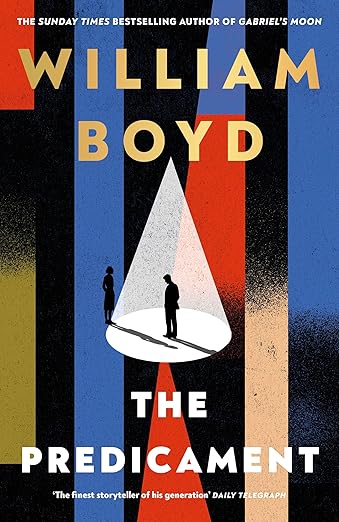
The Predicament by William Boyd

Viking| 4 September 2025| 272 pages| e-book| Review copy| 3*

Gabriel Dax, travel writer and accidental spy, is back in the shadows. Unable to resist the allure of his MI6 handler, Faith Green, he has returned to a life of secrets and subterfuge. Dax is sent to Guatemala under the guise of covering a tinderbox presidential election, where the ruthless decisions of the Mafia provoke pitch-black warfare in collusion with the CIA.

As political turmoil erupts, Gabriel’s reluctant involvement deepens. His escape plan leads him to West Berlin, where he uncovers a chilling realisation: there is a plot to assassinate magnetic young President John F. Kennedy. In a race against time, Gabriel must navigate deceit and danger, knowing that the stakes have never been higher . . .

My thoughts

I was really keen to read The Predicament William Boyd’s second book in his espionage trilogy about Gabriel Drax because I loved, the first book Gabriel Moon. A major strand in that book was the story of the tragedy surrounding his mother’s death when he was a young child. His subsequent separation from his older brother added to Gabriel’s disturbed state of mind and contributed to his reluctance to become a spy. In fact he was accidentally drawn into the world of espionage without making a conscious decision.

The Predicament begins in 1963, a few months after the events related in Gabriel’s Moon. However, I didn’t enjoy it as much as I thought I would because the novelty of a spy who doesn’t want to be a spy is no longer a novelty. Now, Gabriel knows he is being drawn back into the dangerous and shadowy world of espionage by his fascination/obsession with Faith Green, his MI6 handler, who effortlessly manipulates him. But is Faith beginning to show her true feelings for him, is it possible that she may even be in love with him, or is she just using sex to keep stringing him along?

It all seems a bit shallow and the characters are rather stereotypical, although it’s fast paced and easily readable. Gabriel is assigned to a joint MI6/CIA operation in Guatemala to interview Pedro Tiago an ex-priest thought to be the next elected President. When Tiago is assassinated Gabriel realises he has once again been manipulated and is in danger of losing his life. Then he is sent to Berlin to assist the CIA prevent the assassination of President Kennedy, an interesting episode that lacks tension as we know Kennedy wasn’t assassinated in Berlin.

The action does jump about, as in between these events he has meetings with Russian spies and realises he’s become a double agent and he is still having sessions with the psychoanalyst as in Gabriel’s Moon. In addition he is a successful travel writer and he continues to use his spying assignments as locations for his books, but his research seems rather superficial and he is accused of plagiarism. I felt it was all too much tongue in cheek. There are several loose ends, which I hope will be resolved in the final book.

My thanks to the publishers for a review copy via NetGalley.

Six Degrees of Separation from  Ghost Cities by Siang Lu to 4.50 from Paddington

It’s time again for Six Degrees of Separation, a monthly link-up hosted by Kate at Books Are My Favourite and Best. Each month a book is chosen as a starting point and linked to six other books to form a chain. A book doesn’t need to be connected to all the other books on the list, only to the one next to it in the chain.

I’ve been away so this post is a little late!

This month we start with Ghost Cities by Siang Lu , the winner of the 2025 Miles Franklin Literary Award, This is Amazon’s description:

Ghost Cities – inspired by the vacant, uninhabited megacities of China – follows multiple narratives, including one in which a young man named Xiang is fired from his job as a translator at Sydney’s Chinese Consulate after it is discovered he doesn’t speak a word of Chinese and has been relying entirely on Google Translate for his work.

How is his relocation to one such ghost city connected to a parallel odyssey in which an ancient Emperor creates a thousand doubles of Himself? Or where a horny mountain gains sentience? Where a chess-playing automaton hides a deadly secret? Or a tale in which every book in the known Empire is destroyed – then re-created, page by page and book by book, all in the name of love and art?

Allegorical and imaginative, Ghost Cities will appeal to readers of Haruki Murakami and Italo Calvino.

My First link is a book by Italo Calvino – If on a Winter’s Night a Traveller, which I borrowed from the library a few years ago. It’s composed of stories of menace, spies, mystery, premonition—with explorations of how and why we choose to read, make meanings, and get our bearings or fail to. It has an excellent beginning  but as I read on all the stops and starts became disjointed. I renewed it a few times but eventually I decided to abandon it and returned it unfinished.

Cloud Atlas by David Mitchell is my second link because it is a book I abandoned three times before trying it again, after watching the movie, which is fantastic – a kaleidoscope of visual delights, the scenery, the settings and the costumes are blazes of colour and drama. Cloud Atlas covers a time period from the 19th century to a post apocalyptic future. It is an amazing creation (‘amazing‘ is a very overused word, but in this instance very apt), at times confusing and at times brilliant.

My Third link is also by David Mitchell. It’s Slade House, a book I loved as soon as I started reading it. It’s a mixture of a ghost story, science fiction and horror. Something nasty happens every nine years at the end of October at Slade House. I read it as a fantasy, something that I couldn’t believe could ever happen (or at least, I hope not). People are invited or are drawn into Slade House and find themselves in a strange and dangerous situation, and there is no way out.

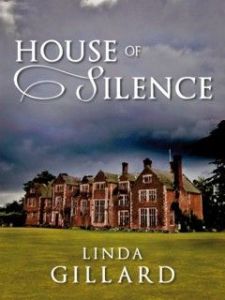
Which brings me to my fourth link House of Silence by Linda Gillard, a novel about families and their secrets – in particular one family, the Donovans. When Gwen Rowland meets Alfie Donovan she becomes interested in his family and persuades him to let her spend Christmas with them at the family home, Creake Hall, an old Elizabethan manor house. It raises issues of memory and identity, mental illness, loss and love.

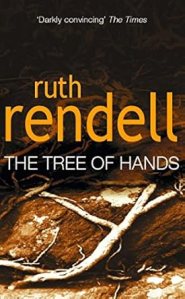
Mental illness is my Fifth link in The Tree of Hands by Ruth Rendell, one of her best standalone books. When Benet was about fourteen, she and Mopsa, her psychologically disturbed mother had been alone in a train carriage, when Mopsa, had tried to stab her with a carving knife. It’s a psychological thriller, full of suspense, with several twists and turns that made me unsure how it would end. I was delighted by the final twist!
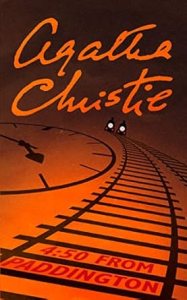
Agatha Christie wrote several books featuring trains. My sixth link is one of those books, 4.50 from Paddington. This begins when Mrs McGillicuddy was going home from Christmas shopping in London when she saw from the window of her train a murder being committed in a train travelling on a parallel line. But nobody believes her because there is no trace of a body and no one is reported missing. Nobody, that is except for her friend Miss Marple. But she is getting older and more feeble and she hasn’t got the physical strength to get about and do things as she would like. So, she enlists the help of Lucy Eyelesbarrow.

My chain is made up of books I abandoned books and books I loved. It’s taken me from a book about megacities in China to a murder mystery on a London train.

What is in your chain?

Next month (October 4, 2025), we’ll start with Dominic Amerena’s novel about authors and publishing, I Want Everything.

Top Ten Tuesday: Books With Occupations in the Title

Top Ten Tuesday is a weekly meme created by The Broke and the Bookish and now hosted by Jana at That Artsy Reader Girl. For the rules see her blog

The topic today is Books With Occupations in the Title  (Submitted by Hopewell’s Public Library of Life). Mine are all fiction.

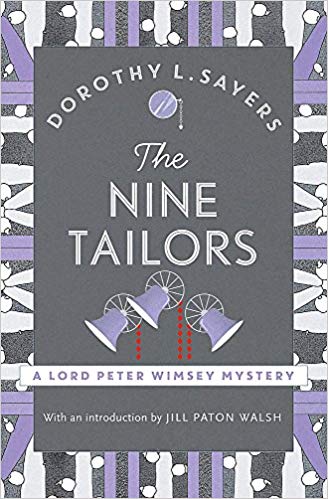
The Nine Tailors by Dorothy L Sayers – a Lord Peter Wimsey mystery

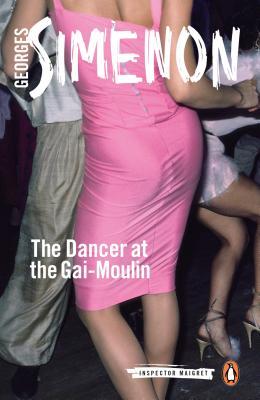
The Dancer at the Gai-Moulin by Georges Simenon – one of the early Maigret books

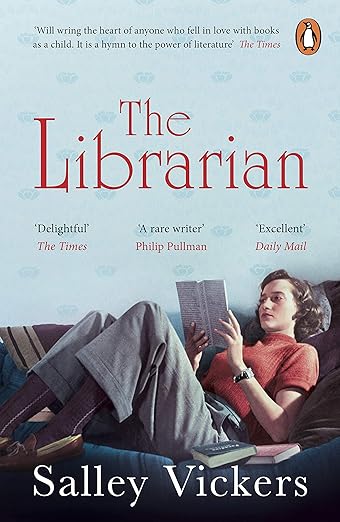
The Librarian by Salley Vickers – set in the 1950s about a Children’s Librarian

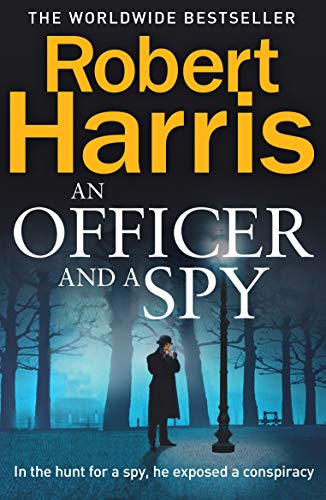
An Officer and a Spy by Robert Harris – the Dreyfus affair, 1890s

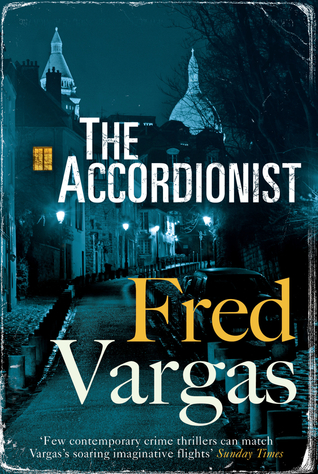
The Accordionist by Fred Vargas – quirky crime fiction, set in Paris

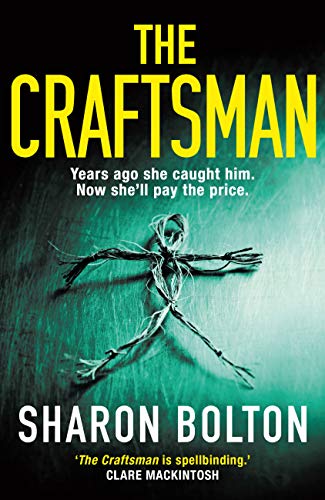
The Craftsman by Sharon Bolton – creepy crime fiction about a coffin-maker

The Sea Detective by Mark Douglas-Home  – oceanographer, Cal McGill, more of an investigative story than crime fiction

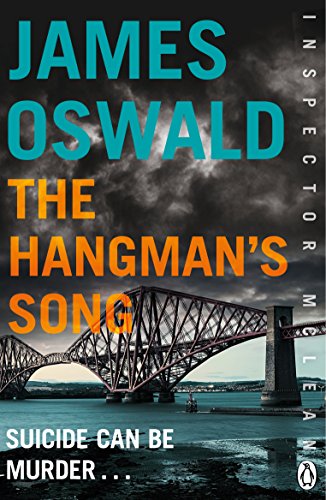
The Hangman’s Song by James Oswald – the third Inspector McLean series set in Edinburgh, crime fiction with elements of the supernatural  and parapsychology thrown in

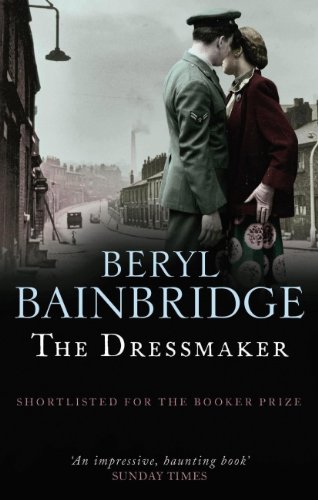
The Dressmaker by Beryl Bainbridge – a wartime tale of life in Liverpool in 1944, with an under current of psychological suspense.

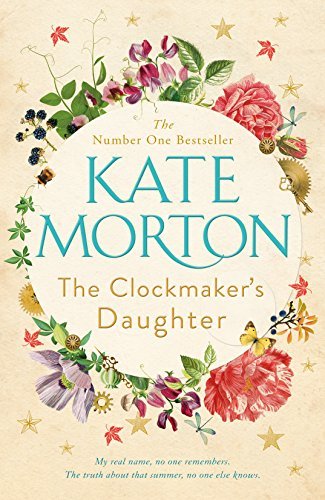
The Clockmaker’s Daughter by Kate Morton – historical fiction set in the summer of 1862, a story of murder, mystery and thievery, of art, love and loss

Top Ten Tuesday: Books with a High Page Count

Top Ten Tuesday is a weekly meme created by The Broke and the Bookish and now hosted by Jana at That Artsy Reader Girl. For the rules see her blog

The topic today is Books with a High Page Count (Share those doorstop books!) Today I’m sharing ten of the longest books I’ve ever read.

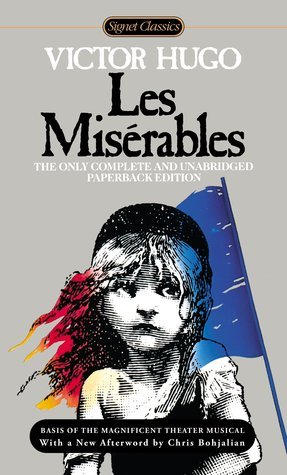
  1. Les Misérables by Victor Hugo 1,463 pages
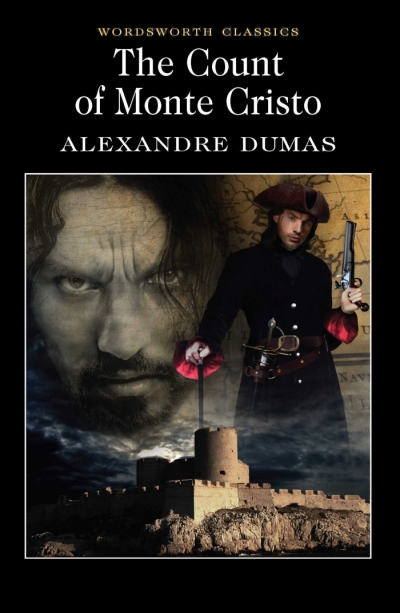
  2. The Count of Monte Cristo by Alexandre Dumas 1,276 pages
  3. David Copperfield by Charles Dickens 1,095 pages
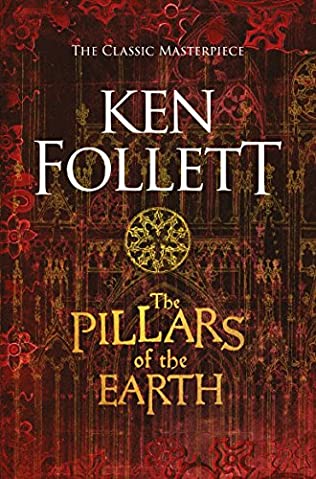
  4. The Pillars of the Earth by Ken Follett 1,076 pages.
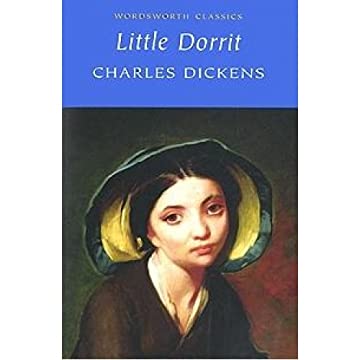
  5. Little Dorrit by Charles Dickens 1,008 pages
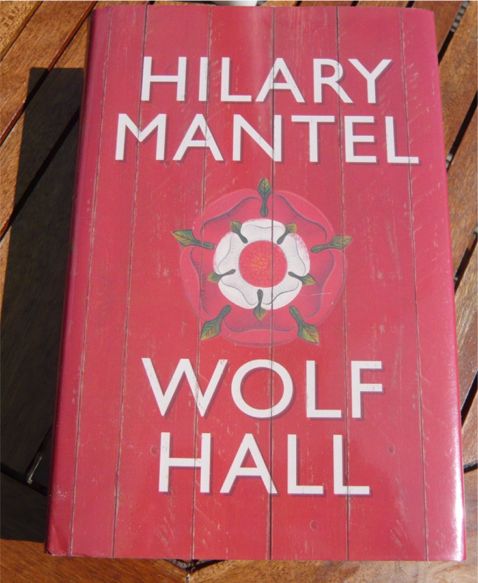
  6. Wolf Hall by Hilary Mantel 965 pages
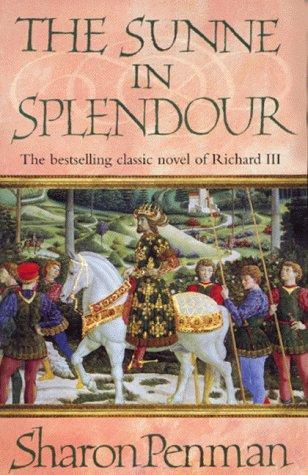
  7. The Sunne in Splendour by Sharon Penman 886 pages
  8. Tombland by C J Sansom 866 pages
  9. The Luminaries by Eleanor Catton 834 pages
  10. Our Mutual Friend by Charles Dickens 777 pages

The Death of Shame by Ambrose Parry

Canongate Books| 5 Jun. 2025| 427 pages| e-book| Review copy| 5*

Description:

1854, Edinburgh.
Respectable public faces hide sordid private sins.

Apprentice Sarah Fisher is helping to fund Dr Will Raven’s emerging medical practice in exchange for being secretly trained as a medic, should the rules barring women ever change. Sarah needs no instruction in the inequalities that beset her gender, but even she has her eyes opened to a darker reality when a relative seeks her help in searching for her missing daughter. Annabelle Banks was promised a situation in a prestigious household, but there has been no word from her since she left home, and the agency that arranged her position says she never appeared.

Sarah’s inquiries lead her to reforming campaigners trying to publicise the plight of the hundreds of girls ensnared in Edinburgh’s houses of assignation. Sarah learns how young women are lured, deceived, trafficked and raped, leaving them ruined in the eyes of a society obsessed with moral purity, and where virginity is prized as a lucrative commodity.
Drawing upon real historical events, The Death of Shame takes Raven and Sarah into a treacherous labyrinth of exploitation, corruption, high-level complicity and Victorian-style revenge porn.

Ambrose Parry is the pseudonym of crime fiction author, Chris Brookmyre and Marisa Haetzman, a consultant anaesthetist. The combination of a crime fiction writer and an anaesthetist works excellently in Ambrose Parry’s novels. The research into the history of medicine is extensive, making this book a combination of historical fact and fiction, a tale of murder and medical matters, with the social scene, historical and medical facts slotting perfectly into an intricate murder mystery. 

The Death of Shame by Ambrose Parry is the 5th and final Raven and Fisher book. Dr Will Raven is no longer working with Dr Simpson (a real historical person, renowned for his discovery of chloroform) but is setting up his own medical practice with the financial assistance of Sarah Fisher. Sarah, who began working as a housemaid for Dr Simpson, then as a nurse, has ambitions to train as a doctor, something rarely possible for women in her position. So secretly Will is training her as his apprentice to become a doctor.

It’s set in 1854, when Will and his wife, Eugenie have two children, as she is struggling to bond with her children suffering from postnatal depression. The book begins with the death of her father, himself an eminent doctor with a wealthy practice. It appears he committed suicide but Eugenie can’t accept that and asks Will to investigate. Meanwhile Sarah has also been asked to investigate the disappearance of her young niece who has disappeared after leaving home to start a job in Edinburgh.

The plot is complicated and although you could read this as a standalone book as there is some background to what has happened in the earlier books, I really think it’s better to have read them – and they are well worth reading. Will and Sarah’s separate investigations take them into dark and desperate places dealing with blackmail, murder, suicide, abortion, rape, female exploitation, and prostitution. The position of women and girls in society and the dangers they faced are centre stage.

I always enjoy reading the Historical Notes at the end of the Raven and Fisher books and this one is no exception. It gives the factual background and sources that Ambrose Parry used and information about the real life people who are included in the book as well as Dr Simpson, such as Henry Littlejohn, Edinburgh’s police surgeon who served as Medical Officer for Health and medical advisor to the Crown, and Emily Blackwell, one of the pioneers of women in medicine.

This is a great ending to the series but I’d like to think this is not the end of their stories – I’d love to read more about them! In the meantime there is a short story, The Apple Falls Not Far by Ambrose Parry, a digital exclusive short story from the world of Raven and Fisher to read – more about that in a later post.

Six Degrees of Separation from  The Safekeep by Yael Van Der Wouden to Cat Among the Pigeons

It’s time again for Six Degrees of Separation, a monthly link-up hosted by Kate at Books Are My Favourite and Best. Each month a book is chosen as a starting point and linked to six other books to form a chain. A book doesn’t need to be connected to all the other books on the list, only to the one next to it in the chain.

This month we start with  The Safekeep by Yael Van Der Wouden, the Women’s Prize Winner for Fiction 2025. This is Amazon’s description:

It is fifteen years after the Second World War, and Isabel has built herself a solitary life of discipline and strict routine in her late mother’s country home, with not a fork or a word out of place. But all is upended when her brother Louis delivers his graceless new girlfriend, Eva, at Isabel’s doorstep – as a guest, there to stay for the season…

In the sweltering heat of summer, Isabel’s desperate need for control reaches boiling point. What happens between the two women leads to a revelation which threatens to unravel all she has ever known.

First link: I really didn’t know how to start this chain, until I remembered that the cover of Agnes Grey by Anne Bronte also has doors, although they are closed doors as opposed to the open doors on The Safekeep. This is a novel about a young woman, a governess and her experiences working for two families in Victorian England. Agnes is the younger daughter of an impoverished clergyman. Her parents had married against her mother’s family’s wishes and when their fortune was wrecked Agnes determines to help out by working as a governess. It gives a very clear picture of the life of a governess, with all its loneliness, frustrations, insecurities and depressions.

I am staying with doors for the second link, although they are not shown not on the cover, but in the title, with Doors Open by Ian Rankin. This was the first Rankin book wrote after he retired John Rebus in Exit Music. It’s about an art heist – planned by Mike Mackenzie, a self-made man, rich and bored with life, Robert Gissing, the head of Edinburgh’s College of Art and Allan Crickshank a banker with a passion for art that he cannot afford to buy on his salary. Between them they devise a plan to steal some of the most valuable paintings from the National Gallery of Scotland on the day that buildings normally closed to the public throw open their doors and invite them in.

My Third link is Exit Music by Ian Rankin, the 17th Inspector Rebus novel.  The Crime Thriller Award for  Author of the Year 2008 was awarded to Ian Rankin for this book. It marked the end of an era as Rebus came to the end of his career. At the beginning of this book Rebus is 10 days from his retirement and is anxious to tie up all the loose ends in his current cases, trying to get DS Siobhan Clarke interested in them. So when the body of the dissident Russian poet Alexander Todorov is found dead this is Rebus’s last case. He throws himself into the investigation, desperate to take his mind off the end of his career.

Which brings me rather obviously to my fourth link Exit Lines by Reginald Hill, a Dalziel and Pascoe murder mystery. In this one there are three elderly victims who all died violently one cold and storm-racked November night. A drunken Dalziel is a suspect in one as it seems he was driving the car that hit an elderly cyclist. The plot is intricate, with each separate case being linked together. I thought it was an excellent crime fiction novel which kept me guessing until the end.

My Fifth link is also about a murder that took place during a stormy night. It’s The Redemption of Alexander Seaton by Shona MacLean. Alexander Seaton is a schoolteacher in Banff. It’s set in 17th century Scotland, mainly in the town of Banff, where on a stormy night Patrick Davidson, the local apothecary’s assistant collapses in the street. The next morning he is found dead in the school house of Alexander Seaton, a failed minister, now a schoolteacher

My sixth link is about another schoolteacher, this time a headmistress, Miss Bulstrode in Agatha Christie’s novel Cat Among the Pigeons. She is the head of an exclusive and expensive girls’ school, Meadowbank, in England, said to be based on her daughter Rosalind’s school. Like Miss Brodie, Miss Bulstrode has built a reputation for excellence. But disaster strikes when two of the teachers, Miss Springer, the new Games Mistress and the History and German teacher, Miss Vansittart are murdered. Rather late in the day Hercules Poirot is called in to investigate their deaths.

My chain is mostly made up of two of my favourite genres, historical fiction and crime fiction. It went from a governess to a headmistress with murder mysteries in between. What is in your chain?

Next month (September 6, 2025), we’ll start with the winner of the 2025 Miles Franklin Literary AwardGhost Cities by Siang Lu.