Historical Fiction Challenge 2022

Marg at The Intrepid Reader hosts the Historical Fiction Reading Challenge. Each month, a new post dedicated to the HF Challenge will be created where you can add the links for the books you have read.

Everyone can participate! If you don’t have a blog you can post a link to your review if it’s posted on Goodreads, Facebook, or Amazon, or you can add your book title and thoughts in the comment section if you wish.

Any sub-genre of historical fiction is accepted (Historical Romance, Historical Mystery, Historical Fantasy, Young Adult, History/Non-Fiction, etc.)

During the following 12 months you can choose one of the different reading levels:

20th Century Reader – 2 books
Victorian Reader – 5 books
Renaissance Reader – 10 books
Medieval – 15 books
Ancient History – 25 books
Prehistoric – 50+ books

I love historical fiction so in 2022 I’m hoping to reach the Medieval level, that is read 15 books.

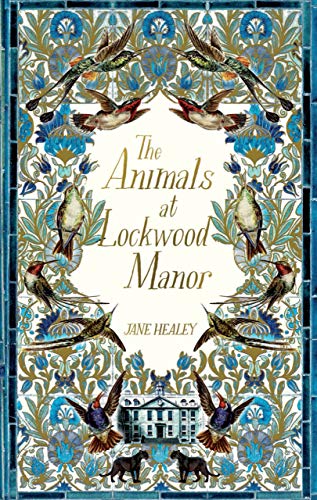
The Animals at Lockwood Manor by Jane Healey

A terrible secret lies buried at the heart of this house

Animals at Lockwood Manor

Mantle| 5 March 2020| 352 pages| e-book| review copy via NetGalley| 3*

I enjoyed The Animals at Lockwood Manor by Jane Healey although I think is too long with some repetitions and so in places I felt it dragged a bit. It is historical fiction, part a love story and part a mystery, beginning in 1939 at the outbreak of World War Two. A taxidermy collection of mainly mammals is being evacuated from a natural history museum in London to Lockwood Manor in the countryside to save them from the threat of bombs. Owned by Major Lord Lockwood, the Lockwood estate is ancient, although most of the house had been built in the Jacobean style in the nineteenth century, with two round turrets and a pierce parapet with pinnacles. Most of its many rooms are empty as the only residents are the Major and his daughter, Lucy along with the servants, whose numbers are down as they enlist.

In charge of the collection is Hetty Cartwright, a young woman, who soon realises she had taken on more than she expected. And it’s not long before, one after another, some of the animals go missing or are mysteriously moved from their positions in the long gallery. The book begins well as the scene is set, and I could feel the tension and mystery surrounding the house and in particular surrounding Lucy and her mother, Heloise. Heloise died in a car crash not long before the book begins, but we see her in Lucy’s journal in which she writes down her nightmares, thoughts and memories.

The narration alternates between Lucy’s journal and the events as experienced by Hetty. The characters of Hetty and Lucy are well drawn as their relationship develops, and the house and the museum animals too are vividly described. I loved the details of the museum collection, and how the conditions at Lockwood affected their condition as insects invaded the stuffed creatures. 

After a good start the pace then slows down and not a lot really happens until the final dramatic ending. Some of the characters are caricatured – for example the Major who is portrayed as an overbearing lecherous man, a pantomime villain. There is a more than a touch of the supernatural in the book, and a lot in it that reminded me of Jane Eyre and The Woman in White, as Hetty fears she is descending into madness. It’s the type of story that would make an excellent film or TV drama and, this is not something I usually think, would probably be better than the book.

Many thanks to Mantle for a review copy via NetGalley.

Reading Challenges: Mount TBR Challenge, Calendar of Crime, Historical Fiction Reading Challenge

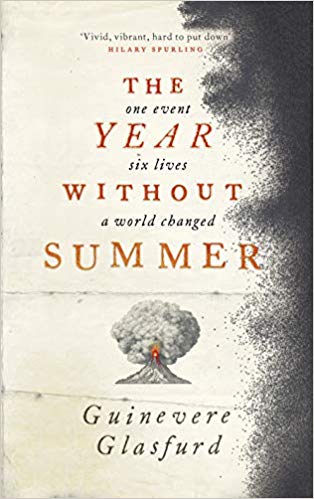
The Year Without Summer by Guinevere Glasfurd

Year without summer

Two Roads| 6 February 2020| 416 pages| e-book| review copy via NetGalley| 5 stars

The Year Without Summer: 1816 – one event, six lives, a world changed by Guinevere Glasfurd is a most remarkable book, telling how the volcanic eruption of Mount Tambora on Sumbawa Island in Indonesia in 1815 had a profound and far reaching impact on the world. It led to sudden cooling across the northern hemisphere, crop failures, famine and social unrest in the following year, which became known as The Year Without Summer and in North America as Eighteen hundred and froze to death. But it wasn’t until the mid twentieth century that volcanic eruptions were shown to affect climate change.

Guinevere Glasfurd’s novel illustrates how the impact of the extreme weather conditions affected the lives of six people. They never meet, or know each other, but their stories are intertwined throughout the book in short chapters, giving what I think is a unique look at the events of 1816. I enjoyed all the stories.

Henry Hogg was the ship’s surgeon on the Benares, the ship sent to investigate the eruption of Mount Tambora in 1815. He discovered the sea full of floating pumice and charred bodies, whilst the decks of the ship were covered a foot thick with ashes. The immediate effects of the eruption were simply tremendous and horrific, within a hundred miles forests, towns were covered, deep valleys were filled in and the contours of the coast were changed.

In 1816 Mary Shelley travelled to Switzerland with Percy Shelley and her son Willmouse, her step-sister, Claire and Lord Byron and Dr Polidori and after a month of rain, Byron suggests that they should each write a ghost story and that led to her writing Frankenstein.

John Constable’s love of landscapes is deeply unfashionable and his hopes to marry Maria Rebow depend upon him gaining a commission from her parents. His father is near to death and as he has passed his business to Abram, John’s younger brother, John has few prospects other than to make a living from his painting.

Farmworker Sarah Hobbs in the Fens is finding work hard to get and has to settle for shovelling shit in the stables in her bare feet for a penny a day.  Always hungry and with work getting even more scarce she gets involved in the Littleport hunger riots. Her story is based loosely on a real person who was condemned to hang for her part in the riots, but her sentence was eventually commuted to transportation. The suppression of these riots was repeated in the 1819 Peterloo Massacre when protesters had gathered in Manchester demanding political reform

The other two people are fictional – preacher Charles Whitlock in Vermont is struggling, having persuaded his flock not to travel to Ohio to escape the draught, only to find that this is followed by periods of hard frost and snow in August. Their prospects are very bleak and death soon follows.

The other fictional character is Hope Peter, a soldier returned from the Napoleonic wars, who finds his mother has died, his family home demolished and a fence has gone up in its place, enclosing the land. He too ends up taking part in a riot – this one at Spa Fields at Islington.

 I thoroughly enjoyed this book. It’s more like a collection of short stories than a novel, but it works very well for me, highlighting the global connections. It is of course about climate change, showing the far-reaching effects of the Tambora eruption, which weren’t limited to 1815 and 1816. It led to hardships in 1817 and 1818 with the outbreak of cholera and typhoid epidemics triggered by the failure of monsoons. As Guinevere Glasfurd explains in her afterword the eruption is ‘credited with social change throughout the nineteenth century and with the pressure for social reform.’

This was the first book by Guinevere Glasfurd  that I’ve read, but it’s not her first book – that was The Words in My Hand, shortlisted for the Costa First Novel Award and Authors’ Club Best First Novel Award and was also longlisted in France for the Prix du Roman FNAC. She is currently working on her third novel, a story of the Enlightenment, set in eighteenth century England and France. I’ll be reading more of her work.

Many thanks to Two Roads for a review copy via NetGalley.

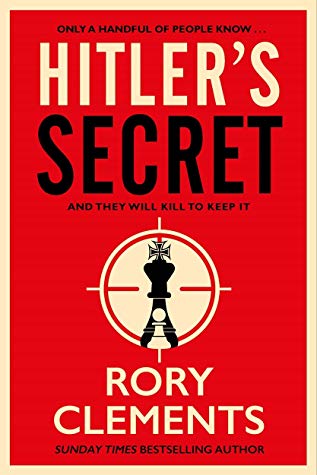
Hitler’s Secret by Rory Clements

Hitler's secret

Bonnier Zaffre| 23 January 2020| 339 pages| e-book| review copy via NetGalley| 4 stars

Description from the author’s website:

In late autumn 1941, Nazi Germany has conquered most of western Europe and is now laying waste to the Soviet Union with a relentless drive towards the East. But a secret from Hitler’s past life threatens to destabilise the Nazi regime – and there are men who will stop at nothing to prevent it coming out. 

My thoughts

I enjoyed Rory Clements’ first book in his Tom Wilde series, Corpus so much that I decided to look out for more of his books. But somehow I missed the next two books as Hitler’s Secret is the fourth book in the series. Luckily for me, it reads perfectly as a standalone, although at some point I would like to read the books I missed.

This is a complicated novel and I am not going to attempt to describe all the details.  Just before the USA’s entry into the Second World War, Cambridge professor Tom Wilde, an American, is smuggled into Nazi Germany at the instigation of an American intelligence officer to collect a mysterious package from Berlin. He isn’t told what is in the package, but I thought it was obvious from quite early in the book what it was.  I think that increased the tension and suspense throughout the book and at several points in the story, I just couldn’t imagine how Tom would succeed in his mission as he is pursued by numerous people including the powerful Nazi, Martin Borman and his agents. Hermann Goering and his wife Emmy also play an important role in the story as does the internal struggle for power under Hitler, whereas Hitler himself does not appear.

I enjoyed all of it – the somewhat predictable plot, the amazing coincidences, the chase across Germany and the Baltic, the doubtful characters, as well as all the twists and turns and seemingly impossible situations that they encounter. It’s fast paced, full of action, danger, violence and double-cross – a most satisfying and compelling thriller. The ending in England is also intriguing, full of heart stopping moments in scenes that had my head whirling. Needless to say really, but I was gripped by this book and I just had to find out what happened. I think the last final twist about Hitler’s secret was very well done.

Imperium by Robert Harris

With not many days left until Christmas and the New Year I’ve just about got time to write a bit about two books I’ve read this month from my to-be-read books. I’ll be writing about the second book in a later post.

The first one is Imperium by Robert Harris, the first in his Cicero Trilogy.

I love historical fiction and over the years I’ve read quite a lot of it, including novels set in Ancient Rome, so I’m familiar with the characters in this book, but not about all the details that Robert Harris has packed into Imperium.

Beginning in 79 BC, this book set in the Republican era is a fictional biography of Marcus Tullius Cicero by Tiro, his slave secretary. Tiro was a real person who did write a biography of Cicero, which has since been lost in the collapse of the Roman Empire. Tiro is credited with the invention of shorthand. Harris has based Imperium on, among other sources, Cicero’s letters, which Tiro had recorded, successfully interweaving Cicero’s own words with his own imagination.  It is basically a political history, a story filled with intrigue, scheming and treachery in the search for political power as Cicero, a senator, works his way to power as one of Rome’s two consuls.

The first part of the book (and I think the best part) covers the trial of Verres, a corrupt governor of Sicily. I found this gripping as it was by no means obvious that Verres would be found guilty. Cicero builds the case against him and the resulting trial is a dramatic showdown.

After that the book dragged just a little bit for me as it moved on to describing a complicated struggle to change Rome’s government from a Republic to having an Emperor as absolute ruler. But it picked up again towards the end and overall I thought this was a very good book and I’m keen to read the second in the trilogy, Lustrum.

In such a short post as this is I cannot go into much detail – and the novel is very detailed. I marked many passages that struck me as interesting and felt much of the struggle for power applies as much today as it did in Ancient Rome. I’ll finish this post with one quotation (there are plenty of others I could have chosen):

You can always spot a fool, for he is the man who will tell you he knows who is going to win an election. But an election is a living thing – you might almost say, the most vigorously alive thing there is – with thousands upon thousands of brains and limbs and eyes and thoughts and desires, and it will wriggle and turn and run off in directions no one ever predicted, sometimes just for the joy of proving the wiseacres wrong. (page 471)

The Abbess of Whitby by Jill Dalladay

The Abbess of Whitby is subtitled A Novel of Hild of Northumbria. As Jill Dalloway explains in her Author’s Note at the end of the book what we know about Hild (St Hilda) comes from the Jarrow monk Bede’s  A History of the English Church and People written 40 years after her death. He gave no information about her between the ages of 13 and 33, so Jill Dalloway has based her fictional account of her life up to the age of 33 on the works of various modern scholars, assuming that like other royal girls of the time she was married for dynastic or political purposes. The major characters are historical, with a few exceptions and Hild’s husband and son are fictional. Hild was born in 614 and died in 680.

Knowing very little about the historical background to the story I found this a fascinating book, but could not have followed it very easily without the list of characters, the family tree of the royal families of Northumbria and the maps showing the Peoples of 7th Century Britain and of Hild’s Northumbria. I was surprised by how much people travelled in the 7th century. It spurred me on to find out more and I am now reading The King in the North: the Life and Times of Oswald of Northumbria by Max Adams. I would also like to read Edwin: High King of Britain and Oswald: Return of the King both by Edoardo Albert.

About two thirds of the book covers Hild’s early life, from the time she was chosen to lead the handmaidens of the fertility goddess  Eostre. It’s a time of transition as people are gradually being converted to Christianity, although at first it appears to be a matter of politics rather than of faith. Her marriage to Cerdic of the Goddodin tribe took her to Din Edin (Edinburgh). When home and family are lost in Oswy’s sack of Edinburgh, she finds herself in enemy hands, but meets the charismatic Aidan (St Aidan of Lindisfarne). The final part of the book covers her life as she helped establish various chapels and finally settled in Whitby as the Abbess there, involved in resolving the Easter dispute at the Synod of Whitby in 664. This settled that the calculations to establish the date of Easter would be according to the customs of Rome, rather than the Celtic customs practised by Irish monks at Iona and also to observe the monastic tonsure.

For me the first two thirds  of the book, showing the disputes between the separate kingdoms in Britain in the 7th century, the  transition from pagan to Christian beliefs and the harsh conditions and plague people had to endure, came to life more successfully than the later chapters.

I received this book for review from the publishers via LibraryThing’s Early Reviewers Program.

  • Paperback: 352 pages
  • Publisher: Lion Fiction; 1st New edition (21 Aug. 2015)
  • Language: English
  • ISBN-10: 1782641548
  • ISBN-13: 978-1782641544

Jill Dalloway is a classicist, historian and former head teacher who pioneered the Cambridge Latin Course. She lives in Whitby.