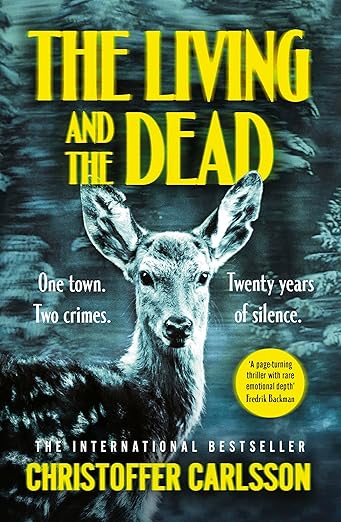
Penguin| 8 January 2026| 428 pages| e-book| Review copy| 4*
Description
On a cold, snowy winter’s night in 1999, Sander and Killian leave a house party together, in a small town in rural Sweden. The very best of friends, they imagine they will remain so forever.
The next morning, each is a key suspect in a murder. Each has something they want to conceal from the police. And from the other.
The hunt for Mikael Söderström’s killer will take over twenty years. It will see a detective leave the force forever. And it won’t end until a second body is found, and the tight-knit community’s secrets are finally brought to light . . .
My thoughts
The Living and the Dead by Christoffer Carlsson, is translated from the Swedish by Rachel Willson Broyles.
This has a slow start. It has a tense atmosphere and a great sense of place, set in Skavböke, a small town in rural Sweden. .There are many characters and it took me quite some time to sort them out – who were related, who were friends and who were police, although the list of characters at the beginning of the book does help. The narrative is told from the different characters’ perspectives, which was also confusing until I had them sorted in my mind and I had to re-read several passages for a while. It’s not a book to read quickly!
By the time I got to the second half of the book and the action picked up pace it was much more satisfying to read. It kept me guessing what was going on and who the culprit was all the way through. I enjoyed all the twists and turns, which took me by surprise. It’s a dark, bleak thriller with plenty of suspense as secret relationships, rumours and rivalries abound in the small town. I particularly enjoyed Carlsson’s description of the Swedish landscape and characterisation.
I didn’t know until after I’d read this book that it is the third book in Carlsson’s Hallandssviten Series. I’ll certainly be looking out for more of his books.
Christoffer Carlsson was born in 1986 on the west coast of Sweden. He holds a PhD in criminology from the University of Stockholm and is one of Sweden’s leading crime experts. Carlsson is the youngest winner of the Best Swedish Crime Novel of the Year, voted by the Swedish Crime Writers’ Academy, and has won the prestigious Glass Key award for The Living and the Dead, given to the best Scandinavian crime novel of the year. He’s also won the Best Swedish Crime Novel twice.
My thanks to the publishers, Penguin and NetGalley for a review copy.
The Maigret books are also a good choice for Novellas in November, they’re all under 200 pages. I’ve been a Maigret fan for a long time, ever since I was in my teens, watching the TV series with Rupert Davies in the title role. And I’ve been reading the Maigret series as I’ve come across the books in libraries, bookshops, and more recently as e-books, so not in the order they were originally published.
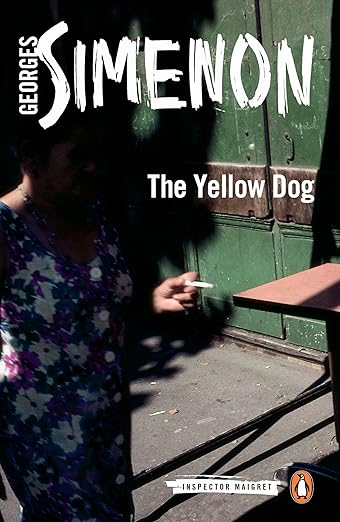
Penguin| 2014| 164 pages| My own copy| 3*
This is a short review because, once more I’m behind with writing reviews. The Yellow Dog is the 5th book in the new Penguin Maigret series, translated by Linda Asher. It was first published in 1931 and also published in a previous translation as A Face for a Clue. It’s a tale of small town suspicion and revenge.
In the windswept seaside town of Concarneau, a local wine merchant is shot. In fact, someone is out to kill all the influential men and the entire town is soon sent into a state of panic. For Maigret, the answers lie with the pale, downtrodden waitress Emma, and a strange yellow dog lurking in the shadows…
It’s only 134 pages but with a slow start it did seem longer than that. It begins with the shooting of Monsieur Mostaguen, a local wine merchant, followed by the appearance of the yellow dog, a big, snarling yellow animal, and then an attempt at poisoning for Maigret to investigate. I wondered what the significance of the yellow dog was and who it belonged to; no one seems to know. The locals had never seen it before and they all viewed it with fear and suspicion. I’ve read some of the earlier Maigret and have noted before that I’ve been confused and baffled, with little idea of what was going on and it was just the same with this book. Maigret doesn’t seem to be very concerned about the man who was shot and seriously injured, nor about the attempted poisoning until there’s a murder and another man disappears. He walks around the town, observing but not actively investigating.
Simenon is good at conveying atmosphere and skilled at setting the scene and drawing convincing characters in a few paragraphs. As the book begins there’s a south-westerly gale slamming the boats together in the harbour in Concarneau and the wind surges through the streets. Contrast the weather at the beginning of the book with the change by the time Maigret is getting close to clearing up the mystery – the weather turned fine, with a vibrant blue sky, the sea sparkled, and ‘the Old Town’s walls, so gloomy in the rain, turn a joyful, dazzling white.‘
I don’t think this is one of the best Maigret book, but it is puzzling with Maigret keeping his thoughts to himself until the end of the book, when like Agatha Christie’s Hercule Poirot, he explains it all.
Throughout the month of November, bloggers Liz, Frances, Heather, Rebekah and Deb invite you to celebrate Nonfiction November with us.
Week 3 (11/11-11/15) Book Pairings: This week, pair up a nonfiction book with a fiction title. Maybe it’s a historical novel and the real history in a nonfiction version, or a memoir and a novel, or a fiction book you’ve read and you would like recommendations for background reading. Or two books on two different areas have chimed and have a link. You can be as creative as you like! (Liz)
Liz further clarifies in her Pairings post: ‘I offer a mix of fiction/nonfiction pairs, fiction/nonfiction/memoir sets and nonfiction/nonfiction.’
After the Hamas-led attack on Israel on October 7, 2023 I decided I needed to know more about what had led up to it. And I found lots of books, including these:
Nonfiction/Fiction – I’m aiming to write more about these books in due course.
This is an extremely detailed chronological account of events in this conflict from the years from 1882 preceding the Balfour Declaration in 1917 to 2017. Ian Black was a British journalist who worked for The Guardian holding the posts of diplomatic editor and Europe editor as well as Middle East editor. I’m quoting from his obituary in January 2023: ‘he embodied the correspondent’s duty to show fairness to both parties. That refusal to reinforce the narrative of one side alone informed his writing on the Israel-Palestine conflict from the start.’ So I thought this could be a good place to start. And as far as I can tell it is an unbiased and factual account,with many references to Black’s sources, and it took me a long time to read it. In the Preface Black states:
It tries to tell the story of, and from both sides, and of the fateful interactions between them. … This book is intended for the general reader … It is based on a synthesis of existing scholarship and secondary sources: primary research covering the entire 135-year history is far beyond the capability of any one author. Specialised publications like the Journal of Palestine Studies, Israel Studies, and the Jerusalem Quarterly are vital resources.
I learnt a lot that I hadn’t known before, but I decided I still needed to know more and next I bought:
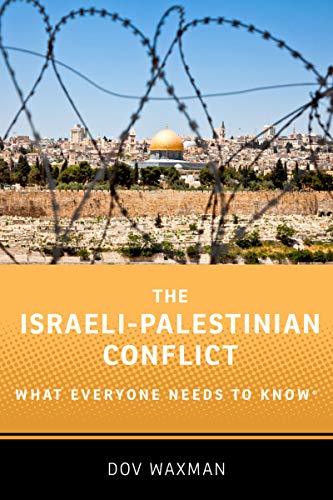
Dov Waxman is the Rosalinde and Arthur Gilbert Foundation Chair of Israel Studies at the University of California Los Angeles (UCLA) and the director of the UCLA Y&S Nazarian Center for Israel Studies. His research focuses on the conflict over Israel-Palestine, Israeli politics and foreign policy, U.S.-Israel relations, American Jewry’s relationship with Israel, Jewish politics, and contemporary antisemitism. He frequently gives media interviews and public talks on these topics. (Taken from his website).
This book is more readable than Black’s and is written as a series of questions and answers covering the conflict from its nineteenth-century origins up to the present day (2019). It explains the key events, examines the core issues, and presents the competing claims and narratives of both sides. In the Preface Waxman states he has tried
to present the different perspectives and narratives of Israelis and Palestinians and avoid ‘playing the blame game’. … Neither side is wholly innocent or completely guilty, and both have legitimate rights and needs.
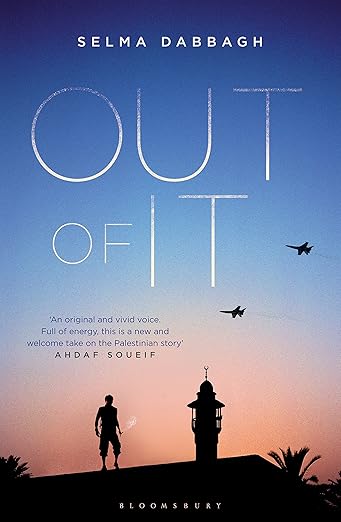
I haven’t read this. I saw it reviewed in The Guardian. It’s set in Gaza City during the Second Intifada in the 2000s. It’s about the Mujahed family, chronicling their hopes and dreams as well as their suffering.
Blurb from Amazon:
Gaza is being bombed. Rashid – an unemployed twenty-seven year
old who has stayed up smoking grass watching it happen – wakes to hear that he’s got the escape route he’s been waiting for: a scholarship to London. His twin sister, Iman – frustrated by the atrocities and inaction around her – has also been up all night, in a meeting that offers her nothing but more disappointment. Grabbing recklessly at an opportunity to make a difference, she finds herself being followed by an unknown fighter.
Meanwhile Sabri, the oldest brother of this disparate family, works on a history of Palestine from his wheelchair as their mother pickles vegetables and feuds with the neighbours.
Written with extraordinary humanity and humour, and moving between Gaza, London and the Gulf, Out of It is a tale that redefines Palestine and its people. It follows the lives of Rashid and Iman as they try to forge paths for themselves in the midst of occupation, religious fundamentalism and the divisions between Palestinian factions. It tells of family secrets, unlikely love stories and unburied tragedies as it captures the frustrations and energies of the modern Arab world.
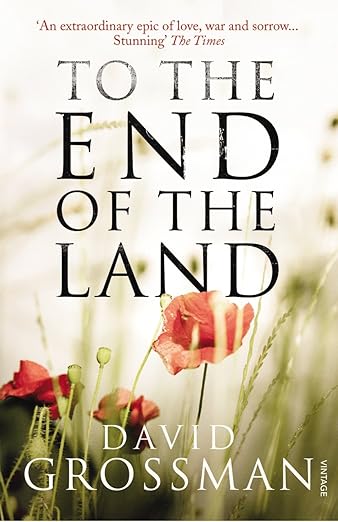
To the End of the Land by David Grossman, translated by Jessica Cohen (fiction) – another book I haven’t read.
David Grossman is one of the leading Israeli writers of his generation, and the author of numerous works of fiction, non-fiction, and children’s literature. His work has appeared in The New Yorker, and been translated into twenty-five languages around the world. He lives on the outskirts of Jerusalem.
Description from Fantastic Fiction:
Ora is about to celebrate her son Ofer’s release from Israeli army service when he voluntarily rejoins. In a fit of magical thinking, she takes off to hike in the Galilee, leaving no forwarding information for the ‘notifiers’ who might deliver the worst news a parent can hear. Recently estranged from her husband, she drags along an unlikely companion: their once best friend Avram, who was tortured as a POW during the Yom Kippur War and, in his brokenness, refused to ever know the boy or even to keep in touch with them.
Now, as they hike, Ora unfurls the story of her motherhood and initiates the lonely Avram in the drama of the human family – a telling that keeps Ofer alive for both his mother and the reader. Her story places the most hideous trials of war alongside the daily joys and anguish of raising children: never have we seen so clearly the reality and surreality of daily life in Israel, the currents of ambivalence about war within one household, the burdens that fall on each generation anew.
Grossman’s rich imagining of a family in love and crisis makes for one of the great antiwar novels of our time.
It’s time again for Six Degrees of Separation, a monthly link-up hosted by Kate atBooks Are My Favourite and Best. Each month a book is chosen as a starting point and linked to six other books to form a chain. A book doesn’t need to be connected to all the other books on the list, only to the one next to it in the chain.
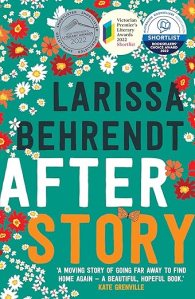
This month starts After Story by Larissa Behrendt. This is the description on Amazon UK:
When Indigenous lawyer Jasmine decides to take her mother, Della, on a tour of England’s most revered literary sites, Jasmine hopes it will bring them closer together and help them reconcile the past. Twenty-five years earlier the disappearance of Jasmine’s older sister devastated their tight-knit community. This tragedy returns to haunt Jasmine and Della when another child mysteriously goes missing on Hampstead Heath. As Jasmine immerses herself in the world of her literary idols – including Jane Austen, the Brontë sisters and Virginia Woolf – Della is inspired to rediscover the wisdom of her own culture and storytelling. But sometimes the stories that are not told can become too great to bear. Ambitious and engrossing, After Story celebrates the extraordinary power of words and the quiet spaces between. We can be ready to listen, but are we ready to hear?
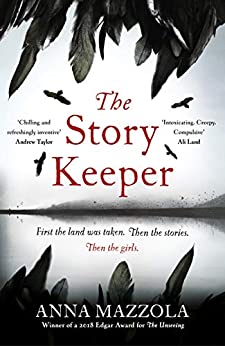
My first link is using the word Story, in the title, and it’s also a book about storytelling – The Story Keeper, set on the Isle of Skye in 1857, by Anna Mazzola. It stresses the importance of folk tales – stories that have been told to make sense of the world and reflect people’s strengths, flaws, hopes and fears.
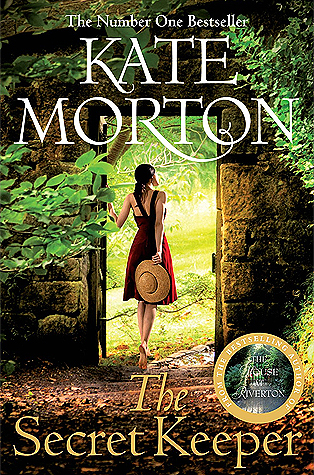
My second link is The Secret Keeper by Kate Morton, a story moving between time periods from 2011, back to the 1960s and also to the 1940s. It begins in 1961 in Suffolk when sixteen-year old Laurel is shocked when she sees her mother stabbing a stranger who had come to their farm.
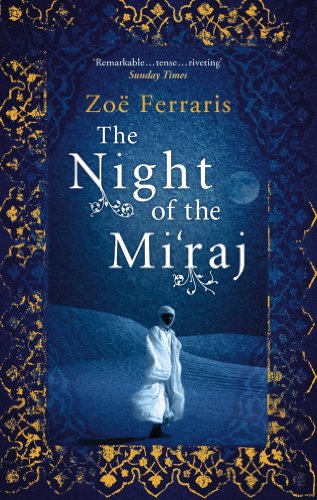
In my third link another sixteen year old girl, Nouf ash-Shrawi, disappears from her home in Jeddah, in The Night of the Mi’raj by Zoë Ferraris, just before her arranged marriage. Her body is eventually found in a desert wadi. It appears that her death was an accident and that she died by drowning in the wadi after a sudden storm.
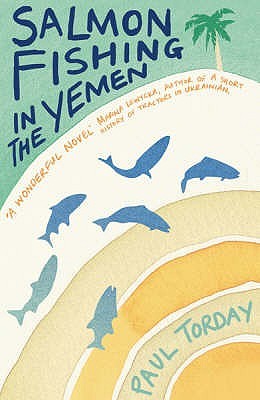
My fourth link is Salmon Fishing in the Yemen by Paul Torday about a project to introduce salmon fishing in the waters of the Wadi Aleyn in the heart of the mountains of Heraz, in Yemen.
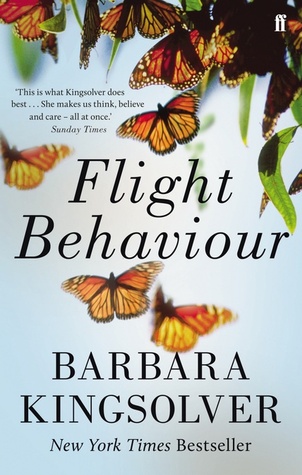
My fifth link takes the chain from the mountains of Heraz to the Appalachian Mountains in Flight Behaviour by Barbara Kingsolver in which a young mother discovers a beautiful and terrible marvel of nature: the monarch butterflies have not migrated south for the winter that year.
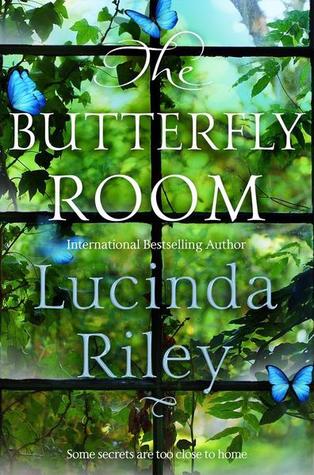
My final link is to The Butterfly Room by Lucinda Riley. The story revolves around Posy Montague and her family home, Admiral House in the Suffolk countryside. Her father encouraged her to draw plants and showed her how to catch butterflies. As a child Posy thought The Butterfly Room in the Folly in the grounds of Admiral House looked like a fairy-tale castle with its turret made of yellow sandy brick. But the Folly was not the wonderful place she imagined – and there is a dark secret hidden behind its locked door.
The books in my chain are all fiction including historical fiction, mysteries and crime fiction. The chain travels through Australia, the UK, Saudi Arabia, Yemen and the USA,
Next month (October 5, 2024), we’ll start with Colm Tóibín’s Long Island.
It’s time again for Six Degrees of Separation, a monthly link-up hosted by Kate atBooks Are My Favourite and Best. Each month a book is chosen as a starting point and linked to six other books to form a chain. A book doesn’t need to be connected to all the other books on the list, only to the one next to it in the chain.
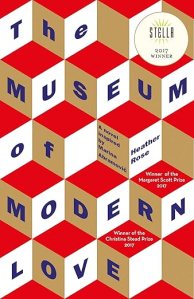
This month starts with The Museum of Modern Love by by Heather Rose (Kate’s pick was inspired by Sue’s recent post about writers and artists). I haven’t read this, but I would like to. This is the description on Amazon UK:
Arky Levin, a film composer in New York, has promised his wife that he will not visit her in hospital, where she is suffering in the final stages of a terminal illness. She wants to spare him a burden that would curtail his creativity, but the promise is tearing him apart. One day he finds his way to MOMA and sees Mariana Abramovic in The Artist is Present. The performance continues for seventy-five days and, as it unfolds, so does Arky. As he watches and meets other people drawn to the exhibit, he slowly starts to understand what might be missing in his life and what he must do.
My first link is via a terminal illness to The Salt Path, Raynor Winn’s memoir about walking the South Coast Path when Moth her husband was diagnosed with a terminal illness. They were homeless, with no means of income except for £48 pounds a week. They had lost their home, business and livelihood, after investing in one of a friend’s companies that had failed. It is about the determination to live life, about overcoming pain and hardship, and the healing power of nature. It is about homelessness and the different reactions and attitudes of the people they met when they told them they were homeless.
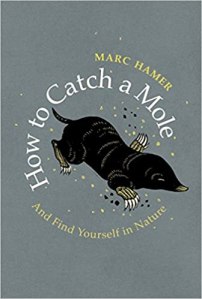
My second link is How to Catch a Mole by Marc Hamer, part memoir, part a nature study of the British countryside, part poetry, and, of course, about moles. After leaving school Marc Hamer was homeless for a while. He has worked in art galleries, marketing, graphic design and taught creative writing in a prison before becoming a gardener. And before writing this book he had been a traditional molecatcher for years.
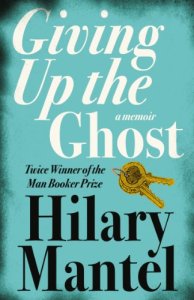
My third link is Hilary Mantel’s Giving Up the Ghost, a remarkable memoir. It came across to me as being clear, honest and very moving. She thought it was because of her that her parents were not happy and that without her they would have had a chance in life. It didn’t get any better when her father left home and she was left to live with two younger brothers, their mother and her mother’s lover. Home was a place where secrets were kept and opinions were not voiced. Her experience of ghosts at the age of 7 was horrifying as she felt as though something came inside her, ‘some formless, borderless evil’.
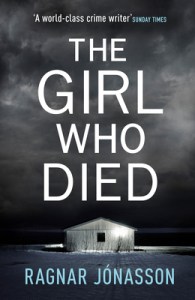
My fourth link is The Girl Who Died by Ragnar Jonasson, Icelandic noir, a mix of horror and psychological thriller, with a strong sense of place. Skálar is a close-knit community that doesn’t welcome newcomers, keeping its secrets well hidden. The only person who welcomes Una, to the village is Salka, the mother of Edda, one of the two girls Una is to teach. Her house is said to be haunted by the ghost of a young girl who had died fifty years earlier,
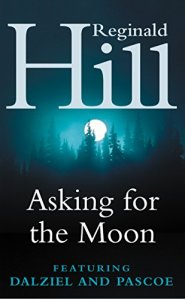
My fifth link is Asking for the Moon by Reginald Kill, a collection of four novellas. Two of them feature ghosts, Pascoe’s Ghost and Dalziel’s Ghost. But I think that the best one is the first story, The Last National Service Man which tells how Dalziel and Pascoe first met. Neither of them are impressed by the other. Dalziel thinks Pascoe is everything he dislikes – a graduate, well spoken, and a Southerner from south of Sheffield. Pascoe thinks Dalziel is an archetypical bruiser who got results by kicking down doors and beating out questions in Morse code on a suspect’s head.
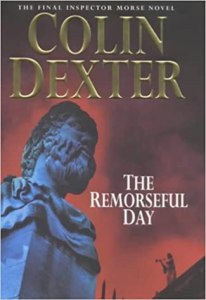
My final link is to the final Inspector Morse novel, The Remorseful Day by Colin Dexter. The plot is detailed, complex and as usual, with Morse, a puzzle type murder mystery with plenty of challenging clues. Sergeant Lewis is left to investigate the murder of nurse Yvonne Harrison that had remained unsolved for a year. When Morse phones to say he is feeling unwell Lewis is most concerned – Morse seldom mentioned his health, what is wrong with him?
The main focus of the book is on Morse and how he copes with his illness and his drinking habits. It becomes obvious just how alone he is in the world and how devastating his situation is to Lewis.
The first three books in my chain are memoirs and the other three are crime fiction/psychological thriller novels. Beginning in America it travels to the UK, then to Iceland, before ending back in the UK.
Next month (September 7, 2024), we’ll start with After Story by Larissa Behrendt.
It’s time again for Six Degrees of Separation, a monthly link-up hosted by Kate atBooks Are My Favourite and Best. Each month a book is chosen as a starting point and linked to six other books to form a chain. A book doesn’t need to be connected to all the other books on the list, only to the one next to it in the chain.
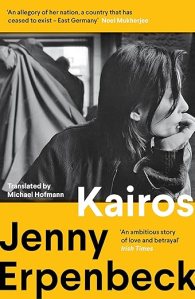
This month starts with Kairos by Jenny Erpenbeck. Kairos is the winner of the International Booker Prize 2024. An intimate and devastating story of the path of two lovers through the ruins of a relationship, set against the backdrop of a seismic period in European history. Translated from German by Michael Hofmann.
Berlin. 11 July 1986. They meet by chance on a bus. She is a young student, he is older and married. Theirs is an intense and sudden attraction, fuelled by a shared passion for music and art, and heightened by the secrecy they must maintain. But when she strays for a single night he cannot forgive her and a dangerous crack forms between them, opening up a space for cruelty, punishment and the exertion of power. And the world around them is changing too: as the GDR begins to crumble, so too do all the old certainties and the old loyalties, ushering in a new era whose great gains also involve profound loss.
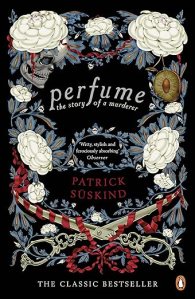
My first link is another novel translated from German, Perfume:the story of a murderer by Patrick Süskind, translated from German by John E Woods. It is an extraordinary novel, a Gothic work in the vein of Edgar Allen Poe, or Oscar Wilde’s ThePicture of Dorian Grey. It depicts the strange life of Jean-Baptiste Grenouille and is a book of smells. This is a horror story, one that made me not want to read it and yet also want to read it to the bitter end.
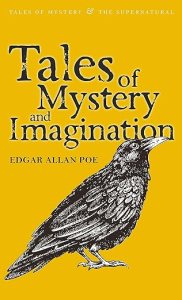
My second link is Tales of Mystery and Imagination by Edgar Allan Poe, which is a collection of Poe’s best stories containing all the terrifying and bewildering tales that characterise his work. As well as the Gothic horror of such famous stories as ‘The Pit and the Pendulum’, ‘The Fall of the House of Usher’, ‘The Premature Burial’ and ‘The Tell-Tale Heart’, all of Poe’s Auguste Dupin stories are included.
These are the first modern detective stories and include ‘The Murders in the Rue Morgue’, ‘The Mystery of Marie Roget’ and ‘The Purloined Letter’.
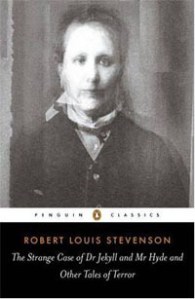
My third link stays on the theme of tales of horror with Tales of Terror by Robert Louis Stevenson, which are published in my copy of The Strange Case of Dr. Jekyll and Mr Hyde. It consists of two short stories, both written for the Christmas “crawler” tradition in 1884 and 1885. Christmas was a season traditionally associated with supernatural and creepy tales. The Body Snatcher is very much a traditional Christmas ghost story, beginning with four men gathered in an inn on a dark winter’s night telling tales round the fireside of grisly deeds. The other story is Olalla, a Gothic tale, set in an ancient Spanish castle surrounded by deep woodland, about a young man recovering from his war wounds and to “renew his blood”, who finds himself living with a strange family.
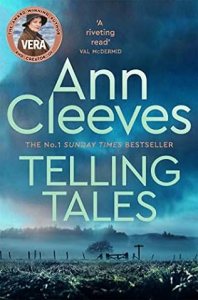
My fourth link moves away from horror stories to crime fiction, linked by the word ‘tales’ in the title. It is Telling Tales by Ann Cleeves, a book I have read but I didn’t write a review. It’s the 2nd of her Vera Stanhope series in which the residents of an East Yorkshire village are revisited with the nightmare of a murder that happened 10 years before. There was some doubt about the guilty verdict passed on Jeanie Long and now it would seem that the killer is still at large. Inspector Vera Stanhope builds up a picture of a community afraid of itself and of outsiders.
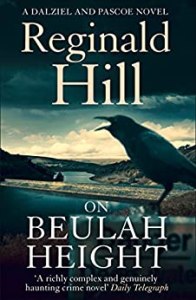
My fifth link is On Beulah Height, Reginald Hill’s 17th Dalziel and Pascoe novel. It’s also set in a Yorkshire village, Dendale. Three little girls had gone missing from the village one summer. Their bodies were never found, and the best suspect, a strange lad named Benny Lightfoot, was held for a time, then released. Fifteen years later another little girl, Lorraine, aged seven went out for a walk one morning with her dog before her parents got up and didn’t return home, reviving memories of the missing children from fifteen years earlier.
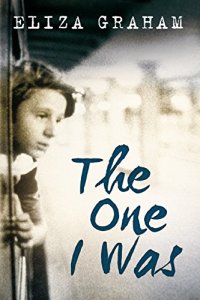
My final link is to a another book featuring a character called Benny – The One I Was by Eliza Graham – historical fiction split between the present and the past following the lives of Benny Gault and Rosamund Hunter. Benny first came to Fairfleet in 1939, having fled Nazi Germany on a Kindertransport train. As an adult he bought the house and now he is dying of cancer. Rosamund returns to Fairfleet, her childhood home, to nurse Benny. I was totally engrossed in both their life stories as the various strands of the story eventually combined.
Half of my chain consists of horror stories, not a genre I often read and the other half is made up of crime fiction novels, as usual.

 BooksPlease