Short Stories on Sunday

Over several years I’ve been reading my way through Agatha Christie’s books and short stories. I’ve read all her detective/mystery novels and some of her short story collections. In an attempt to read more of the short stories I’ve decided to read some each Sunday, beginning with the stories collected in Miss Marple and Mystery.

IMG_20180513_095855842.jpgThis collection contains 55 stories, 20 of them featuring Miss Marple. There is an Short Story Chronology in the Appendix with a table aiming to present all Agatha Christie’s short stories published between 1923 and 1971, listed in order of traced first publication date. Counting how many there are in total is a difficult task – some stories that first appeared in weekly or monthly magazines were later  re-worked and became chapters in a larger work, some in Partners in Crime were sub-divided into smaller chapters, 13 were re-worked into the episodic novel, The Big Four, and some were rewritten so substantially that they appear separately in different books!

I’ve read some of these in other short story collections but there are still many I haven’t read.

The Girl in the Train is one I haven’t read before. It was first published in Grand Magazine in February 1924 and was adapted as one of the Agatha Christie Hour drama series for by Thames Television in 1982 as part of their ten-part programme. It’s a very short story that also appears in The Listerdale Mystery collection of short stories.

George Rowland is the heir to his Uncle William’s wealth but is left without a job or a home when William throws him out on his heel. On a whim George Rowland decides to catch a train down to Rowland’s Castle, a village which happens to bear his name. A beautiful girl bursts into his compartment, frantically begging to be hidden.  She gives him a package saying it is the key to everything and he is to guard it with his life. Jumping out of the train at the first stop she tells him to follow the little man with a small dark beard getting on the train. His life changes dramatically as he follows her instructions.

It’s a bit of nonsense really, in the same vein as Christie’s Tommy and Tuppence stories. A quick easy read, but entertaining nevertheless and possibly the first of books entitled The Girl … 

My Friday Post: A Killing Kindness by Reginald Hill

Book Beginnings Button

Every Friday Book Beginnings on Friday is hosted by Gillion at Rose City Reader where you can share the first sentence (or so) of the book you are reading, along with your initial thoughts about the sentence, impressions of the book, or anything else the opener inspires.

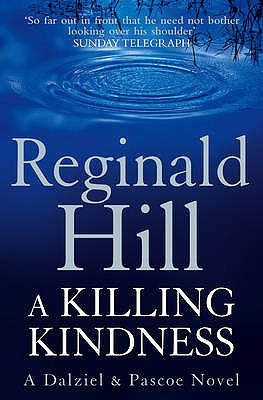
A Killing Kindness by Reginald Hill is one of the books I’m thinking I’ll read next. It’s the 6th Dalziel and Pascoe novel

A killing kindness


… it was green, all green, all over me, choking, the water, then boiling at first, and roaring, and seething, till all settled down, cooling, clearing, and my sight up drifting with the last few bubbles, till through the glassy water I see the sky clearly, and the sun bright as a lemon, and birds with wings wide as a windmill’s sails slowly drifting round it, and over the bank’s rim small dark faces peering, timid as beasts at their watering, nostrils sniffing danger and shy eyes bright and wary, till a current turns me over, and I drift, and am still drifting …

What the hell’s going on here! Stop it! This is sick …

I wasn’t sure what was going on either …

Also every Friday there is The Friday 56, hosted by Freda at Freda’s Voice.

30879-friday2b56These are the rules:

  1. Grab a book, any book.
  2. Turn to page 56, or 56% on your eReader. If you have to improvise, that is okay.
  3. Find any sentence (or a few, just don’t spoil it) that grabs you.
  4. Post it.
  5. Add the URL to your post in the link on Freda’s most recent Friday 56 post.

Page 56: it’s becoming clearer now what was going on –

… all over me, choking, the water all boiling at first, and roaring, and seething …. Pascoe shook the medium’s taped words out of his mind and went on with his reading.

There was a degree of lividity down the left side which was unusual for a corpse taken from the water, but could be explained by the fact that the body seemed to have been wedged in the debris by the canal bank rather than rolling free in the current.

Blurb:

When Mary Dinwoodie is found choked in a ditch following a night out with her boyfriend, a mysterious caller phones the local paper with a quotation from Hamlet. The career of the Yorkshire Choker is underway.

If Superintendent Dalziel is unimpressed by the literary phone calls, he is downright angry when Sergeant Wield calls in a clairvoyant.

Linguists, psychiatrists, mediums – it’s all a load of nonsense as far as he is concerned, designed to make a fool of him.

And meanwhile the Choker strikes again – and again…

~~~

Have you read this book? What did you think?

WWW Wednesday: 15 January 2020

IMG_1384-0

WWW Wednesday is run by Taking on a World of Words.

The Three Ws are:

What are you currently reading?
What did you recently finish reading?
What do you think you’ll read next?

Currently I’m reading three books:

Charles Dickens oliver twist etcOliver Twist by Charles Dickens, my Classics Club Spin book. It’s one of those books that I think I know the story from watching TV adaptations, but I have never read it. I’ve discovered that I only ‘know’ the beginning of the book up to the part where Oliver is rescued by Mr Brownlow from Fagin’s clutches, only to be snatched back by Nancy. After that the story is totally new to me.

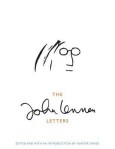
John Lennon LettersI’m also reading The John Lennon Letters edited by Hunter Davies. It includes a brief biography and using almost three hundred of Lennon’s letters and postcards, to relations, friends, fans, strangers, and lovers follows his life more or less chronologically. It’s a large, heavy hardback book, illustrated with photos and reproductions of the letters etc. This is going to be a long-term read for me.

The Windsor StoryThe third book is one I’ve only just started – I’ve been struck by some of the parallels between Edward VIII’s abdication in 1936 in order to marry Wallis Simpson and the current situation of Prince Harry and Meghan in wanting to step back as senior royals, and I remembered I have The Windsor Story by J Bryan III and Charles V Murphy. It looks remarkably comprehensive and is another book that I think will take me a long time to read.

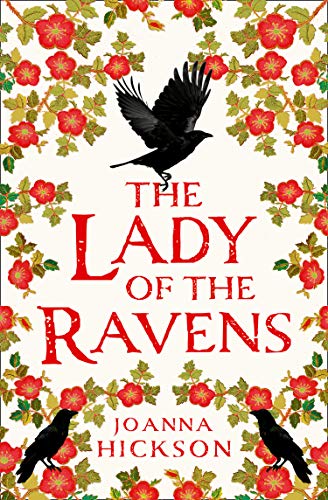
Lady of the ravensThe last book I finished reading is  The Lady of the Ravens by Joanna Hickson, historical fiction about about the early years of Henry’s reign as seen through the eyes of Joan Vaux, a lady in waiting to Elizabeth of York, whose marriage in 1486 to Henry united the Houses of Lancaster and York after the end of the Wars of the Roses.  I found this a fascinating book and posted my review a few days ago.

Tinker tailorI have several books lined up to read next including Tinker, Tailor, Soldier, Spy by John Le Carré because over the Christmas period I watched the film starring Gary Oldman as George Smiley, along with Colin FirthTom HardyJohn Hurt and others. I began reading the book years ago and have a bookmark at page 88, but I’ll have to go back to the beginning now.

A killing kindnessBut I’d also like to start A Killing Kindness, the next Dalziel and Pascoe novel, the 6th one in Reginald Hill’s series. It looks good – about Mary Dinwoodie whose body is found choked in a ditch following a night out with her boyfriend, and a mysterious caller phones the local paper with a quotation from Hamlet.

But knowing how long it could be until I start the next book, it could be something completely different!

Have you read any of these books?  Do any of them tempt you? 

A Pinch of Snuff by Reginald Hill

A Pinch of Snuff

HarperCollins|2003|362 pages|Paperback|my own copy|4* 

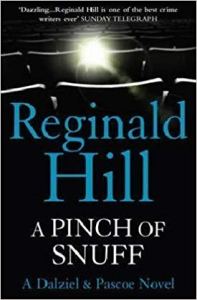
A Pinch of Snuff is Reginald Hill’s fifth Dalziel and Pascoe novel, first published in 1978. It was televised in 1994 by Yorkshire Television, two years before the BBC series began. The characters of Dalziel and Pascoe were played by comedians Gareth Hale and Norman Pace, with Christopher Fairbank as Sergeant Edgar Wield. It was not a success and Reginald Hill was said to have been unhappy with the series. Subsequently the Dalziel and Pascoe books were adapted for BBC television from 1996 to 2007 with the actors Warren Clarke and Colin Buchanan in the lead roles.

I finished reading A Pinch of Snuff just before Christmas and didn’t have time to review it then, so these are just a few notes of what I thought about it. It is better than the earlier books, almost as good as the later books and I enjoyed it very much. It begins as Jack Shorter, Pascoe’s dentist, tells him that he thinks that in one of the blue movies shown at the Calliope Club, an actress wasn’t acting but that she really was beaten up and that her teeth were actually broken. However, when Pascoe begins to investigate his dentist’s allegations it seems that the dentist’s fears were unfounded as the actress in question assures Pascoe that she was acting and certainly wasn’t hurt. But then the cinema is wrecked and its owner killed. Shorter, meanwhile, is accused of molesting an underage patient and is allegedly responsible for getting her pregnant.

All in all, this is a complicated book involving child abuse, pornography, violence towards women and snuff films. It starts slowly, but as the various twists and turns crop up the pace quickens. The events are shown through Pascoe’s eyes and we see his relationships with Dalziel and Sergeant Wield develop.  Elly, Pascoe’s wife, still doesn’t get on with Dalziel, and her feminism comes to the fore in her antagonism against him. 

The 6th book in the series is A Killing Kindness and I shall be reading that very soon.

These are the Dalziel and Pascoe books I’ve read so far:

1. A Clubbable Woman (1970) 
2. An Advancement of Learning (1971)
3. Ruling Passion (1973)
4. An April Shroud (1975) 
8. Exit Lines (1984)
11. Bones and Silence (1990) 
14. Pictures of Perfection (1993) – read, no post
17.On Beulah Height (1998) 
20. Death’s Jest Book (2002) 
21. The Death of Dalziel (2007)

The Lady of the Ravens by Joanna Hickson

Lady of the ravens

Harper Collins|9 January 2020|400 pages|e-book via NetGalley|Review copy|5*

Publishers’ Description:

Elizabeth of York, her life already tainted by dishonour and tragedy, now queen to the first Tudor king, Henry the VII.

Joan Vaux, servant of the court, straining against marriage and motherhood and privy to the deepest and darkest secrets of her queen. Like the ravens, Joan must use her eyes and her senses, as conspiracy whispers through the dark corridors of the Tower.

Through Joan’s eyes, The Lady of the Ravens inhabits the squalid streets of Tudor London, the imposing walls of its most fearsome fortress and the glamorous court of a kingdom in crisis.

My thoughts:

The Lady of the Ravens opens in 1485 just weeks after Henry Tudor had taken the throne to become King Henry VII of England and Lord of Ireland. This is historical fiction about the early years of Henry’s reign as seen through the eyes of Joan Vaux, a lady in waiting to Elizabeth of York, whose marriage in 1486 to Henry united the Houses of Lancaster and York after the end of the Wars of the Roses.

Henry comes across as a competent king, which is really all I knew of his reign before reading this book. I’ve read Joanna Hickson’s earlier book about him, The Tudor Crown, which is about his early life and how he gained the English throne. Joan Vaux also features in a small way in this book. In The Lady of the Ravens he is shown to be determined to hold on to his throne, dealing with several Yorkists’ claims to the throne, in particular those of Lambert Simnel, who claimed to be Edward Plantagenet, 17th Earl of Warwick, Elizabeth’s cousin, and Perkin Warbeck, who claimed to be Richard of Shrewsbury, Duke of York, who was the second son of Edward IV, Elizabeth’s brother, one of the so-called Princes in the Tower. It is also about his family life – his marriage to Elizabeth,,the births of their children (three of them died in childhood), and his concern for his subjects – for example both he and Elizabeth were present at Joan’s wedding and we also see him enjoying dancing at court.

Joan Vaux is also a real historical character – her mother, Katherine was French and had been a lady-in-waiting to the former queen Margaret of Anjou (the wife of Henry VI).. Joan had served Elizabeth as a woman of her bedchamber before Elizabeth’s marriage to Henry and, after her own marriage to Sir Richard Guildford, as a lady-in-waiting. And before that she had been brought up in the household of Lady Margaret Beaufort, Henry’s mother. Joan became a good friend and confidante of Elizabeth, even after her marriage and the birth of her son Henry, known as Hal, who also became a good friend to the young Prince Henry.

The fictional element is in the story of Joan’s fascination for and care of the ravens of the Tower of London firmly believing in the legend that should the ravens leave the Tower for good then the crown will fall and ruin will return to the nation. I came to really like Joan, a warm and caring woman. Joanna Hickson goes into detail describing the traumatic birth of her son and the lives of ordinary people outside the royal court. It is a rich and vibrant novel, full of action and political unrest.

I particularly like the glimpses we see of the ill-fated Prince Arthur and his bride, Katherine of Aragon. And I was especially delighted by the portrait of Prince Henry (who later became Henry VIII) as a young charismatic child of nearly three. His father was  furious about the imposters’ claims to the throne and had decided the best response was to invest his younger son as the trueborn and genuine Duke of York. Little Henry, with his bright red Tudor hair, was mounted on a gleaming black warhorse strapped into a specially made high-backed jousting saddle and escorted by his great-uncles, the Yeoman of the Guard and the King’s Archers as they processed around the streets of London to Westminster.  He was in his element, waving to the crowd who cheered and threw flowers as he went by.

This novel is beautifully written, grounded in its historical context, full of colour and life. I loved all the descriptions of the various settings, especially the Tower of London, and the ravens. My grasp of English history in this period was very hazy and I learned a lot reading this book, especially as the characters came to life on the pages, but most of all I loved the portrayal of Joan Vaux, Lady Guildford. And I see from the Author’s Note at the end of the book that there is more to come about her, including a mystery, her second marriage and her close relationship with Katherine of Aragon and the early years of Henry VIII’s reign. I’m looking forward to reading that!

The Author:

Joanna Hickson became fascinated with history when she studied Shakespeare’s history plays at school. However, having taken a degree in Politics and English she took up a career in broadcast journalism with the BBC, presenting and producing news, current affairs and arts programmes on both television and radio. Now she writes full time. The Lady of the Ravens is her sixth novel. 

My thanks to the publishers for my review copy via NetGalley.

Searching for Sylvie Lee by Jean Kwok

Searching for Sylvie Lee

John Murray|17 October 2019|341 pages|e-book via NetGalley|Review copy|4*

Description extracted from the publishers’ blurb:

It begins with a mystery. Sylvie, the beautiful, brilliant, successful older daughter of the Lee family, flies to the Netherlands for one final visit with her dying grandmother – and then vanishes.

Amy, the sheltered baby of the Lee family, is too young to remember a time when her parents were newly immigrated and too poor to keep Sylvie. Seven years older, Sylvie was raised by a distant relative in a faraway, foreign place, and didn’t rejoin her family in America until age nine. Timid and shy, Amy has always looked up to her sister, the fierce and fearless protector who showered her with unconditional love.

But what happened to Sylvie? Amy and her parents are distraught and desperate for answers. Sylvie has always looked out for them. Now, it’s Amy’s turn to help. 

My thoughts:

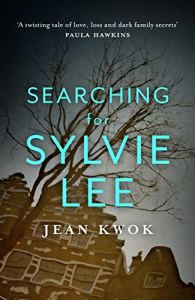
I loved Searching For Sylvie Lee by Jean Kwok.  I enjoyed reading its beautiful descriptive language and the mystery of what had happened to Sylvie. I think the characterisation is very good, the three main characters, Sylvie, her younger sister Amy and their mother Ma are each clearly recognisable by the way they speak. The story alternates between the two sisters and their mother’s perspectives, as the details of what happened to Sylvie are revealed.

Sylvie had left her home in the USA to visit her dying grandmother in the Netherlands where she had lived until she was nine. After the funeral she was supposed to return home, but she never arrived. Amy and her parents are distraught and she flies to the Netherlands to find out what had happened to her.

This is a mystery full of suspense and it is also a story about family relationships, about secrets and the barriers that language can raise – Amy’s dominant language is English, whereas her mother and father, Chinese immigrants living in America, have just a basic grasp of English and still speak Chinese. Sylvie also speaks Dutch as until the age of nine she had lived with the Tan family, Chinese immigrants living in the Netherlands. It’s not just the language but also the different cultures and the racism they experienced that separated the characters.

I had realised quite early on what the family secret was and what had happened to Sylvie, but that didn’t spoil my enjoyment of the book. My only criticism is that in the latter part of the book, particularly as Sylvie describes her visit to Venice I thought that the book veered offline. Although the episode is essential to the plot the detailed description took away the momentum of the mystery and my attention wandered a bit. But the ending made up for that!

The Author:

I would like to read more of Jean Kwok’s books. She is trilingual, fluent in Dutch, Chinese, and English, and studied Latin for seven years. Jean immigrated from Hong Kong to Brooklyn when she was five and worked in a Chinatown clothing factory for much of her childhood. She received her bachelor’s degree from Harvard and completed an MFA in fiction at Columbia University. She currently lives in the Netherlands. Her work has been published in twenty countries and taught in universities, colleges, and high schools across the world.  

My thanks to the publishers for my review copy via NetGalley.