New Additions to BooksPlease

Yesterday we went Barter Books in Alnwick, my favourite bookshop (this is a secondhand bookshop where you can ‘swap’ books for credit that you can then use to get more books from the Barter Books shelves). It’s only the second time we’ve visited since January 2020 before the first lockdown.

It’s almost back to ‘normal’ now, so there was no queue to get in. Some people, but not all, were wearing face masks and it was busy, busier than I would have liked and in some sections such as crime fiction and paperback fiction in particular where the bookcases are close together, people were crowded together choosing books, so I didn’t linger, as I would normally do. Consequently I didn’t get any crime fiction books. I did manage to get three historical novels, seizing the opportunity when people had moved away.

I took back 18 books and brought home 6, so I’m still in credit:
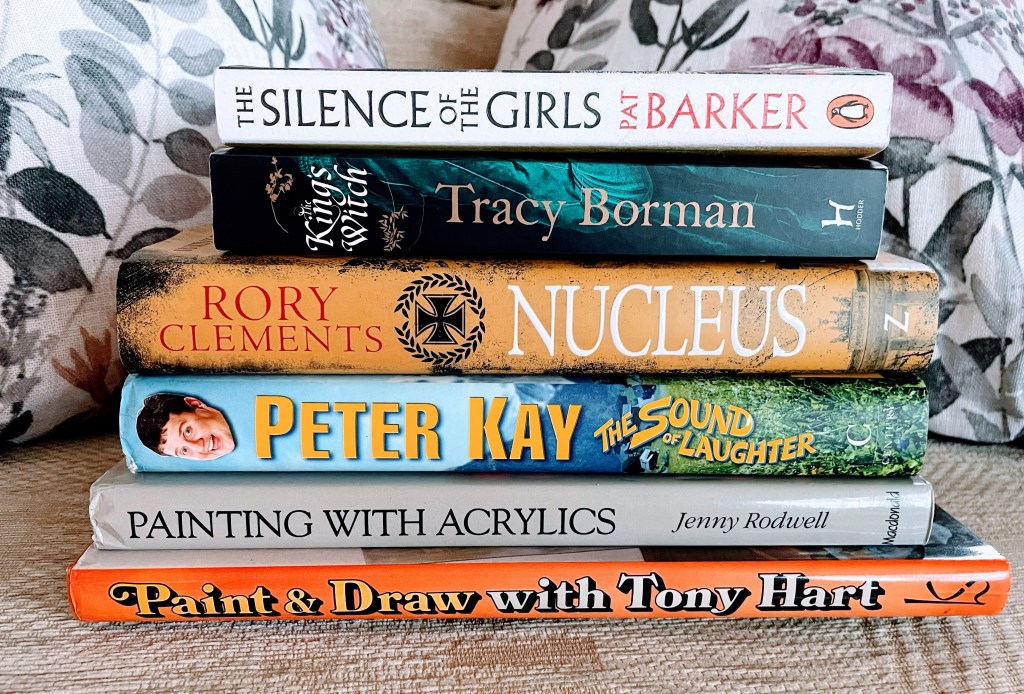
The descriptions are from Amazon and from top to bottom the books are:

The Silence of the Girls by Pat Barker, the first book in the Troy series.

There was a woman at the heart of the Trojan War whose voice has been silent – until now. Discover the greatest Greek myth of all – retold by the witness that history forgot . . . Briseis was a queen until her city was destroyed. Now she is a slave to the man who butchered her husband and brothers. Trapped in a world defined by men, can she survive to become the author of her own story?

The King’s Witch – this is historian, Tracy Borman’s debut novel.

As she helps to nurse the dying Queen Elizabeth, Frances Gorges longs for the fields and ancient woods of her parents’ Hampshire estate, where she has learned to use the flowers and herbs to become a much-loved healer.

Frances is happy to stay in her beloved countryside when the new King arrives from Scotland, bringing change, fear and suspicion. His court may be shockingly decadent, but James’s religion is Puritan, intolerant of all the old ways; he has already put to death many men for treason and women for witchcraft.

So when her ambitious uncle forcibly brings Frances to court, she is trapped in a claustrophobic world of intrigue and betrayal – and a ready target for the twisted scheming of Lord Cecil, the King’s first minister. Surrounded by mortal dangers, Frances finds happiness only with the precocious young Princess Elizabeth, and Tom Wintour, the one courtier she can trust.

Nucleus by Roy Clemens – the second in the Tom Wilde series. I’ve already read book 1, Corpus and book 4, Hitler’s Secret.

June 1939. England is partying like there’s no tomorrow . . . but the good times won’t last. The Nazis have invaded Czechoslovakia, in Germany Jewish persecution is widespread and, closer to home, the IRA has embarked on a bombing campaign.

Perhaps most worryingly of all, in Germany Otto Hahn has produced man-made fission and an atomic device is now possible. German High Command knows Cambridge’s Cavendish Laboratory is also close, and when one of the Cavendish’s finest brains is murdered, Professor Tom Wilde is drawn into the investigation. In a conspiracy that stretches from Cambridge to Berlin, and from the US to Ireland, can he discover the truth before it’s too late?

The Sound of Laughter: the Autobiography of Peter Kay – this is my husband’s choice, but I like Peter Kay too, so I’ll probably read this one too.

Peter Kay’s unerring gift for observing the absurdities and eccentricities of family life has earned himself a widespread, everyman appeal. These vivid observations coupled with a kind of nostalgia that never fails to grab his audience’s shared understanding, have earned him comparisons with Alan Bennett and Ronnie Barker.

In his award winning TV series’ he creates worlds populated by degenerate, bitter, useless, endearing and always recognisable characters which have attracted a huge and loyal following.In many ways he’s an old fashioned kind of comedian and the scope and enormity of his fanbase reflects this. He doesn’t tell jokes about politics or sex, but rather rejoices in the far funnier areas of life: elderly relatives and answering machines, dads dancing badly at weddings, garlic bread and cheesecake, your mum’s HRT…

His autobiography is full of this kind of humour and nostalgia, beginning with Kay’s first ever driving lesson, taking him back through his Bolton childhood, the numerous jobs he held after school and leading up until the time he passed his driving test and found fame. 

And finally two books on painting – both to encourage me to actually do some painting, rather than just reading about it.

Painting with Acrylics by Jenny Rodwell – 27 Acrylics Painting Projects, Illustrated Step-By-Step With Advice on Materials and Techniques with demonstrations of how to paint a variety of project, such as landscapes, portraits and still life etc.

Paint and Draw with Tony Hart – I remember enjoying watching Tony Hart’s TV programmes. This book contains 50 projects in a variety of materials – oil, watercolour, acrylic, gouache, pastel, crayon and other material. It looks excellent.
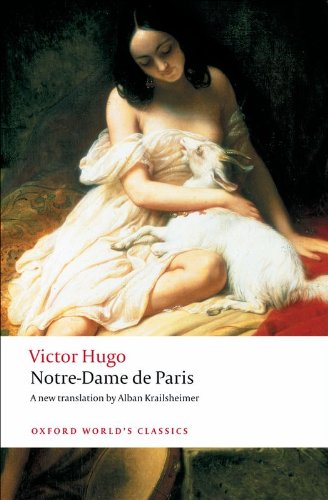

Notre-Dame de Paris by Victor Hugo

I have an old hardback copy of The Hunchback of Notre Dame (first published in 1831) in a very small font, too small for my eyes to cope with these days and a 49p e-book that I downloaded years ago when first got a Kindle. But I didn’t start reading it until a few months ago when FictionFan mentioned she was intending to read it and hold a Review-Along on her blog. I knew next to nothing about the book, not having seen any of the many films or TV versions, but I had read Victor Hugo’s Les Misérables back in 2008 and enjoyed it very much. So, I had high expectations that I would enjoy this one too.

But when I began reading my e-bookI was so disappointed – I thought it was so boring and it was hard to read, the sentences stilted and stumbling and obtuse with no flow. I was tempted to abandon it, after all it is a long book, and there are plenty of other books I want to read. However, I persevered, thinking surely it would get better. It didn’t, so then I wondered if it was me or the translation and began to look for another edition and I ended up with the Oxford World Classics edition, translated and with an introduction by Alban Krailsheimer, Notre-Dame de Paris, which is so much better, so much easier to read!

Rating: 3 out of 5.

The English title is so misleading – this book is not just about the hunchback Quasimodo, the bell-ringer of Notre-Dame, it is historical fiction on a grand scale, with a large cast of characters. It revolves around four main characters – the beautiful gypsy dancer, Esmeralda who fell hopelessly in love with the handsome womaniser, Captain Phoebus de Châteaupers, who has no intentions of marrying her. She in turn is loved by Frollo, the Archdeacon of Notre-Dame and by Quasimodo, the deformed and deaf bell-ringer of the cathedral of Notre-Dame.

But that is not all – it is also the story of the cathedral itself, Notre-Dame de Paris, and Hugo describes it at great length, focusing on the Gothic architectural elements of its structure, particularly its use of the pointed arch and including its flying buttresses, clerestory windows, and stained glass. He was a great advocate for the preservation of its Gothic architecture and was also extremely upset about the changes to the cathedral, the repairs and additions that had been done over the years. And it is not just the cathedral, Hugo also devotes many pages to describing Paris, seeing it from a bird’s eye view and also to the invention of the printing press and its effect on culture, described by Hugo as ‘the greatest event in history’. These digressions were not what I expected to read – I just wanted to get on with the story. I was impatient with the digressions, but looking back at Les Mis, that is exactly what he had done in that book too, so I shouldn’t have been surprised.

The story of the main characters’ relationships is told in a complicated way, going forward and backward in time, filling in the background of the characters, whilst revolving around the events of 1482, during the reign of Louis XI (who makes an appearance in the book). And it is melodramatic, playing on all our emotions. Quasimodo was so named because he was found, abandoned on Quasimodo Sunday (that is the second Sunday after Easter) when he was four years old. He was ‘adopted’ by the sinister Archdeacon, Claude Frollo, and grew up in the cathedral, isolated by his deafness caused by all the years he’d spent ringing the bells, and feared because of his hideous appearance.

This book has everything! It is by turns a farcical comedy, a tale of obsessions and unrequited passions, of love and lust, of a terrible miscarriage of justice, of outsiders, of violent mobs, of cruelty, arrogant men, silly women, of monsters, of alchemy, of intolerance, of prejudice, jealousy, fury, torture, corruption and above all of tragedy. And it has a cast of colourful and distinct characters, that I either despised, loved or hated, including Esmeralda’s little goat Djali, who could dance and do tricks and spells (I loved Djali). It is difficult for me to love the book and equally as hard to dislike it as a whole, set firmly in its medieval time frame, against the dramatic backdrop of the cathedral (even though I grew impatient with all the architectural details). But I was convinced by the end of the book that Hugo had successfully brought the place and the people of 1482 dramatically to life for me.

My apologies to FictionFan for being nearly a week late to her Review-Along and thanks for nudging me into reading Notre-Dame de Paris at long last. I am glad I read it even if I can’t give it more than 3 stars – I  liked it, a good, enjoyable book.

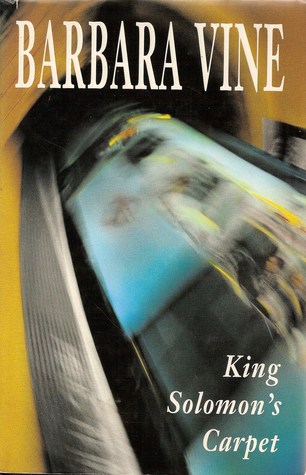
Book Beginnings & The Friday 56: King Solomon’s Carpet by Barbara Vine

Every Friday Book Beginnings on Friday is hosted by Gillion at Rose City Reader where you can share the first sentence (or so) of the book you are reading. You can also share from a book you want to highlight just because it caught your fancy.

I like the title of this Barbara Vine crime novel – King Solomon’s Carpet. It refers to the legend of King Solomon’s magic carpet of green silk which, as it could fly and brought everyone to their destination, is likened to the London Underground. This is one of my TBRs and it’s been sitting on my bookshelves for 12 years! It’s about time I read it …

The Book begins:

A great many things that other people did all the time she had never done. These were the ordinary things from which she had been protected by her money and her ill-health. She had never used an iron nor threaded a needle, been on a bus nor cooked a meal for other people, earned money, got up early because she had to, waited to see the doctor or stood in a queue.

Also every Friday there is The Friday 56, hosted by Freda at Freda’s Voice, where you grab a book and turn to page 56 (or 56% of an eBook), find one or more interesting sentences (no spoilers), and post them.

Page 56:

When the coffee came Tom said she could come and live at Cambridge School if she liked.

‘A school?’

‘It used to be. It’s just a house now where people rent rooms, only the rent’s very low. There’s a room free now Ollie’s going. I asked the man who owns it and he said you could have the Headmaster’s Study’.

Synopsis from Amazon UK:

Jarvis Stringer lives in a crumbling schoolhouse overlooking a tube line, compiling his obsessive, secret history of London’s Underground. His presence and his strange house draw a band of misfits into his orbit: young Alice, who has run away from her husband and baby; Tom, the busker who rescues her; truant Jasper who gets his kicks on the tube; and mysterious Axel, whose dark secret later casts a shadow over all of their lives.

Dispossessed and outcast, those who come to inhabit Jarvis’s schoolhouse are gradually brought closer together in violent and unforeseen ways by London’s forbidding and dangerous Undergound . . .

Barbara Vine: A pseudonym used by Ruth Rendell

Ruth Rendell created a third strand of writing with the publication of A Dark Adapted Eye under her pseudonym Barbara Vine in 1986. Books such as King Solomon’s Carpet, A Fatal Inversion and Anna’s Book (original UK title Asta’s Book) inhabit the same territory as her psychological crime novels while they further develop themes of family misunderstandings and the side effects of secrets kept and crimes done. Rendell is famous for her elegant prose and sharp insights into the human mind, as well as her ability to create cogent plots and characters. Rendell has also injected the social changes of the last 40 years into her work, bringing awareness to such issues as domestic violence and the change in the status of women. (Fantastic Fiction)

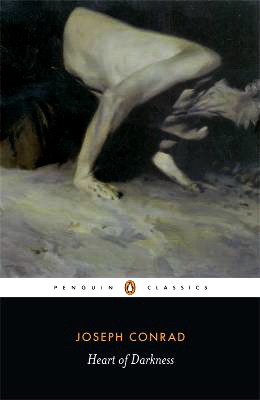
Heart of Darkness by Joseph Conrad

Rating: 3 out of 5.

Heart of Darkness, a novella by Joseph Conrad, was originally a three-part series in Blackwood’s Magazine in 1899. Although a gripping story, this was not an enjoyable book for me. But then, I suppose, it is not meant to be. Conrad was writing about the inhumanity of the way the native population in Africa was treated; the greed and cruelty of the Europeans to gain property, business, trade and profit, draining Africa of its natural resources. It paints an appalling picture.

It is a story within a story and has an inner core of mystery. It relates the story told by Charlie Marlow to his friends on a cruising yawl on the Thames as the day ended and dusk fell. He began by saying ‘this also … has been one of the dark places of the earth.‘ He was referring to the Roman invasion of the British Isles centuries earlier, feeling the utter savagery that closed around them as they set out to conquer the land.

Then he went on to tell them about another ‘dark place‘ where he worked as the skipper of a river steamboat, travelling up and down an unnamed mighty African river (assumed to be the Congo) between the stations of an ivory trading business. He hears about the mysterious Mr Kurtz, the ivory trading company’s agent in the interior. He was said to have supernatural powers. What happened to Kurtz, or rather, what Kurtz did, and what he became, were the questions I pondered as I read on. Marlow set out to find Kurtz, which took him deep into the jungle, and also deeper into the heart of the ‘Dark Continent’ and into the darkness of the human soul. Nothing is what it seems, and the mystery surrounding Kurtz has a feverish and nightmare atmosphere. The ambiguity and the vagueness left me feeling puzzled as well as horrified at what was implied. I think it is all the more horrific for not being crystal clear.

It is an horrific tale that I think shows the darkest depths of human behaviour. In doing so Conrad highlights the prejudices and the cruelty and shows how it was at that time – the graphic reality of what happened. It is a powerful criticism of colonialism at its worst, and full of imagery, casting a spotlight on the barbarity of the so-called civilised Westerners. These few words, uttered by Kurtz concisely summarise the whole story: ‘The horror! The horror!’

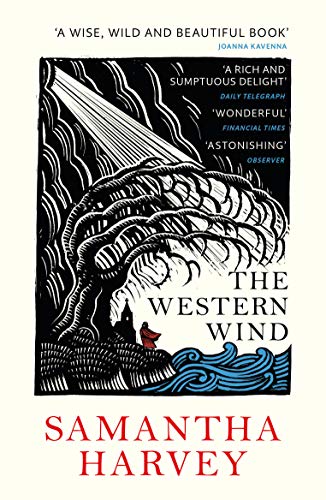
Throwback Thursday: The Western Wind by Samantha Harvey

Today I’m looking back at my post on The Western Wind by Samantha Harvey, historical fiction, a medieval murder mystery. I first reviewed it on March 7, 2018.

My review begins:

The Western Wind really is an extraordinary book. I was drawn into the story right from the start. Samantha Harvey’s writing brings to life the sights, smells and sounds of the daily life of the ordinary people living in Oakham, a small village in Somerset  in 1491. So often in historical fiction it’s about the notable historical figures of the period that are the main characters – here there none (although there is a reference to their bishop who is in prison for trying to put a pretender on the throne (Perkin Warbeck had first claimed the English throne in 1490).

Click here to read my full review

The next Throwback Thursday post is scheduled for May 5, 2022.

The Drowned City by K J Maitland

Headline Review| 1 April 2021| 495 pages| e-book| Review copy| 3*

1606. England stands divided in the wake of the failed Gunpowder Plot. As a devastating tidal wave sweeps the Bristol Channel, rumours of new treachery reach the King.

In Newgate prison, Daniel Pursglove receives an unexpected – and dangerous – offer. Charles FitzAlan, close confidant of King James, will grant his freedom – if Daniel can infiltrate the underground Catholic network in Bristol and unmask the one conspirator still at large.

Where better to hide a traitor than in the chaos of a drowned city? Daniel goes to Bristol to investigate, but soon finds himself at the heart of a dark Jesuit conspiracy – and in pursuit of a killer.

My thoughts:

I didn’t realise when I began reading The Drowned City that K J Maitland is Karen Maitland, an author whose books I’ve enjoyed in the past. It is the first book of a new series featuring Daniel Pursglove, set in Jacobean England under the reign of James I of England and VI of Scotland. It is an historical thriller set in 1606, a year after the Gunpowder Plot failed.

It begins dramatically as a huge wave surges up the Bristol Channel, flooding the surrounding countryside in south-west England and parts of South Wales causing devastation and loss of life. The drama continues with Daniel Pursglove’s arrival in Bristol sent on the orders of King James to find Spero Pettingar, one of the conspirators of the Gunpowder Plot. King James is fearful of his life as there are rumours of more Catholic uprisings and plots to assassinate him, especially if the flood is taken as a sign of God’s anger, revenge for the executions of the conspirators.

Daniel is an interesting character, but there is a mystery about him. He was in Newgate prison at the start of the book, but no details are given about what crime he had committed, and little is given about his family background. He is offered his freedom if he finds Spero, or torture and death if he doesn’t. King James is an expert on witchcraft and also fears the flood was caused by enchantments, by witches and sorcerers paid by Jesuits to wreck the King’s ports and open the country to an invading army.

Daniel’s real name is not Pursglove. He’s skilled at opening locks, described as a ‘crossbiter’ meaning a trickster, and hints are given about his origins – we know he had been educated as a nobleman and brought up to act the lord, but without money, title of position, raised in Lord Fairfax’s Catholic household. He is also a most determined and courageous investigator and he needs all his skills during his visit to Bristol, as his life is in danger more than once.

I like description in a novel but it is excessive in the this book, so much so, that it slowed down the narrative almost to a standstill in places and I had to really concentrate to keep track of who was who and even what was actually going on. The detailed description makes it a long book.

There is an extensive Glossary at the end of the book that explains many of the terms that puzzled me and was unable to find in a dictionary – I wish I’d discovered it when I began the book, rather than in the middle. Maitland’s historical research is impressive but at times I felt I was reading a history book rather than a novel. However, overall I enjoyed reading it and I’m looking forward to reading the second book in the series, The Traitor in the Ice.