The Toymakers by Robert Dinsdale

Do you remember when you believed in magic?
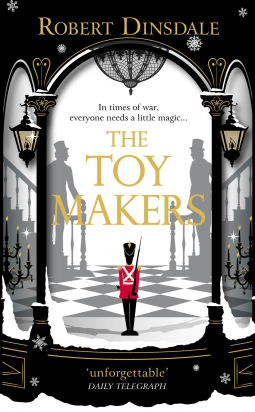
Publication date 8 February 2018, Penguin Random House UK, Ebury Publishing

Review copy from the publishers, via NetGalley

My rating:  5 stars 

Blurb:

It is 1917, and while war wages across Europe, in the heart of London, there is a place of hope and enchantment.

The Emporium sells toys that capture the imagination of children and adults alike: patchwork dogs that seem alive, toy boxes that are bigger on the inside, soldiers that can fight battles of their own. Into this family business comes young Cathy Wray, running away from a shameful past. The Emporium takes her in, makes her one of its own.

But Cathy is about to discover that the Emporium has secrets of its own…

My thoughts:

I loved this book. As a child I loved stories about magic, stories that transported me to another world, but The Toymakers is not a children’s story. It is an extraordinary, magical and wonderful book that captivated me, a book set mainly in 1917 whilst the First World War was taking its toll of humanity, leaving despair and tragedy in its wake. It’s a blend of historical fiction and magic realism.This is a story of love, and family relationships, as well as of the devastating effects of rivalry and war.

Papa Jack’s Emporium in London is a toyshop extraordinaire. It opens with the first frost of winter each year and closes when the first snowdrop blooms. And the toys it sells aren’t ordinary toys – they seem alive, from patchwork dogs, to flying pegasi, Russian dolls that climb out of one another, runnerless rocking horses, whales that devour ships, fire-breathing dragons and many others to the toy soldiers that wage war on each other.

The story begins in 1906 and ends in 1953, following the lives of Papa Jack Godman, his sons, Kaspar and Emil and Cathy Wray, who aged 15 and pregnant had run away from home. Cathy finds sanctuary at the Emporium, and Papa Jack tells her how he came to live in London and founded the Emporium, how he had found in making toys a kind of magic, a way of reaching a man’s soul.

At first Cathy lived in the Wendy House, which like the Tardis is larger on the inside than the outside, with Sirius the patchwork dog. It was where her daughter, Martha was born. Kasper and Emil are caught up in a battle for control of the Emporium, and they both fall in love with Cathy, but it is Kasper that she marries. The years pass, the First World War breaks out, Kasper joins up, but Emil’s application is refused, so he stays at home, developing his toy soldiers. I was struck by the irony and pathos of a world at war mirrored in the battles fought by Emil’s toys soldiers. And things come a head when Kasper returns a damaged man and retreats into his mind. What happens next changes their lives for ever.

The Toymakers is a wonderful book, one that will stay with me, not just about the horrors of war and rivalry, but above all about the power of love, the magic of childhood and the effect of toys – when you are young you play with toys to feel grown up, imagining what it will be like to be an adult. But when you are an adult what you want from toys is to feel that you are young again. They remind you that the world was once as filled with magic as your imagination will allow.

Many thanks to the publishers for a review copy via NetGalley.
Amazon UK link
Amazon US link

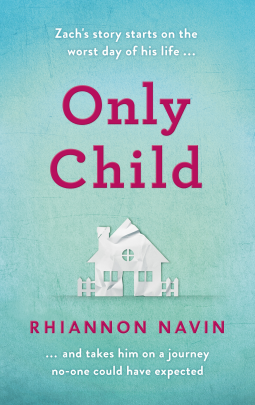
First Chapter First Paragraph: Only Child by Rhiannon Navin

Every Tuesday First Chapter, First Paragraph/Intros is hosted by Vicky of I’d Rather Be at the Beach sharing the first paragraph or two of a book she’s reading or plans to read soon.

My first paragraph this week is from Only Child by Rhiannon Navin, which will be published on 8 February 2018.

It begins:

The Day the Gunman Came

The thing I later remembered the most about the day the gunman came was my teacher Miss Russell’s breath. It was hot and smelled like coffee. The closet was dark except for a little light that was coming in through the crack of the door that Miss Russell was holding shut from inside. There was no door handle on the inside, only a loose metal piece, and she pulled in with her thumb and pointer finger.

“Be completely still, Zach,” she whispered.

“Don’t move.”

Blurb

“We went to school that Tuesday like normal. Not all of us came home . . .” Huddled in a cloakroom with his classmates and teacher, six-year-old Zach can hear shots ringing through the corridors of his school. A gunman has entered the building and, in a matter of minutes, will have taken nineteen lives. In the aftermath of the shooting, the close knit community and its families are devastated.

Everyone deals with the tragedy differently. Zach’s father absents himself; his mother pursues a quest for justice — while Zach retreats into his super-secret hideout and loses  himself in a world of books and drawing. Ultimately though, it is Zach who will show the adults in his life the way forward — as, sometimes, only a child can.

∼ ∼ 

I was just going to look at this, not start reading it but before I knew it I was hooked and well into the story. What do you think – would you read on?

January’s Books 2018

I read seven books in January, six of them are fiction and one non-fiction, all of them good – some indeed are excellent. So far I’ve only reviewed three of them:

Turning for Home by Barney Norris, a beautifully and lyrically written novel. I loved this. It’s set on the day of Robert’s 80th birthday celebration and the narrative alternates between Robert’s and his granddaughter Kate’s stories, reflecting on their lives.

The Wicked Cometh by Laura Carlin, historical fiction set in England in 1831 – a tale of wickedness and evil. Although this begins well, it drags in the middle and ends with a final twist I didn’t find convincing.

The Confession by Jo Spain, a standalone book, set in Ireland.  Banker, Harry McNamara, recently cleared of multiple accounts of fraud, is brutally attacked in his home in front of his wife, Julie. I was gripped by this story and I had to read it quickly to find out what really happened.

I didn’t get round  to writing reviews for the other books, so here are a few notes on two of them, both books that I enjoyed. Both are written achronologically which took a bit of getting used to, but it worked well. This meant that with both books you have to be on your toes, so to speak, to keep track of where you are and who is who. And I really should have made notes as I read – and written about them not long after I finished them!

Notes From An Exhibition by Patrick Gale. It’s been a month since I finished reading this and unfortunately the details are rather vague in my mind now. Artist Rachel Kelly, a manic-depressive, subject to highs and lows is found dead in her Penzance studio, leaving her family with lots of unanswered questions. It becomes clear that her Quaker husband knew nothing about her early life. The narrative moves backwards and forwards from the past to the present and is told from different characters’ perspectives. It reminded me a bit of Sylvia Plath’s The Bell Jar in parts. I enjoyed the sections on Quakerism and working out the puzzle of Rachel’s life and her relationships. But I wasn’t sure about the ending – I should probably re-read the book.

After You’d Gone by Maggie O’Farrell – her debut novel. The main character, Alice is in a coma after being in road accident, which may or may not have been a suicide attempt. She has been grieving the death of her husband, John.

It’s quite a complicated story, following the life stories not only of Alice, but also those of her mother, Ann (who I didn’t like much),  her grandmother, Elspeth (who I did like very much), her two sisters and of John. What was it that Alice saw at Edinburgh station that shocked her so much? You don’t find out until the end of the book, although I did have an idea before that what it meant to her and why it was so upsetting. I’ve already started to re-read it as I’m sure there’s a lot I missed on my first reading, especially as some of it is written in the present tense. And I may write a more detailed post at some point.

And my reviews of these books will follow later:

Six Degrees from Lincoln in the Bardo to Iris

I love doing Six Degrees of Separation, a monthly link-up hosted by Kate at Books Are My Favourite and Best. Each month a book is chosen as a starting point and linked to six other books to form a chain. A book doesn’t need to be connected to all the other books on the list, only to the one next to it in the chain.

This month the chain begins with Lincoln in the Bardo by George Saunders, a book I haven’t read.

Lincoln in the Bardo

It’s about Abraham Lincoln and the death of his eleven year old son, Willie, at the dawn of the Civil War. Willie finds himself trapped in a transitional realm – called, in Tibetan tradition, the bardo – and as ghosts mingle, squabble, gripe and commiserate, and stony tendrils creep towards the boy, a monumental struggle erupts over young Willie’s soul.

Moving from a fictional and highly original book by the looks of it my chain goes next to a biographical account of Lincoln:

Team of Rivals: The Political Genius of Abraham Lincoln

Team of Rivals: the Political Genius of Abraham Lincoln, a biography of Abraham Lincoln and others, by  Doris Kearns Goodwin, a book I bought after watching the film, Lincoln, which is loosely based on this book covering the final four months of Lincoln’s life. Goodwin examines his relationships with three men he selected for his cabinet, all of whom were opponents for the Republican nomination in 1860: William H. Seward, Salmon P. Chase, and Edward Bates.

Body Parts: Essays on Life-Writing

Writing biography is the subject of Body Parts: Essays on Life Writing by Hermione Lee, a collection of essays on Shelley,  T S Eliot, J M Coetzee, Jane Austen, Eudora Welty  and Virginia Woolf, to name but a few. Lee explores the relation of biography to fiction and history and of the connection of writers’ lives to their works.

So my next link is a collection of essays by Virginia Woolf –

The Death of the Moth and Other Essays

The Death of the Moth and Other Essays, originally published in 1942 by Leonard Woolf. Virginia had been getting together essays, which she proposed to publish in the autumn of 1941, or the spring of 1942. She had left behind her many essays, sketches and short stories, some of which had been previously published in newspapers, which he decided were worth republishing and in this book he also included some of those previously unpublished.

The title essay is a meditation on the nature of life and death seen through the perspective of a moth. It flies by day, fluttering from side to side of a window pane. As the day progresses the moth tires and falls on his back. He struggles vainly to raise himself. Woolf watches, realising that it is useless to try to do anything to help and ponders the power of death over life.

Moths provide the next link  – to a novel, The Behaviour of Moths by Poppy Adams.

Behavior Of Moths

This is the story of two sisters, Ginny and Vivi. Vivi, the younger sister left the family mansion 47 years earlier and returns unexpectedly one weekend. Ginny, a reclusive moth expert has rarely left the house in all that time.  What happens when they meet again is shocking to both of them. It’s a story full of mystery and suspense as it is revealed that the two have very different memories of their childhood and the events of the past. Two events in particular affected their lives. One was when Vivi, aged 8, fell from the bell tower and nearly died. The story alternates between the past and the present as Ginny recalls their lives.

Bell‘ is the next link in my chain – to Iris Murdoch’s novel The Bell, a book with an impending sense of evil and menace. It looks at the angst and self-denial of the relationship between religion and sex.

The Bell

A lay community lives next to an enclosed order of nuns, a new bell is being installed and then the old bell, a legendary symbol of religion and magic  is retrieved from the bottom of the lake. The legend of the bell is that it fell into the lake after a 14th century Bishop had cursed the Abbey when a nun was discovered to have a lover and had drowned herself.

And my final link is to a book about the author of The Bell, Iris Murdoch – Iris: A Memoir by John Bayley.

Iris: A Memoir of Iris Murdoch

I first read this in 2003. It’s a very loving and touching account. Iris died in February 1999 after suffering from Alzheimer’s Disease. Bayley explained how he had coped emotionally and practically with the illness that beset the woman he loved and cherished.

Writing this post as disrupted my reading because I got Bayley’s book off the shelves and began reading it again. He writes in such a warm and affectionate way that I’ve decided to read it right away.

For once there is no crime fiction in my chain! It contains books pondering the nature of life and death, beginning with a meditation on the death of Willie Lincoln and ending with a memoir of the life of Iris Murdoch.

Next month (March 3, 2018), the chain begins with a controversial book that Kate reports had everyone talking in the nineties – The Beauty Myth by Naomi Wolf. Everyone that is, apart from me – I don’t know anything (yet) about this book.

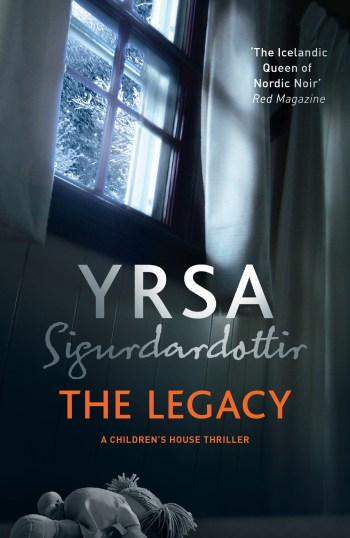
The Legacy by Yrsa Sigurdardottir: Blog Tour

Last year I wrote about The Legacy by Yrsa Sigurdardottir – it was my first venture into Icelandic Noir and I loved it. So I was delighted when Jenni from Hodder Paperbacks asked me to be part of the blog tour for its release in paperback.

It’s the first in the Children’s House thriller series, translated from Icelandic by Victoria Cribb.

9781473621558

Blurb (Amazon):

Detective Huldar is out of his depth. His first murder case is like nothing he’s seen before – a bizarre attack on a seemingly blameless woman.

The only evidence is a list of numbers found at the scene, and the testimony of the victim’s eleven-year-old daughter, who isn’t talking.

While his team attempt to crack the code, Huldar turns to child psychologist Freyja for her expertise with traumatised young people.

Because time is running out…and the one thing they know for certain is that the murderer will strike again.

My review – first posted 27 March 2017:

I think the first thing I should say about this book is that I loved it and once I started reading I just didn’t want to put it down. What is so remarkable about that is that there are some particularly dark and nasty murder scenes, which would normally guarantee that I’d stop reading. I am so glad I did read on. The Legacy is an excellent book. It’s dark, mysterious and very cleverly plotted, full of tension and nerve-wracking suspense. Although I thought I’d worked out who the murderer is I was completely wrong, but looking back I could see all the clues are there, cunningly concealed – I just didn’t notice them.

It begins with a prologue set in 1987 when three young children, two boys and their little sister are waiting to be adopted. It’s hard to find anyone willing to adopt all three and they are separated. The psychiatrists’ opinion is that it is in their best interests to be parted and that their horrendous background be kept secret, hoping that time and being split up would obliterate their memories. I did try to keep the events in the prologue in mind as I read and had some idea of how it related to the rest of the book, but it was only when I came to the dramatic conclusion that everything became clear.

Move forward to 2015 to Elisa whose husband is away leaving her on her own with three young children for a week. Her seven-year old daughter, Margrét wakes her, frightened because there is a man in the house. What follows is the first horrifying murder (read it quickly and try not to linger over the details because the pictures they paint don’t bear thinking about). Margrét, who was hiding when her mother is killed, is the only witness and she’s too traumatised to say very much.

She is taken to the Children’s House where Freyja, the child psychologist in charge and the detective Huldar, in charge of the police investigation, try to get to the truth. It’s immensely difficult, complicated by more murders. Freyja and Huldar are both sympathetic characters, both deeply committed to their jobs, but because of past history between them unable to trust each other.

The narrative is in the third person and switches between Freyja’s and Huldar’s viewpoints, interspersed by that of another character, Karl a student and radio ham enthusiast who has been receiving strange messages from a mysterious numbers station broadcasting, unusually, in Icelandic. These consist of long strings of numbers read out by synthesised voices. Karl dreams of successfully cracking the codes. I was both intrigued and completely mystified by this part of the novel. I was completely engrossed in the plot and the characters and I shall certainly be reading more of Yrsa Sigurdardottir’s books in the future.

My thanks to the publishers, Hodder and Stoughton, and NetGalley for my review copy.

  • Paperback: 464 pages
  • Publisher: Hodder Paperbacks (25 Jan. 2018)
  • Language: English
  • ISBN-10: 1473621550
  • ISBN-13: 978-1473621558
  • My rating: 5* (despite the horrific murders)

Amazon UK link
Amazon US link

And do check out the other blogs taking part in this tour 

Blog Tour the legacy

My Week in Books: 31 January 2018

This Week in Books is a weekly round-up hosted by Lypsyy Lost & Found, about what I’ve been reading Now, Then & Next.

IMG_1384-0

A similar meme,  WWW Wednesday is run by Taking on a World of Words.

Now:

Victoria: A Life

I’m still reading Victoria: a Life by A N Wilson (I began reading it last October!) and am now in Part 7 – I hope to finish it today, just 72 pages left. I’ve just read about the wedding of George, Duke of York to Princess May of Teck (later King George VI and Queen Mary) and this is Archbishop Benson’s description of Victoria. Just picture the scene:

I could scarcely believe my eyes when the Queen entered the Chapel by the lower end. There she was alone and began to walk up alone. … On she came, looking most pleasant, slightly amused, bowing most gracefully to either side as she came, her black silk almost covered with wonderful lace, and lace and a little crown with chains of diamonds on her head, walking lame and with a tallish stick. She looked Empire, gracious Empire … (page 503)

I’m also reading The Toymakers by Robert Dinsdale, to be published on 8th February 2018. So far I’m completely taken with this fascinating and imaginative novel.

Blurb:

Do you remember when you believed in magic?

It is 1917, and while war wages across Europe, in the heart of London, there is a place of hope and enchantment.

The Emporium sells toys that capture the imagination of children and adults alike: patchwork dogs that seem alive, toy boxes that are bigger on the inside, soldiers that can fight battles of their own. Into this family business comes young Cathy Wray, running away from a shameful past. The Emporium takes her in, makes her one of its own.

But Cathy is about to discover that the Emporium has secrets of its own…

Then:

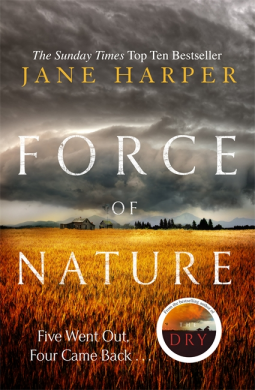
The last book I finished is Force of Nature by Jane Harper, which  will be published on 8 February 2018. I loved it and will post my review on 12 February 2018 as part of the blog tour .

Blurb:

FIVE WENT OUT. FOUR CAME BACK…

Is Alice here? Did she make it? Is she safe? In the chaos, in the night, it was impossible to say which of the four had asked after Alice’s welfare. Later, when everything got worse, each would insist it had been them.

Five women reluctantly pick up their backpacks and start walking along the muddy track. Only four come out the other side.

The hike through the rugged landscape is meant to take the office colleagues out of their air-conditioned comfort zone and teach resilience and team building. At least that is what the corporate retreat website advertises.

Federal Police Agent Aaron Falk has a particularly keen interest in the whereabouts of the missing bushwalker. Alice Russell is the whistleblower in his latest case – and Alice knew secrets. About the company she worked for and the people she worked with.

Far from the hike encouraging teamwork, the women tell Falk a tale of suspicion, violence and disintegrating trust. And as he delves into the disappearance, it seems some dangers may run far deeper than anyone knew.

Next:

I’d like a change from non-fiction and crime fiction, so I’m thinking of reading Loitering with Intent by Muriel Spark. Tomorrow marks the 100th anniversary of her birth – so it seems appropriate to read one of her books.

Loitering With Intent

Blurb (Goodreads):

Would-be novelist Fleur Talbot works for the snooty Sir Quentin Oliver at the Autobiographical Association, whose members are at work on their memoirs. When her employer gets his hands on Fleur’s novel-in-progress, mayhem ensues when its scenes begin coming true.

Have you read any of these books?  Do any of them tempt you?