I’ve been making good progress with my reading, but I’m way behind with writing about the books I’ve read. So it’s time to catch up with a few short posts.
Gabriel Dax is a young man haunted by the memories of a tragedy: every night, when sleep finally comes, he dreams about his childhood home in flames. His days are spent on the move as an acclaimed travel writer, capturing changing landscapes in the grip of the Cold War. When he’s offered the chance to interview a political figure, his ambition leads him unwittingly into the shadows of espionage.
As Gabriel’s reluctant initiation takes hold, he is drawn deeper into duplicity. Falling under the spell of Faith Green, an enigmatic and ruthless MI6 handler, he becomes ‘her spy’, unable to resist her demands. But amid the peril, paranoia and passion consuming Gabriel’s new covert life, it will be the revelations closer to home that change the rest of his story . . .
Gabriel’s Moon by William Boyd is his 18th book, but it’s the first book by him that I’ve read. I loved it right from the start. It’s well written, one of those books that makes me want to read on and on eager to know what happens next.
I wondered about the title – what is Gabriel’s Moon? The Prologue set in 1936 enlightened me straight away. When Gabriel was six years old his family home burnt down. He escaped, but his mother died in the fire, caused, so the fire brigade claimed, by the naked flame of the nightlight burning by his bed. It was a small candle covered by a glass dome that resembled the moon. His mother would light it as part of a bedtime ritual that was important to him, signifying order and calm. But, his mind has blanked out all his memories of that night, although he still has nightmares about the fire.
By the early 1960s Gabriel had become a successful travel writer and in 1960 he travelled to the newly independent Republic of the Congo to interview the Prime Minister, Patrice Lumumba. And thus he is accidentally drawn into the intrigue surrounding Lumumba’s murder. And then Dax is drawn into the dangerous and shadowy world of espionage.
I loved it. It’s a gripping tale that kept me turning the pages as Gabriel travels from Africa to London, Cadiz and then Warsaw. At home he visits a psychoanalyst, hoping to discover the truth about the tragic events of his childhood. He is drawn deeper and deeper into ever more complex and dangerous situations, whilst in thrall to Faith Green, his MI6 handler, who effortlessly manipulates him.
Gabriel’s Moon is the first novel in a new espionage trilogy. The second book, The Predicament will be released on September 4. 2025 and I’m looking forward to reading more about Gabriel Dax.
Many thanks to the publishers for a review copy via NetGalley.
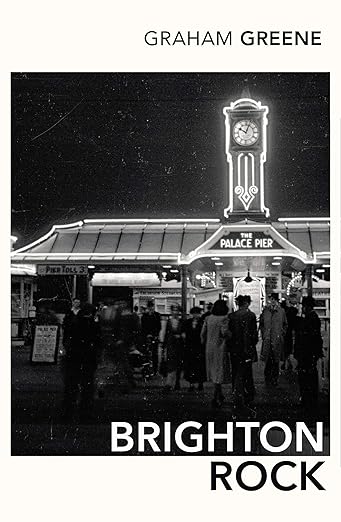
Gripping, terrifying, an unputdownable read. Discover Graham Greene’s most iconic novel.
A gang war is raging through the dark underworld of Brighton. Seventeen-year-old Pinkie, malign and ruthless, has killed a man. Believing he can escape retribution, he is unprepared for the courageous, life-embracing Ida Arnold. Greene’s gripping thriller exposes a world of loneliness and fear, of life lived on the ‘dangerous edge of things.’
In this gripping, terrifying, and unputdownable read, discover Greene’s iconic tale of the razor-wielding Pinkie.
This has been on my Spin List for some while now, so it’s about time I read it.
“Why does this bleak, seething and anarchic novel still resonate? Its energy and power is that of the rebellious adolescent, foreshadowing the rise of the cult of youth in the latter part of the 20th century.”—The Guardian
Did you take part in the Classics Spin? What will you be reading?
Spell the Month in Books is a linkup hosted by Jana on Reviews From the Stackson the first Saturday of each month. The goal is to spell the current month with the first letter of book titles, excluding articles such as ‘the’ and ‘a’ as needed. That’s all there is to it! Some months there are optional theme challenges, such as “books with an orange cover” or books of a particular genre, but for the most part, any book you want to use is fair game!
This month’s Spell the Month in Books theme is Books that you found or currently see at the library. For this theme I’ve used books I’ve previously borrowed from the library for the letters J, U, and E and a book I’ve seen on the library’s website for the letter N.
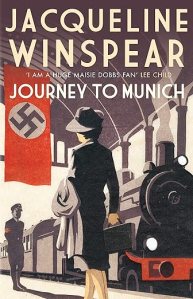
Journey to Munich by Jacqueline Winspear – Travelling into the heart of Nazi Germany, Maisie encounters unexpected dangers – and finds herself questioning whether it’s time to return to the work she loved. But the Secret Service may have other ideas!
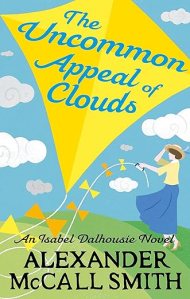
Uncommon Appeal of Clouds by Alexander McCall Smith – an Isabel Dalhousie book – An unexpected appeal for help from a collector who has been the victim of an art theft threatens to take Isabel Dalhousie far outside her comfort zone.
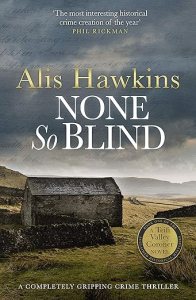
None So Blind by Alis Hawkins – West Wales, 1850. When an old tree root is dug up, the remains of a young woman are found. Harry Probert-Lloyd, a young barrister forced home from London by encroaching blindness, has been dreading this discovery. He knows exactly whose bones they are. Working with his clerk, John Davies, Harry is determined to expose the guilty. But the investigation turns up more questions than answers and raises long-buried secrets. The search for the truth will prove costly.
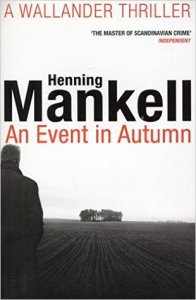
An Event in Autumn by Henning Mankell a Wallender thriller – Kurt Wallander’s life looks like it has taken a turn for the better when his offer on a new house is accepted, only for him to uncover something unexpected in the garden – the skeleton of a middle-aged woman. As police officers comb the property, Wallander attempts to get his new life back on course by finding the woman’s killer with the aid of his.
The next link up will be on July 5, 2025 when the optional theme will be: Set in a fantasy world or fictional place.
Top Ten Tuesday is a weekly meme created by The Broke and the Bookish and now hosted by Jana at That Artsy Reader Girl. For the rules see her blog.
The topic today is Books on My Summer 2025 to-Read List. I’m taking part in the 20 Books of Summer but didn’t make a list this year because In the past I don’t think I’ve ever managed to read the lists I’ve compiled because I just can’t stick to reading from a list – as soon as a book is on a list my desire to read it just dies. So, I decided to make it simple and read from my TBRs and the books on my Netgalley Shelf.
Anyway, here is a list of books I might read this summer, just picked at random from the e-books on my Kindle, without thinking too hard about which ones to list.:
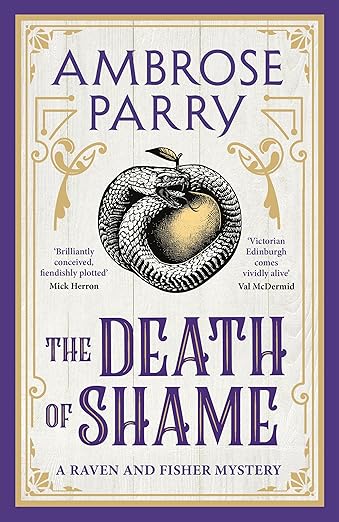
The Death of Shame by Ambrose Parry (A Raven and Fisher Mystery Book 5) Historical fiction set in Victorian Edinburgh, a mix of fact and fiction incorporating the social scene, historical and medical facts.
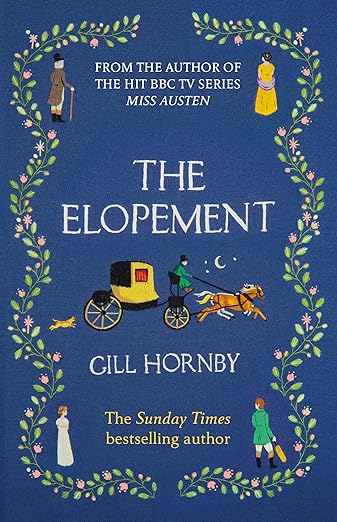
The Elopement by Gill Hornby, historical fiction about the life of Jane Austen’s niece Fanny Knight and her stepdaughter.
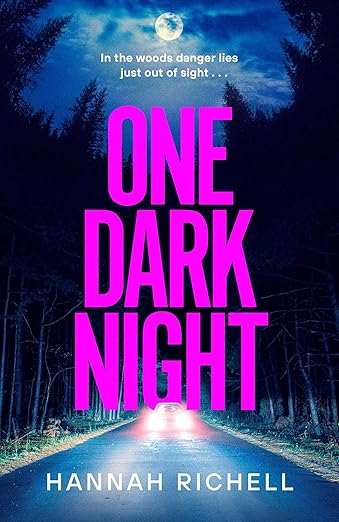
One Dark Night by Hannah Richell, a gothic thriller about the murder of a young girl at Halloween.
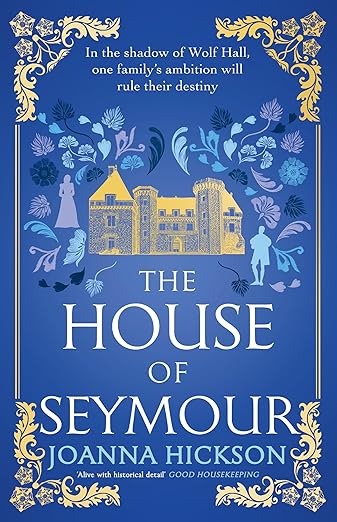
The House of Seymour by Joanna Hickson, (The House of Seymour, Book 1) historical fiction set in the 15th century during King Henry VI’s reign.
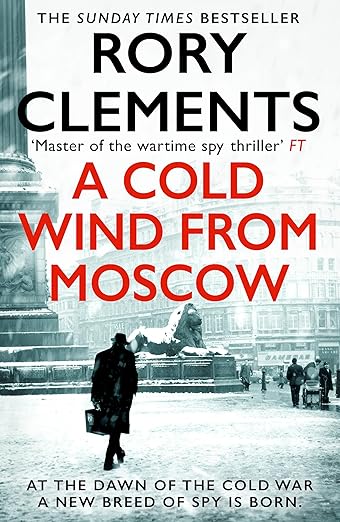
A Cold Wind from Moscow by Rory Clements, (Tom Wilde Book 8) historical fiction set at the start of the Cold War,
All that Matters by Chris Hoy, a memoir cycling legend Sir Chris Hoy reveals the truth of his cancer diagnosis and how he is determined to find hope and happiness on the home straight.
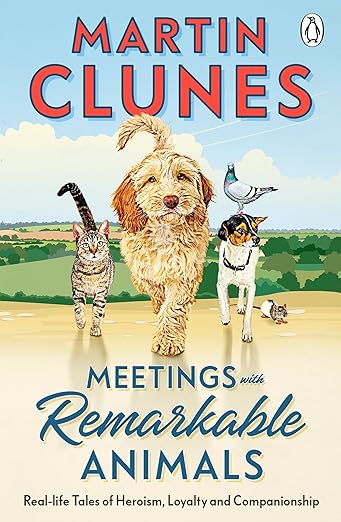
Meetings With Remarkable Animals by Martin Clunes, the Heartwarming Journey of Animals Who’ve Guided, Rescued, and Saved Us in Surprising Ways.
Transworld Digital |22 May 2025| 362 pages| e-book|Review book| 5*
Description
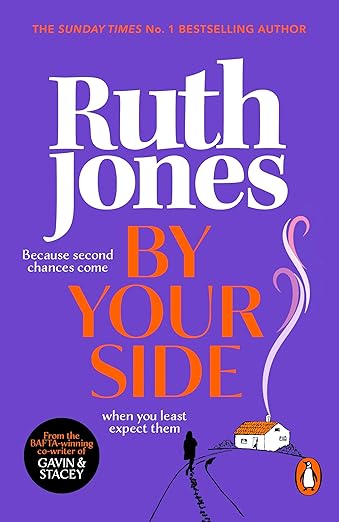
Linda Standish has been a friend to the friendless for the past thirty-three years, in her role at the council’s Unclaimed Heirs Unit. And now she’s looking forward to the joys of an early retirement.
But before she hangs up her lanyard, Linda takes on one last case – that of Levi Norman – a Welshman who made his home on a remote Scottish island for the five years before he died. Linda must visit Storrich to track down Levi’s remaining relatives . . .
What brought Levi here? And who did he leave behind? Obliged to travel (by hearse!) with her arch nemesis, and helped (and hindered…) by the local residents, Linda searches for clues to a life now lost. And in the process unexpectedly makes new friends, and discovers things about herself she never knew.
Bursting with all the heart and humour that has made Ruth’s name as a screenwriter and author, By Your Side is a joyful celebration of friendship, love and community.
I loved the TV series Gavin and Stacey which Ruth Jones co-wrote with James Corden and I loved By Your Side too. It’s the first one of her books that I’ve read but I’ll definitely look out for more to read. It’s an emotionally charged book as Linda Standish takes on her last case for the Council’s Unclaimed Heirs Unit, tracking down Levi Norman’s next of kin.
The story is told mainly from two perspectives, those of Linda and Levi. It’s told with gentle humour and laced with sadness as the details of both Levi’s and Linda’s lives are revealed. I really liked Linda, such a kind, compassionate character, who hides her vulnerability behind a confident exterior. She was looking forward to retirement and had made plans, most of which involved her four-year-old grandson, Zander, who lives with her and his father Struan. So she is devastated when she learns they will be moving to live near his ex-wife and her parents. All this just before Christmas and Linda has to travel to Storrich, the island where Levi died.
All she knows is that for the last five years seventy-five year old Levi had lived alone in Storrich, twenty miles off the mainland of Scotland. He had kept himself to himself and none of the local people knew anything about him. The story moves between their lives as Linda gradually discovers more about Levi, a Welshman, and the circumstances of his life and death.
It’s a well paced story, with wonderful characters, all well defined and believable. As I read it I could so easily hear Ruth Jones’ Welsh accent in Levi’s words. It’s a heartbreaking and poignant story, and at the same time an uplifting story, beautifully written bringing it all to life. It was a joy to read.
Many thanks to the publishers for a review copy via NetGalley.
It’s time again for Six Degrees of Separation, a monthly link-up hosted by Kate atBooks Are My Favourite and Best. Each month a book is chosen as a starting point and linked to six other books to form a chain. A book doesn’t need to be connected to all the other books on the list, only to the one next to it in the chain.
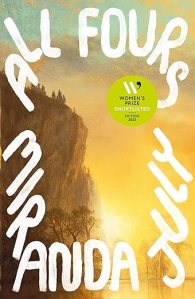
This month we start with All Fours by Miranda July, shortlisted for the Women’s Prize for Fiction 2025 and several other awards. I haven’t read it and probably won’t. This is Amazon’s description:
A semi-famous artist turns forty-five and gives herself a gift – a cross-country road trip from LA to New York, without her husband and child. But thirty minutes after setting off, she spontaneously exits the freeway, beds down in a nondescript motel – and embarks on the journey of a lifetime.
Miranda July’s second novel confirms the brilliance of her unique approach to fiction. With July’s wry voice, perfect comic timing, unabashed curiosity about human intimacy, and palpable delight in pushing boundaries, All Fours tells the story of one woman’s quest for a new kind of freedom. Part absurd entertainment, part tender reinvention of the sexual, romantic, and domestic life of a forty-five-year-old female artist, All Fours transcends expectation while excavating our beliefs about life lived as a woman. Once again, July hijacks the familiar and turns it into something new and thrillingly, profoundly alive.
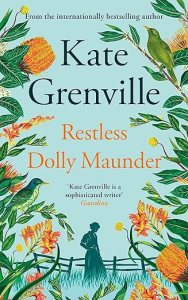
First link: I have read another book that was shortlisted for the previous year’s Women’s Prize for Fiction – Restless Dolly Maunder by Kate Grenville.
Dolly Maunder is born at the end of the 19th century, when society’s long-locked doors are just starting to creak ajar for determined women. Growing up in a poor farming family in rural New South Wales, Dolly spends her life doggedly pushing at those doors. A husband and two children do not deter her from searching for love and independence.
This is the fictionalised life story of Kate Grenville’s maternal grandmother, Sarah Catherine Maunder, known as Dolly. She was not only restless but also clever and determined – she knew what she wanted and she did her best to achieve it.
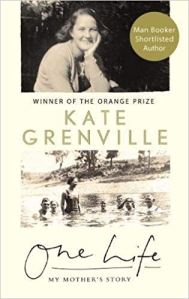
Second link: One of my favourite books by Kate Grenville is One Life: My Mother’s Story, her biography of Nance Russell, based on Nance’s memories, making it much more than a factual account of a person’s life. It’s a book that casts light not only on Nance’s life but also on life in Australia for most of the 20th century. Nance was born in 1912 and died in 2002, so she lived through two World Wars, an economic depression and a period of great social change. Nance wasn’t famous, the daughter of a rural working-class couple who became pub-keepers, but she was a remarkable woman.
It’s a vivid portrait of a real woman, a woman of great strength and determination, who had had a difficult childhood, who persevered, went to University, became a pharmacist, opened her own pharmacy, brought up her children, and helped build the family home. She faced sex discrimination and had to sell her pharmacy in order to look after her children at home.
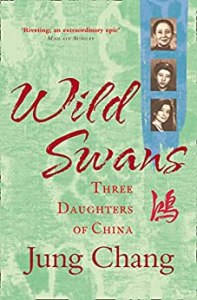
Third link: Wild Swans: Three Daughters of China by Jung Chang, a family memoir – the story of three generations of women in Jung Chang’s family – her grandmother, mother and herself, telling of their lives in China up to and during the years of the violent Cultural Revolution. Her family suffered atrociously, her father and grandmother both dying painful deaths and both her mother and father were imprisoned and tortured. She casts light on why and how Mao was able to exercise such paralysing control over the Chinese people. His magnetism and power was so strong and coupled with his immense skill at manipulation and his ability to inspire fear, it proved enough to subdue the spirit of most of the population; not to mention the absolute cruelty, torture and hardships they had to endure.
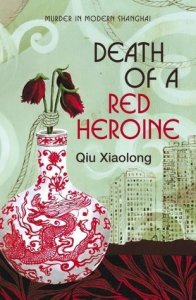
My fourth link moves from a memoir to crime fiction in Death of a Red Heroine by Qiu Xiaolong, the first book featuring Chief Inspector Chen. Chen is a reluctant policeman, he has a degree in English literature and is a published poet and translator. This is as much historical fiction as it is crime fiction. There is so much in it about China, its culture and its history before 1990 – the Communist regime and then the Cultural Revolution in the 1960s – as well as the changes brought about in the 1990s after the massacre of Tiananmen Square. This does interfere with the progress of the murder investigation as Chen has to cope with the political ramifications and consequently there are several digressions and the pace is slow and lacking tension. As Chen is a poet as well as a policeman there are also references to Chinese literature.
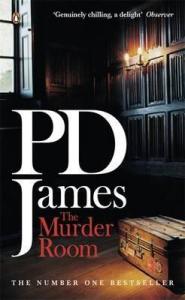
Fifth link: Another fictional Chief Inspector who writes poetry is Adam Dalgleish in The Murder Room by P D James. The Murder Room itself is in the Dupayne Museum, displaying the most notorious murder cases of the 1920s and 30s, with contemporary newspaper reports of the crimes and trials, photographs and actual exhibits from the scenes of the murders. These were actual crimes and not fictional cases made up by P D James.
The novel begins, as Adam Dalgleish visits the Dupayne in the company of his friend Conrad Ackroyd who is writing a series of articles on murder as a symbol of its age. A week later the first body is discovered at the Museum and Adam and his colleagues in Scotland Yard’s Special Investigation Squad are called in to investigate the killing, which appears to be a copycat murder of one of the 1930s’ crimes.
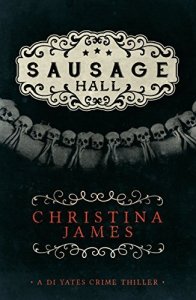
Another crime fiction writer with the surname James is my sixth link: Sausage Hall by Christina James, the third novel in the DI Yates series. It has a sinister undercurrent exploring the murky world of illegal immigrants, and a well researched historical element. It’s set in the South Lincolnshire Fens and is an intricately plotted crime mystery, uncovering a crime from the past whilst investigating a modern day murder. Sausage Hall is home to millionaire Kevan de Vries, grandson of a Dutch immigrant farmer. I liked the historical elements of the plot and the way Christina James connects the modern and historical crimes, interwoven with the history of Kevan’s home, Laurieston House, known to the locals as ‘Sausage Hall’ and the secrets of its cellar.
My chain is made up of novels shortlisted for the Women’s Prize for Fiction, a biography, a memoir and three murder mysteries. It travels from New York to the UK via Australia and China.
Where does your chain end up, I wonder?
Next month (July 5, 2025), we’ll start with the 2025 Stella Prize winner, Michelle de Kretser’s work of autofiction, Theory & Practice.





 BooksPlease