Top Ten Tuesday is a weekly meme created by The Broke and the Bookish and now hosted by Jana at That Artsy Reader Girl. For the rules see her blog.
The topic today is Books On My Winter 2025-2026 to-Read List. The first three are books on my NetGalley shelf and will be published early in the New Year. The rest are books from my TBR lists. I do enjoy making lists and sometimes I stick to them!
The Fox of Kensal Green by Richard Tyrrell – a quiet neighbourhood of London is about to be shattered.
The Living and the Dead by Christoffer Carlsson – a haunting murder mystery, set in a rural Swedish town, where one community’s secrets will be laid bare over the next twenty years
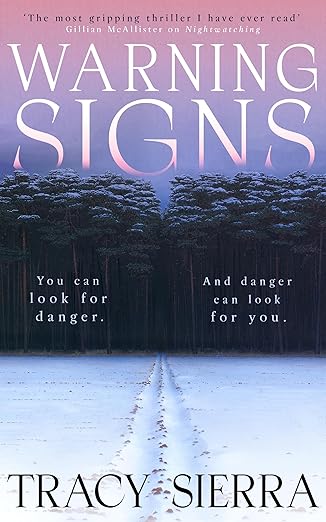
Warning Signs by Tracy Sierra – a thriller set in the Colorado mountains during a ski-weekend.
The Vanishing of Margaret Small by Neil Alexander – a mystery that takes readers into a fascinating past, and introduces an unforgettable literary heroine.
Goodbye Mr Chips by James Hilton – the classic story of a quiet, unassuming man and the many lives he touches.
Exiles by Jane Harper – Investigator Aaron Falk finds himself drawn into a complex web of tightly held secrets in South Australia’s wine country.
The Christmas Clue by Nicola Upson – a Christmas murder mystery featuring the real-life couple who invented Cluedo.
Marble Hall Murders by Anthony Horowitz – Susan Ryeland has had enough of murder.
Spell the Month in Books is a linkup hosted by Jana on Reviews From the Stacks on the first Saturday of each month. The goal is to spell the current month with the first letter of book titles, excluding articles such as ‘the’ and ‘a’ as needed. That’s all there is to it! Some months there are optional theme challenges, such as “books with an orange cover” or books of a particular genre, but for the most part, any book you want to use is fair game!
This month’s theme is Giftable – Books you would give or would like to receive as a gift. I’ve chosen a medley of crime fiction novels for people new to crime fiction. These are by some of my favourite crime fiction authors and all are books I’ve really enjoyed.
D is for A Dark-Adapted Eye by Barbara Vine, a pseudonym for Ruth Rendell. This is psychological crime fiction, you know right from the beginning who the murderer is, but not why or how the murder was committed. It’s not even clear immediately who the victim is.
E is for The Evidence is Against You by Gillian McAllister. A brilliant psychological thriller, this is a character-driven story of conflict, of broken lives, of the destruction of families, and of devastating trauma as secrets from the past come to the surface; a story full of twists and turns.
C is for Cards on the Table by Agatha Christie, one of the best of her books. In her Foreword she states that it is not the sort of detective story where the least likely person is the one to have committed the crime. This story has just four suspects and any one of them ‘given the right circumstances‘ might have committed the crime. She goes on to explain that there are four distinct types, the motives are peculiar to each person and each would employ a different method. It kept me guessing until the end
E is for Exit Lines by Reginald Hill, a Dalziel and Pascoe crime novel. There are three deaths in one night. All three victims were elderly and died violently and a drunken Dalziel is a suspect in one, as it seems he was driving the car that hit an elderly cyclist. The third victim was found dying, having fallen whilst crossing the recreation ground. The plot is intricate, with the separate cases all linked in one way or another.
M is for Murder by Matchlight by E C R Lorac, a Golden Age mystery featuring Chief Inspector Robert Macdonald, a shrewd detective, not easily ruffled or fooled. It’s set in London in 1945. A murder takes place in Regents Park in the darkness of the blackout as the bombs are still falling, witnessed by Bruce Mallaig who heard it happen and briefly saw both the victim and his assailant by the light of a struck match. It is not only darkness that shrouds the mystery – who is the victim?
B is for The Blackhouse by Peter May, the first in the Lewis trilogy, set on the Isle of Lewis in the Outer Hebrides. There’s a murder and a mystery. Detective Fin Macleod is seconded from the Edinburgh police force to help with the investigation into the murder. As the story unfolds, the narrative splits in two – one, set in the present day, following the murder investigation and the other, as Fin recalls the events of his childhood on the island.
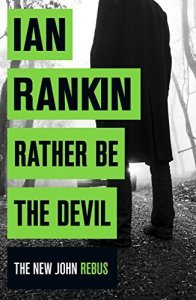
E is for Even Dogs in the Wild by Ian Rankin, book 20 in the Inspector Rebus series. He is on his second retirement, when DI Siobhan Clarke asks him to act in a ‘consultative capacity’. Clarke’s been investigating the death of a senior lawyer whose body was found along with a threatening note. Then Big Ger Cafferty, Rebus’s long-time nemesis, receives an identical note and a bullet through his window. This is a complex book, with more deaths, and many twists and turns.
R is for Raven Black by Ann Cleeves, first book in the Shetland series. A teenage girl’s body is found dead in the snow strangled with her own scarf, ravens circling above. Inspector Jimmy Perez, originally from Fair Isle, is part of the investigation team. It has a strong sense of location and a terrific atmosphere – the landscape, the sea, the weather, the circling ravens and the spectacle of Up Helly Aa (the Fire Festival), all anchor the story and bring the book to life.
The next link up will be on January 3, 2026 when the theme will be: New – interpret as you will (new releases, new to you, etc)
Every Friday Book Beginnings on Friday is hosted by Gillion at Rose City Readerwhere you can share the first sentence (or so) of the book you are reading. You can also share from a book you want to highlight just because it caught your fancy.
One of the books I’m currently reading is The Crow’s Inn Tragedy by Annie Haynes, the third Inspector Furnival Mystery. Originally published in 1927 and republished by Dean Street Press in 2015.
The book begins:
The offices of Messrs Babcombe and Turner took up the whole of the first floor of the corner house of Crow’s Inn Square. Babcome and Turner was one of the oldest firms in London. Their offices were dingy, not to say grimy-looking.
Also every Friday there is The Friday 56, hosted by Freda at Freda’s Voice, but she is taking a break and Anne at My Head is Full of Books has taken on hosting duties in her absence. You grab a book and turn to page 56 (or 56% of an eBook), find one or more interesting sentences (no spoilers), and post them.
Page 56:
‘By the way, I come into some more money when Aunt Madeleine dies. You will be expecting me to murder her next! You had something left you too. You may have done it to get that!
Description from Amazon UK
“I cannot understand why Mr. Bechcombe apparently offered no resistance. His hand-bell, his speaking-tube, the telephone—all were close at hand. It looks as though he had recognized his assassin and had no fear of him.” The corner house of Crow’s Inn Square was the most dignified set of solicitors’ chambers imaginable. But this monument to law and order nonetheless becomes the scene of murder – when the distinguished lawyer Mr. Bechcombe, despite giving strict instructions not to be disturbed, is strangled in his own office.
Inspector Furnival of Scotland Yard has to wrestle with fiendish clues, unearth priceless gems and tangle with a dangerous gang before he can solve this case, his third and final golden age mystery. Originally published in 1927, this new edition is the first printed in over 80 years, and features an introduction by crime fiction historian Curtis Evans.
Top Ten Tuesday is a weekly meme created by The Broke and the Bookish and now hosted by Jana at That Artsy Reader Girl. For the rules see her blog/
The topic today is Books Set in Snowy Places. These are some of the books I’ve read set in snowy places demonstrating the awesome power and danger to be found in the snow!
The Shining by Stephen King, set in the Overlook Hotel in the Colorada Rockies with Jack Torrance and his family. The winter weather closes in on the hotel and they are cut off from the rest of the world. Terrible things had taken place at the hotel and as psychic forces gather strength ghosts begin to surface and both Jack and his five year old son, Danny are their target. Terrifying!
The Corpse in the Snowman by Nicholas Blake. Set in 1940 at Easterham Manor in Essex, where the isolated home of the Restorick family is cut off from the neighbouring village by snow. There’s a death and a body hidden in a snowman that is only discovered when a thaw sets in.
The Shipping News by Annie Proulx. Set in Newfoundland in its frozen, storm-ridden isolation, surrounded by icebergs “like white prisons” is the old, dilapidated Quoyle family house on Quoyle’s Point that had stood empty for forty-four years, a “gaunt building … lashed with cable to iron rings set in the rock”. Quoyle’s job on the local Newfoundland weekly paper the Gammy Bird is to report on the shipping news, the boats coming in and out of the port and to cover the local car wrecks.
Murder on the Orient Express by Agatha Christie. Poirot is on the Orient Express, on a three-days journey across Europe. But after midnight the train comes to a halt, stuck in a snowdrift. In the morning the millionaire Simon Ratchett is found dead in his compartment his body stabbed a dozen times and his door locked from the inside. It is obvious from the lack of tracks in the snow that no-one has left the train. So the murderer must be on the train.
The Mist by Ragnar Jonasson Nordic Noir. Jonasson’s writing brings the scenery and the weather to life – you can feel the isolation and experience what it is like to be lost in a howling snowstorm. The emotional tension is brilliantly done too, the sense of despair, confusion and dread is almost unbearable.
The Body in the Ice by A J Mackenzie, the 2nd Hardcastle and Chaytor Mystery set in Romney Marsh and the surrounding countryside in 1796-7 when the winter was exceptionally harsh and cold and on Christmas Day a body is found, frozen in a pond. There’s no modern technology, just old-fashioned crime detection and deduction and a certain amount of intuition.
To the Bright Edge of the World by Eowyn Ivey. The story ofLieutenant Colonel Allen Forrester’s journey in 1885 from Perkins Island up the Wolverine River in Alaska. TheWolverine is the key to opening up Alaska and its rich natural resources to the outside world, but previous attempts have ended in tragedy.
Ethan Frome by Edith Wharton. As well as striking and memorable characters the setting is beautifully described – a ‘mute and melancholy landscape, an incarceration of frozen woe‘, in the isolated village of Starkfield (a fictional New England village). This is a tragedy but there is light to contrast the darkness, and there is love and hope set against repression and misery.
The Chalet by Catherine Cooper, a fast-paced murder mystery, set mainly in La Madière, a fictional ski resort in the French Alps.Two young men ski into a blizzard… but only one returns. 20 years later four people connected to the missing man find themselves in that same resort. Each has a secret. Two may have blood on their hands. One is a killer-in-waiting. Someone knows what really happened that day.
Dark Matter: a Ghost Story by Michelle Paver, set in the High Arctic, where the isolation of the long, dark Arctic winter is oppressive and unrelenting. Set in 1937 when Jack Miller was part of an expedition to study its biology, geology and ice dynamics and to carry out a meteorological survey. Right from the start things begin to go wrong. Jack’s unease turns into dread when is left alone at the camp and his nightmare really begins. This really is a page-turner and a good old-fashioned and seriously scary ghost story!
Lake Union Publishing| 2001| 346 pages| e-book| I bought it| 5*
Description on Amazon:
An emotional, rousing novel inspired by the incredible true story of two giraffes who made headlines and won the hearts of Depression-era America.
“Few true friends have I known and two were giraffes…”
Woodrow Wilson Nickel, age 105, feels his life ebbing away. But when he learns giraffes are going extinct, he finds himself recalling the unforgettable experience he cannot take to his grave.
It’s 1938. The Great Depression lingers. Hitler is threatening Europe, and world-weary Americans long for wonder. They find it in two giraffes who miraculously survive a hurricane while crossing the Atlantic. What follows is a twelve-day road trip in a custom truck to deliver Southern California’s first giraffes to the San Diego Zoo. Behind the wheel is the young Dust Bowl rowdy Woodrow. Inspired by true events, the tale weaves real-life figures with fictional ones, including the world’s first female zoo director, a crusty old man with a past, a young female photographer with a secret, and assorted reprobates as spotty as the giraffes.
Part adventure, part historical saga, and part coming-of-age love story, West with Giraffes explores what it means to be changed by the grace of animals, the kindness of strangers, the passing of time, and a story told before it’s too late.
My thoughts:
I read West with Giraffes by Lynda Rutledge in September this year but didn’t get round to writing about it then. I don’t think I need to add anything to the description shown above other than to say that I loved this story. I didn’t really expect to like it as much as I did – that took me by surprise. It has a colourful cast of characters, all fictional apart from the owner of the San Diego Zoo, Mrs Belle Benchley, a remarkable woman. In the Historical Notes at the end of the book she’s described as ‘an early glass-ceiling breaker‘. She began working at the zoo in 1925 as a civil servant bookkeeper, and working her way through a number of different roles eventually becoming known in the late 1930s as ‘the only female zoo director in the world‘. She believed that the only way people would care about wild animals was to meet them.
Not knowing much about American history I found the Historical Notes very helpful, particularly those about the Great Hurricane of 1938, the most destructive storm to strike New England in recorded history until 2012’s Hurricane Sandy. The journey the giraffes took was primarily the Lee Highway, the more southern, of the transcontinental routes at the time, designed to be a southern counterpart to the northern Lincoln Highway. The author’s website is fascinating giving lots of information about the book, photos from newspaper articles and details about her writing process.
It conjures up a vivid picture of America in 1938 during the Great Depression, the Dust Bowl, hobo cards, nomadic workers taking jobs where they could, desperate Hooverville dwellers in shanty towns, sundown town racism, and circus animal cruelty. But of course, it is the giraffes that are the two main characters. It is a remarkable book and if you like historical fiction based on fact, books about travel and an exciting story I think you’d enjoy it too.
Today I’m linking up with Davida @ The Chocolate Lady’s Book Review Blogfor Throwback Thursday. It takes place on the Thursday before the first Saturday of every month (i.e., the Thursday before the monthly #6Degrees post). The idea is to highlight one of your previously published book reviews and then link back to Davida’s blog.
I enjoyed Elly Griffiths’ first DS Harbinder Kaur book, The Stranger Diaries, so I was keen to read the second book, The Postscript Murders. It’s very different, in a much lighter style and I think Elly Griffiths was enjoying herself writing this poking fun at crime fiction writers and the book world, with book bloggers and a literary festival. I really enjoyed it. It’s very readable, cleverly plotted, with interesting and well defined characters