Today I am pleased to welcome a new weekly event. It is Friday Book Snippets, combining Book Beginnings on Friday and Friday56, co-hosted by Anne@HeadFullofBooks and Olivia at Bemused and Bookish.
Directions: Share two snippets (a sentence or short paragraph) from a) the book’s opening and b) page 56 (or another page) from the book you are currently reading. No spoilers, please.
I like this idea of using any page number for the second snippet.
One of the books I’m currently reading is It Could Have Been Her by Lisa Jewell. This is her latest book, published in June this year.
The book begins with a Prologue:
4 June 2005
I liked the girl. She had a nice smile. She was friendly. I could tell she liked us.
Page 4:
On the eighth day of May 2026, Jane Trevally does something terrifying.
She invites an estate agent into her home.
Page 51:
She has never told Tony about the night she went home with a complete stranger on the flimsy promise of a job. She’s certain he would not judge her, not all these years later, but still, she can’t quite bring herself to let him see the desperate broken fool she’d once been.
Description from Amazon UK:
It was the night she almost died.
Newly divorced and feeling a little lost, Jane Trevally agrees to accompany a man she doesn’t know to his house in the darkest corner of Hampstead Heath.
She’s offered a drink. She steps inside.
And then she hears a scream.
Jane runs.
Twenty five years later, Jane finds herself outside the same house, this time to return a dog who’s been found near her home. A dog whose owner has just been reported missing.
A fleeting glimpse of a haunted looking woman through the window sends Jane on a mission to uncover the house’s secrets – secrets more terrifying than she could have ever imagined.
And she can’t stop thinking:
It could have been her . . .
I’ve enjoyed all of Lisa Jewell’s books that I’ve read, so it’s no surprise that this one too is promising to be just as good.
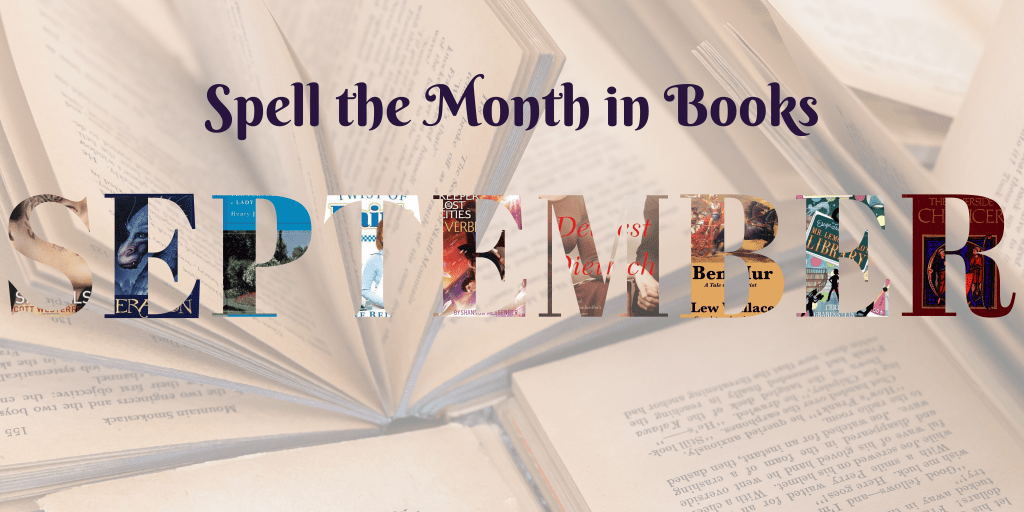
Spell the Month in Books is a linkup hosted by Jana on Reviews From the Stacks on the first Saturday of each month. The goal is to spell the current month with the first letter of book titles, excluding articles such as ‘the’ and ‘a’ as needed. That’s all there is to it! Some months have additional themes, but feel free to participate however you’d like!
Currently Jana is not assigning themes, so for September I’ve chosen to feature some of the Classic books that I have read. The links in the titles of each book go to my posts, where they exist.
The more Spell the Month books I do, the harder it becomes to use book titles beginning with the letter E as I prefer to use ones I haven’t already used in earlier posts – but I have managed it this time. I think the last three months of the year will be challenging!
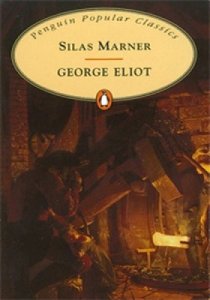
S is for Silas Marner by George Eliot, set in the early years of the 19th century (Eliot was writing the book in 1861)
The story revolves around Silas Marner, a weaver living in Raveloe, a village on the brink of industrialisation. He was wrongly accused of theft and left his home town to live a lonely and embittered life in Raveloe where he became a miser, hoarding his gold and counting it each night. Until one night his life is changed by the theft of his money and a little girl who came to live with him, having been abandoned in the snow.
It took me a while to settle into George Eliot’s style of writing, with her long, long sentences – some so long I had forgotten how they had started, before I got to the end. But once my mind had adjusted to the rhythm of her writing I enjoyed this short book
E is for Ethan Frome by Edith Wharton, first published in 1911 this is in contrast to some of her other books about the New York society of the 1870s to 1920s. It’s a rural tragedy of inevitable suffering and sadness that reminded me of Thomas Hardy’s books.
It’s a beautifully told tale – a tragedy, signalled right from the beginning of the book, when the unnamed narrator first saw Ethan Frome and was told he had been disfigured and crippled in a ‘smash up’, twenty four years earlier. Life had not been good to him.
I enjoyed it very much. As well as striking and memorable characters the setting is beautifully described – a ‘mute and melancholy landscape, an incarceration of frozen woe‘, in the isolated village of Starkfield (a fictional New England village). Even though Ethan Frome is a tragedy there is light to contrast the darkness, and there is love and hope set against repression and misery. I hoped the ending would be a happy one, although I knew it couldn’t be.
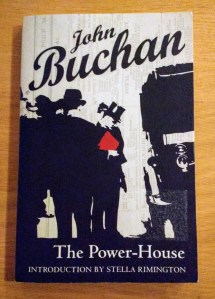
P is for The Power-House by John Buchan, written in 1913 when it was serialised in Blackwood’s Magazine and then published in book form in 1916.
Buchan tells a good story, even if I had little idea what the Power-House really was. It’s an international anarchist network, but who they were, what they were actually after, or how they hoped to achieve their ends was never clear to me. But I really enjoyed this book. As Stella Rimington says it has an ‘intoxicating blend of madness with scents of home and countryside.’
It has some interesting thoughts on the nature of civilisation, and of power and comments on the ‘the business of Government. When all is said, we are ruled by amateurs and the second-rate. The methods of our departments would bring any private firm to bankruptcy. The methods of Parliament – pardon me – would disgrace any board of directors.’
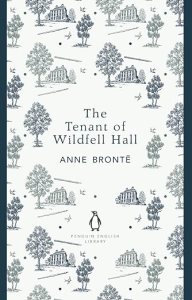
T is for The Tenant of Wildfell Hall by Anne Bronte, first published in 1848 under the pseudonym Acton Bell.
I read this years ago before I began blogging, so I have no record of what I thought of it, other than that I loved it.
In this sensational, hard-hitting and passionate tale of marital cruelty, The Tenant of Wildfell Hall sees a mysterious tenant, Helen Graham, unmasked not as a ‘wicked woman’ as the local gossips would have it, but as the estranged wife of a brutal alcoholic bully, desperate to protect her son. Using her own experiences with her brother Branwell to depict the cruelty and debauchery from which Helen flees, Anne Brontë wrote her masterpiece to reflect the fragile position of women in society and her belief in universal redemption, but scandalized readers of the time.
E is for East of Eden by John Steinbeck, first published in 1952.
This is the story of two family, the Trasks and the Hamiltons, whose generations helplessly re-enact the fall of Adam and Eve and the poisonous rivalry of Cain and Abel. I enjoyed this beautifully written book, which begins slowly, but not as much as The Grapes of Wrath, which I thought was amazing. It’s long – too long really – and to my mind it reads like a morality tale of good versus evil. There are many parallels to the Bible stories, with surely one of the most evil characters ever in Cathy. I liked the way Steinbeck set out the moral dilemmas and gave the characters personal choice using the Hebrew word ‘timshel‘, meaning ‘thou mayest’.
On the surface this is a simple story about a family and their relationships. Fanny Price, as a child of 10 goes to live with her wealthy aunt and uncle, Sir Thomas and Lady Bertram at Mansfield Park, where as the poor relation she is not treated badly, but not as cared for or as kindly as her cousins, but more as an unpaid servant dependent on the family for her welfare – a sort of Cinderella story. But through the story, Jane Austen reveals the complicated interaction of society, shows the development of Fanny’s character and the depiction of a heroine who is good and gentle who matures throughout the novel.
It’s full of detail of everyday life, its boredom as well as its entertainments and pleasures, the balls and dinners. There is much in it about the houses and gardens, not only of the wealthy but also of the lower classes, such as Fanny’s parents home in Portsmouth – but they have servants themselves, so it is only comparative poverty. Seen mainly through Fanny’s eyes, it’s a study of morals, the damage caused by being unwanted and unloved. There is also a gentle strain of humour and satirical observations about contemporary values, and even, with Mary Crawford’s pun on ‘Rears and Vices‘, a bawdy note.
B is for Barnaby Rudge by Charles Dickens, first published in 1841, a murder mystery as well as a historical novel, mainly concerning the events surrounding the Gordon Riots of 1780. It’s almost a book of two parts and the dramatic second half, to my mind, more than makes up for the slow beginning which I had to read slowly and carefully.
It begins in 1775, five years before the riots as a group of customers in the Maypole Inn in the village of Chigwell, on the borders of Epping Forest and about 112 miles from London, recollect the murder of Reuben Haredale, the owner of The Warren, 22 years earlier to the day. His steward, a Mr Rudge was found months later, stabbed to death.The murderer had never been discovered. Reuben’s brother Geoffrey had lived at The Warren with his niece, Emma ever since.
From then on the book becomes much more complicated with many characters and sub-plots. There are a number of themes running through the novel – the relationship between fathers and sons, the position of authority, justice and the question of punishment for crime, and religious conflict. Dickens paints a picture of London, the dirt and poverty, the terrible condition of the roads, the perils of footpads and highwaymen which is in contrast to the countryside that still at that period surrounded London making it a cleaner, purer place to live in.
E is for Excellent Women by Barbara Pym, first published in 1952. It’s not laugh-out-loud funny, but it is most entertaining, subtly and gently comic. laugh-out-loud funny, but it is most entertaining, subtly and gently comic.
It’s set just after the end of the Second World War, about the everyday life of Mildred Lathbury, an unmarried woman – in other words a spinster – in her early 30s. The daughter of a clergyman she is one of those ‘excellent women’ who could be relied upon to help out at Church jumble sales, garden fêtes, to make tea when required or to make up numbers at social gatherings. She finds herself involved in the quarrel between her new neighbours, Helena and Rockingham (Rocky) Napier, a married couple who live in the flat below her, as well as in the difficult relationship between Julian Mallory, the local vicar and his unmarried sister, when he finds himself trapped by Allegra Grey, a vivacious widow when she moves into their spare room. It’s a slow-paced book but all the better because of that.
R is for A Room with a View by E M Forster. First published in 1908, this is a novella of 161 pages, a comedy of manners, satirising the manners and social conventions of Victorian/Edwardian society. It is about a young woman, Lucy Honeychurch, and her journey to self-discovery as she breaks out of the restrained culture of Edwardian England. It’s also a romance.
It begins in Florence where Lucy is staying at the Pensione Bertolini, with her older cousin and chaperone Charlotte Bartlett. They meet two other guests, a Mr Emerson and his son George who are not bound by the conventions of the day and Charlotte considers they are ill-bred. But Lucy is attracted by the Emersons’ free thinking ideas. They spend time in Florence visiting various locations including the Santa Croce church, the Piazza Della Signoria and the San Miniato church, with its beautiful facade, and take a trip into the hills.
The second half of the book takes place in England at Lucy’s home at Windy Corner where we meet the rest of her family and Lucy has to decide between the insufferable Cecil and the unconventional George.
This is a monthly link-up hosted by Kate atBooks Are My Favourite and Best. This month we are starting with either with your book group’s current selection or if you’re not in a book group, start with the book that you’re currently reading.
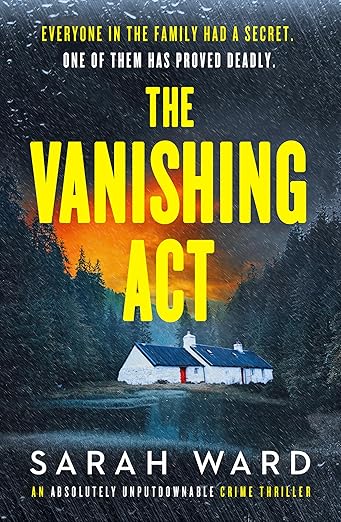
I’m not in a book group so I’m starting with the book I’m currently reading, which is The Vanishing Act by Sarah Ward. It’s the third book in the Mallory Dawson Crime Thriller series. I enjoyed the first two books and so far (I’ve read over half the book) I’m really enjoying this one too.
This is about a missing family. They disappeared from the holiday cottage, they were renting in a remote part of Wales. Apparently they had left in a hurry whilst making sandwiches for a picnic and leaving a kettle still steaming on the Aga.
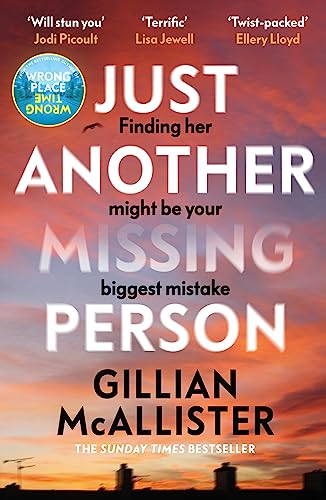
Just Another Missing Person by Gillian McAllister, a book that totally gripped and baffled me. Olivia just disappeared from a dead-end alley without being seen coming back out. The investigating police officer is DCI Julia Day, a detective with a passion for solving things, piecing things together and helping people to get to the truth. But she has come up against what seems to be an impossible crime.
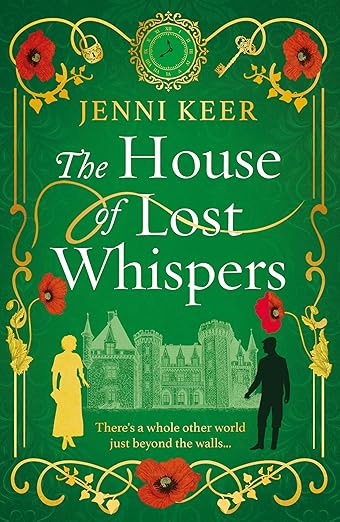
The House of Lost Whispers by Jenni Keer, a review copy, which also contains a character called Olivia. I don’t often read romance or fantasy novels but this book has both elements and it’s also historical fiction set before, during and after the First World War. It explores loss and grief, family life, friendship and romantic relationships, as well as the devastating and horrific events of the First World War.
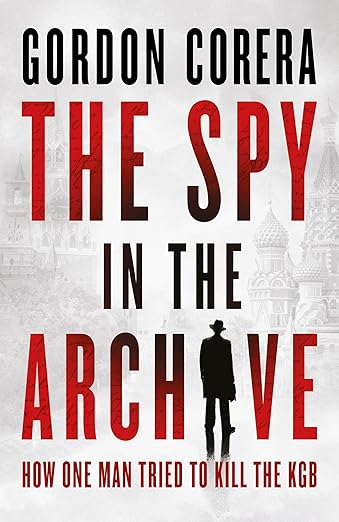
Next is another review copy, The Spy in the Archive by Gordon Corera. It’s nonfiction about Vasili Mitrokhin, a KGB archivist who defected to Britain in 1992. Mitrokhin, a quiet, introverted and determined man, was a reluctant defector, because whilst he loved Russia he came to hate the KGB and the Soviet system. It is a remarkable book about a remarkable man; an in-depth account, that took me weeks to read as it’s not a book to read quickly. It’s both fascinating and informative.
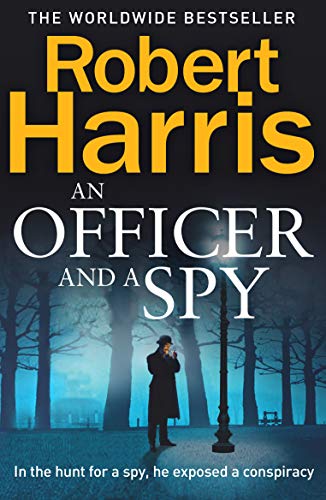
An Officer and a Spy by Robert Harris, historical fiction about the Dreyfus Affair. In his Author’s Note Harris writes that his aim in writing this novel was to ‘retell the true story of the Dreyfus affair‘, describing it as ‘perhaps the greatest political scandal and miscarriage of justice in history, which in the 1890s came to obsess France an ultimately the entire world‘. What follows is a chillingly dark, and realistic novel of conspiracy and espionage.
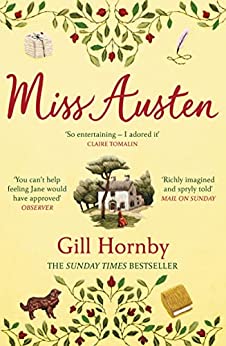
Miss Austen by Gillian Hornby – the untold story of the most important person in Jane’s life – her sister Cassandra. After Jane’s death, Cassandra lived alone and unwed, spending her days visiting friends and relations and quietly, purposefully working to preserve her sister’s reputation. It’s very well researched, a novel that held my attention from the beginning right to the end. A definite 4.5 star book.
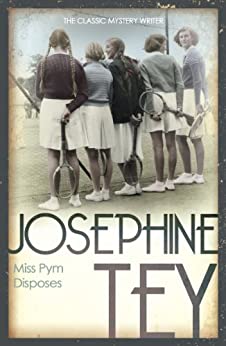
Miss Pym Disposes by Josephine Tey. Miss Pym was pleased and flattered to be invited to Leys Physical Training College to give a lecture on psychology. But then there was a ’nasty accident‘. This is not a conventional crime fiction novel. It’s a psychological study focussing on the characters, their motivation and analysis of facial characteristics. It looks at the consequences of what people do and say and, as Miss Pym discovers who she thinks is responsible, it also looks at how much a person should intervene, or as one of the characters tells her, ‘Do the obvious right thing, and let God dispose.’ Miss Pym agonises over her decision, was she really going to condemn someone to death?
Making this chain into a very loosely linked circle I went from crime fiction to crime fiction, with historical fiction, non fiction and spy stories in between.
Next month (October 3, 2026), we’ll start with Rachel Cusk’s latest novel, Life of M.
Penguin| 5 May 2026| 638 pages e-Book| Review copy| 4*
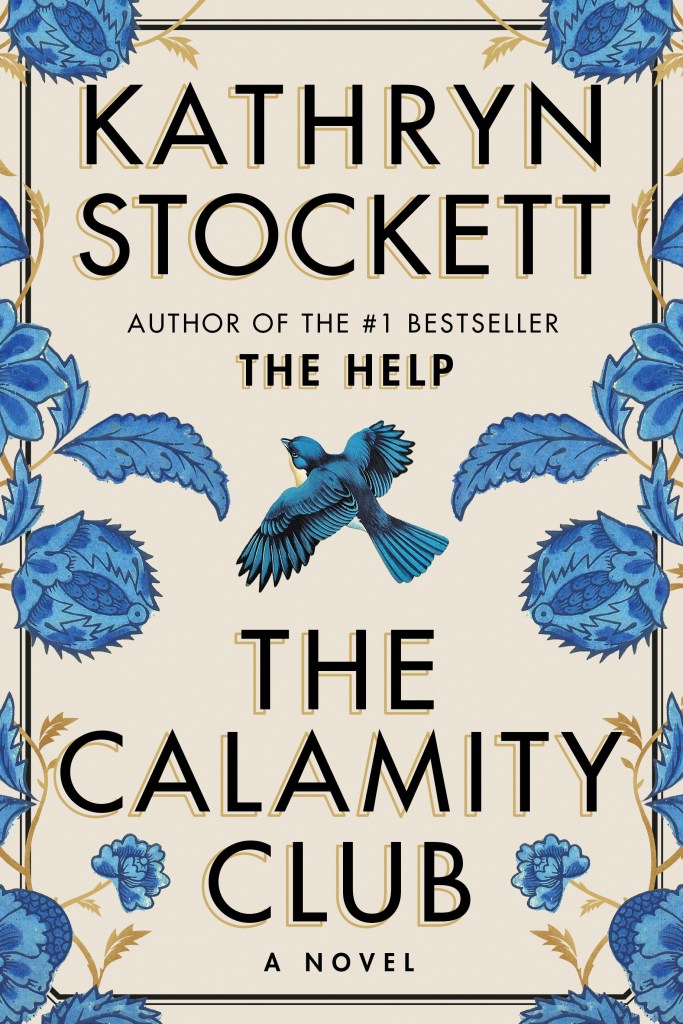
Fourteen years ago I read Kathryn Stockett’s first novel, The Help and loved it. I also watched the film and loved that too. So when I saw on NetGalley she’d written a second novel. The Calamity Club, I requested it and was pleased to find that I loved it, too, although maybe not quite as much as The Help.
Description on Goodreads:
In 1933 Oxford, Mississippi, Prohibition is on the wane, and the Great Depression is tightening its grip. Poor and rich folks alike have fallen on hard times, even as the old social order remains. For women on the margins, the options are few and the price of dignity and self-determination is unbearably high.
Eleven-year-old Meg, one of the unadoptable “big girls” at the Lafayette County Orphan Asylum, fights each day to keep her spirit unbowed. Birdie, unmarried and outspoken, has come to Oxford on a mission to ask her social-climbing sister to help the struggling family she’s left behind. And Charlie is a woman with a past, running low on luck but driven by fire, fury, and grit. When their fates converge, they come up with an audacious plan to take back control of their lives. Together, they form an unlikely sisterhood—but in a place and time where hypocrisy is rife, women’s freedom is fragile, and making an enemy can have dire consequences, will the price they pay for their outrageous risk-taking be too high?
My thoughts:
It took me a long time to read this book as it’s so long and detailed, with lots of characters and covering such emotive and serious issues. Maybe it could have been shorter, without losing any impact and it’s unevenly paced with slow sections that made the story drag at times. And I was surprised that the ending was so abrupt. Having said that the characters are wonderfully depicted, with depth making them really believable, especially Birdie, Charlie and Meg (although I wonder if she comes across as too adult for an eleven year old). The locations are well described, which really helped me as I don’t know the area at all.
The title tells you what you need to know. Set in 1933 during the Great Depression calamity follows calamity for all the characters; the miseries, pain and suffering are unrelenting right from the start as Meg enters The Lafayette County Orphan Asylum for Girls in Oxford, Mississippi. Her mother Charlie had gone shopping on Christmas Eve and never returned, leaving eleven year old Meg to fend for herself, until she was rescued by an unknown man – who he is is only revealed much later in the book. But this is not the end of Meg’s misfortunes as she is cruelly treated by Garnet Pitman, the head of the orphanage.
Birdie, meanwhile is living in Footely (a fictional small town) in the Delta, with her mother and sick grandmother. They fear they’ll lose their home as they are unable to pay the forty-three dollars they owe in property taxes. Her sister Frances has married Rory Tartt, a member of a wealthy family living in Oxford and Birdie travels there to ask for help. However, all is not right in the Tartt family and Birdie finds they’re unable to pay off a mortgage of $2,754. Birdie then helps Frances and her mother-in-law as they try to raise the money to save the Tartt’s grand house as well as Birdie’s home.
What follows is truly remarkable, when Charlie comes up with a plan to raise the money through the Calamity Club she and Birdie set up in the Tartt’s house, employing a group of prostitutes. This could have developed into a farce, but it’s actually a story highlighting the hardships suffered by women at the hands of men and the Anti-Vice Leagues. So-called feeble minded women and those considered to be sexually promiscuous, were imprisoned and sterilized. Above all it’s a story of the women’s resilience, courage and determination to survive against all the odds. I loved it despite its length.
My thanks to the author and NetGalley for a review copy.
Every Friday Book Beginnings on Friday is hosted by Gillion at Rose City Readerwhere you can share the first sentence (or so) of the book you are reading. You can also share from a book you want to highlight just because it caught your fancy.
Zeus sits on his throne. He rules the sky and the world.
Also every Friday there is The Friday 56, hosted by Freda at Freda’s Voice, but she is taking a break and Anne at My Head is Full of Books has taken on hosting duties in her absence. You grab a book and turn to page 56 (or 56% of an eBook), find one or more interesting sentences (no spoilers), and post them.
Page 56:
She looked down, plucked Alcides from her nipple and threw him disgustedly from her. Milk sprayed from her nipple in a great arc across the night sky, imprinting it with stars, which from that moment, would be known as the Milky Way.
Description from Amazon UK
In this companion to his bestselling Mythos, Stephen Fry brilliantly retells these dramatic, funny, tragic and timeless tales.
Join Jason aboard the Argo as he quests for the Golden Fleece. See Atalanta – who was raised by bears – outrun any man before being tricked with golden apples. Witness wily Oedipus solve the riddle of the Sphinx and discover how Bellerophon captures the winged horse Pegasus to help him slay the monster Chimera.
Filled with white-knuckle chases and battles, impossible puzzles and riddles, acts of base cowardice and real bravery, not to mention murders and selfless sacrifices, Heroes is the story of what we mortals are truly capable of – at our worst and our very best.
Every Friday Book Beginnings on Friday is hosted by Gillion at Rose City Readerwhere you can share the first sentence (or so) of the book you are reading. You can also share from a book you want to highlight just because it caught your fancy.
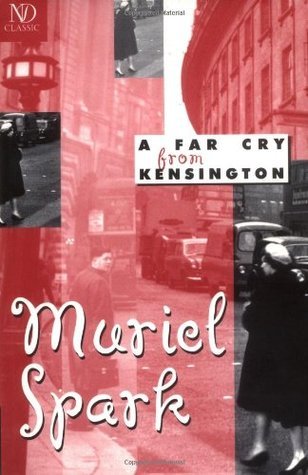
I’ve borrowed A Far Cry from Kensington by Muriel Spark from my local library. After reading Like a Cat Loves a Bird by James Bailey about Spark’s life and works, I wanted to read more of her books. In the introduction to this novel William Boyd states that her novels are very varied –
there are surreal novels, allegorical novels, some philosophical fables – but all are united by a tone of voice, a very dry sense of humour, and a particularly honed terse style … However, A Far Cry from Kensington … belongs in a loose group of novels in the Sparkian canon that has a recognisable footing in history and the real world – environments that Spark was familiar with and with a clear connection to her biography.( page xi)
The book begins:
So great was the noise during the day that I used to lie awake at night listening to the silence. I eventually fell asleep contented, filled with soundlessness but while I was awake I enjoyed the experience of darkness, thought, memory, sweet anticipations.
Also every Friday there is The Friday 56, hosted by Freda at Freda’s Voice, but she is taking a break and Anne at My Head is Full of Books has taken on hosting duties in her absence. You grab a book and turn to page 56 (or 56% of an eBook), find one or more interesting sentences (no spoilers), and post them.
Page 56:
Before we sent Wanda to bed I gave her a notebook and told her to write down as soon as possible everything she could remember about the voice and what it said. ‘I don’t want to write down things’, said Wanda. I think already she had an inkling of who the voice belonged to. Perhaps, already, she had started putting two and two together.
Description from Goodreads
Set on the crazier fringes of 1950s literary London, A Far Cry from Kensington is a delight, hilariously portraying love, fraud, death, evil, and transformation. Mrs. Hawkins, the majestic narrator, takes us well in hand and leads us back to her threadbare years in postwar London.
There, as a fat and much admired young war widow, she spent her days working for a mad, near-bankrupt publisher (“of very good books”) and her nights dispensing advice at her small South Kensington rooming house. At work and at home Mrs. Hawkins soon uncovered evil: shady literary doings and a deadly enemy; anonymous letters, blackmail, and suicide. With aplomb, however, Mrs. Hawkins confidently set about putting things to order, little imagining the mayhem that would ensue.
Now decades older, thin, successful, and delighted with life in Italy–quite a far cry from Kensington–Mrs. Hawkins looks back to all those dark doings and recounts how her own life changed forever. She still, however, loves to give advice: “It’s easy to get thin. You eat and drink the same as always, only half…I offer this advice without fee; it is included in the price of this book.”