The Skeleton Road by Val McDermid

The Skeleton Road (Inspector Karen Pirie, #3)

The Skeleton Road by Val McDermid is the third of her DCI Karen Pirie novels. Investigating the identity of the skeleton found, with a bullet hole in its skull, on the rooftop of a crumbling, gothic building in Edinburgh takes Karen and her Historic Cases Unit into a dark world of intrigue and betrayal during the Balkan Wars in the 1990s.

It begins slowly, introducing rather a bewildering number of characters one after the other. It moves between the past and the present in Scotland, England and Croatia, told through different viewpoints, and interweaving the sequence of events in the past and the present in a way that I found rather disjointed. Dr River Wilde a forensic anthropologist, discovers that the skeleton is a male, he’d been dead between five and ten years and his dental work shows he was originally from one of the Eastern bloc countries.

It’s a complex story with several strands, including the search for war criminals through the work of two lawyers at the International Criminal Tribunal for the former Yugoslavia. Karen’s investigations take her to Oxford and then to a small village in Croatia, a place scarred by fear, where people have endured unspeakable acts of violence.

At times I thought I was reading an account of the wars and the search for justice and revenge rather than a murder mystery. Even given the traumatic events it describes I didn’t feel there was much tension in the search for the killer and I was able to figure out who it was fairly quickly. I enjoyed the sections focusing on Karen’s and her assistant DS James, ‘the Mint’ Murray’s detective work, and I liked all the details of her relationship with her partner, Phil (also a police officer, now working on a different team).  But I didn’t enjoy this as much as the first two Karen Pirie books – in fact I think the first book, The Distant Echo is by far the best.

  • Hardcover: 416 pages
  • Publisher: Little, Brown (11 Sept. 2014)
  • Language: English
  • ISBN-10: 1408704579
  • ISBN-13: 978-1408704578
  • Source: a library book
  • My rating: 3*

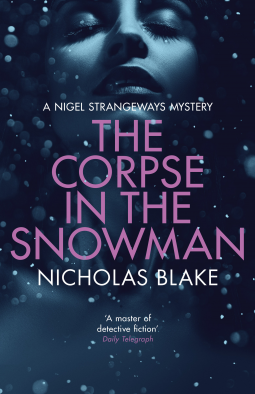
The Corpse in the Snowman by Nicholas Blake

A Golden Age Mystery

Publication date 2017, Ipso Books, 305p. First published as The Case of the Abominable Snowman in 1941 by Collins UK (The Crime Club)

Review copy from the publishers, Ipso Books, via NetGalley

My rating: 3 stars

I enjoyed The Corpse in the Snowman by Nicholas Blake* a vintage murder mystery with a complicated plot. There’s a death and a body hidden in a snowman that is only discovered when a thaw sets in. It is set in 1940 in an isolated country house with a closed cast of characters and an amateur detective, Nigel Strangeways, helping the police and eventually solving the mystery. There are numerous twists and turns and red herrings before the murderer is revealed.

Easterham Manor in Essex, the home of the Restorick family is cut off from the neighbouring village by snow. Strange things have been going on. On Christmas Eve the family and their guests had gathered in what was said to be a haunted room waiting to see if the ghost would appear when  Scribbles, the family cat  sprang at a corner of the room and repeatedly struck her head against the wall and turned herself into a whirling dervish.

Some weeks later Nigel Strangeways and his wife Georgia  have been invited by Georgia’s cousin, Clarissa to stay at the Manor’s Dower House to investigate the cat incident. The next morning Elizabeth Restorick is found hanged and naked in her room, a hint of a smile playing on her painted lips. Was it suicide, or a murder made to look like suicide? Nigel is convinced it was murder and finds there are plenty of suspects. Elizabeth was a drug addict – so, was she killed by the doctor who was treating her addiction, or by Will Dykes, a romantic novelist in love with Elizabeth, or her friend Miss Ainsley, described as a ‘nondescript sort of fribble‘ -a frivolous or foolish person – or by one of the family?

The title and the first chapter give away a vital element of the plot – the snowman, built by the Restorick children, twins John and Priscilla, melts to reveal a corpse hidden inside. But at this point the identity of the corpse is unknown and as I was reading the rest of the book I kept trying to work out who it could be. It wasn’t too difficult, but it did detract a little from the mystery and I didn’t enjoy it as much as his earlier book Malice in Wonderland.

*Nicholas Blake was the pseudonym of Poet Laureate Cecil Day-Lewis (1904 – 1972), one of the leading British poets of the 1930s. He began writing mysteries in 1935 to supplement his income from poetry and published his first Nigel Strangeways detective novel, A Question of Proof in 1935. The Corpse in the Snowman aka The Case of the Abominable Snowman is the 2nd in the series.

My thanks to the publishers for a review copy via NetGalley.

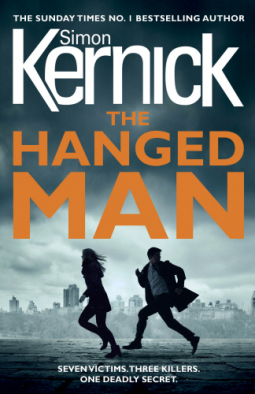
The Hanged Man by Simon Kernick

Expected publication date 16 November 2017

Review copy from the publishers, Random House, Century, via NetGalley

My rating: 2.5 stars

In December 2016 I read the first book in this series The Bone Field by Simon Kernick. It ended on a cliff-hanger in the last sentence (just when you thought it was all over). The Hanged Man is the second book in the series and refers back to events in The Bone Field, but in enough detail so it probably doesn’t matter much if you haven’t read the first book. It’s packed full of action right from the opening chapter as Hugh Manning and his wife are on the run from some very dangerous and violent people who are out to kill them. The police are also looking for Hugh as he is the only witness to what had happened at the farmhouse (dubbed ‘The Bone Field‘) where the bodies of seven women had been found.

Ray Mason, suspended from the police after the events told in The Bone Field, and now exonerated, is back on the case, working with Dan Watts in the National Crime Agency. The main suspects are the Kalamans,  brother and sister, Alastair and Lola Sheridan and a mysterious character called Mr Bone. It’s  told through different characters’ viewpoints, including Ray’s partner, ex-cop and now a PI, Tina Boyd. With so many characters acting as narrator it’s useful that Kernick uses the first person when telling what happens as seen through Ray’s eyes, whereas the rest are told in the third person.

It’s complicated, maybe over-complicated and I found myself racing through it. There are too many characters and sub-plots. Some characters are like cardboard cut-outs, the ‘baddies’ really bad and the ‘goodies’, particularly Ray Mason, who breaks all the rules, not much better. It’s a world full of corruption and secrets, where life is of little account and murder commonplace, and nobody is safe. But because I knew the identities of the criminals from the start there is no mystery – it’s just a matter of who will get to Manning first, the police or the villains and will the villains be caught? There’s climatic ending – but is this really the end …?

My thanks to the publishers for a review copy via NetGalley.

Amazon UK
Amazon US


The Fear Index by Robert Harris

The Fear Index

The Fear Index by Robert Harris is a fast-paced story set in the world of high finance and computer technology but it didn’t appeal to me as much as the other books by him that I’ve read. It’s about scientist Dr Alex Hoffman, who together with his partner Hugo Quarry, an investment banker, runs a hedge fund based in Geneva, that makes billions. Alex has developed a revolutionary form of artificial intelligence that tracks human emotions, enabling it to predict movements in the financial markets. It’s built around the standard measure of market volatility: the VIX or ‘Fear Index’.

Alex wakes up one morning in the early hours to find an intruder has managed to bypass the elaborate security of the house. He challenges him only to receive a blow to his head that knocks him out and the intruder escapes. That is just the start of his troubles. A brain scan indicates he may have MS or possibly dementia and he is advised to take further advice, which of course, he doesn’t want to do. It appears that someone is out to destroy him and his company and even worse it soon looks as though this will cause a major global economic crisis. He is at a complete loss as to who it can be. It’s someone who has infiltrated into all areas of his life, affecting his marriage as well as his business.  He even begins to doubt his sanity.

On the one hand it helped me understand a bit more about hedge funds and how they operate but I got lost in the computer technology details. The characters are all not particularly likeable, but it’s definitely a page turner with plenty of suspense as the story raced to a conclusion, and it kept me puzzling over what or who was really causing the paranoia and violence. I thought it began well but didn’t find the ending very illuminating or satisfying and was left wondering what it was really all about.

I liked the chapter headings with extracts from books such as Charles Darwin’s On the Origin of Species and The Descent of Man and Mary Shelley’s Frankenstein which made me wonder if the book was about the evolution of man into machine. Just an idea – if you’ve read the book what did you make of it all?

  • Hardcover: 336 pages
  • Publisher: Hutchinson; First Edition, First Printing edition (29 Sept. 2011)
  • Language: English
  • ISBN-10: 0091936969
  • ISBN-13: 978-0091936969
  • Source: Library book
  • My rating: 3*

Fair of Face by Christina James

Tina Brackenbury and her baby daughter Bluebell are dead …

Fair of Face

Fair of Face is the sixth novel in the DI Yates series and  I think it stands well on its own. It is not a book you can read quickly as there are plenty of characters and several plot threads that need to be kept in mind. It is an intricately plotted mystery, re-assessing a crime from the past whilst investigating a present day murder, set in Spalding in Lincolnshire. I  didn’t find it an easy book to review.

The book begins with Tristram Arkwright, a prisoner in HMP Wakefield. He works in the prison library and is secretly in correspondence with Jennifer Dove, a bookseller who regularly supplies the prison. Jennifer is bored and finds Tristram a welcome diversion. He, meanwhile, is planning an appeal against his sentence insisting he is innocent.

Tina’s 10 year old foster daughter, Grace Winter was staying with a friend, Chloe and arrives home as DI Tim Yates and DS Juliet Armstrong are beginning their investigations into the deaths of Tina and Bluebelle. Grace acts strangely and doesn’t seem very upset by the murders and asks to see the bodies. But Grace has had a difficult life as this isn’t the first murder that she has encountered. Four years earlier her mother, sister and grandparents had been killed at their farmhouse and Grace had escaped by hiding in a cupboard. Grace was then adopted by Amy Winter, and only later sent to live with Tina. Her friend, Chloe, also has a troubled background, with brothers who are regularly in trouble with the police. She is noticeably intimated by them and by Grace. As both girls are only 10 years old the police work with Social Services in order to question them

I struggled for a while to sort out the relationships between all the characters and the relationship between the opening chapters and Tina and Bluebell’s murders. The narrative switches between the first person present tense (Juliet) and the third person past tense, which I found a bit awkward until I got used to it. And I was confused by characters with similar names – Tom and Tim for example – regularly having to check who was who. I also failed to see relevance of Jennifer Dove’s character in the opening chapters. But despite these drawbacks I enjoyed the book and was eager to solve the mysteries.

My thanks to the publishers for a review copy of the book.

  • Paperback: 320 pages
  • Publisher: Salt Publishing (15 Oct. 2017)
  • Language: English
  • ISBN-10: 1784631086
  • ISBN-13: 978-1784631086
  • My rating: 3*

Six Degrees from Less than Zero to The Book of Dust

I love doing Six Degrees of Separation, a monthly link-up hosted by Kate at Books Are My Favourite and Best. Each month a book is chosen as a starting point and linked to six other books to form a chain. A book doesn’t need to be connected to all the other books on the list, only to the one next to it in the chain.

This month the chain begins with a controversial bestseller by a member of the eighties ‘literary Brat Pack’ – Bret Easton Ellis’s Less Than Zero.

Lessthan01st1.png

I haven’t read this book and can’t say that it appeals to me at all. Filled with relentless drinking in seamy bars and glamorous nightclubs, wild, drug-fuelled parties, and dispassionate sexual encounters, Less Than Zero – narrated by Clay, an eighteen-year-old student returning home to Los Angeles for Christmas – is a fierce coming-of-age story, justifiably celebrated for its unflinching depiction of hedonistic youth, its brutal portrayal of the inexorable consequences of such moral depravity, and its author’s refusal to condone or chastise such behaviour. (Amazon UK)

Towards Zero

So, the first link in my chain is to an another book with the word ‘zero‘ in the title – Towards Zero by Agatha Christie.

It’s one of my favourite of Agatha Christie’s books, first published in 1944, with an intricately plotted murder mystery featuring Superintendent Battle. The hypothesis is that murder is not the beginning of a detective story, but the end. It is the culmination of causes and events bringing together certain people, converging towards a certain place and time – towards the Zero Hour. The idea presupposes that there is an inevitability – that once events have been set in motion then the outcome is determined. Agatha Christie dedicated this book to Robert Graves, author of I Claudius, who was her neighbour in Devon during the Second World War and the two had become friends.
I, Claudius & Claudius the God by Robert…

I read I, Claudius and Claudius the God  by Robert Graves many years ago after watching the TV adaptation with Derek Jacobi playing the role of Claudius. Set in the first century A.D. in Rome, this is the life story of the Roman Emperor Claudius. A lame man and a stammerer, he was despised and dismissed as an idiot. He recorded the antics of the imperial household as its members vied for power; a story of murders, greed and folly. He had a disastrous love affair with the depraved Messalina but his reign as Emperor was surprisingly successful.
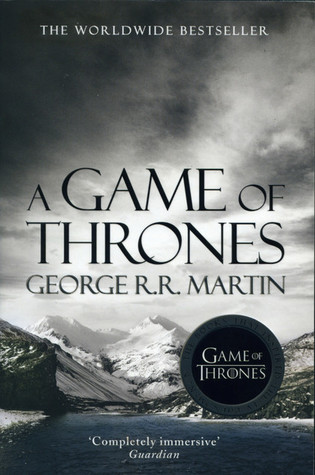
22740513My next link is to another book I read after first watching the TV adaptation – it’s A Game of Thrones by G R R Martin, fantasy fiction. I loved both the book and the TV series. It’s complex and multifaceted, and it’s full of stories and legends, set in a grim and violent world full of tragedy, betrayals and battles; a tale of good versus evil in which family, duty, and honour are in conflict, the multiple viewpoints giving a rounded view of the conflicts the characters face. It’s a love story too.
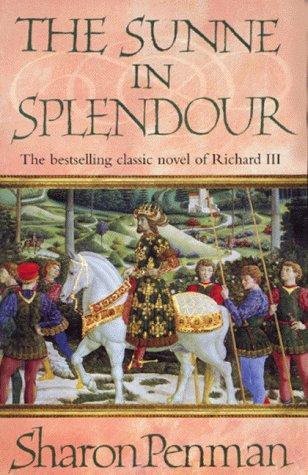
The Sunne In Splendour

Just before I read The Game of Thrones I’d read The Sunne in Splendour by Sharon Penman, historical fiction about the Wars of the Roses and had noticed the similarities between that and A Game of Thrones, the battles between the Houses of York and Lancaster paralleled by those between the Houses of Stark and Lancaster for example. This is one of the best historical novels that I’ve read. It is full of detail, bringing Richard III’s world to life. It’s a long book, nearly 900 pages and it took me a while to read it, but never once did I think it was too long, or needed editing. I loved it.

Another very long book is The Pillars of the Earth by Ken Follett. It has 1,076 pages and is historical fiction set in 12th century England during the time of the civil war between Stephen and Matilda/Maud (she’s known by both names – in this book she’s called Maud, but at school we were taught her name was Matilda). It’s also the story of the building of a cathedral.  It is really a medieval soap opera – in essence a family saga. Parts of the novel came to life more than others and it is rather long-winded and repetitive, terrible things happen, the characters overcome them and recover only to be knocked down again by more terrible events.

La Belle Sauvage (The Book of Dust, #1)Earth‘ made me think of ‘dust to dust’ which in turn made me think of Philip Pullman’s La Belle Sauvage, volume one of The Book of Dust. This is his latest book – I haven’t read it yet – set ten years before His Dark Materials, telling the story of Lyra Belacqua’s early life. Eleven-year-old Malcolm Polstead and his daemon, Asta, live with his parents at the Trout Inn near Oxford. Across the River Thames is the Godstow Priory where the nuns live. A baby by the name of Lyra Belacqua.

The next two books in the series, Pullman has said, will take place after the events of His Dark Materials – he describes this trilogy as neither a prequel nor a sequel but as an ‘equel’.

My chain began with a book I haven’t read and don’t want to read and ended, so far from where it began, with another book I haven’t read, but a book I’m looking forward to reading. It has travelled through time and space, taking in ancient Rome, medieval England and the fantasy worlds of G R R Martin and Philip Pullman.

Next month (December 2, 2017) the chain begins with Stephen King’s It – where that will end I have no idea yet.