My Friday Post: Deadland by William Shaw

Every Friday Book Beginnings on Friday is hosted by Gillion at Rose City Reader where you can share the first sentence (or so) of the book you are reading. You can also share from a book you want to highlight just because it caught your fancy.

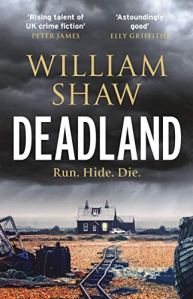
Today my book beginning is from Deadland by William Shaw, one of the latest books I’ve bought.

The first time they tried stealing a phone, it went arse-tit. The second time was worse.

Also every Friday there is The Friday 56, hosted by Freda at Freda’s Voice. *Grab a book, any book. *Turn to Page 56 or 56% on your  ereader . If you have to improvise, that is okay. *Find a snippet, short and sweet, but no spoilers!

These are the rules:

  1. Grab a book, any book.
  2. Turn to page 56, or 56% on your eReader. If you have to improvise, that is okay.
  3. Find any sentence (or a few, just don’t spoil it) that grabs you.
  4. Post it.
  5. Add the URL to your post in the link on Freda’s most recent Friday 56 post.
  1. Grab a book, any book.
  2. Turn to page 56, or 56% on your eReader. If you have to improvise, that is okay.
  3. Find any sentence (or a few, just don’t spoil it) that grabs you.
  4. Post it.
  5. Add the URL to your post in the link on Freda’s most recent Friday 56 post.

Stark and white against the grey sky, the gallery made Cupidi think of a cathedral built by missionaries.

Margate had once been a grand place, an elegant curve of Georgian houses facing a bay with sand the colour of honey. The town had been sliding downhill for decades.

About the book:

YOU CAN RUN

The two boys never fitted in. Seventeen, the worst age, nothing to do but smoke weed; at least they have each other. The day they speed off on a moped with a stolen mobile, they’re ready to celebrate their luck at last. Until their victim comes looking for what’s his – and ready to kill for it.

YOU CAN HIDE

On the other side of Kent’s wealth divide, DS Alexandra Cupidi faces the strangest murder investigation of her career. A severed limb, hidden inside a modern sculpture in Margate’s Turner Contemporary. No one takes it seriously – not even the artwork’s owners, celebrity dealers who act like they’re above the law.

YOU CAN DIE

But as Cupidi’s case becomes ever more sinister, as she wrangles with police politics and personal dilemmas, she can’t help worrying about those runaway boys. Seventeen, the same age as her own headstrong daughter. Alone, on the marshes, they’re pawns in someone else’s game. Two worlds are about to collide.

Kent and its social divisions are brilliantly captured in Deadland, a crime thriller that’s as ingeniously unguessable as it is moving and powerful.

~~~

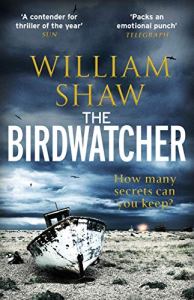
This is the second book in the DS Alexandra Cupidi series. I’ve read the first Salt Lane, which I thoroughly enjoyed, so I’m hoping this one is just as good.

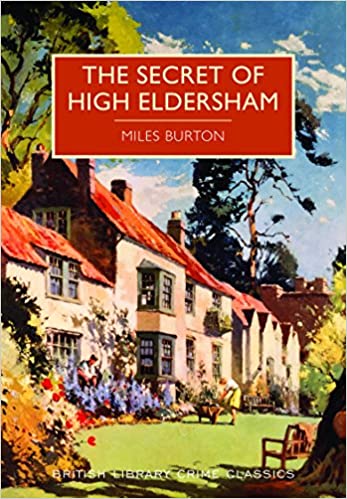
The Secret of High Eldersham by Miles Burton

Rating: 4 out of 5.

The Secret of High Eldersham by Miles Burton was first published in 1930. Miles Burton is a pseudonym. His real name was Cecil John Charles Street (1884 – 1964) and he also wrote under the names of John Rhode and Cecil Way. I like these names – variations on the word ‘street’. This edition was published by the British Library in 2016 and is one of my TBRs.

It’s not an easy book to write about. There is a murder – that of the landlord of the Rose and Crown Inn in the village of High Eldersham. He was found dead slumped in a chair, having been stabbed in the neck. The local police don’t feel able to deal with the murder so call in help from Scotland Yard.

But when Detective Inspector Young arrives he discovers that there is something very strange about the village and its inhabitants. Like a lot of small and remote villages the local people keep themselves to themselves and are very wary of strangers – they’re not made welcome and they don’t stay very long. But it’s more than that. Strange things are happening, and Young’s theory to account for the queerness of the place seemed to him (and to me) ‘so impossible, so utterly fanciful, that to entertain it was to doubt his own sanity.’ It concerns ancient legends and customs with a supernatural element. And this is what makes it difficult to write about because to say anything more about this ‘queerness‘ would be to give away a major part of the plot.

Young decides he can’t deal with this on his own and he contacts his friend, Desmond Merrion, a brilliant individual from the intelligence branch of the Admiralty, he had met during the war. He writes to Merrion inviting him to the inquest into the Inn’s landlord death, where he meets a war-time acquaintance, Laurence Hollesley.

From that point on the novel branches into two stories – the murder mystery and a thriller full of danger, drama and pace, plus a damsel in distress and spot of smuggling thrown into the mix. I enjoyed it. It’s easy to read, even if I find it difficult to write about, with clearly identifiable characters and a good sense of location. There’s suspense and the tension rises as the mystery reaches its climax.

Merrion also appears in the one other book I have by Miles Burton – Death in the Tunnel, which I hope to read soon.

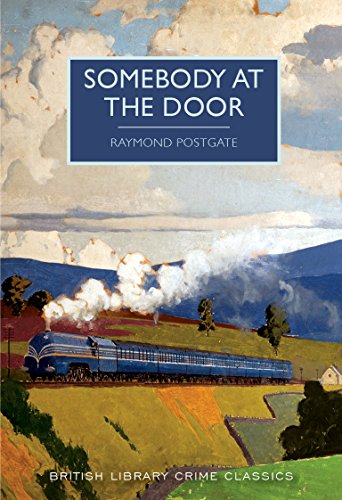
Somebody at the Door by Raymond Postgate

Rating: 4 out of 5.

Somebody at the Door is one of the British Library Crime Classics, originally published in 1943. It’s set in 1942 and it gives a vivid picture of what life was like in wartime England. There is an interesting introduction by Martin Edwards.

In January 1942, Henry Grayling is on the 6.12 train from Euston, travelling home to Croxburn from work in London. There’s a fuel shortage so there are less trains than usual and the carriages are crowded – Grayling views all his fellow passengers with dislike and suspicion as he clutches his attache case, containing £120 pounds close to his chest.

He sits next to a young man, Evetts, who works for the same company and is smoking a foul smelling pipe, and on his other side is the Vicar of Croxburn, both of whom he knows. He also recognises Ransom, a corporal in the Home Guard platoon in which he, Grayling is a second lieutenant. The other occupants of the carriage are a fair young man with a club foot, a refugee doctor, a fat middle aged woman and her teenage daughter, and two young working men in overalls. Most of the passengers are suffering from colds, coughing and sneezing and Grayling has to hold his handkerchief in front of his nose. He is relieved to leave the train when it eventually pulls into the station at Croxburn. However, when Grayling arrived home he is seriously ill and dies later that evening.

An autopsy reveals that he had died of mustard gas poisoning and Inspector Holly finds that there are too many suspects; Grayling was an extremely unlikable person. The rest of the book reads like a collection of short stories as Holly investigates Grayling’s fellow passengers. Their stories are detailed and at times I felt they were too long and slowed the book down too much, but they are interesting in themselves. I particularly like the German refugee’s story, casting light on what life was like in Germany just before and at the onset of the war.

I did enjoy the book, the characters stand out as real people and also reflect Postgate’s own likes and dislikes. Martin Edwards’ introduction gives the background to Postgate’s writing – he was an atheist and a one-time Communist. His stories reveal the corruption in local government at that period, and the attitudes of the British government in the lead up to the war. The murder mystery is really secondary to the suspects’ stories, which makes the book more a reflection of the period, which Postgate does really well, than crime fiction. However, the murder mystery is well plotted, giving me plenty to unravel and it was only in the final section that I guessed who had killed Grayling.

  • Kindle Edition
  • File Size : 3089 KB
  • Print Length : 239 pages
  • Publisher : British Library Publishing (10 Oct. 2017)
  • Source: Prime Reading Library

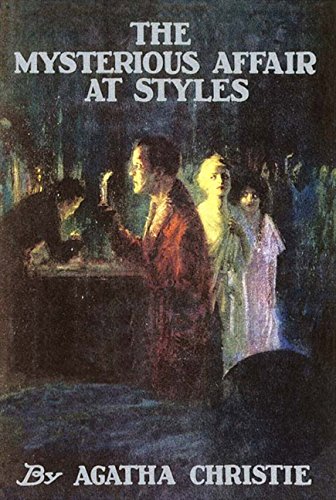
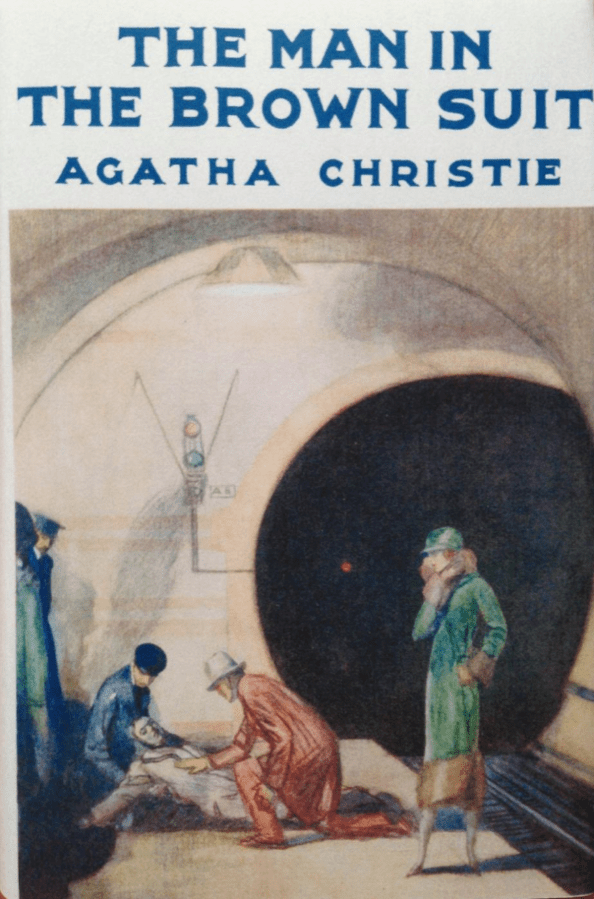
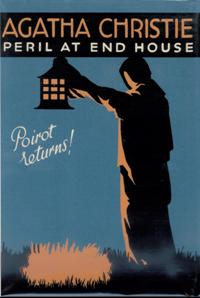
Top Ten Tuesday: First Edition Agatha Christie Book Covers

Top Ten Tuesday is a weekly meme created by The Broke and the Bookish and now hosted by Jana at That Artsy Reader Girl. For the rules see her blog. The topic this week is a Book Cover Freebie.

How it works:

There’s a new topic every Tuesday. You create your own top ten (or 2, 5, 20, etc.) list on that topic or one of your own if you wish and then link back to That Artsy Reader Girl so that others know where to find more information. If a weekly topic is listed as a “freebie”, you are invited to come up with your own topic. Sometimes she will give the freebie topic a theme, such as “love”, a season, or an upcoming holiday. That just means that you can come up with any topic you want that fits under that umbrella.

So today my top ten are twelve –

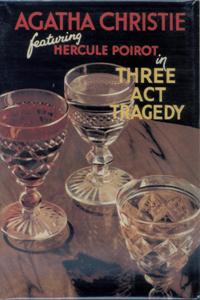
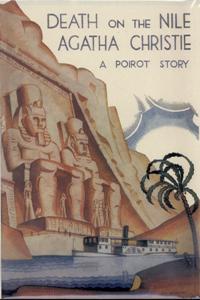
Twelve First Edition Agatha Christie book covers.

I’ve read all of Agatha Christie’s crime fiction novels and the links are to my posts – although the books I read were not first editions!

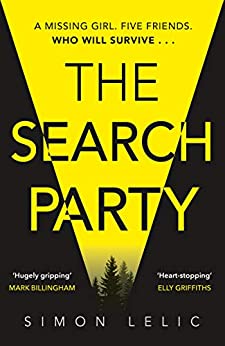
The Search Party by Simon Lelic

Rating: 4.5 out of 5.

Viking| 20 August 2020| 352 pages print length| Hardback| Review Copy

Three years ago I read The House by Simon Lelic and enjoyed it, so I was looking forward to reading The Search Party. I’m delighted to say that I think it is even better.

16-year-old Sadie Saunders is missing and five of her friends set out into the woods to find her. At the same time the police’s investigation, led by Detective Inspector Robin Fleet and Detective Sergeant Nicola Collins, is underway. The narrative alternates between the two groups. Sadie is a clever girl, popular with her school friends and loved by her parents, who favour her over her twin brother Luke and their younger brother, Dylan.

The opening lines propelled me straight into the story as one of Sadie’s friends, lost in the woods her makes an incoherent phone call to the emergency services. The caller doesn’t know their location other than it is ‘somewhere in the woods‘ near an abandoned building. And from that point on I was gripped, compelled to follow this complex novel, full of red herrings and multiple twists and turns. It is tense from start to finish, ending in an exhausting and terrifying chase that had me on the edge of my seat!

I really like Fleet, and the way he stands up to his boss, Superintendent Burton, whose main concern is the cost of the investigation. Burton puts pressure on him to arrest Mason, assuming he has killed Sadie even though her body has not been found. Mason is part of the search party, but Fleet’s instincts tell him Mason is innocent. Fleet is known for his ability to find missing persons and sticks to his gut feelings.

My only criticism is that at times the teenagers’ rambling discussions about what could have happened to Sadie and their disagreements went on too long for my liking. But that is just a minor point. They are all keeping secrets and in their interviews with the police they all lie and withhold vital facts and they are suspicious of each other, not knowing who they can trust. And I couldn’t decide what had happened to Sadie – had she run away, committed suicide or was she murdered and if so who was the murderer. They are all suspects, including Sadie’s parents. It was only just before the end of the book that I realised just what had happened.

My thanks to NetGalley and Viking, the publishers for a review copy.

Wycliffe and How To Kill a Cat by W J Burley

W.J. Burley (1914 – 2002) was first an engineer, and later went to Balliol to read zoology as a mature student. On leaving Oxford he went into teaching and, until his retirement, was senior biology master in a large mixed grammar school in Newquay. He created Wycliffe in 1966 and the series was televised in the 1990s with Jack Shepherd starring in the title role. But I’ve never watched any of them. Set in Cornwall, they have a strong sense of place, and Wycliffe is a quiet, thoughtful detective.

Wycliffe and How to Kill a Cat is the second book in the series and is the 7th one I’ve read. It was first published in 1970 as To Kill a Cat. It’s well written, with descriptions of the coast of Cornwall, firmly set in the late 1960s, specifically at the time of the astronauts first moon landing in July 1969. At one point Wycliffe reflects on the fact that a quarter of a million miles away men were walking on the moon.

Superintendent Wycliffe, despite being on holiday can’t help getting involved when a young woman is found murdered in her seedy hotel bedroom. She’d been strangled and her face had been savagely smashed in. A thousand pounds was still in a drawer, hidden beneath her clothes, so the motive wasn’t theft.

It’s a complex story that kept me guessing to the end. Once Wycliffe had established the young woman’s identity, there were several suspects he investigated, including her husband, a meek man whose mother dominated him and his aunt who doted on him, or maybe it was the owner of the nightclub, the Voodoo where she’d worked, or one of its patrons. I kept thinking it was this person and then that person …

I like Wycliffe, a quiet man who works on instinct, but I did feel sorry for his wife, left very much on her own as he occupied himself on investigating the murder – after all they were supposed to be on holiday. She doesn’t complain. Instead she made friends with some local people and went out with them in their motor launch to explore a bit of Du Maurier country.

Wycliffe is a comparative newcomer to the area and the divisional inspector, Inspector Fehling’s first impression of him was not favourable. He thought that Wycliffe did not look like a policeman. He didn’t look ‘tall enough and he seemed almost frail. A teacher, some kind of academic, perhaps a parson, but never a policeman.’ This reminded me that there used to be a minimum height requirement for policemen of 5ft 8in tall.

These two extracts describe how Wycliffe worked:

“Wycliffe stood for a while, apparently lost in thought. Actually, though ideas chased each other through his mind they could hardly be said to have any pattern of rational consecutive thought.”

“It was when he made an effort to think in a disciplined way about anything that he was most conscious of his shortcomings. And this reflection brought him back to the case. Not only did he find sus­tained logical thought difficult but he was always short of written data. He had the official reports but these were so full as to be almost useless. Any other detective would have a sheaf of private notes, but he rarely wrote anything down and if he did he either lost it or threw it away. Notes were repugnant to him. Even now he ought to be sitting at a desk with a notepad in front of him, jotting down his ideas, transposing and relating facts like a jig-saw.”

This is police procedural, reflecting the social values and attitudes of the 1960s. It’s an early book in the series, but I think it clearly shows Wycliffe’s character and the way he worked. I’ve read the books in the series totally out of order, so it was good to read the second one. I’m still wondering about the title as there are no details in it about how to kill a cat! I’m hoping to read the first one – Wycliffe and the Three Toed Pussy, which despite its title is not about an actual cat either, but about a young woman with a deformed foot.