Six Degrees of Separation: From Are You There God? It’s Me, Margaret to Bring Up the Bodies

It’s time again for Six Degrees of Separation, a monthly link-up hosted by Kate at Books Are My Favourite and Best. Each month a book is chosen as a starting point and linked to six other books to form a chain. A book doesn’t need to be connected to all the other books on the list, only to the one next to it in the chain.

This month it begins with a book that is celebrating its 50th birthday this year – Are You There God? It’s Me Margaret by Judy Blume. I’ve not read this book, but the title, with my name in it, intrigues me. Margaret Simon, almost twelve, likes long hair, tuna fish, the smell of rain, and things that are pink. She’s just moved from New York City to Farbook, New Jersey, and is anxious to fit in with her new friends.

There are several ways I thought of to go from this book – my name, or the author’s name, or the subject matter of a coming of age novel, or a relationship with God.

After several false starts, I chose another coming , bof age novel. The Highest Tide by Jim Lynch is about Miles O’Malley, a thirteen year old boy and about life, growing up, relationships and love. It’s narrated by an adult Miles, looking back at that summer when he found a giant squid, dying on the mudflats at Skookumchuck Bay, at the southern end of Puget Sound, near his house. That was the summer he had a crush on Angie, his ex-babysitter, and his best friend, old Florence was getting sicker each week.

Moving on to another book about ‘tides‘ to The Sea Detective by Mark Douglas-Hume set in Scotland on the fictional island of Eilean Iasgaich. Cal McGill uses his knowledge of tides, winds and currents to solve mysteries, which helps in the investigation of the appearance of severed feet in trainers that had been washed on shore on islands miles apart. It’s a story of unsolved mysteries both from the present day and from the Second World War, and of two Indian girls, sold into the sex trafficking trade.

And the next link is the word ‘sea‘ in the title in The Sea Change by Joanna Rossiter set in lost landscapes this is a novel revolving around a mother and daughter caught up in catastrophic events. The lost landscapes are the village of Imber, a Wiltshire village that was requisitioned by the army during World War Two, where Violet had grown up, and the coastal village of Kanyakumari in Southern India, where her daughter Alice was caught up in the tsunami that devastated the area in 1971.

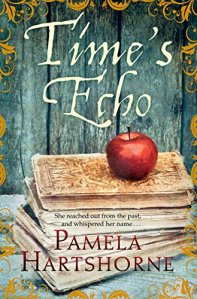
Time’s Echo by Pamela Hartshorne is a time-slip story with an element of mystery and suspense. Grace Trewe is drawn into Hawise Aske’s life, four and a half centuries earlier in York, 1577. Grace likes to travel and although she survived the Boxing Day tsunami she is suppressing her memories of what happened. As she learns how Hawise died it gets to the point where she dreads slipping out of current time into not only Hawise’s past but also into her own as she remembers what happened to her in the tsunami.

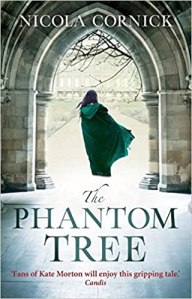
Another time-slip novel is The Phantom Tree by Nicola Cornick which alternates between the Tudor period and the present day following the life of Alison Banestre (known as Bannister in the present day) as she moves between the centuries trying to find out what happened to Mary Seymour. It’s a mystery, based on the true story of Mary Seymour, the daughter of Katherine Parr (Henry VIII’s sixth wife) and Thomas Seymour, who she married after Henry’s death.

Thomas Seymour was Jane Seymour’s brother. Their family home was Wolf Hall, an early 17th-century manor house where Mary Seymour was taken in 1557 as an unwanted orphan and presumed dead after going missing as a child. This brings me to Hilary Mantel’s trilogy, Wolf Hall and specifically to the second book in the trilogy, Bring Up the Bodies, which begins at Wolf Hall, where Henry VIII is visiting the Seymours. And it is at Wolf Hall that Henry begins to fall in love with Jane.

My chain this month includes a coming of age novel, books with tides and seas in their titles, time-slip novels and books in which Wolf Hall features. It begins in America in 1970, moves forward and backwards in time and place to the 16th century in England.

Next month (January 2, 2021), we’ll start with the winner of the 2020 Women’s Prize for Fiction, Hamnet by Maggie O’Farrell.

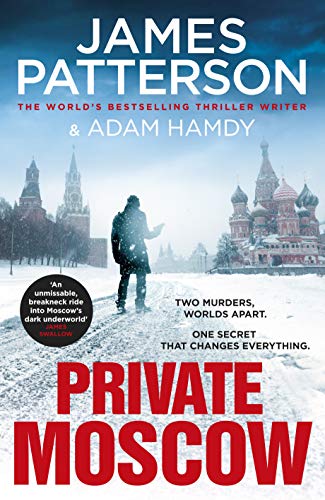
Private Moscow by James Patterson & Adam Hamdy

Cornerstone Digital| 3 September 2020| 464 pages| Review copy| 4*

Description:

An invitation from an old friend draws Jack Morgan into a deadly conspiracy

On a cold January morning, Jack Morgan stands on a podium inside the New York Stock Exchange alongside his friend and former US Marine comrade whose company is being launched onto the market. Everyone is eagerly awaiting the moment the opening bell rings. But that moment never arrives. An assassin’s bullet rips through the air and finds its mark.

In the aftermath of the murder, Jack is approached by the victim’s wife. She needs him to find the killer. As the head of Private, Jack has at his disposal the world’s largest investigation agency. He accepts the case, but what Jack will discover will shake him to his core.

Jack identifies another murder in Moscow that appears to be linked. So he heads to Russia, and begins to uncover a conspiracy that could have global consequences

With powerful forces plotting against him, will Jack Morgan make it out alive?

My thoughts:

Private Moscow is the 15th book in James Patterson’s Private series, his latest one published – the 16th book, Private Rogue will be published in July 2021. He has written numerous books and series but Private Moscow is the first one I have read. Adam Hamdy is a British author and screenwriter. He is the author of the Pendulum trilogy, an epic series of conspiracy thriller novels.  James Patterson described Pendulum as ‘one of the best thrillers of the year’, and the novel was nominated for the Glass Bell Award for contemporary fiction, and chosen as book of the month by Goldsboro Books.  Pendulum was also selected for the BBC Radio 2 Book Club. 

Private Moscow is a change from the type of books usually read – an action packed, fast paced mystery thriller. Although it’s the 15th book in the series, I think it reads well as a standalone. The action never lets up as Jack Morgan, the head of Private, a detective agency with branches across the globe, sets out to hunt for the killer of his best friend and former marine, Karl Parker. Meanwhile in Moscow Dinara Orlova, an ex FSB agent in the Moscow office of Private and her colleague, Leonid Boykov an ex police detective, are investigating the murder of Yana Petrova, who was killed in an explosion at the Boston Seafood Grill. When it becomes apparent that the two cases are linked Jack flies to Moscow to join forces with Dinara and Leonid.

After a slow start, the pace picked up dramatically as the danger intensified and I was gripped right up to the final high octane ending. The short chapters emphasise the speed of the action. There spectacular car chases, with violent shoot outs, miraculous escapes and fight scenes, and intense danger throughout as intrigues, conspiracies, old secrets and deep-cover agents are revealed. It’s told through Jack’s perspective in the first person narrative alternating with the third person of the other characters. It’s far-fetched, but also entertaining, like watching a fast paced spy movie/thriller and although I have never been to New York or Moscow I had no difficulty in visualising the locations. Pure escapism!

My thanks to the publishers for a review copy via NetGalley.

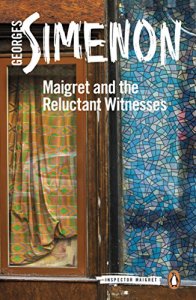
Maigret and the Reluctant Witnesses by Georges Simenon

This week the theme for Novellas in November is Literature in Translation and I’ve chosen Maigret and the Reluctant Visitors by Georges Simenon translated from the French by William Hobson, a novella of 172 pages.

This is the 53rd Inspector Maigret book, originally published in 1955.

It is November and Maigret, nearing retirement, is in a melancholy, nostalgic mood. He has been called out to the home of the Lauchaume family where Léonard, the eldest son has been shot dead. The name Lachaume brings back memories of his childhood in the countryside where the village grocer sold Lachaume Biscuits. But the family is now in dire straits, living in a large house on the Quai de la Gare, Ivry and their biscuit factory is failing. Their house was once an impressive three storey building but is now in a state of decay, cold and damp. The rest of the Lachaume family, his younger brother Armand, Paulette Armand’s wife and his elderly parents, are not only reluctant to talk to the police, they don’t appear to be grieving.

It looks initially that the murder may have been part of a burglary, although only a wallet is missing, but Maigret is suspicious right from the start. His attempts to question the family are held up by their lawyer and also by the Examining Magistrate, Angelot who insists on taking charge of the case. But he makes headway when he visits Véronique Lachaume, Léonard’s estranged sister and eventually Paulette reluctantly talks to him.

The book as a whole has a nostalgic feel, the sense that the world is changing – the Lachaume family has been left behind. Their business has only been kept afloat by the money from the sons’ wives, but they are still proud and reluctant to face the true facts of their situation. Maigret, too, is beginning to realise that his world is changing. for one thing he is getting older, the new magistrates are the younger generation bringing in new methods and he is aware that he only has two years left before his retirement. However, he solves the case mainly through his own intuition, and so he casts off his melancholy.

I’ve now read several of the Maigret books totally out of order, so now I’ve decided it’s time I read the first book, Pietr the Latvian first published in 1931.

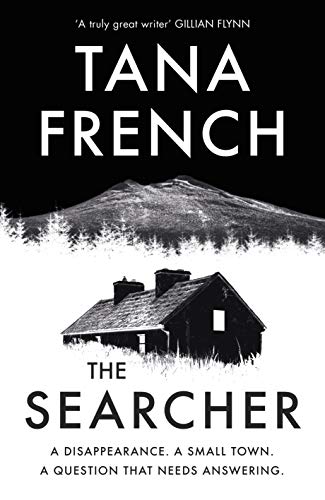
The Searcher by Tana French

Penguin| 5 November 2020| 400 pages| Review copy| 5*

I enjoyed The Searcher very much. For the most part this standalone mystery novel moves quite slowly, but it held my attention right from the beginning. It certainly isn’t a book to rush through, rather it’s one to savour. The main characters are Cal Hooper and thirteen-year old Trey Reddy living in Ardnakelty, a remote Irish village. After twenty five years in the Chicago police force, Cal has recently moved to the village, wanting to build a new life after his divorce. He is a loner and wants a quiet life in which nothing much happens. But he finds himself getting involved in the search for Brendan, Trey’s older brother who had gone missing from home.

Cal is a methodical man, slowly doing up his run-down cottage and getting to know the locals – his neighbour Marty, Noreen who runs the village shop, her sister Lena and above all, Trey. I liked the slow build up to the mystery, and I loved Tana French’s beautiful descriptions of the Irish rural landscape. It’s the sort of book I find so easy to read and lose myself in, able to visualise the landscape and feel as if I’m actually there with the characters, watching what is happening.

But this is no ‘cosy’ crime fiction novel. Trey is like a dog with a bone and won’t let Cal give up when it looks as though they will never discover why Brendan left and what had happened to him. I realised after a while what could have happened to Brendan, but I hadn’t foreseen the twists and turns in this book, one of which really surprised me. The ending is terrific. The tension builds and builds as Cal and Trey find themselves in danger. Above all, it is about family relationships, responsibility and friendship. It is atmospheric, spellbinding, and compelling reading. Tana French is a great storyteller.

Many thanks to the publishers and NetGalley for my review copy.

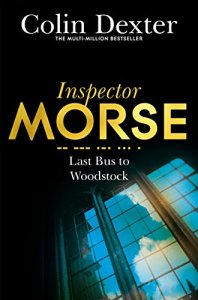
My Friday Post: Last Bus to Woodstock by Colin Dexter

Every Friday Book Beginnings on Friday is hosted by Gillion at Rose City Reader where you can share the first sentence (or so) of the book you are reading. You can also share from a book you want to highlight just because it caught your fancy.

As I’ve nearly finished reading Daniel Defoe’s A Journal of the Plague Year I’ve been wondering what to read next. I had thought I might read Moon Over Soho by Ben Aaronovitch, which is the second Rivers of London book. But this morning I picked up The Last Bus to Woodstock by Colin Dexter and began reading and just carried on. It’s the first Morse book in which Morse and Lewis first met and worked together. Morse thought they would get on well together.

It begins:

‘Let’s just wait a bit longer please,’ said the girl in dark-blue trousers and the light summer coat. ‘I’m sure there’s one due soon.’

This is a scene at a bus stop where two girls are waiting for the next bus to Woodstock. One of the girls doesn’t want to wait, wanting to hitch a lift and they both left the bus stop – it was the wrong decision.

Also every Friday there is The Friday 56, hosted by Freda at Freda’s Voice. *Grab a book, any book. *Turn to Page 56 or 56% on your  ereader . If you have to improvise, that is okay. *Find a snippet, short and sweet, but no spoilers!

These are the rules:

  1. Grab a book, any book.
  2. Turn to page 56, or 56% on your eReader. If you have to improvise, that is okay.
  3. Find any sentence (or a few, just don’t spoil it) that grabs you.
  4. Post it.
  5. Add the URL to your post in the link on Freda’s most recent Friday 56 post.
  1. Grab a book, any book.
  2. Turn to page 56, or 56% on your eReader. If you have to improvise, that is okay.
  3. Find any sentence (or a few, just don’t spoil it) that grabs you.
  4. Post it.
  5. Add the URL to your post in the link on Freda’s most recent Friday 56 post.

She pointed to a large volume, also lying open on the carpet in front of the TV set. ‘Mary’s started to read it.’ Morse picked it up and looked at the title. Who was Jack the Ripper?

‘Mm.’

‘I’m sure you’ve read that.’

Morse’s moral began to sag again. ‘I don’t think I’ve read that particular account, no.’ (page 56)

Blurb:


The death of Sylvia Kaye figured dramatically in Thursday afternoon’s edition of the Oxford Mail. By Friday evening Inspector Morse had informed the nation that the police were looking for a dangerous man – facing charges of wilful murder, sexual assault and rape.

But as the obvious leads fade into twilight and darkness, Morse becomes more and more convinced that passion holds the key . . .

The Birdwatcher by William Shaw

I read The Birdwatcher by William Shaw in the summer and didn’t get round to reviewing it. So, this is a short post summarising what I thought about it.

I enjoyed this book, set in Dungeness on the Kent coast. Sergeant William South is a birdwatcher a methodical and quiet man. Very much a loner, South is not a detective and has always avoided investigating murder. But he does have one friend, a fellow birdwatcher, Bob Rayner and one morning he finds Bob has been brutally beaten to death. DS Alexandra Cupidi, a new CID officer, is leading the investigation and Shaw is reluctantly assigned to her team. Having recently moved from London she relies on William for his knowledge of the area.

Alternating with the present day story is the story of Billy, a thirteen year old living in Northern Ireland during the ‘Troubles’. And hidden within that story is the reason for South’s reluctance to investigate murders. Life becomes uncomfortable for South as Cupidi takes over his house for the base for their investigation and also lands him with the responsibility of entertaining her troubled teenage daughter, Zoe after school – he introduces her to birdwatching.

Shaw is an excellent storyteller and I liked his writing style. This is very much a character-driven mystery as the suspense builds to a climax and his description of Dungeness, with its wind-swept shingle beach close to the Nuclear Power Station and Romney Marsh provides an atmospheric and vivid backdrop. I liked William, and was irritated by Alexandra. So I’m pleased to discover that this is a prequel to Shaw’s DS Alexandra Cupidi series. Currently there are five books, with the sixth to be published next year, so I have plenty more to read.

  • File Size : 3045 KB
  • Print Length : 337 pages
  • Publisher : Riverrun (19 May 2016)
  • Source: I bought it
  • Rating: 5*