Ghost Walk by Alanna Knight

The 4th book in Alanna Knight’s Rose McQuinn historical crime fiction series, Ghost Walk is set in 1897 mainly in Eildon, a village in the Scottish Borders.

Three years have passed since Rose McQuinn’s husband, Danny, disappeared in Arizona, whilst working for Pinkerton’s Detective Agency. During that time she has become a Lady Investigator and is about to marry her lover, Detective Inspector Jack Macmerry of the Edinburgh Police. But when a nun from the local convent claims to have received a letter from Danny she is anxious to find out if he is still alive. Rose hopes Danny’s older relative, Father McQuinn, a priest living in the village of Eildon in the Scottish Borders will be able to tell her more.

Rose lives in Solomon’s Tower, a (fictional) tower at the foot of Arthur’s Seat, an old volcano in Edinburgh. A mysterious deerhound, Thane lives somewhere on Arthur’s Seat and often accompanies her. There is a deep bond between the two of them and he often seems to read her mind and understand when she is in danger. As the novel begins Rose and Thane go to Eildon, to meet her future in-laws, just before the wedding, which will also give her an opportunity to talk to Father McQuinn. However, before she can ask him about Danny, he dies under mysterious circumstances and Rose becomes convinced that both his death and that of his housekeeper are in fact murders.

But the main focus of this book is not the murder mystery, nor the suspicions about a Fenian plot to assassinate Queen Victoria during the Jubilee celebrations, but the relationships between Rose and Jack, who has to stay in Edinburgh to testify at a trial, and also between Rose and Jack’s parents, particularly his mother who refuses to acknowledge that Rose is a widow. It also highlights the position of women in a country village during that period. I wanted to know more about Thane, particularly his role at the end of the book – how did he escape with his life?

I liked Rose for her determination to discover the truth and her persistence in being a Lady Detective, despite much opposition. There are nine books in the Rose McQuinn series. I’ve read the first one as well as Ghost Walk and hope to read the others to find out more about her.

  • Publisher ‏ : ‎ Allison & Busby (6 Sept. 2012)
  • File size ‏ : ‎ 537 KB
  • Print length ‏ : ‎ 288 pages
  • My own copy
  • Rating: 3*

The Night of the Mi’raj by Zoë Ferraris

Abacus| 16 August 2012 | 360 pages| e-book edition| My own copy| 4*

The Night of the Mi’raj (published as Finding Nouf in the USA) is the first book in Zoë Ferraris’  Katya Hijazi series, set in modern day Saudi Arabia, featuring Nayir al-Sharqi, a desert guide and a laboratory technician Katya Hijazi. When sixteen year old Nouf ash-Shrawi disappears from her home in Jeddah, just before her arranged marriage, her brother, Othman, asks his friend, Nayir to find her. After searching the desert for ten days, Nayir fails to find her, but then Nouf’s body is found in a desert wadi. It appears that her death was an accident and that she died by drowning in the wadi after a sudden storm.

Nayir is puzzled. Why did Nouf run away to the desert, leaving behind her fiance and a luxurious life with her wealthy family? He’d never failed before to find a lost traveller and he assumed if she had run away it was because she didn’t want to be found. Her family accept the verdict of accidental death, but when Katya tells Nayir she has found evidence that Nouf was murdered he feels compelled to uncover the truth about her death. The more the two of them discover the more problems and challenges arise.

What is most fascinating in this book for me is not the mystery, but the developing relationship between Nayir and Katya and the description of life in Saudi Arabia. Nayir is not a Bedouin or a Saudi, he’s a Palestinian. But the Bedouin had taught him about the desert:

From here he had a sprawling view of the desert valley, crisp and flat, surrounded by low dunes that undulated in the golden colour of sunset. … The wind picked up and stroked the desert floor, begging a few grains of sand the better to flaunt its elegance, while the earth shed its skin with a ripple and seemed to take flight. The bodies of the dunes changed endlessly with the winds. They rose to peaks or slithered like snake trails. The Bedouin had taught him how to interpret the shapes to determine the chance of a sandstorm or the direction of tomorrow’s wind. Some Bedouin believed that the forms held prophetic meanings too. Right now, the land directly ahead of him formed a series of crescents, graceful half-moons that rolled towards the horizon. Crescents meant change was in the air.

I was puzzled by the title of the UK publication – The Night of the Mi’raj, so I was pleased that Zoë Ferraris explained why she chose it in her Author’s Note. The mi’raj is both a physical journey and a spiritual climax, a moment of revelation for Mohammed. She states that; ‘In this book Nayir’s journey to learning the truth behind Nouf’s death is, for him, both a physical and a spiritual discovery too.’

There are two more books in the Katya Hijazi series: City of Veils and Kingdom of Strangers.

Book Beginnings & The Friday 56: A Heart Full of Headstones by Ian Rankin

Every Friday Book Beginnings on Friday is hosted by Gillion at Rose City Reader where you can share the first sentence (or so) of the book you are reading. You can also share from a book you want to highlight just because it caught your fancy.

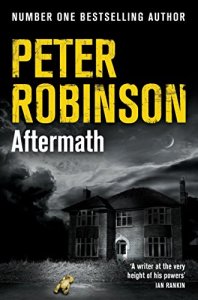
One of the books I’m currently reading is Ian Rankin’s latest and 24th Rebus novel, A Heart Full of Headstones. I’ve read all the earlier books.

The first Rebus book I read was Set in Darkness, the 11th book in the series. It was obvious that this featured characters that had been in the earlier books but I didn’t find it difficult to follow who was who and their relationships. Even so I decided I needed to start at the beginning and read them in sequence. And I think, for me at least, that works best, in order to fully understand the background and how the characters interact and evolve.

My Book Beginning:

John Rebus had been in court plenty of times, but this was his first time in the dock.

Also every Friday there is The Friday 56, hosted by Freda at Freda’s Voice, where you grab a book and turn to page 56 (or 56% of an eBook), find one or more interesting sentences (no spoilers), and post them.

Page 56:

Rebus had just finished eating an early dinner of microwaved haggis when he heard the doorbell. Brillo trotted with him to the door. Siobhan was standing on the step.

‘Well, well,’ Rebus said, while Brillo’s welcome was more effusive, ‘In you come then.’

Synopsis:

John Rebus had been in court plenty of times, but this was his first time in the dock…

John Rebus stands accused: on trial for a crime that could put him behind bars for the rest of his life. Although it’s not the first time the legendary detective has taken the law into his own hands, it might be the last.

What drove a good man to cross the line? Or have times changed, and the rules with them?

Detective Inspector Siobhan Clarke faces Edinburgh’s most explosive case in years, as a corrupt cop goes missing after claiming to harbour secrets that could sink the city’s police force.

But in this investigation, it seems all roads lead to Rebus – and Clarke’s twin loyalties to the public and the police will be tested to their limit.

A reckoning is coming – and John Rebus may be hearing the call for last orders…

Oh, my goodness – the call for last orders? How will this book end? I just have to read it!

What do you think? Have you read it, or are you going to read it?

The Black Mountain by Kate Mosse #NovNov22

Week 4 in Novellas in November is Contemporary novellas (post 1980)

The Black Mountain by Kate Mosse (136 pages) 3*

This is a Quick Reads publication – a series of short books by bestselling authors and celebrities. They are designed to encourage adults who do not read often, or find reading difficult, to discover the joy of books. I like the long novels Kate Mosse writes, so I wondered what this short novel would be like.

It is historical fiction set in May 1706 on the northern part of the island of Tenerife, where Ana and her family live in the shadow of a volcano, known locally as the Black Mountain. It’s also a murder mystery – Ana’s father Tomas had apparently committed suicide, but Anna just can’t accept that and reading the letter he’d left she is convinced it was murder. She is determined to find out the truth.

Legend says the mountain has the devil living inside it and when the devil was angry he sent fire and rocks up into the sky. However, there has been no eruption for thousands of years and no one believes it is a threat. Sometimes the earth trembled and shook but the sky never turned red. Until, that is two days after Tomas’ death. He had seen the signs that the mountain was about to erupt and had tried to warn people – but they didn’t want to know. When more tremors occur, and grey ash starts falling Ana realises the danger signs are increasing and she needs to warn people that they must flee before the volcano erupts and destroys their world.

I enjoyed this novella, reading it quickly, feeling almost as though I was also in danger as the Black Mountain threatens to erupt and wondering if Ana would discover the truth about her father’s death in time for her to escape.

The Black Mountain is based on a real historical event. The town of Garachio erupted from May 4 to 5, 1706, which was disastrous not only for the town but also for the entire archipelago. Its port concentrated a large part of the international trade that linked the island with Europe, Africa and America.

~~~

I’ve read a few of the Quick Reads. Here’s a list of all the available titles.

Talking About Detective Fiction by P D James #NovNov22

Week 3 in Novellas in November is Short Nonfiction.

Faber & Faber| 2010| 160 pages| Paperback|My Own Copy| 4*

From the birth of crime writing with Wilkie Collins and Dostoevsky, through Conan Doyle to the golden age of crime, with the rise of Agatha Christie, Ngaio Marsh and Margery Allingham, P. D. James brings a lifetime of reading and writing crime fiction to bear on this personal history of the genre. There are chapters on great American crime writers – the likes of Patricia Highsmith, Raymond Chandler and Dashiel Hammett. James also discusses many of her favourite famous detectives, from Sherlock Holmes to Philip Marlowe.

P.D. James, the bestselling author of Death Comes to Pemberley, Children of Men and The Murder Room, presents a brief history of detective fiction and explores the literary techniques behind history’s best crime writing.

I do like reading books about books and as crime fiction is one of my favourite genres I wanted to read Talking About Detective Fiction by P D James. In December 2006 she was asked to write the book by the Bodleian Publishing House, in aid of the Library. It’s a personal account and being a short book doesn’t go into much detail about any of the writers. It’s an overview of mostly British authors, with just one chapter, entitled Soft-centred and Hard-boiled in which she writes about the differences between the hard-boiled school of American fiction and some of the Golden Age writers.

I’m familiar with the work of most of the authors in this book, but there are some James mentions I haven’t read, such as Dashiell Hammett, who wrote short stories featuring the Continental Op and Sam Spade, who also appears in one full-length novel, The Maltese Falcon. James’ favourite of the hard-boiled writers was Kenneth Millar, who wrote under the pseudonym of Ross Macdonald, novels featuring private detective Lew Archer. But she didn’t give the details of any of his books.

The structure of the book is rather loose and meandering. Although it is divided into eight chapters, the works of some, such as Agatha Christie and Dorothy L Sayers appear in several chapters spread across the book as a whole. The book needs an index to draw the separate entries together! I think the parts I enjoyed the most are those in which James writes about her own methods of working, and the chapter on Telling the Story: Setting, Viewpoint and People.

There is a short bibliography and list of suggested reading at the end of the book. Throughout the book there are several cartoons, which add an amusing touch.

Finally, you need to be aware if you haven’t read The Murder of Roger Ackroyd that without any warning, she gives away not just a little spoiler, but the identity of the murderer! I was amazed!

Maigret’s Memoirs by Georges Simenon Translated by Howard Curtis

Week 2 in Novellas in November is Novellas in translation and a Maigret book is an obvious choice for me. But Maigret’s Memoirs is not your usual Maigret mystery. This a memoir written by Simenon writing as his fictional character, Maigret.

Penguin Classics| 2016| 160 pages| My Own Copy| 4*

I can still see Simenon coming into my office the next day, pleased with himself, displaying even more self-confidence, if possible, than before, but nevertheless with a touch of anxiety in his eyes.’

Maigret sets the record straight and tells the story of his own life, giving a rare glimpse into the mind of the great inspector – and the writer who would immortalise him.

‘One of the greatest writers of the twentieth century . . . Simenon was unequalled at making us look inside, though the ability was masked by his brilliance at absorbing us obsessively in his stories’ Guardian

‘A supreme writer . . . unforgettable vividness’ Independent

The original French version of Maigret’s MemoirsLes Mémoires de Maigret, was first published in 1950. An English translation was later published in Great Britain in 1963. It is unlike any of the other Maigret novels. It’s a fictional autobiography by Georges Simenon writing as Maigret, beginning in 1927 or 1928 when Maigret and Simenon, calling himself Georges Sim, first ‘met’. I don’t recommend reading if you haven’t read some of the Maigret mysteries.

I enjoyed it – it’s a quick entertaining read as Maigret looks back to his first ‘meeting’ with Sim. He fills in some of the background of his early life and talks about his father and how he first met his wife, Louise. Simenon had written 34 Maigret novels before this one and Maigret took this opportunity to correct some of Simenon’s inaccuracies. I recognised some of the books – I’ve read 11 of his first 34 books.

One of the things that irritated Maigret the most was Simenon’s habit of mixing up dates, of putting at the beginning of his career investigations that had taken place later and vice versa. He’d kept press cuttings that his wife had collected and he had thought of using them to make a chronology of the main cases in which he’d been involved. And he also considered some details his wife had noted – concerning their apartment on Boulevard Richard Lenoir, pointing out that in several books Simenon had them living on Place des Vosges without explaining why. There were also times when he retired Maigret even though he was still several years away from retirement. Madame Maigret was also bothered by inaccuracies concerning other characters in the books and by Simenon’s description of a bottle of sloe gin that was always on the dresser in their apartment – that was in actual fact not sloe gin but raspberry liqueur given to them every year by her sister-in-law from Alsace.

Simenon drops facts and information piecemeal in his Maigret books and one thing I particularly like in Maigret’s Memoirs is that it is all about Maigret, but I did miss not having a mystery to solve.