Old God’s Time by Sebastian Barry

Rating: 4 out of 5.

Faber and Faber Ltd| 2 March 2023 | 228 pages|e-book |Review copy|4*

Synopsis:

Have you ever been the custodian of a story no one else believed?’
‘Oh yes,’ he said.
‘You have?’
‘Yes,’ he said.
‘Then I can tell you.’

Recently retired policeman Tom Kettle is settling into the quiet of his new home, a lean-to annexed to a Victorian castle overlooking the Irish Sea. For months he has barely seen a soul, catching only glimpses of his eccentric landlord and a nervous young mother who has moved in next door. Occasionally, fond memories return, of his family, his beloved wife June and their two children.

But when two former colleagues turn up at his door with questions about a decades-old case, one which Tom never quite came to terms with, he finds himself pulled into the darkest currents of his past.

A beautiful, haunting novel, in which nothing is quite as it seems, Old God’s Time is about what we live through, what we live with, and what may survive of us.

My thoughts:

I’ve enjoyed all Sebastian Barry’s books and Old God’s Time is no exception. It’s set in Dalkey, a small coastal town south of Dublin, where Tom, a recently retired policeman is living in a tiny flat annexed to a Victorian castle. One afternoon he was sitting in a sun-faded wicker chair, enjoying a cigarillo, listening to the sound of the sea below. He was quite content to just gaze out, watching the cormorants on the rocks to the left of Dalkey Island, when two of his former colleagues disturbed his peaceful afternoon, asking for his help on a cold case he had worked on. He doesn’t want to, knowing it will open up painful memories he would rather forget.

So this appears to be a detective story, but the main focus is Tom, himself as the narrative reveals in streams of consciousness. It soon becomes clear that his memories are unreliable and for a while I was confused, not knowing what was going on, whether Tom was remembering, or imagining what had happened in his life. It is beautifully written, showing the beauties of the landscape. It takes us right inside Tom’s mind, highlighting the horrors that Tom had experienced both in his childhood and family life as well as in his professional life. The past had not been kind to him. But now it was as though enough time had gone by and it was as if it had never happened; it had receded away into ‘old God’s time’, and Tom didn’t want to reach back into those memories. They were locked away, preserved in the long-ago.

It is a tragic story, not shying away from describing the horrific details of child abuse, nor the despair and sadness as the details of Tom’s family life are gradually revealed. It is a harrowing book, made even more so as I had to read it slowly making sure I fully understood what I was reading, even going back to re-read some passages. It is bleak, but Tom’s story is also one of love and immeasurable happiness, of strength and goodness, alongside grief and pain.

WWW Wednesday: 15 February 2023

WWW Wednesday is run by Taking on a World of Words.

The Three Ws are:

What are you currently reading?

What did you recently finish reading?
What do you think you’ll read next?

Currently I’m reading three books:

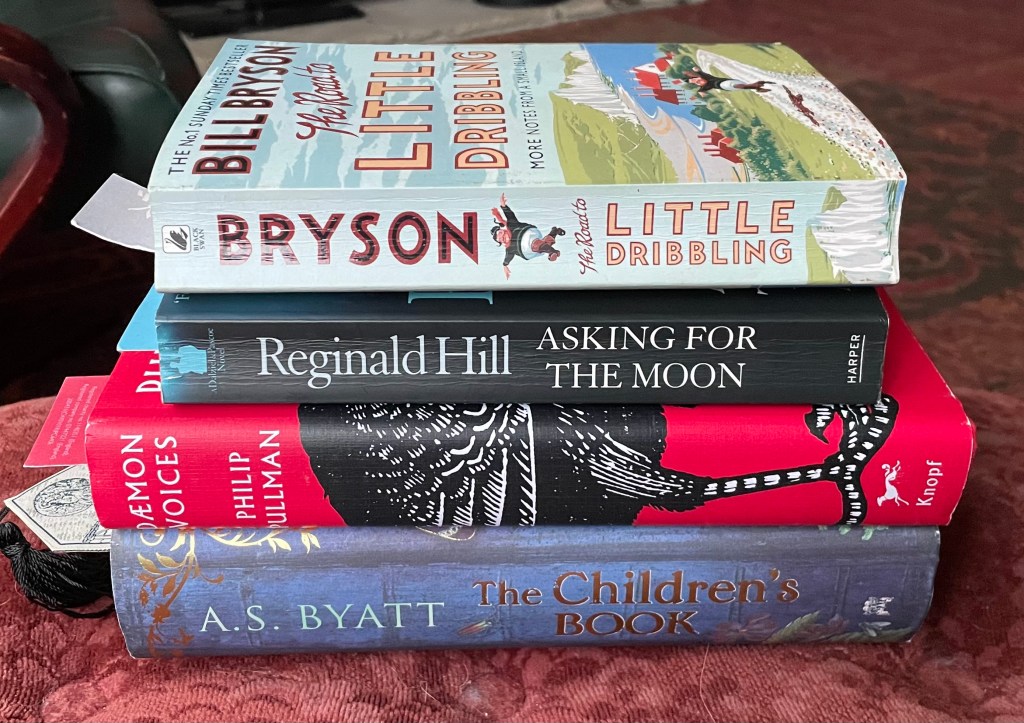
The Children’s Book by A S Byatt. This is one of my oldest TBRs, a book I’ve owned since 2009. I did start reading it as soon as I got (it was a birthday present) but I didn’t get very far! It’s a big book with 624 pages and at the time I was in the middle of reading Wolf Hall and I couldn’t cope with to such long and complicated books, so I temporarily put down The Children’s Book to read later – then other books got in the way. It begins in 1895 in the South Kensington Museum (now the Victoria and Albert Museum) and ends with the end of the Great War. There are lots of characters and it’s about children, about books, about art, about the writing of children’s books, about the telling of children’s stories, and about the clash between life and art. It’s detailed and richly descriptive full of fascinating facts. I’ve only the first three chapters so far and I’m loving it.

I’m also reading The City of Tears by Kate Mosse, one of my NetGalley books that I ‘should’ have read long before now. It’s another long book, the second in The Burning Chambers trilogy. I’ve read the first book, which began slowly and developed into a fast moving story with a dramatic climax. There’s a huge cast of characters and it continues the story of Minuo Reydon-Joubert and Piet Reydon during the Catholic and Huguenot conflicts in the sixteenth century. It looks to be just as good as The Burning Chambers (my review).

The other book I’m reading is Lessons in Chemistry by Bonnie Garmus. I usually avoid hyped books, but this one interested me. It’s about Elizabeth Zott, who is described as ‘not your average woman’. I had a look at the sample and liked the beginning so I borrowed it from the library. It’s also described as ‘laugh-out-loud funny’, but I’m not finding that at all and I’ve read 13 chapters so far. In fact I’m finding it a bit irritating.

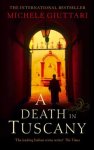
The last book I read is A Death in Tuscany by Michele Giuttari. Chief Superintendent Michele Ferrara, head of Florence’s elite Squadra Mobile, is investigating the death of a young girl, whose body was found in the picturesque Tuscan hill town of Scandicci, lying by the edge of the woods.When he delves deeper he believes the girl was murdered, And then his close friend Massimo Verga is accused of murder and has disappeared, so Ferrara is desperate to find him, and it appears both the Freemasons and the Mafia are involved.

Next I’ll be reading – It’ll be a while before I’ve finished the books I’m currently reading so it’s too soon to decide what I’ll read next.

Although this is a weekly meme I’m only taking part occasionally.

Underworld by Reginald Hill

Rating: 5 out of 5.

Deadheads is the 10th Dalziel and Pascoe novel first published in 1988, set in the small mining town of Burrthorpe (a fictional town) in Yorkshire. The setting is excellent and Hill paints a compelling account of the mining community and gives a convincing insight into the period a few years after the Miners’ Strike of 1984. The majority of the book is about the miners, their families, their hatred of the bosses, and their distrust and dislike of the police.

There are two mysteries facing Dalziel and Pascoe. One is current and the other is a case that had appeared to have been resolved several years earlier, when Tracy Pedley, a young girl disappeared. Her body was never discovered and some of the residents believed that Billy Farr, who was the last person to see her alive, was responsible for her death. But then Donald Pickford committed suicide leaving a letter confessing to killing several young girls in the area and although he hadn’t mentioned Tracy by name, she was counted as a probable victim. Even so, some people still thought Billy was guilty and their suspicions were confirmed when later on it appeared that he committed suicide when he fell to his death in an abandoned mineshaft.

Matters are brought to boiling point when the local newspaper serialises the memoirs of ex-Deputy Chief Constable Neville Whatmough, who had been in charge of the Pickford case. This incenses Colin Farr, Billy’s son. And then another man is found dead in the mine …

Dalziel has just a minor role as Pascoe leads the investigation. Ellie, Pascoe’s wife, also plays a major role. Her involvement comes about when she tutors some of the miners as part of the union-sponsored day release courses and meets Colin Farr, Billy’s son. He is an angry young man and Ellie is attracted both to his intelligence and his physical masculinity, despite the strength of her feminist views. She really is an irritating character, an angry young woman and for most of the book it looked as though the Pascoes’ marriage was about to come to an end. It’s left to Dalziel to bring a touch of humour to the book and his down to earth approach to the miners gets more results than Pascoe’s middle class attempts to understand them.

I thoroughly enjoyed Underworld.

Note:

The title appears as ‘Under World‘ in some editions and as ‘Underworld‘ on others. On the front cover of the paperback I read it is ‘Under World‘ but on the title page it is one word -‘Underworld‘. The Underworld or Hades in ancient Greek and Roman Mythology was where the souls of the dead resided. Hill divides Underworld into three parts and begins each part with verses from Dante’s The Divine Comedy, thus equating the mine with hell.

Books Read in January

I read 8 books in January, enjoying some much more than others. I am hoping to write about the three books I haven’t reviewed but in case I don’t get round to it I’ve written a few words about them here.

1. The Stroke of Winter by Wendy Webb 2.5*

2. The Girl Who Died by Ragnar Jonasson 3*

3. Ghost Walk by Alanna Knight 3*

4. Aftermath by Peter Robinson 3*

5. Underworld by Reginald Hill 5* – the 10th Dalziel and Pascoe crime fiction novel, set in the Yorkshire mining town of Burrthorpe in 1986, two years after the Miners’ Strike. I thoroughly enjoyed this. For now I’ve copied the summary from Fantastic Fiction because this is a complex book that needs more description than just a few lines:

When young Tracey Pedley vanished in the woods around Burrthorpe, the close-knit community had their own ideas about what had happened, but Deputy Chief Constable Watmough has it down as the work of a child-killer who has since committed suicide — though others wondered about the last man to see her alive and his fatal plunge into the disused mine shaft. Returning to a town he left in anger, Colin Farr’s homecoming is ready for trouble, and when a university course brings him into contact with Ellie Pascoe, trouble starts… Meanwhile Andy Daziel mutters imprecations on the sidelines, until a murder in Burrthorpe mine forces him to take action that brings him up against a hostile and frightened community…

6. Lion by Conn Iggulden 4*

7. The Last Rose of Shanghai by Weina Dai Randel 3* – historical fiction set Japanese-occupied Shanghai, this is a World War Two romance, the story of Aiyi Shao, a young heiress and the owner of a glamorous Shanghai nightclub and Ernest Reismann, a penniless Jewish refugee who had fled from Germany. I loved the beginning of this book but the rest of the book was not so good – too much ‘telling’ and I’d have liked less focus on the romance, which to me was barely believable So, 5* for the first 40%, 2* for the rest, so 3* overall. But plenty of other readers love this book.

8. Shroud of Darkness by E C F Lorac 4* – a Golden Age crime fiction beginning with five passengers on a train from Cornwall to London. When it arrives at Paddington Station in thick fog, one of the passengers is brutally attacked and left for dead. Chief Inspector MacDonald first has to identify the victim, whose pockets had been rifled and then discover why he was attacked and who did it. Another book I really enjoyed, trying to work out what had happened and failed – I was completely baffled, as much in the dark as the fog-bound passengers.

Aftermath by Peter Robinson – a brief review

A house of horror. A despicable serial killer. Banks’s darkest case.

When a concerned neighbour calls the police to number 35 The Hill after a domestic disturbance, the two constables are led to a truly horrific scene. They unwittingly uncover an elusive serial killer known as the Chameleon. With the killer finally in custody it appears the nightmare is over.

Not for Banks though. Too many questions remain unanswered at the house of horrors. And then they discover there are more bodies than victims. Is the Chameleon killer just one monster of many? Banks must solve his darkest case yet

Aftermath is the 12th book in Peter Robinson’s Inspector Banks series. The synopsis does not indicate the real nature of this book. There is much more to it than ‘truly horrific’. I agree that it is Banks’ darkest case in the series so far, but it is more than that. I didn’t like it right from the start; there is too much violence and graphic detail for me. It is harrowing and deeply disturbing with some scenes of physical abuse, child abuse, and rape. However the characters are well written and the story is gripping and despite hating it I read all 512 pages.

I’ve read some of the later books in the series and don’t remember that any of them were as dark and disturbing as this one, so I’m hoping the next book in the series, The Summer That Never Was, is not like Aftermath.

  • ASIN ‏ : ‎ B003DWC6NQ
  • Publisher ‏ : ‎ Pan; New Edit/Cover edition (4 Sept. 2008
  • Print length ‏ : ‎ 512 pages
  • My Rating: 3* not for the storyline but for the writing
  • Source: I bought the e-book

The Stroke of Winter by Wendy Webb

Lake Union| 1 November 2022 | 300 pages| e-book edition| My own copy| 2.5*

She’s restoring the old family home on the hill. And unearthing something evil.

In the tourist town of Wharton, on the coast of Lake Superior, Tess Bell is renovating her old family home into a bed-and-breakfast during the icy dead of winter…

As the house’s restoration commences, a shuttered art studio is revealed. Inside are paintings Tess’s late grandfather, beloved and celebrated artist Sebastian Bell, hid away for generations. But these appear to be the works of a twisted mind, almost unrecognizable as paintings she and others familiar with his art would expect. The sinister canvases raise disturbing questions for Tess, sparking nightmares and igniting in her an obsession to unearth the truth around their origins.

What evil has been locked away for so many years? The ominous brushstrokes, scratching at the door, and moving shadows begin to pull Tess further and further into the darkness in this blood-chilling novel of suspense by the #1 Amazon Charts bestselling author of The Keepers of Metsan Valo.

I haven’t read any of Wendy Webb’s books, but I liked the blurb so I got an ebook through Amazon First Reads. I didn’t know what to expect but I was rather disappointed. It is easy to read, almost too easy in a simplistic style in which actions such as getting items out of the fridge are described in detail. In fact it is so detailed that all the rooms in the house are described, along with all the furniture and furnishings. It is a mix of genres – a cozy mystery, a haunted house/ghost story with some creepy scenes, a horror story, a romance and a recipe book. There is lots of unnecessary repetition as various events are described over and over again and the ending is rushed.

Its good parts are that I liked the setting in the fictional town of Wharton on the shores of Lake Superior and despite my disappointment in the writing style I liked the plotline centered on Amethyst (known as Tess) Bell’s family and their family home. So I wanted to read on to find out what was going on, just what was making the scratching noises Tess hears in the middle of the night and what is the secret of the large room that had been closed off, the door permanently bolted and the windows shuttered in black? It had been like that as long as Tess could remember.