Books Read in October

October was a good reading month for me. I read 11 books, which were a mixed bag of different genres, but all fiction this month, with two books from my to-be-read shelves. I’ve already written about some of the books (the links are to my posts):

1.The Shining by Stephen King (Kindle)

2.Ten Little Niggers by Agatha Christie

3. Over My Dead Body by Hazel McHaffie

4. The Year of Miracle and Grief by Leonid Borodin

5. The Idea of Perfection by Kate Grenville (library book)

6. A Murder is Announced by Agatha Christie (a book from my to-be-read shelves)

When I started this blog I wanted to write something about each book I read. I’ve never managed to do that and now I’ve decided that there are some books I don’t want to write about at all and for some I just want to write a few words. That’s not because I didn’t enjoy the books but simply because sometimes I just want to read and then go on to another book.

These are the books without posts (with links to Amazon UK):

6.Once Upon a Castle by Alan S Blood (Kindle, LibraryThing Early Reviewers) – a story about children evacuated to Northumberland during World War II, this had so much potential and it just wasn’t achieved. It is basically a series of short stories and I thought there were too many episodes packed into it. It needs more detail and development to be convincing. It’s unevenly paced, as though the author didn’t know how to finish it and rushed the ending. The supernatural elements come across as confusing rather than mysterious or spooky.

5. The Shooting Party by Isabel Colegate – I liked this novel, which chronicles the events of one day at a shooting party on an Oxfordshire country estate. There is a great sense of foreboding right from the start with the statement: ‘It was an error of judgment which resulted in a death. It took place in the autumn before the outbreak of what used to be known as the Great War.’ Although I could see how this was foreshadowing the slaughter of the First World War, for me it was the knowledge that a death was going to take place, right from the opening paragraphs, that was uppermost. I kept wondering who was going to die, what was the error of judgment, who was going to do the killing. I was surprised.

I did think it was rather too slow, too drawn out in parts but that maybe because I’m used to much faster paced books. I also had to keep reminding myself of the characters – their relationships to each other and at times I got confused and had to back track.

But its main attraction for me was the focus on a society that was soon to be destroyed by the devastation wrought by the First World War. Isabel Colegate writes beautifully depicting the class structure of the times, the rich aristocrats and their servants, ‘the stranglehold of the rich on the life-blood of the working man‘, ideas about manliness, the realization that civilisation as they knew it was coming to an end, contrasting it to a vision of England that had not existed even then for many years:

Doesn’t England mean a village green, and smoke rising from cottage chimneys, and the rooks cawing in the elms, and the squire and the vicar and the schoolmaster and the jolly villagers and their rosy-cheeked children? (page 100)

7. The Great Gatsby by F Scott Fitzgerald (a re-read). I really like this book – a portrait of the Jazz Age in all of its decadence and excess.

8. Dying Fall by Elly Griffiths (library book) – This is the fifth of her Ruth Galloway books. Ruth travels from her home in Norfolk up to the north of England €“ Lancashire, to be precise Blackpool, Lytham, Pendle, Preston and Fleetwood €“ because Dan Golding a friend from university has died in a house fire. He had written to her just before his death with news of an amazing find. It turns out that Dan was murdered and Ruth and Inspector Harry Nelson are instrumental in discovering the truth. It’s yet another book I’ve read about the whereabouts of King Arthur’s Bones €“ this time it seems he’s the Raven King. A satisfying if undemanding read.

11. Mrs Harris goes to Moscow by Paul Gallico (a book from my to-be-read shelves). This is a lovely little book. Mrs Harris is a London char lady who wins a trip to Moscow, where she wants to find her employer’s long-lost love. Mayhem ensues when she is thought to be Lady Char (the Russians not understanding what a ‘char lady’ is had converted it to ‘Lady Char’) and also a spy.

I sometimes borrow books and after reading the first few pages return them without reading any more, with no qualms. But it is very rare that I return a book unfinished after reading just over a quarter of it. That is just what I did with The Assassin’s Prayer by Ariana Franklin. I thought it was repeating much the same sort of scenarios (albeit in different locations) than her earlier books and I got fed up – so back it went.
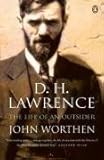
A Murder is Announced by Agatha Christie

A Murder is Announced was first published in 1950. My copy is in a collection of four Miss Marple stories – A Miss Marple Quartet. I particularly like this cover, showing Joan Hickson as Miss Marple.

Synopsis from Amazon:

The villagers of Chipping Cleghorn, including Jane Marple, are agog with curiosity over an advertisement in the local gazette which reads: ‘A murder is announced and will take place on Friday October 29th, at Little Paddocks at 6.30 p.m.’ A childish practical joke? Or a hoax intended to scare poor Letitia Blacklock? Unable to resist the mysterious invitation, a crowd begins to gather at Little Paddocks at the appointed time when, without warning, the lights go out.

Of course it isn’t a practical joke and someone is murdered. But the mystery is to identify the victim – it’s not as straight forward as it first appears and there are plenty of red herrings. I vaguely remembered seeing the TV version (with Joan Hickson, perfect as Miss Marple) years ago and although I couldn’t remember who did it knew that I had to pay close attention to the detail of where people were sitting or standing in the room at the Little Paddocks when the lights went out. But even though I read it very carefully I was still baffled. It all hinges on family relationships and details of the characters’ identities which are so skilfully hidden that I was kept guessing until very near the end.

It’s not without flaws, some of the characters are a bit sketchy, and some of the novel borders on farce, with Miss Marple imitating a dead person’s voice whilst hiding in a broom cupboard and Mitzi, the highly strung and paranoid cook, a refugee from Germany, screaming like a siren and insisting that the police will take her away and torture her. Still, I wish her recipe for the chocolate cake ‘Delicious Death’ had been revealed.

What I really like about A Murder is Announced is the picture it paints of life in post-war Britain, showing how society was in the process of change. Miss Marple is her usual brilliant self, now seeming very old with ‘snow white hair and a pink crinkled face and very soft innocent blue eyes’, chattering and fluttering, but still as sharp and observant as ever. As she explains the world has changed since the war when everyone knew who everybody was. But now people come and settle in a village and all you know of them is what they say of themselves – you don’t know who they really are! And so, she compares them to the people she does know, people in her village of St Mary Mead, which helps to throw light on the mystery. It’s a layered mystery involving past illness, identities, and questions of inheritance.

Ten Little Niggers by Agatha Christie

I wondered when I began to write this post whether to use the current title, And Then There Were None, for this book, but chose to use its original title, Ten Little Niggers as that is the title of my copy, a 1968 reprint of its first publication in the UK in 1939. Because of its offensive title it was first published in the US a few months later in 1940 as And Then There Were None.

Ten Little Niggers

Description from the back cover:

10 people are invited to a fabulous mansion on Nigger Island off the coast of Devon. Though they all have something to hide, they arrive hopefully on a glorious summer evening… But soon a series of extraordinary events take place: the island is suddenly bathed in a most sinister light .. panic grips the visitors one, by one … by one… by one…

Eight people are invited to the island (based on a real island – Burgh Island off the south west coast of Devon). They are met by the butler and housekeeper/cook who explain that the owner, Mr Owen (U.N.Owen) has been delayed but has left instructions for their reception. In each of their rooms is a framed copy of the rhyme about the ten little nigger boys who all met their death. On their first evening they sit down to dinner in good spirits until, without any warning they hear a Voice accusing each of them (including the butler and housekeeper) of having caused the deaths or murdered a number of people. From that point onwards, one by one they are found dead, corresponding to the deaths in the rhyme and one by one a china figurine on the dining room table mysteriously disappears.

As the weather worsens they are stranded on the island and unable to leave or to get help from the mainland. Agatha Christie has created not only a ‘locked room’ type of mystery but also a mystery full of suspense, as the guests try to identify Mr U N Owen and become increasingly suspicious of each other. Their fear is further amplified by the house itself, which surprisingly is not an old Gothic house full of creaking wood and dark shadows –

But this house was the essence of modernity. There were no dark corners – no possible sliding panels – it was flooded with electric light – everything was new and bright and shining. There was nothing hidden in this house, nothing concealed. It had no atmosphere about it.

Somehow, that was the most frightening thing of all …

They exchanged good-nights on the upper landing. Each of them went into his or her own room, and each of them automatically, almost without conscious thought, locked the door … (page 52)

Despite their precautions the deaths continue, and each time no one sees or hears anything. I’d marked the page with the rhyme and kept flipping back to it to check how the next victim was going to meet with death, as I tried to work out who the murderer was and how he/she was able to carry out the murders unobserved. What makes it more tense for the reader (or at least for me) is the technique Agatha Christie makes of revealing the thoughts of the remaining characters, but without letting on who the thinker is.

In 1943 Agatha Christie adapted the book into a play, changing the ending, and there have been several film versions, none of which I’ve seen, so I didn’t know who the murderer was, although I knew the outline of the plot. Part way through the book I thought – ah, there is only one person who could be the murderer and I was right. I must re-read the book sometime to see if there were any clues, because if there were I missed them. My idea was based on the probability of that character being the murderer rather than any specific clues.

It is an ingenious mystery, revolving around the concepts of guilt and justice. There was no doubt that each of the victims had committed murder or caused/influenced the death of another person. But did the punishment fit the crime and could it ever be justified? As the murderer explains in an epilogue there were varying degrees of guilt among the victims and those whose guilt was lightest were killed off first!

This is possibly the most famous of Agatha Christie’s books. In her Autobiography Agatha Christie wrote that she had written the book because it was so difficult to do and the idea fascinated her. I found it fascinating too, but as an exercise and a puzzle rather than as a novel. Writing about the play and the book she stated:

I don’t say it is the play or the book of mine I like best, or even that I think it is my best, but I do think in some ways that it is a better piece of craftsmanship than anything else I have written. (page 489 of An Autobiography)

I agree.

The Lost Symbol by Dan Brown: Book Notes

I read Dan Brown’s The Lost Symbol back in July and never got round to writing about it at the time, so I’ve forgotten much of the detail. For pure escapism I really like Dan Brown’s books. I know lots of people criticise his writing but I find his books hard to put down once I’ve started reading them – I’ve read The Da Vinci Code and Angels and Demons as well as this one. They’re not great literature but they are great entertainment, even though this one follows the same formula – it’s a breathtaking race over 24 hours as Robert Langdon follows the clues, to rescue the his friend, Peter Solomon, a Mason. Because it’s so formulaic I knew what to expect (although not the detail), it’s full of cliff-hangers and the characters are stereotypes.

It’s long and complicated, full of coincidences and improbable situations, all of which I had no trouble accepting, and a terrifying and crazy villain, Mal’ahk. It’s also packed with detail about the Freemasons,the art and architecture of Washington D.C., and Noetic Science – ‘a fusion of modern particle physics and ancient mysticism’,  all of which was new to me and I found it fascinating. It helped that I read the Illustrated Edition on Kindle which has many photographs and illustrations and I kept checking facts on the computer too.

I don’t think it’s as good as either The Da Vinci Code or Angels and Demons, but that may because the first had the novelty factor and the second is set in Rome, a place I’ve visited and know more about than Washington D.C. It did make me want to visit Washington D.C. though. And I do intend to read his next book Inferno. I’ve read some of Dante’s Inferno and I’ve visited Florence so I’m keen to find out where Robert Langdon’s race against time takes him and how Brown incorporates the details of the Circles of Hell.

Although I didn’t read this to take part in the What’s in a Name Challenge I’ve realised that it does fit into the category of book with the word ‘lost‘ in the title, making this the last book for me to complete the Challenge.

Not the End of the World by Christopher Brookmyre

Not the End of the World

Not the End of the World by Christopher Brookmyre is a crime thriller set in Los Angeles at the end of the last century when people were in the grip of ‘1999 Syndrome’:

1999 Syndrome took plain old Things Are Getting Worse and changed it into Things Are Getting Worse Because The End Is Nigh. Crime used to be seen as instances of anti-social behaviour, sins against society. But now there was this resigned attitude at large that it was indicative of a greater, inexorable process of decay. Each crime now had to Mean Something, each new atrocity held up as the next marker on our descent into uncharted depths of stygia. (page 37)

Synopsis (from Christopher Brookmyre’s website):

The crew of an oceanic research vessel goes missing in the Pacific along with their mini-submarine.

An evangelical media star holds a rally next door to a convention in LA devoted to ‘nubile’ cinematic entertainment.

The cops know there’s going to be trouble and they are not disappointed. What they didn’t foresee was the presence in their state of a Glaswegian photographer with an indecipherable accent and a strong dislike of hypocrisy or of a terrorist who seems to have access to plutonium as well as Semtex.

My View

I became absorbed in this book as I read it. The plot is tightly constructed but the novel is interspersed with details of the main characters’ backgrounds and how they came to have their beliefs and personality traits, which slows down the action somewhat. However, this does flesh out the characters – the tension and drama slowly comes up to boiling point.

Larry Freeman of the LAPD is overseeing security at the Pacific Vista Hotel where the American Feature Film Market is being held. Just over the road the Evangelical Festival of Light is being held, including the Mission of Purity and the American Legion of Decency, led by the TV evangelist and ex-Presidential candidate Luther St John. St John has predicted that time is running out, the countdown has begun and a tidal wave is going to hit LA as God’s punishment for all the evil man has committed. St John’s wrath is also aimed at the ‘Whore of Babylon’, the porn actress Madeleine Witherson, whose father is a Republican Senator. Steff Kennedy is a Scottish photographer who falls in love with Maddy and gets mixed up in the whole scene and the result is chaos. Add into this mix diatribes against fundamental religion and this is the book in a nutshell.

I enjoyed it, but could have done with less detail about the characters’ backgrounds. Brookmyre’s style is snappy, cynical and wise-cracking, although in places I thought it was too wordy. I really liked the ancient history references to the Minoan eruption of Thera (Santorini), one of the largest volcanic eruptions of all time, a ‘devastating caldera eruption’, resulting in one of the largest seismic waves in history. I’d like to find out more about that!

Not the End of the World is Christopher Brookmyre’s third book. He is a Scottish novelist whose novels mix politics, social comment and action with a strong narrative. He has been referred to as a Tartan Noir author.

Relics of the Dead by Ariana Franklin

As soon as I’d finished reading The Death Maze I began Ariana Franklin’s third book in her Mistress of the Art of Death series, Relics of the Dead. Now this one was more to my liking and I enjoyed it very much.

The date is 1176, the setting is Glastonbury where the monks, after a fire had destroyed their monastery, discovered two skeletons buried in their graveyard. The question is  – are these the remains of King Arthur and Queen Guinevere? The problem is that Henry II needs evidence that they are not – that the legendary Arthur is indeed dead and not the ‘Once and Future King’, sleeping but waiting for the right time to lead the belligerent Welsh against him. Henry’s solution is to send Adelia Aguilar, the anatomist, to examine the bones for evidence, preferably to establish that no one can say that the bones are not that of Arthur and his queen. Given that this is the 12th century and the technology wasn’t there to prove the age and identity of the bones, Adelia assisted by Mansur, does a pretty good job in her investigation, despite attempts on her life.

Where Relics of the Dead stands out is in the depiction of Glastonbury, a mysterious, spiritual place, ‘one of the world’s sacred centres, a place where the division between man and God was thinner than anywhere else‘, a place where ‘there was a special magnetism that pulled people to worship a presence her long before Christ had set foot on his native heath.’ But Adelia, that down-to-earth, practical woman couldn’t feel it – for her all mysteries had to have an explanation. And she was determined to find it.

I’ve always liked the stories about King Arthur and the beliefs about his life and death, about Excalibur (which does feature in this book), about Guinevere’s affair with Lancelot,  and the Holy Grail (which do not). As well as a strong sense of place and atmosphere the characters are well-drawn and believable, even if some aspects of the plot required quite a hefty suspension of disbelief (which I managed easily enough).

Similarly I wasn’t bothered by Franklin’s use of modern language – in her Author’s Note, she had noted that she was sometimes criticised for making her characters use modern language and explained that ‘in 12th century England the common people spoke a form of English even less comprehensible than Chaucer’s in the 14th, the nobility spoke Norman French and the clergy Latin. Since people then sounded contemporary to each other, and since I hate the use of what I call ‘Gadzooks’ in historical novels to denote a past age, I insist on making them sound contemporary to us.’ If she had used such ‘gadzooks’ language I don’t think I’d have got very far into the book. And, it didn’t occur to me that her dialogue was anachronistic.

Franklin also used a lot of terms common to the age, such as ‘Mort d’Ancestor’, which she did explain within the text, so that that too did not bother me. In fact I liked it, I think it added to the atmosphere and I did enjoy looking up such terms for more information in a book I used to use a lot when I worked in a local archive repository – The Local Historian’s Encyclopedia by John Richardson, a fascinating book.

Ariana Franklin was the pseudonym of Diana Norman. She died in 2011. The last book in the series is The Assassin’s Prayer (published as Murderous Procession in the US), continuing Adelia’s story.