The Classics Club Spin Result

Classics Club

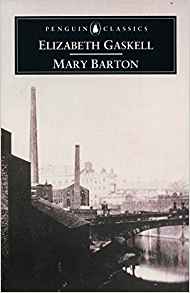
The spin number in The Classics Club Spin was announced yesterday. It’s number …

5

which for me is Mary Barton by Elizabeth Gaskell. The rules of the Spin are that this is the book for me to read by October 31, 2019.

Mary Barton


I’ve read some of Elizabeth Gaskell’s books and enjoyed them. This is her first book, set in Manchester between 1839 and 1842.

Here’s the blurb from Amazon:

Mary Barton, the daughter of disillusioned trade unionist, rejects her working-class lover Jem Wilson in the hope of marrying Henry Carson, the mill owner’s son, and making a better life for herself and her father. But when Henry is shot down in the street and Jem becomes the main suspect, Mary finds herself painfully torn between the two men. Through Mary’s dilemma, and the moving portrayal of her father, the embittered and courageous Chartist agitator John Barton, Mary Barton powerfully dramatizes the class divides of the ‘hungry forties’ as personal tragedy. In its social and political setting, it looks towards Elizabeth Gaskell’s great novels of the industrial revolution, in particular North and South.

Did you take part in the Classics Spin? What will you be reading?

The Classics Club Spin: My List

63269-classic2bspin

It’s time for another  Classics Club Spin. By 23 September compile a Spin List of twenty books that remain ‘to be read’ on your Classics Club list.

On that day the Classics Club will randomly pick a number and that will be the book to read. You then have until the 31st October 2019 to finish your book and review it.

I have only 13 unread books left on my list  so, I’ve repeated seven of the titles to make the numbers up to 20.

  1. The Riddle of the Third Mile by Colin Dexter
  2. Little Dorrit by Charles Dickens
  3. Oliver Twist by Charles Dickens
  4. Parade’s End by Ford Maddox Ford
  5. Mary Barton by Elizabeth Gaskell
  6. Smallbone Deceased by Michael Gilbert
  7. Far from the Madding Crowd by Thomas Hardy
  8. The Return of the Native by Thomas Hardy
  9. Murder by Matchlight by E C R Lorac
  10. Love in the Time of Cholera by Gabriel Garcia Marquez
  11. All Quiet on the Western Front by Erich Maria Remarqu
  12. Framley Parsonage by Anthony Trollope
  13. Orlando by Virginia Woolf
  14. The Riddle of the Third Mile by Colin Dexte
  15. Little Dorrit by Charles Dickens
  16. Oliver Twist by Charles Dickens
  17. Smallbone Deceased by Michael Gilbert
  18. Far From the Madding Crowd by Thomas Hardy
  19. The Return of the Native by Thomas Hardy
  20. Murder by Matchlight by E C R Lorac

I’m quietly hoping it will be Murder by Matchlight or Smallbone Deceased, but any of them will be OK.

Latest Additions at BooksPlease

BB bks Aug 2019

Yesterday I brought this little pile of books home from Barter Books in Alnwick, my favourite bookshop.

From top to bottom they are:

Waverley by Sir Walter Scott, his first novel, first published anonymously in 1814. It is set in the Jacobite Rebellion of 1745 and tells the story of Edward Waverley, an idealistic daydreamer whose loyalty to his regiment is threatened when they are sent to the Scottish Highlands. I’m inspired to read this by a recent visit to Abbotsford, Scott’s home in the Scottish Borders.

The Locked Room by Maj Sjowall and Per Wahloo, the eighth in the Martin Beck series – once more I’ve plunged into a series without reading the earlier books. But it appears that shouldn’t matter as each book is focused on one particular case. I’m not sure what to expect as the blurb on the back says it transforms the police force into the police farce.

The Daughters of Cain by Colin Dexter, the eleventh Inspector Morse mystery. Morse must solve two related murders — a problem complicated by a plethora of suspects and by his attraction to one of the possible killers. I’ve read several of the Morse books, so far, so I was pleased to find another one I haven’t read.

Strangers on a Train by Patricia Highsmith, a book I’ve wanted to read for a long time. Hitchcock’s 1951 film is based on this book. Guy Haines and Charles Anthony Bruno meet on a train. Bruno manipulates Guy into swapping murders with him. “Some people are better off dead,” Bruno remarks, “like your wife and my father, for instance.” 

Sleeping Beauties by Jo Spain, the third Inspector Tom Reynolds novel set in Dublin and the surrounding areas. I’ve read the fourth book and have copies of the first two to read, so I was pleased to find this book on the shelves. Five bodies are found in woodland and a young woman is missing. A search is under way – can she be found before she too is killed?

The Headhunters by Peter Lovesey, second book DCI Hen Mallin Investigation (I haven’t read the first!)  Mallin and her team investigate the discovery of a dead body, found on the beach at Selsey. Gemma had joked about murdering her boss – and now her boss is missing.

The Vault by Peter Lovesey. I’ve read one of his Peter Diamond books before and enjoyed it. This book is the sixth book in the Peter Diamond series. A skeletal hand is unearthed in the vault under the Pump Room in Bath, England, near the site where Mary Shelley wrote Frankenstein. Then a skull is excavated. The bones came from different corpses, and one is modern.

Hotel on the Corner of Bitter and Sweet by Jamie Ford. I’d borrowed a copy of this from the library but hadn’t finished it when I had to return it. In 1986, The Panama Hotel in Seattle has been boarded up for decades, but now the new owner has made a startling discovery in the basement: personal belongings stored away by Japanese families sent to internment camps during the Second World War. The novel goes back and forth between 1986 and World War Two. 

The Music Shop by Rachel Joyce, a book I’ve often wondered about reading. As the title reveals it is about Frank’s music shop, full of records, vinyl, that is. It’s set in 1988 and is a story about love and about how important music is in our lives. When Ilse asks Frank to teach her about music she is not what she seems and for Frank it opens up old wounds from his past.

Six Degrees of Separation: from Gaudy Night to The Cuckoo’s Calling

I love doing Six Degrees of Separation, a monthly link-up hosted by Kate at Books Are My Favourite and Best. Each month a book is chosen as a starting point and linked to six other books to form a chain. A book doesn’t need to be connected to all the other books on the list, only to the one next to it in the chain.

This month it’s a wild card – the chain begins with the book that ended our July chains, which means that my starting book is Gaudy Night by Dorothy L Sayers.

Gaudy Night

It’s set at Shrewsbury College at Oxford University. Harriet Vane attends the Shrewsbury Gaudy (a college reunion involving a celebratory dinner). It doesn’t go well – there are poison pen letters, nasty graffiti and vandalism causing mayhem and upset. It’s 1935 and explores the role of women in society, particularly with regard to education and marriage and the importance of truth and honesty. 

My first link is the word ‘night’ in the title:

Endless Night by Agatha Christie. It differs from most of her other books in that it is a psychological study. It reminded me very much of Ruth Rendell’s books, writing as Barbara Vine. It has the same suffocating air of menace throughout the book, with more than one twist at the end. It’s a murder mystery, but there is little or no detection, and no investigators – no Poirot or Miss Marple – to highlight the clues to the murders, for there are several.

So, my second link is, The Brimstone Wedding, by Barbara Vine, also a book full of a menacing atmosphere. In it Stella, reveals her past as she talks to Jenny, one of the carers at the retirement home where she lives. It’s all very subtle at first with tantalising hints about what had really happened in Stella’s past. But the full horror is left to the end –  it’s not horrific in the overblown graphic sense, but in a sinister, psychological way that really is ‘chilling’ and inexpressibly sad.

And my third link takes me to another chilling book, The Craftsman by Sharon Bolton –  a remarkably powerful book, full of tension and fear. Assistant Commissioner Florence Lovelady attends the funeral of Larry Glassbrook, the convicted murderer she arrested thirty years earlier. The victims had been buried alive. But as she revisits the scenes of the burials she starts to think that maybe Larry wasn’t the murderer after all.

Moving away from chilling books about death and burials my mind jumped to a completely different book about death – The Graveyard Book by Neil Gaiman. This is the story of Bod, the baby who escapes a murderer. He stumbles into the local disused graveyard where he is rescued by ghosts. Silas, who is neither dead nor alive appoints himself as his guardian. It’s about life, love and friendship, loyalty and the fight between good and evil. Above all it is about growing up and the excitement and expectations that Bod has about life.

Another character called Silas is Silas Marner, written by George Eliot about a weaver who was wrongly accused of theft and left his home town to live a lonely and embittered life in Raveloe where he became a miser, hoarding his gold and counting it each night. George Eliot is the pen name of Mary Anne Evans.

Finally this leads me to my last link, The Cuckoo’s Calling by Robert Galbraith, J K Rowling’s pen name. It’s crime fiction, set in the world of Cormoran Strike , an ex-army private detective, who is struggling to get clients and pay his bills, sleeping on a camp bed in his office.

My links are via the word ‘night’, chilling books, death and burials, characters called Silas and authors using pen names (the links on titles are to my posts on the books). I have read and enjoyed all these books.

Next month (September 7, 2019), we’ll begin with A Gentleman in Moscow by Amor Towles – a book I haven’t read, or even heard of before.

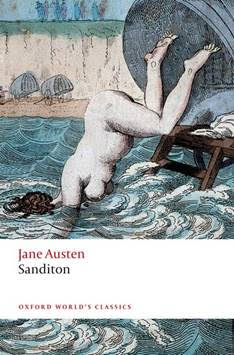
Sanditon by Jane Austen, edited by Kathryn Sutherland

Sanditon

Jane Austen has long been one of my favourite authors so I was delighted when Georgie Malcolm at the Oxford University Press contacted me to see if was interested in a review copy of a new edition of Jane Austen’s final, incomplete work Sanditon, edited with an introduction and explanatory notes on the text by Austen expert and Oxford University lecturer Kathryn Sutherland. 

In Sanditon, Jane Austen writes what may well be the first seaside novel: a novel, that is, that explores the mysterious and startling transformations that a stay by the sea can work on individuals and relationships. Sanditon is a fictitious place on England’s south coast and the obsession of local landowner Mr Thomas Parker. He means to transform this humble fishing village into a fashionable health resort to rival its famous neighbours of Brighton and Eastbourne. 

In this, her final, unfinished work, the writer sets aside her familiar subject matter, the country village with its settled community, for the transient and eccentric assortment of people who drift to the new resort, the town built upon sand. If the ground beneath her characters’ feet appears less secure, Austen’s own vision is opening out. Light and funny, Sanditon is her most experimental and poignant work.

I first read Sanditon only four years ago, in a combined publication of  Lady Susan, The Watsons and Sanditon and reviewed it in this post. I thoroughly enjoyed Sanditon, even in its unfinished state. It’s the last fiction that Jane Austen wrote, beginning it in January 1817, the year she died.

I’m looking forward to reading this new edition with great interest, particularly the introduction and the notes explaining literary allusions, references to diseases and contemporary medical treatments, Regency fashions, quasi-specialist language, etc. It certainly looks excellent!

And I see that ITV has a new adaptation by Andrew Davies of Sanditon that will air in eight parts this autumn.

  • Paperback: 128 pages
  • Publisher: OUP Oxford (25 July 2019)
  • Language: English
  • ISBN-10: 0198840837
  • ISBN-13: 978-0198840831

Sweet Thursday by John Steinbeck

Sweet thursdayI read John Steinbeck’s Cannery Row five years ago. At the time I didn’t know he’d written a sequel – Sweet Thursday. So when I discovered it, as I’d loved Cannery Row I wanted to read it. Published in 1954, I think it’s just as good, set in Monterey on the California coast in the 1950s after the Second World War when the cannery had closed down.

‘Sweet Thursday’ is what they call the day after Lousy Wednesday – one of those days that’s just bad from the start. But ‘Sweet Thursday’ is sunny and clear, a day when anything can happen.

I was delighted to find that there is just as much humour and generosity within its pages. Some of the same characters are still there, Mack, Hazel and friends who live in the Palace Flop-house (a dosshouse) and Doc too. There are some new characters, notably Suzy at the house called the Bear Flag, the local brothel. Dora who ran the Bear Flag had died and it has been taken over by her sister Fauna (previously known as Flora). Lee Chong had sold the grocery and it is now owned by a Mexican called Joseph and Mary Rivas.

I loved the opening of the Prologue:

One night Mack lay back on his bed in the Palace flop-house and he said, “I ain’t never been satisfied with that book Cannery Row, I would have went about it different.”

And after a while he rolled over and raised his head on his hand and he said, “I guess I’m just a critic. But if I ever come across the guy that wrote that book I could tell him a few things.”

Doc returned from the war to his laboratory, Western Biological Laboratories, now run down, covered in dust and mildew. He’d left Old Jingleballicks, in charge and he’d neglected it. But his heart is now longer in his work and the ‘worm of discontent‘ is gnawing at him – he feels a failure.

Whisky lost its sharp delight and the first long pull of beer from a frosty glass was not the joy it had been. He stopped listening in the middle of an extended story. He was not genuinely glad to see a friend …

What am I thinking? What do I want? Where do I want to go? There would be wonder in him, and a little impatience, as though he stood outside and looked in on himself through a glass shell …

Doc thought he was alone in his discontent, but he was not. Everyone on the Row observed him and worried about him. Mack and the boys worried about him. And Mack said to Fauna, “Doc acts like a guy that needs a dame.”

So they decide that Suzy is the answer. But Suzy, an independent spirit who isn’t much good as a hustler, doesn’t think she’s good enough for Doc. The schemes for getting the two of them together seem doomed from the start, ending in a disastrous party, when all Mack and Fauna’s good intentions seem to backfire. But this is not a tragedy, although at times it has touches of melancholy. Hazel, one of my favourite characters in the book, takes matters into his own hands. Although he appears to be slow and stupid, his problem is not that he lacks intelligence, but is that of inattention, as he just watches life go by. After the party he put his mind to thinking about what had gone wrong. And then he goes on a Quest …

Mack, in the Prologue, sums up for me what I like in a book. After saying that he likes to have a couple of words at the top of each chapter that tells what the chapter is about he says:

‘Well, I like a lot of talk in a book, and I don’t like nobody to tell me what the guy that’s talking looks like. I want to figure out what he looks like from the way he talks. and another thing – I kind of like to figure out what the guy’s thinking by what he says. I like some description too,’ he went on. ‘I like to know what colour a thing is, how it smells and how it looks, and maybe how a guy feels about it – but not too much of that.’

This is what you get in Sweet Thursday, great dialogue, great sense of location, eccentric and funny characters, wit, humour, irony and a touch of farce and surrealism, along with plenty of philosophy. I loved it.

This was my Classics Club Spin book for May, but I was late finishing it! It’s also one of my TBRs and a book that qualifies for the What’s In a Name challenge.