Six Degrees of Separation: from A Christmas Carol to No Further Questions

I love doing Six Degrees of Separation, a monthly link-up hosted by Kate at Books Are My Favourite and Best. Each month a book is chosen as a starting point and linked to six other books to form a chain. A book doesn’t need to be connected to all the other books on the list, only to the one next to it in the chain.

This month the chain begins with A Christmas Carol by Charles Dickens.
A Christmas Carol cover

I love A Christmas Carol and when I sat down to think about this Six Degrees post I thought I’d be linking up to more books with a Christmas theme, but it didn’t work out like that. Instead what came to mind after the first link to another Dickens’ book is a series of mystery/crime fiction books! These are all books I’ve read, so the links are to my review posts.

The MoonstoneDiamonds Are Forever

  • The Holly Tree Inn by Charles Dickens. This was originally published in 1855, being the Christmas number of Dickens’s periodical Household Words. It was so popular that it was then adapted for the stage. It’s a collection of short stories by Dickens, Wilkie Collins, William Howitt, Adelaide Anne Procter and Harriet Parr, around the theme of travellers and inns.
  • The Moonstone by Wilkie Collins – The ‘Moonstone’, a large diamond, originally stolen from a statue of an Indian God and said to be cursed is left to Rachel Verinder. She receives it on her 18th birthday and that night it is stolen from her bedroom.
  • Diamonds are Forever by Ian Fleming in which James Bond is assigned to infiltrate and close down a diamond smuggling operation, run by the Spangled Mob, operating from Africa to the UK and the USA. It’s run by a couple of American gangsters, the Spang brothers, and the mysterious character known as ‘ABC‘.

The ABC Murders (Hercule Poirot, #13)The House at Sea's End (Ruth Galloway, #3)No Further Questions

  • ABC leads me to The ABC Murders by Agatha Christie – one of her best books, I think, in which there’s another mysterious character known as ‘ABC’. Poirot and Captain Hastings investigate a series of murders. An ABC Railway Guide is left next to each of the bodies.
  • The House at Seas End by Elly Griffiths – The bones of six people are found in a gap in the cliff, a sort of ravine, where there had been a rock fall at Broughton Seas End. Seas End House, which stands perilously close to the cliff edge above the beach is owned by Jack Hastings. I really, really do wish these books weren’t written in the present tense!
  • No Further Questions by Gillian McAllister – also written in the present tense, but in this book it didn’t irritate me. I was totally gripped by it. It plunges straight into a trial as Martha sits in the courtroom listening to expert witnesses being questioned  and cross-examined about the death of her baby, Layla, just eight weeks old. I didn’t want to stop reading it and when I wasn’t reading it I was thinking about it, about the characters and their relationships, about how they had got themselves into such a terrible situation. An excellent book, and it is without doubt one of the best books I’ve read this year.

From tales told in an inn, to diamond smugglers, murders connected to a mysterious character, characters called Hastings and books written in the present tense, this chain has once again surprised me at where it has ended up!

Next month (January 5, 2019) the chain begins with another of my favourite books – The French Lieutenant’s Woman by John Fowles.


Books Read in November 2018

This month I read seven books, made up of one review copy that came to me via  NetGalley, two library books and four of my own books (two of these on Kindle). Two of the seven books are non-fiction and the rest are fiction. My ratings range from 5 to 2.5 stars and are based solely on my reactions to the books.

I’ve written about three of these books (click on the links to read my reviews):

Jacob's Room is Full of Books: A Year of ReadingAbsolute ProofIn a Dark, Dark Wood

  1. Jacob’s Room is Full of Books by Susan Hill 5*  – in which Susan Hill describes a year of her reading.
  2. Absolute Proof by Peter James 3.5* –  a standalone thriller that is very different from his Roy Grace books. It has similarities to Dan Brown’s The Da Vinci Code, as the search is on for proof of  God’s existence.
  3. In a Dark, Dark Wood by Ruth Ware 2.5* – I was disappointed as this book promised to be a psychological thriller but it neither thrilled nor scared me, although it is a page-tuner. Leonora and Clare haven’t seen  or even spoken to each other since they were 16, ten years ago. So why has Clare invited Leonora to her hen party held in a glass house in the middle of a wood?

Here are some brief notes about the remaining four books:

I Am, I Am, I Am: Seventeen Brushes With DeathThe ReckoningThe New Mrs CliftonTombland (Matthew Shardlake, #7)

I Am, I Am, I Am by Maggie O’Farrell 5* – I wrote this Friday post about this book, with two quotations and a summary of the book. It’s a memoir with a difference: seventeen encounters of near-death experiences, with Maggie at different ages, in different locations, revealing a whole life in a series of tense, visceral snapshots. It’s a beautifully written book that I loved.

The Reckoning by John Grisham 5*, about Pete Banning, Clanton’s favourite son, a returning war hero, the patriarch of a prominent family, a farmer, father, neighbour, and a faithful member of the Methodist Church. Why did he shoot and kill the Reverend Dexter Bell? And then refuse to say why he killed him? I was intrigued and fascinated by the whole book that went back into Pete’s wartime experiences during world War Two during the Bataan Death March in the Philippines.

The New Mrs Clifton by Elizabeth Buchan 4* this begins in 1974 with the discovery of a skeleton, the remains of a woman, between twenty-five and thirty, buried beneath a tree in the garden of house in Clapham, facing the Common. Her identity and why and how she was killed is not revealed until very nearly the end of the book.

It then moves back in time to 1945 when Intelligence Officer Gus Clifton returns to London with Krista, the German wife he married secretly in Berlin. For his sisters, Julia and Tilly, this broken woman is nothing more than the enemy. For Nella, Gus’s loyal fiancée, it is a terrible betrayal. Elizabeth Buchan paints a convincing and moving picture of life in both London and Berlin post-war, highlighting the devastation of the bombing and showing how people have to come to terms with the changes in their lives. All the way through the book I wondered who the killer was and which woman had been murdered.

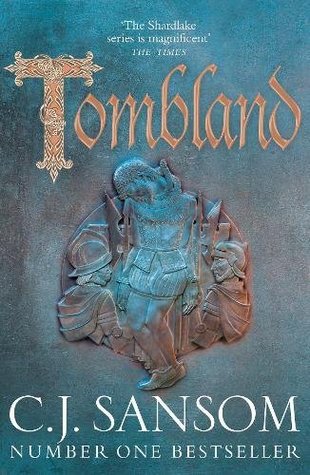
Tombland by C J Sansom 5* – I wrote this Friday post this book, giving two quotations and a summary of the book. Set in 1549 this is a remarkable and detailed book about the situation as Edward VI is on the throne following the death of his father Henry VIII and his uncle Edward Seymour, Duke of Somerset, rules as Protector.

Matthew Shardlake has been working as a lawyer in the service of Edward’s sister, the Lady Elizabeth. He is employed to investigate the gruesome murder of Edith Boleyn, the wife of John Boleyn – a distant Norfolk relation of Elizabeth’s mother. But the main part of the book is about Kett’s Rebellion – as thousands of peasants, in protest about the enclosures of common land, gather together on Mousehold Heath outside Norwich and battle ensues.

It’s an enormous book and I’m planning to write a longer post about it.


Jacob’s Room is Full of Books by Susan Hill

Nine years ago I read Susan Hill’s Howards End is on the Landing: A Year of Reading, a book in which she wrote about the books from her own collection she’d read or re-read over the course of a year. Jacob’s Room is Full of Books is a similar book in that it follows month by month a year during which she reflects on the books she has read, reread, or returned to the shelves as well as her thoughts on a whole variety of topics.

Jacob's Room is Full of Books: A Year of Reading

It’s full of her observations on the weather, on nature – birds, flowers, trees, moles, eels, egrets and so on – on writers and writing, about religion and fairy tales and many more besides as well as on books. She also writes about herself and notes her obsessions with, for example, Virginia Woolf and the Bloomsbury Set, Marilyn Monroe, wood engravings, medieval monasticism, Elizabeth Bowen, Benjamin Britten and her collection of Ladybird Books. Some of her observations on other topics are short but conjure up vivid pictures, such as in November she recorded: ‘RAINING. Sky like the inside of a saucepan.‘ (page 208) And in October: ‘THIS GOLDEN OCTOBER continues to drift slowly down like a twirling leaf.’  (page 186)

One of the things I like about this book is the passion with which Susan Hill writes and her strong opinions about books, writers, literary prizes, what makes a good reader and so on and so forth, that she has no qualms about expressing (and why should she?) You are left in no doubt about what she does and does not like. For example she likes Robert Louis Stevenson (so do I) and the way he cleverly and cunningly creates a sense of sinister and evil in his creation of Mr Hyde. She thinks he’s the ‘perfect writer’ (page 188) and describes him thus: ‘Next to Dickens, I think RLS was the greatest writer of his time.’ (page 54) She didn’t like fairy tales as a child (I did), describing fairies as

Wispy, wafty, wish-washy things. Nowhere near on a par with sprites and goblins, witches, wizards, trolls. As a child I lapped up stories about any of these. I can understand why I did not, and do not, have any patience with fairies and their stories. They are so colourless (despite Andrew Lang’s best attempts). So dull. Yes. Just dull. (page 21)

And yet as a child she also liked the Flower Fairies books by Cecily Mary Baker (as did I) and pored over their illustrations, but followed that up by describing them as ‘just an excuse for pretty pastel pictures.

She doesn’t like fantasy and science fiction, although as a child she loved fantasy. She likes, amongst others, Thomas Hardy, Somerset Maugham, Raymond Chandler, Muriel Spark and Barbara Pym, to a certain extent, describing her books as ‘dated, but not dated enough’, but not Jane Austen – oh my, I love Jane Austen’s books:

I read most of the reissued novels [of Pym’s] at the time and never entirely saw the point of the praise, probably because everyone compared them to Jane Austen and that is never a good recommendation to me. (page 200)

She then goes on to change her mind about Pym after reading Shirley Hazzard’s review of Pym’s Quartet in Autumn, which I haven’t read, but after reading her description I think I would like.

She has no interest left in the First World War, particularly in fiction about it (I have) since she wrote Strange Meeting in 1971, but she admires Ford Madox Ford’s The Good Soldier, but has ‘not even tried Parade’s End‘. She seems to have more time for the Second World War novels, praising Olivia Manning’s novels, the Balkan and Levant trilogies, which reminds  me I still haven’t read the third book in the Balkan Trilogy.

She is scathing about creative writing courses: ‘I don’t suppose anything is obligatory for these courses, which are as thick as autumn leaves on the ground. Writing is the thing. Ye gods.’ (page 189)

There’s plenty more on the same lines about other authors and books – there are many, many more that I could mention – and I found it all fascinating, rambling and chatty, a bit repetitive in parts, but still fascinating. And there is a list of the books she refers to at the end of the book. It’s probably a book that could stand a second reading.

And as she says:

Reading is magic. Books are magic. It starts when we are shown picture books and realise there is another world beyond the everyday one we know. Once we can read ourselves, we live inside the magic. The only problem is that we have to emerge at the end of a book, and we don’t want to return to that dull domestic world we know. The only solution to that problem, of course, is that there is always the next book, and the next and there is bonus magic if it is another in a series we already love, so we are plunging back into a magic other world but one we already know. We feel a lift of the heart, a lurch of the stomach, when we find ourselves in it again. (pages 55 – 56)

Yes, reading is, indeed, magic!

  • Hardcover: 272 pages
  • Publisher: Profile Books (5 Oct. 2017)
  • Language: English
  • ISBN-10: 9781781250808
  • ISBN-13: 978-1781250808
  • ASIN: 1781250804
  • Source: a library book
  • My Rating: 5*

The Classics Club Spin Result

Classics Club

The spin number in The Classics Club Spin was announced today. It’s number …

1

which for me is Greenmantle by John Buchan. The rules of the Spin are that this is the book for me to read by January 31, 2019.

Greenmantle

Greenmantle is the second of five novels by John Buchan featuring the character of Richard Hannay, first published in 1916. I’ve read the first, The Thirty-Nine Steps.

Here’s the blurb from Amazon:

Richard Hannay is tasked to investigate rumours of an uprising in the Muslim world and takes off on a hair-raising journey through German-occupied Europe to meet up with his old friend Sandy Arbuthnot in Constantinople, where they must thwart the Germans’ plans to use religion to help them win the war. Set during World War I, Greenmantle is a contraversial meditation on the power of political Islam (it was pulled from Radio 4’s schedule at the time of the 7 July bombings).

I’m really pleased this book came up in the Spin for me as it will fit in with my reading about World War I.

Did you take part in the Classics Spin? What will you be reading?

Nonfiction November Week 5: Additions to my TBR

Week 5: (Nov. 26 to 30) – New to My TBR (Katie @ Doing Dewey): It’s been a month full of amazing nonfiction books! Which ones have made it onto your TBR? Be sure to link back to the original blogger who posted about that book!

I’ve had a great time doing these Nonfiction November posts, found yet more book bloggers and I’ve added these books to my TBR:

From the comments on my Ask the Expert post asking for recommendations about books on World War One:

The War that Ended Peace: How Europe abandoned Peace for the First World WarThe Sleepwalkers: How Europe Went to War in 1914Rites of Spring: The Great War and the Birth of the Modern AgeDead Wake: The Last Crossing of the Lusitania

From posts on Nonfiction that reads like fiction:

Midnight in the Garden of Good and EvilLeonardo da VinciThe Sound of a Wild Snail Eating

  • Midnight in the Garden of Good and Evil by John Berendt from Rennie of What’s Nonfiction. She writes ‘Berendt’s story begins with a murder in the old-fashioned, uniquely southern atmosphere of Savannah but develops into so much more.’
  • Leonardo da Vinci by Walter Isaacson from Deb Nance at ReaderbuzzWalter Isaacson is not an art historian, he’s simply a lover of Leonardo, who manages to communicate the sheer joy of this remarkable man’ Books of the Year – The Times.
  • The Sound of a Wild Snail Eating by Elisabeth Tova Bailey from Brona’s Books, Brona writes, ‘Bailey uses examples from poetry, literature and science to bring forth the nature of her snail. Each little nugget is revealed with care and circumspection. Watching her snail, Bailey comes to terms with her own illness.’

Thanks everyone for your recommendations!

In a Dark, Dark Wood by Ruth Ware

In a Dark, Dark Wood

Nora hasn’t seen Clare for ten years. Not since the day Nora walked out of her old life and never looked back.

Until, out of the blue, an invitation to Clare’s hen party arrives. A weekend in a remote cottage – the perfect opportunity for Nora to reconnect with her best friend, to put the past behind her.

But something goes wrong.

Very wrong.

And as secrets and lies unravel, out in the dark, dark wood the past will finally catch up with Nora.

I featured In a Dark, Dark Wood by Ruth Ware in this Friday Post on book Beginnings and said that I wasn’t sure I wanted to read it having been disappointed  by the only other book by her that I’ve read, The Woman in Cabin 10.  But as some people commented that they had enjoyed it and as it has good reviews on Amazon and Goodreads I decided to read on. It promises to be a psychological thriller – a scary book – but maybe I’ve read too many psychological thrillers as I didn’t find it thrilling or scary. It’s mystery novel that slowly reveals why Leonora, known either as Lee or Nora or Leo, and Clare haven’t seen  or even spoken to each other since they were 16, ten years ago. That was also when Nora’s heart was broken when her relationship with James came to an abrupt end. She had never come to terms with their break up.

I thought the setting was good – the hen party is held in a glass house in the middle of a wood in Northumberland. The mobile phone signal is practically nonexistent and they are cut off from the outside world and isolated when the snow sets, in cutting off the landline. But the characters are stereotypes – a new mother pining for her baby back home, a gay male actor, a gay female doctor (who is in my opinion the most sensible of the group), the dippy devoted friend of the bride who has organised this terrible hen party, the bride, self-obsessed, selfish and manipulative as well as Nora, who can’t move on from her past. The outcome is predictable when footprints appear in the snow, the backdoor that was supposed to be locked is found open and the hen party keep arguing and antagonising each other. It’s obvious from the start that something terrible had happened when Nora wakes up in a hospital bed and realises that she can’t remember what had happened … or what she had done.

In a Dark, Dark Wood is Ruth Ware’s debut novel and the film rights have been optioned  by New Line Cinema.  I can imagine that a film would be much more terrifying than the book – it should be, the potential is there. I don’t like being critical of a book, but I can’t recommend this book.