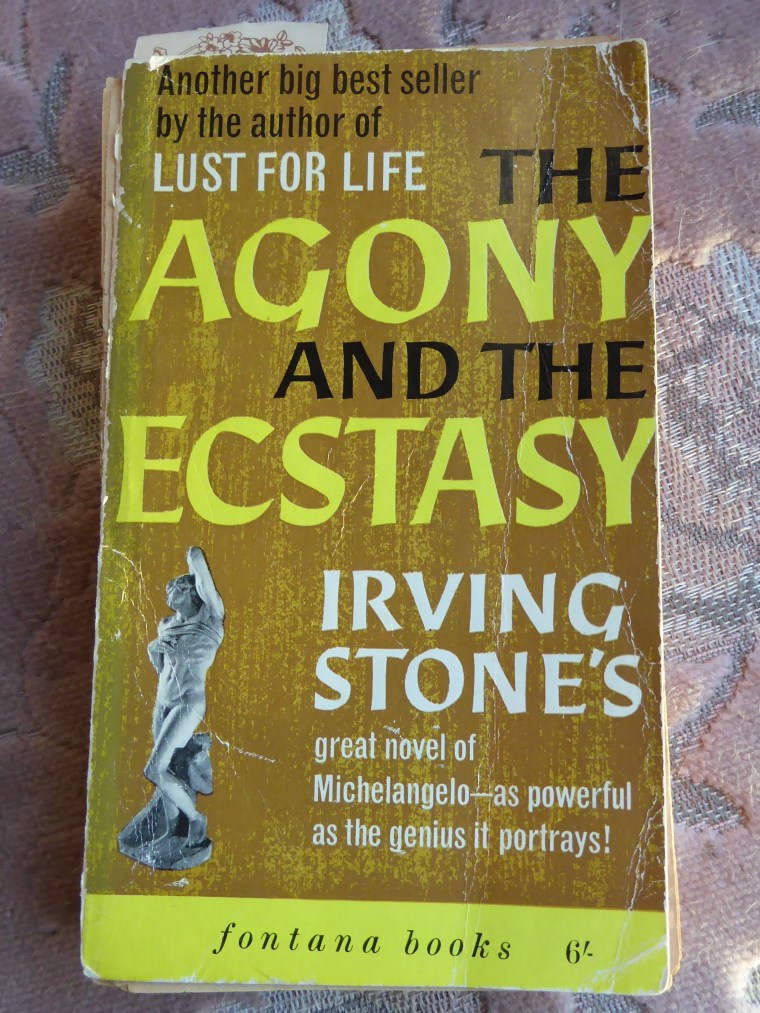
My Friday Post: The Agony and the Ecstasy by Irving Stone

Book Beginnings Button

Every Friday Book Beginnings on Friday is hosted by Gillion at Rose City Reader where you can share the first sentence (or so) of the book you are reading, along with your initial thoughts about the sentence, impressions of the book, or anything else the opener inspires.

Agony & Ecstasy


My old, tatty copy of The Agony and the Ecstasy by Irving Stone has been sitting on my desk for months now, whilst I’ve been wondering about reading it. I bought for 50p more 20 years ago (no idea exactly when or where I bought it). It was old when I first bought it and it’s falling to pieces now, the pages are brown and the font is so small, which is why I’m not reading it. So I think I’ll have to get a new edition.

It’s a biographical novel of Michelangelo.


He sat before the mirror of the second-floor bedroom sketching his lean cheeks with their high bone ridges, the flat broad forehead, and ears too far back on the head, the dark hair curling forward in thatches, the amber-coloured eyes wide set but heavy-lidded.

Also every Friday there is The Friday 56, hosted by Freda at Freda’s Voice.

30879-friday2b56These are the rules:

  1. Grab a book, any book.
  2. Turn to page 56, or 56% on your eReader. If you have to improvise, that is okay.
  3. Find any sentence (or a few, just don’t spoil it) that grabs you.
  4. Post it.
  5. Add the URL to your post in the link on Freda’s most recent Friday 56 post.

Page 56:

Michelangelo went into the yard and sat in the baking sun with his chin resting on his chest. He had made a nuisance of himself.

Have read this book? What did you think about it? And if you haven’t, would you keep on reading?

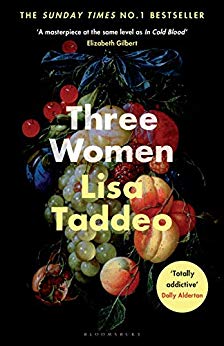
Six Degrees of Separation: from Three Women to …

I love doing Six Degrees of Separation, a monthly link-up hosted by Kate at Books Are My Favourite and Best. Each month a book is chosen as a starting point and linked to six other books to form a chain. A book doesn’t need to be connected to all the other books on the list, only to the one next to it in the chain.

Three Women


This month the chain begins with Three Women by Lisa Taddeo – a book I haven’t read, or even heard of before. It’s described on Goodreads as Desire as we’ve never seen it before: a riveting true story about the sex lives of three real American women, based on nearly a decade of reporting. I have no desire to read it.

My first link is to one of the books I’m currently reading – a biography of D H Lawrence, a man who believed himself to be an outsider in angry revolt against his class, culture and country, and who was engaged in a furious commitment to his writing and a passionate struggle to live according to his beliefs. He also struggled all his life with his relationships with women, particularly about those with his mother and his wife, Frieda.

Leading on from Lawrence’s biography my second link is to his book, Women in Love,  a book I first read as a teenager. It’s about the relationships of two sisters, Ursula and Gudrun. Ursula falls in love with Birkin (a self portrait of Lawrence) and Gudrun has an affair with Gerald, the son of the local colliery owner. Later on I watched the film version with Glenda Jackson as Gudrun, Oliver Reed as Gerald, Alan Bates as Birkin and Jennie Linden as Ursula. Lawrence considered this book to be his best and the one that clearly showed his ideas of society at the time (1922).

Moving on from a book about sisters, my third link is to a book about brothers. It’s The Lost Man by Jane Harper, set in an isolated part of Australia hundreds of miles from anywhere and revolving around the death of Cameron Bright. There are three Bright brothers – Nathan the oldest, then Cameron and the youngest brother, Bub. They have a vast cattle ranch in the Queensland outback. The book begins with the discovery of Cameron’s body lying at the the base of the headstone of the stockman’s grave – a headstone standing alone, a metre high, facing west, towards the desert, in a land of mirages.

My fourth link is to another book set in Australia – Sarah Thornhill by Kate Grenville, a love story set in 19th century Australia, where the convicts, transported or ‘sent out‘ are  now called ‘old colonists‘. A story about prejudice – some people, those who had ‘come free‘,  thought being ‘sent out‘ meant you were tainted for all time, but for others having money and land overcame their distaste. And then there is the prejudice about the ‘blacks’. When Sarah, the daughter of William Thornhill, an ‘old colonist’ and now a landowner on the Hawkesbury River, falls in love with Jack Langland, whose mother was a native woman, racial prejudice and hatred rear their ugly heads.

Prejudice and racial tension is also uppermost in The Tea Planter’s Wife by Dinah Jefferies, set in Ceylon (now called Sri Lanka) in 1913. It was a time of unrest, with political and racial tension between the Sinhalese and Tamil workers and the British plantation owners. After a whirlwind romance, Gwendolyn Hooper marries a tea planter, Laurence, an older man, and a widower. But this is not the idyllic life she expected – there are secrets, locked doors and a caste system and culture that is alien to her. There is a mystery, too, surrounding the death of Caroline, Laurence’s first wife.

And so to the last link, which is to another book about the death of a wife. It’s The Evidence Against You by Gillian McAllister – Gabe English has been released from prison on parole, having served seventeen years for the murder of his wife, Alexandra. But nobody really knew exactly what had happened the night Alexandra was killed – she simply went missing and then her body was found – she’d been strangled. Gabe’s daughter Izzy thought that her father could never have harmed anybody, let alone her mother. Now, he swears that he is innocent and wants to tell his side of it. He asks her to consider the evidence for herself. But is he really guilty – can she trust her father?

My chain is link by books about women, sisters and brothers, prejudice and racial tension, books set in Australia and about the deaths of wives. It passes from America to Great Britain,  and Sri Lanka, via books of crime fiction, historical fiction and non-fiction.

Next month (November 2, 2019), we’ll begin with Alice’s Adventures in Wonderland – a book I have read and loved.

My Friday Post: Black Water Lilies by Michel Bussi

Book Beginnings Button

Every Friday Book Beginnings on Friday is hosted by Gillion at Rose City Reader where you can share the first sentence (or so) of the book you are reading, along with your initial thoughts about the sentence, impressions of the book, or anything else the opener inspires.

Last week I bought Black Water Lilies by Michel Bussi and I can’t resist starting it even though there are plenty of books in my TBR piles that I ‘should’ be reading. 
 
Black water lilies

Three women lived in a village.

The first was mean, the second a liar, and the third was an egoist.

Their village bore the pretty name of a garden, Giverny.

Also every Friday there is The Friday 56, hosted by Freda at Freda’s Voice.

30879-friday2b56These are the rules:

  1. Grab a book, any book.
  2. Turn to page 56, or 56% on your eReader. If you have to improvise, that is okay.
  3. Find any sentence (or a few, just don’t spoil it) that grabs you.
  4. Post it.
  5. Add the URL to your post in the link on Freda’s most recent Friday 56 post.

Pages 56 -7:

He used to be an art teacher in the United States, he tells her. He never stops saying that she talks all the time, and even though she’s very gifted, she needs to be able to concentrate more. Like Monet did.

I’ve read one other book by Michel Bussi, Time is a Killer, which I really enjoyed and so I thought I’d like this one. It’s the story of a mystery, of thirteen days that begin with one murder and end with another. Jérôme Morval, a man whose passion for art was matched only by his passion for women, has been found dead in the stream that runs through the gardens at Giverny, where Monet did his famous paintings.

Have read this book? What did you think about it? And if you haven’t, would you keep on reading?

Top Ten Tuesday:  Book Titles with Numbers In Them

top-ten-tuesday-new

Top Ten Tuesday is a weekly meme created by The Broke and the Bookish and now hosted by Jana at That Artsy Reader Girl. For the rules see her blog.

This week’s topic: Book Titles with Numbers In Them. I’ve read all these books and my links go to my posts about them, except for Eight Black Horses, which I didn’t write about.
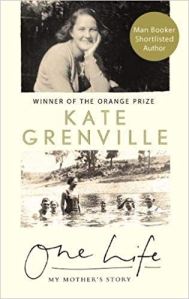
One Life

One Life: My Mother’s Story by Kate Grenville – a beautiful biography of her mother Nance Russell. A book that casts light not only on Nance’s life but also on life in Australia for most of the 20th century. Nance was born in 1912 and died in 2002, so she lived through two World Wars, an economic depression and a period of great social change.
Two Moons

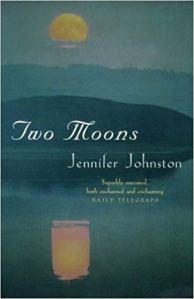
Two Moons by Jennifer Johnston – there’s a touch of magic about this book. Set in Dublin it’s the story of three women. Mimi and her daughter Grace live in a house overlooking Dublin Bay. Grace, an actress, is absorbed in rehearsals for Hamlet in which she is playing Gertrude, and Mimi, her elderly mother is similarly absorbed in talking to an angel, Bonifacio, who is invisible to everyone except Mimi. Their lives are disrupted by the arrival of Grace’s daughter, Polly who arrives to stay for a few days bringing with her, Paul, her new boyfriend.
Three Men in a Boat

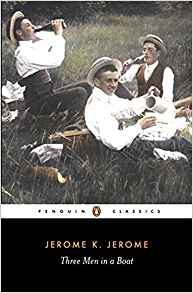
Three Men in a Boat: (to say nothing of the dog) by Jerome K Jerome, a gentle witty book that kept me entertained all the way through. It’s about the events that happened to Jerome and his friends whilst out on the River Thames, interspersed with passages about the scenery and history. The main characters were real people, Jerome’s friends – ‘George‘ is George Wingrave who was the best man at his wedding, and ‘Harris‘ is Carl Hentschel, a photographer. Only the dog ‘Montmorency‘ is fictional.
Four last things

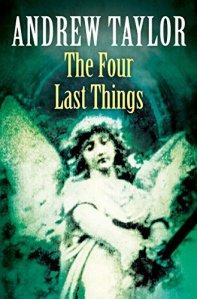
The Four Last Things by Andrew Taylor. This is the first in the Roth trilogy. The complete trilogy is about the linked histories of the Appleyards and the Byfields. The books work backwards in time, with this first book being the last chronologically, set in the 1990s, and each book works as a stand-alone, self-contained story. The Four Last Things tells the story of Lucy Appleyard, aged four, who is snatched from her child minder’s one cold winter afternoon.
Five little pigs

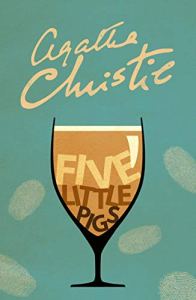
Five Little Pigs by Agatha Christie – Caroline Crale was convicted of the murder of her husband, Amyas and died in prison. Sixteen years later, her daughter, a child of five at the time of the murder, asks Poirot to clear her mother’s name, convinced that she was innocent. Just like the nursery rhyme, there were five other “little pigs” who could have killed him: Philip Blake (the stockbroker), who went to market; Meredith Blake (the amateur herbalist), who stayed at home; Elsa Greer (the three-time divorcée), who had her roast beef; Cecilia Williams (the devoted governess), who had none; and Angela Warren (the disfigured sister), who cried all the way home.
Sixth Lamentation

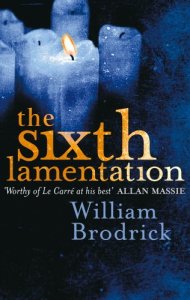
The Sixth Lamentation by William Brodrick, the first Father Anselm novel. It’s historical fiction and it’s also a mystery. It looks back  to the Second World War in occupied France, telling a dramatic tale of love and betrayal, full of suspense. It weaves together fact and fiction, with accurate details of life in Paris during the Occupation and the subsequent war trials.
seven sisters ebook

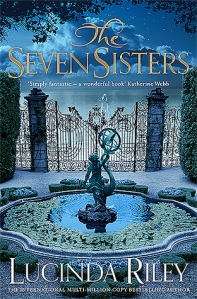
The Seven Sisters by Lucinda Riley, the first in the series in which Maia D’Aplièse and her five sisters gather together at their childhood home, ‘Atlantis’ – a fabulous, secluded castle situated on the shores of Lake Geneva – having been told that their beloved father, the elusive billionaire they call Pa Salt, has died. Maia and her sisters were all adopted by him as babies and, discovering he has already been buried at sea, each of them is handed a tantalising clue to their true heritage. Maia’sclue takes her across the world to a crumbling mansion in Rio de Janeiro in Brazil.
Eight black horses

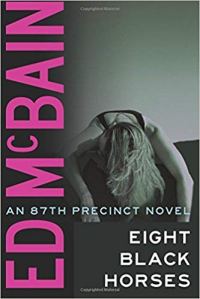
Eight Black Horses by Ed McBain. Finding a dead body was not unusual for an autumn night in the 87th Precinct. But this young woman’s body was naked—and potentially related to the series of odd missives received at the station house. All signs point to the Deaf Man’s return, this time with a plot more diabolical than even the jaded policemen could imagine. He’s been sending them mysterious pictures of police equipment: nightsticks, helmets, black horses, and more. But what did they mean?
Nine Tailors

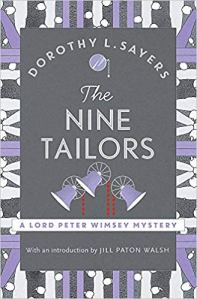
The Nine Tailors by D L Sayers,  a Lord Peter Wimsey Mystery, first published in 1934, that had me completely baffled, first the bell-ringing, and then the twists and turns and all the red herrings. Wimsey, driving through a snow storm, ends up in a ditch near the village of Fenchurch St Paul in the Fens and is taken in for the night by the vicar. It’s New Year’s Eve (at some period in the early 1930s) and the vicar has arranged that the bell-ringers will ring in the New Year, involving 9 hours of bell-ringing. As one of the ringers is ill with influenza, Wimsey steps in at the last minute to take his place.
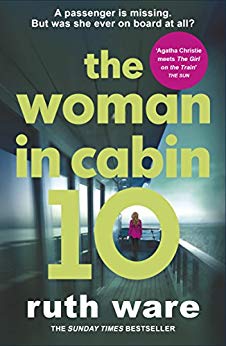
Woman in Cabin 10

The Woman in Cabin 10 by Ruth Ware. Journalist Lo Blacklock takes the opportunity to fill in for her boss on a luxury press launch on a boutique cruise ship and hopes it will help her recover from a traumatic break-in at her flat. But woken in the night by a scream from cabin 10 next to hers she believes a woman was thrown over board, only to discover that the ship’s records show that cabin 10 was unoccupied. Lo is exhausted from lack of sleep, overwrought with anxiety and dependent on pills and alcohol to see her through. She fails to convince anyone that she is telling the truth.
 

My Friday Post: Maigret’s Holiday by Georges Simenon

Book Beginnings Button

Every Friday Book Beginnings on Friday is hosted by Gillion at Rose City Reader where you can share the first sentence (or so) of the book you are reading, along with your initial thoughts about the sentence, impressions of the book, or anything else the opener inspires.

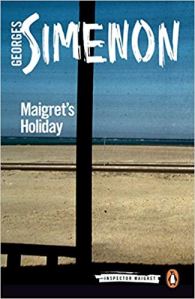
Maigret’s Holiday by Georges Simenon is one of my TBRs, the 28th Inspector Maigret novel in which Maigret’s wife falls ill whilst on their seaside holiday at Les Sables d’Olonne and  a visit to the hospital sends him on an unexpected quest to find justice for a young girl.

Maigret's Holiday


The street was narrow, like all the streets in the old quarter of Les Sables d’Olonne, with uneven cobblestones and pavements so narrow that you had to step off to let another person pass.

Also every Friday there is The Friday 56, hosted by Freda at Freda’s Voice.

30879-friday2b56These are the rules:

  1. Grab a book, any book.
  2. Turn to page 56, or 56% on your eReader. If you have to improvise, that is okay.
  3. Find any sentence (or a few, just don’t spoil it) that grabs you.
  4. Post it.
  5. Add the URL to your post in the link on Freda’s most recent Friday 56 post.

Page 56:

‘I was very fond of that girl, but I repeat that my feelings for her were purely fraternal. I am aware that things are often otherwise. A man can easily be in love with two sisters, especially if they are both living under his roof. That is not the case  and besides, Lili was not in love with me. I’ll go further. I was the exactly the opposite of what she loved. She found me cold and cynical. She often said I had no heart.’

I’ve been reading the Maigret books as I come across them – so, totally out of order of publication. It doesn’t seem to matter. Maigret’s Holiday was originally published in 1948

Have read this book? What did you think about it? And if you haven’t, would you keep on reading?

Top Ten Tuesday: Books On My Fall 2019 TBR

top-ten-tuesday-new

Top Ten Tuesday is a weekly meme created by The Broke and the Bookish and now hosted by Jana at That Artsy Reader Girl. For the rules see her blog.

This week’s topic: Books On My Fall 2019 TBR. Here is a selection. What I actually read may turn out to be completely different, but I like to think I’ll read several of these books:

The Wine of Angels by Phil Rickman, the first Merrily Watkins novel, in which the Rev Merrily Watkins tries to be accepted as the vicar (or priest-in-charge as she insists she ought to be called) in the country parish of Ledwardine in Herefordshire, steeped as it is in cider and secrets and echoes of the poet Thomas Traherne who was once based in the area.

Thursdays in the Park by Hilary Boyd – Jeanie has been married for thirty years, but her husband George has become so cold and distant she may as well be alone. Surely, at just sixty, a loveless marriage can’t be the only thing left on the horizon? Then, one Thursday in autumn, Jeanie meets Ray in the park, and a chance meeting blossoms into a friendship.

Mrs Robinson’s Disgrace: the Private Diary of a Victorian Lady by Kate Summerscale – the true story of Isabella Robinson, a frustrated mother and wife with, and a husband who is a controlling bully, often absent from the home. So Isabella’s eyes rove and she chose to record her innermost thoughts – and especially her infatuation with a married Dr. Edward Lane – in her diary. Over five years the entries mounted-passionate, sensual, suggestive. One day in 1858 her husband found her diary and read Isabella’s intimate entries. Aghast at his wife’s perceived infidelity, Henry petitioned for divorce on the grounds of adultery.

The Lady of the Ravens by Joanna Hickson – When Joan Vaux is sent to live in the shadow of the Tower of London, she must learn to navigate the treacherous waters of this new England under the Tudors. Like the ravens, Joan must use her eyes and her senses, if Henry and his new dynasty are to prosper and thrive …

A Single Thread by Tracy Chevalier – set in Violet Speedwell is mourning for both her fiancé and her brother and regarded by society as a ‘surplus woman’ unlikely to marry, resolves to escape her suffocating mother and strike out alone. A new life awaits her in Winchester. Yes, it is one of draughty boarding-houses and sidelong glances at her naked ring finger from younger colleagues; but it is also a life gleaming with independence and opportunity.

The Woman Who Wanted More by Vivky Zimmerman – No woman dreams of being unceremoniously dumped and moving back in with her mother on the eve of her 40th birthday. Food technician Kate Parker’s first response? Denial, long days under her duvet and bucket loads of cheesy pasta. A reluctant Kate finds herself volunteering at the Lauderdale House For Exceptional Ladies. There she meets 96-year-old Cecily Finn – spiky and sharp as a pin, but the spark has gone out of her. She has resigned herself to the imminent End.

The Storm Sister by Lucinda Riley, the 2nd book in her Seven sisters series. Ally D’Aplièse is about to compete in one of the world’s most perilous yacht races, when she hears the news of her adoptive father’s sudden, mysterious death. Rushing back to meet her five sisters at their family home, she discovers that her father – an elusive billionaire affectionately known to his daughters as Pa Salt – has left each of them a tantalizing clue to their true heritage.

An April Shroud by Reginald Hill – the 4th Dalziel and Pascoe novel. Superintendent Dalziel’s holiday runs into trouble when he gets marooned by flood water. Rescued and taken to nearby Lake House, he discovers all is not well: the owner has just died tragically and the family fortunes are in decline. He also finds himself drawn to attractive widow, Bonnie Fielding. But several more deaths are to follow. And by the time Pascoe gets involved, it looks like the normally hard-headed Dalziel might have compromised himself beyond redemption.

My Beautiful Imperial by Rhiannon Lewis – Driven from all that matters, Davy has been sent away to sea. He must navigate a way between the bullies and storms, just to survive. Against the odds, success is within reach – his first captaincy is promised and he has met Estella. But revolution erupts in Chile. Davy’s new ship, the Imperial, is commandeered, along with its crew. Amidst the terror, Davy learns to call another country home. He learns that love and friendship have no borders of their own.

Transcription by Kate Atkinson – During WWII, Juliet Armstrong was conscripted into service as a young woman, transcribing conversations between an MI5 agent and a ring of suspected German sympathizers. Years later, in 1950 post-war London, Julie can’t escape the repercussions of her work for the government, and is pulled back into the life of espionage she thought she’d left behind.