Sunday Selection

Newbooks magazine arrived yesterday, with articles about James, Naughtie, Deborah Moggach and Jodie Picoult amongst others – all interesting reading. There’s also a recipe for Parsnip Cake with Walnuts and Raisins that I may try.

Now I’m wondering whether to send off for one (or more) of these books, offered for just the cost of p&p. I haven’t read anything by any of these authors, so have no knowledge of their writing. Newbooks gives extracts from the opening of the books and articles about the authors.

newbooks March 13

  • Jasmine Nights by Julia Gregson – described as a love story set against the backdrop of the Second World War in Egypt and Turkey, in which Saba Tarcan enlists in ENSA to entertain the troops, but also is drafted as a spy. I have Julia Grigson’s first book The Water Horse, but haven’t read it yet. It looks very interesting and well located – Julia Grigson travelled to both Egypt and Turkey to get the settings right. Although the book is not about her parents, their experiences during the War were the springboard into writing the book. 
  • Among Others by Jo Walton – set in Wales in 1979, this is a story about a 15 year-old girl and her twin sister who commune with fairies. When her sister is killed, she is crippled and sent away to a boarding school. It’s a fantasy and science fiction novel and centres on books and their importance.  Jo Walton is well-known (if not by me) as a science fiction/fantasy writer. She is a Welsh-born author, living in Canada.
  • The Forbidden Queen by Anne O’Brien – historical fiction about Katherine de Valois, who married Henry V. Anne O’Brien has made use of the historic outline of Katherine’s life and incorporated the romantic myths of her love for Owen Tudor and her liaison with Edmund Beaufort. Not a political history for this is a coming-of-age novel – a tragic love story.
  • The Masque of the Red Death by Bethany Griffin – a version of Edgar Allan Poe’s tale, a dark, gothic dystopian story of the plague and apocalypse. It’s targeted at young adults/teenagers. I don’t think this book is for me.
  • The Passage by Justin Cronin and The Twelve by Justin Cronin. These are the first two books in Justin Cronin’s post-apocalyptic trilogy, more dystopian fiction. I’m not interested in reading books featuring vampires (apart from Dracula, which to my surprise, I liked), even bio-engineered vampires. Justin Cronin is a multi-award-winning writer, a Professor of English at Rice University, who lives with his family in Houston, Texas.

At the moment I’m veering towards sending off for Jasmine Nights, or The Forbidden Queen.

Memoirs of a Fox-Hunting Man by Siegfried Sassoon

Turn of the Century Salon

Memoirs of a Fox-Hunting Man by Siegfied Sassoon is a perfect choice for the Turn of the Century Salon. It’s the first part of his fictionalised autobiography. The other two books in his trilogy are Memoirs of an Infantry Officer and Sherston’s Progress.

The Book

Fox-Hunting 001

Siegfried Sassoon was born in 1886 and in Memoirs of a Fox-Hunting Man he relives his childhood, youth and experiences as an officer during the First World War. He wrote it in 1928, ten years after the War had ended, calling himself George Sherston. Life for young George/Siegfried was almost idyllic, living in the country as part of the privileged upper class, although his lifestyle exceeded his income. His aunt’s groom, Dixon, taught him to ride and introduced him to the fox-hunting world. At first Siegfried’s sympathies were with the fox and, at one of his first hunts, on spotting a fox he was alarmed so much that when his companion shrieked ‘Huick-holler’ (meaning the fox has been seen) he uttered the words ‘Don’t do that; they’ll catch him.’

Sassoon paints a beautiful picture of the English countryside and country life at the turn of the century. In the passage quoted below he wakes early on the morning of the local village flower show, looking forward to playing in the Flower Show Cricket Match:

When I unlocked the door into the garden the early morning air met me with its cold purity; on the stone step were the bowls of roses and delphiniums and sweet peas which Aunt Evelyn had carried out there before she went to bed [in preparation for the Flower Show]; the scarlet disc of the sun had climbed an inch above the hills. Thrushes and blackbirds hopped and pecked busily on the dew-soaked lawn, and a pigeon was cooing monotonously from the belt of woodland which sloped from the garden toward the Weald. Down there in the belt of river-mist a goods train whistled as it puffed steadily away from the station with a distinctly heard clanking of buffers. How little I knew of the enormous world beyond that valley and those low green hills. (page 53)

The first part of the book is carefree, as Siegfried passes through his school years and time at Cambridge University, which he left before completing his degree. Not a lot happens. His life, despite his lack of funds was a seemingly endless round of riding and hunting. He describes his friends and fox-hunting companions with affection and realism – the old country gentlemen, the benevolent gentry, the newly rich and the dare-devil younger riders, who were ‘reckless, insolent, unprincipled and aggressively competitive; but they were never dull, frequently amusing, and, when they chose, had charming manners.’ (page 235)

Siegfried, himself comes across as a likeable young man, shy, reserved, and modest, happy-go-lucky but aware of his own shortcomings.

All this changed with the onset of the First World War. He enlisted and was eventually posted to France, where because of his connections and abilities, he was appointed as a Transportation Officer stationed behind the trenches and the Front Line. But war brought him face to face with the grim realities of life and death. At first he was philosophical about the War – it seemed ‘inevitable and justifiable. Courage remained a virtue.’ But writing in 1928 he considered:

And that exploitation of courage, if I may be allowed to say a thing so obvious, was the essential tragedy of the War, which as everyone now agrees, was a crime against humanity. (page 256)

He sees men under his command die and suffer appallingly, his friends die, and Dixon his former groom who had enlisted died of pneumonia. Whilst home on leave as he talked to an old friend of Dixon’s he realised the past had gone …

  • Paperback: 320 pages
  • Publisher: Faber and Faber; 2nd edition (31 Jan 1974)
  • Language: English
  • ISBN-10: 057106454X
  • ISBN-13: 978-0571064540
  • Source: library book

The Author

Siegfried Sassoon 1915 (from Wikipedia)

Sassoon is one of the of the War Poets. Unlike others, such as Rupert Brooke, he survived the War. He came to the conclusion that the war was being needlessly prolonged. In 1917 he wrote a protest to his commanding officer. Its impact was reduced because rather than facing a court martial he was tried by a medical board and was judged to be suffering from severe shell shock. His account of the ruling is in the second part of his trilogy Memoirs of an Infantry Officer (1931). He was sent to Craiglockhart military hospital where he met Wilfred Owen, also one of the War Poets. It was in the hospital that Sassoon published some of his war poems. I’ll write more about those in another post and also more about his life when I’ve read Siegfried Sassoon: a biography by Max Egremont (which I’ve reserved at the library). In his later years he wrote The Old CenturyThe Weald of Youth andSiegfried’s Journey, three volumes of non-fictionalised autobiography.

First Chapter First Paragraph

First chapterEvery Tuesday Diane at Bibliophile By the Sea hosts First Chapter First Paragraph Tuesday Intros, where she shares the first paragraph or (2) of a book she is reading or thinking about reading soon. Here’s my contribution this week:

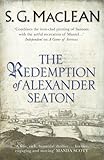
This is the opening of The Redemption of Alexander Seaton by Shona MacLean, from the Prologue:

Banff, 26 March 1626, 10 o’clock

The younger of the two whores rifled the man’s pockets with expert fingers. she cursed softly. Nothing.

‘Leave off, then,’ said her sister. The baillie will be here any minute.’

Mary Dawson rolled the man back over onto his face. He groaned, then retched, and she cursed once more as he vomited bile over her foot. ‘Pig’, she said, and kicked him. The wind sent a barrel careering past them down the brae to smash into a wall below. Somewhere a dog took up a demented howling.

What do you think ? — Would you keep reading? I haven’t read much further on, but I will do.

I came across this book whilst reading blogs a few weeks ago and can’t remember which one referred to this author. I was interested firstly because I like historical mysteries,and secondly because this one is set in Banff on the Moray coast where Shona Maclean lives, and where some of my husband’s family came from. It’s a place I’d like to visit one day.
The Lacuna by Barbara Kingsolver

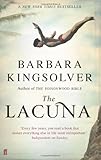
Some years ago I was browsing in a bookshop at Gatwick airport to add to the books I’d brought with me to read on holiday and I bought Barbara Kingsolver’s The Poisonwood Bible. I loved it. I’ve read some of her other books, but none as good as The Poisonwood Bible. When I saw that she had written The Lacuna and it had won the 2010 Orange Prize for Fiction, (actually beating Hilary Mantel’s Wolf Hall!) I bought it, expecting great things. That was two and half years ago and it’s only this year that I’ve read it.

I was disappointed as I don’t think it’s as good as either Wolf Hall or The Poisonwood Bible. There some good parts, but overall I was glad to finish reading it. It’s a long tale (670 pages), moving from Mexico in the 1930s to the McCarthy trials of alleged communists in the USA of the 1940s and 1950s. I thought it began and ended well, with good descriptions and fascinating characters, but I got bored several times in the middle.

It’s the story of Harrison Shepherd, the son of a Mexican mother and an American father and it’s told through his diaries and letters together with genuine newspaper articles, although whether they reported truth or lies is questionable. It begins in Mexico where Harrison’s mother took him to live when she left his father to live with a Mexican businessman, she calls Mr Produce the Cash behind his back. I thought this part came to life with lyrical descriptions of the people and the landscape. But it is only in the second half of the novel that I felt Harrison himself came alive as a character, no longer talking about himself in the third person, ‘the boy’, and referring to himself as ‘I’.

Throughout the book Kingsolver intermingles real characters and events with her fictional ones and I thought that worked well. There are the artists Diego Rivera and his wife Frida Kahlo. Harrison works for Diego, mixing plaster for his huge murals he painted in Mexico City. Whilst working for Rivera, who was a communist he met and subsequently worked for the exiled Bolshevik leader, Lev Trotsky. And it is this connection that eventually lands him in difficulties later on when he had moved to live in the USA and became a novellist writing historical fiction about the Aztecs. He is accused of being a communist and being Un-American.

I found the historical parts very interesting as I knew nothing about Rivera, or his wife, and very little about Trotsky and the McCarthy trials. But eventually I found the level of detail was just too much and the story meandered, losing impetus. Harrison himself comes across as too passive, too accepting of what ever happened to him, a victim of circumstances. Much more interesting is the second narrator, Violet Brown who becomes his secretary and friend, who saved his diaries from being burnt.

There are several instances of lacunas, missing parts and gaps, scattered throughout the book. For example, some of Harrison’s diaries and notebooks go missing. As a boy he loved swimming and diving into a cave, which is only available at certain tides:

Today the cave was gone. Saturday last it was there. Searching the whole rock face below the cliff did not turn it up. Then the tide came higher and waves crashed too hard to keep looking. How could a tunnel open in the rock and then close again? … Leandro says the tides are complicated and the rocks on that side are dangerous, to stay over here in the shallow reef. He wasn’t pleased to hear about the cave. He already knew about it, it is called something already, la lacuna. (page 45)

But although The Lacuna is well written and well researched I felt there was something missing, the personal elements that brought the story to life for me were few and far between; I couldn’t feel involved and just wanted it to end. I persevered because it has had such good reviews and recommendations, but sadly it dragged for me.

January's Books

If you look at how many books I read in January it doesn’t look as though I did much reading with just 4 books completed. I usually average about 8 books a month! But that statistic is misleading because I’ve read just as much if not more than usual because of the length of the books.

Jaunary 2013

I began reading Wild Swans:Three Daughters of China by Jung Chang last year but by January I’d only read less than a quarter of it, so I began January by reading the rest of the book, which took me up to the middle of the month. Wild Swans is an amazing book (720 pages). I wrote about it in this post.It’s a harrowing book to read, but it’s also an eye-opener (for me at any rate) about what happened in China under Mao. It’s a personal story, reflecting the twentieth century history of China. A remarkable book, full of courage and spirit.

I read just one crime fiction – The Case of the Curious Bride by Erle Stanley Gardner (from TBR books). I was disappointed really with this Perry Mason book and didn’t think it was as good as other books by him that I’ve read.

Next was Deaf Sentence by David Lodge, which I liked but didn’t love. Unlike the reviewer in the Literary Review (quoted on the back cover) I didn’t find it had ‘many laugh-out-loud moments‘, just a few amusing bits that made me smile. But is it a moving and at times melancholy book.

In a much lighter vein, although sad in parts is Paw Tracks at Owl Cottage by Denis O’Connor, which I read on my Kindle. It chronicles O’Connor’s experiences with four more cats, all Maine Coons, at his Northumberland cottage.

So, not a large number of books but a lot of reading, because I’ve also been reading Barbara Kingsolver’s The Lacuna, another long book which I’ve finished this morning. I suppose that goes under February’s books!