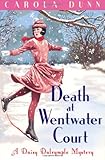
The Hand That First Held Mine by Maggie O'Farrell

I’ve just finished reading Maggie O’Farrell’s book, The Hand That First Held Mine, which won the 2010 Costa Novel Award. I loved it, but it’s such a sad story. It’s beautifully written, so much so that it took me a while to realise that for the most part it’s written in the present tense.

This is a book set in two time periods about two families and immediately I wondered what the link could be. There’s Lexie Sinclair who we meet at the end of the 1950s and Elina and her boyfriend Ted in the present day. Lexie is young and in love with journalist Innes Kent. Elina is struggling after the traumatic birth of her baby and Ted is worried about her. Then strange things happen to Ted as forgotten memories of his childhood rise to the surface of his mind.

It wasn’t too hard to work out the link, but that doesn’t detract from the story – it just makes it all the more poignant. I wrote about the opening of the book in a Book Beginnings post, but I think it’s worth repeating here:

Listen. The trees in this story are stirring, trembling, readjusting themselves. A breeze is coming in gusts off the sea, and it is almost as if the trees know, in their restlessness, in their head-tossing impatience, that something is about to happen.

The garden is empty, the patio deserted, save for some pots with geraniums and delphiniums shuddering in the wind. A bench stands on the lawn, two chairs facing politely away from it.  A bicycle is propped against the house but its pedals are stationary, the oiled chain motionless. A baby has been put out to sleep in a pram and it lies inside its stiff cocoon of blankets, eyes obligingly shut tight.  A seagull hangs suspended in the sky above and even that is silent, beak closed, wings outstretched to catch the high thermal draughts.

When I first read those words I could visualise the scene, feel the breeze and found myself holding my breath, waiting with bated breath to find out what was going to happen. What happened was a wonderful and moving story that kept me captivated to the end as Ted gradually realises the truth. As the epigraph from Matthew Arnold says:

And we forget because we must.

Maggie O’Farrell has a new book out Instructions for a Heatwave, and four earlier books. The full list is (via Fantastic Fiction):

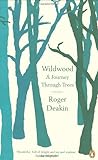
Wildwood: a Journey Through Trees by Roger Deakin

Roger Deakin was a writer, broadcaster and film-maker with a particular interest in nature and the environment. He completed the manuscript for Wildwood, his second book, just before he died in 2006. As the sub-title explains it’s about Deakin’s journeys through a wide variety of trees and woods in various parts of the world. It’s a memoir, a travelogue and also it’s about the interdependence of human beings and trees, or in his own words:

Wildwood is about the element of wood, as it exists in nature, in our souls and in our lives. (page x)

I think parts of this book are brilliant and fascinating, but my eyes glazed over in other parts as I got lost in all the facts and details that he recounts, which were just too much at times for me. But sometimes his writing is poetical, full of imagery. For example in writing about pencils he concludes:

The fine-grained, slow grown mother of all pencils is incense cedar from the forests of Oregon, where a single tree may grow 140 feet high, with a trunk five feet across, enough cedar wood to make 150,000 pencils. It is the incense cedar that infuses pencils with the nutty aroma I remember as I open my pencil-box. In a scooped out hollow in my Oregon pine work table in front of me lies a smooth, round pebble from the Hebrides. It sits snugly in the wood, like the pencil between finger and thumb, and like the hidden vein of graphite, poised inside the cedar to spin itself into words like gossamer from the spider. (page 30)

I love the image that last simile brings to my mind. I also marked these passages: ‘The pencil whispers across the page and is never dogmatic.‘ And this, ‘Rub your finger long enough on a soft-pencilled phrase and it will evaporate into a pale-grey cloud. In this way, pencil is close to watercolour painting.’ (both from page 29)

He wrote about Walnut Tree Farm, his house in Suffolk. It was a ruin when he bought it and he took enormous delight in renovating and restoring it, including personally shaping and repairing every single timber beam  – all 323 of them. His love of trees stemmed from his early years and his school days when in the sixth form he and his school friends camped in the New Forest where their Biology teacher filled them with enthusiasm, setting them to studying and mapping the natural history of a stretch of the woodland, bog and heathland.

He covers a huge area of natural history, not just trees, but also plants, birds, moths, hedges, as well as the uses of wood for living, working and pleasure. He also describes his journeys to numerous places – not just in Britain, but also to the Pyrenees, Bieszczady, Australia, east to Kazakhstan, China, and the walnut forests of Kyrgyzstan. There is so much to take in  – I really think this book deserves an index!

I liked the southern English chapters best, as the further afield he went it seemed more of a travel book. It’s a book of several parts and maybe it would have been more of a whole if Deakin had lived to see it through to publication. I think it’s a bit fragmented.

My favourite chapters cover the work of David Nash, a sculptor in wood and the paintings by Mary Newcomb. Deakin visited David Nash’s studio at Blaenau Ffestiniog, where he was particularly drawn to the Cracking Box made of oak:

As if entering the wild life of the wood, or at least taking its side, Nash has put as many difficulties in his way in the making of the box as he can. … The anarchic work thumbs its nose at the basic rules of woodwork, triumphantly so, because it holds together in spite of the wriggling of the wood as it warps and cracks. The more the wood struggles , the tighter the grips of the oak pegs in their augured sockets. (pages 154 -5)

Mary Newcomb was a Suffolk painter, who Deakin described as belonging ‘in the greenwood tradition, peering unnoticed from behind leaves like the Green Man’.. (page 179) (There is also has a chapter on the Green Man.) I hadn’t heard of Mary Newcomb and was intrigued by Deakin’s description of her work in which people seem to be part of the landscape, where proportion is very often skewed as in children’s art or ‘naive’ painting.

I also liked the chapter on walnuts, entitled Among Jaguars, describing how shapes of delicate walnut veneer are cut for the dashboards and door panels of Jaguar cars, and how the rare walnut burr veneer is produced. Walnuts figure quite prominently in Wildwood, with chapters on the walnut forests of Ferghana Valley in Kyrgyzstan.

Throughout the book Deakin referred to other books – one that stands out for me is Thomas Hardy’s The Woodlanders, one of my favourites of Hardy’s books, full of beautiful descriptions of the landscape and woods.

Overall, then I found this an interesting book, with some outstanding chapters. It’s not a book to read quickly and some parts are written much more fluently than others, but it’s full of fascinating information and meditations on the natural world. One final quotation:

To enter a wood is to pass into a different world in which we ourselves are transformed. It is no accident that in the comedies of Shakespeare, people go into the greenwood to grow, learn and change. It is where you travel to find yourself, often, paradoxically , by getting lost. Merlin sends the future King Arthur as a boy into the greenwood to fend for himself in The Sword in the Stone. There, he falls asleep and dreams himself, like a chameleon, into the lives of the animals and the trees. In As You Like It, the banished Duke Senior goes to live in the Forest of Arden like Robin Hood, and in Midsummer Night’s Dream the magical metamorphosis of the lovers takes place in a wood ‘outside Athens’ that is obviously an English wood, full of the faeries  and Robin Goodfellows of our folklore. (page x)
Books Read in February 2013

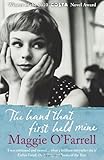
I enjoyed all the books I finished reading in February and my Pick of the Month goes to two excellent books – Dead Water (Shetland series 5) by Ann Cleeves and The Redemption of Alexander Seaton by Shona MacLean, both books being crime fiction.

Dead Water & Alex Seaton

The other books I read are also fiction, although Memoirs of a Fox-Hunting Man by Siegfried Sassoon is fictionalised autobiography. Two of the books are from my stock of unread books bought before January 2013, two are books from my local library and one is an e-book borrowed from the Kindle Owners’ Lending Library.

The links are to my posts on the books – I have yet to write my thoughts about Agatha Christie’s Cat Among the Pigeons.

  1. The Lacuna by Barbara Kingsolver (from TBR books). This novel tells the story of Harrison Shepherd, the son of a Mexican mother and an American father. It’s told through his diaries and letters together with genuine newspaper articles, although whether they reported truth or lies is questionable.
  2. Dead Water by Ann Cleeves, crime fiction continuing the Shetland series featuring Inspector Jimmy Perez. I thoroughly enjoyed reading this –  a mixture of mystery and the creation of totally believable characters, set in Shetland Mainland.
  3. Memoirs of a Fox-Hunting Man by Siegfried Sasson (library book). Sassoon was born in 1886 and in this book he relives his childhood, youth and experiences as an officer during the First World War. He comes across as a likeable young man, shy, reserved, and modest, happy-go-lucky but aware of his own shortcomings. But all this changed with the onset of the First World War.
  4. The Redemption of Alexander Seaton by Shona MacLean (library book)  I think this is one of the best novels I’ve read recently. It’s historical crime fiction set in Scotland in the 1620s, mainly in the town of Banff, where on a stormy night Patrick Davidson, the local apothecary’s assistant collapses in the street. The next morning he is found dead.
  5. Death at Wentwater Court by Carola Dunn (Kindle) – this is crime fiction, the first in the Daisy Dalrymple series and it’s a quick and easy read, a mix of Agatha Christie and PG Wodehouse, set in 1923
  6. Cat Among the Pigeons by Agatha Christie (Poirot)

I’ve also been reading two non-fiction books in February and am still reading them –  Quiet: the power of introverts in a world that can’t stop talking by Susan Cain and Wildwood: a Journey Through Trees by Roger Deakin. It takes me longer to read non-fiction than fiction as I read it more slowly, especially these two books that are packed with facts and ideas. But I’m nearing the end of both of them.

After that I’m planning to finish reading The Hand That First Held Mine by Maggie O’Farrell, which I first started reading last year and put to one side. I’ve had to start reading it again!

Other books waiting to be read, if not in March then later in the year are Memoirs of an Infantry Officer by Siegfried Sassoon, which I’ve borrowed from my local library. This is the next book in his fictionalised autobiography  I’ll also be reading (because it’s my book group choice for March) The Kashmir Shawl by Rosie Thomas, a story of wartime, family secrets and forbidden love, set against in the 1940s in Kashmir.

I’ve got a pile of other books from the library which I’m itching to read soon – I think I’ll do a separate post on these books. I’m always tempted to borrow more books than I can possible read in the loan period, but that’s me! As if I don’t have enough of my own unread books to keep me going all year and beyond.

Death at Wentwater Court by Carola Dunn

I first came across Carola Dunn’s Daisy Dalrymple books on Geranium Cat‘s blog and on Read Warbler‘s blog a couple of years ago and have been meaning to read them ever since.
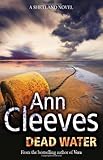
Death at Wentwater Court is the first in the series. It’s a quick and easy read, a mix of Agatha Christie and PG Wodehouse, set in 1923 at the Earl of Wentwater’s country mansion, Wentwater Court. The Honourable Daisy Dalrymple, keen to be independent and earn her own living, is on her first writing assignment for Town and Country magazine, writing about country houses. It’s Christmas and the family and guests at Wentwater Court are enjoying the snow and in particular skating on the frozen lake.

But all is not well. One of the guests, Lord Stephen Astwick is found dead in the lake and it appears he has had a skating accident. However, Daisy’s photos suggest that the hole in the ice had not occurred naturally – there were signs that someone had cut a hole and not that the ice had simply weakened. Enter Detective Chief Inspector Alec Fletcher of Scotland Yard, who is also investigating a jewel robbery at Lord Flatford’s house nearby.

This is a typical country house murder mystery, with plenty of suspects. Daisy is a likeable, lively character and it looks as though her relationship with Alec could become more personal by the end of the book. An enjoyable book, but not one to overtax the brain. I hope it’s not too long before I read the next one in the series – The Winter Garden Mystery.

Note: Carola Dunn is a prolific author, with 21 books in the Daisy Dalrymple series alone – see Fantastic Fiction for her bibliography.

Ann Cleeves and Dead Water

I loved Ann Cleeves’s Shetland QuartetRaven Black, White Nights, Red Bones and Blue Lightning, so I was delighted to read her latest book, Dead Water, which takes the Quartet one step further. Actually, it’s the first book in a new Shetland Quartet, in which each book will be named after the four elements –  earth, air, fire and water. Each of the Shetland books reads well as stand-alones, but I think it’s better to read them in order as you can then follow the development of the main characters. And Dark Water does refer to events in earlier books.

In Dead Water Rhona Laing, the Fiscal, finds journalist Jerry Markham lying dead, drifting in a yoal, a traditional Shetland boat in Aith marina. Markham, a Shetlander visiting his parents, was apparently working on a story for a national newspaper – maybe about the development of renewable energy proposed for Shetland, or maybe his reason was more personal? Detective Inspector Jimmy Perez is not the man he once was, since the death of his fiancée and at first he takes a back seat in the investigations, led by Detective Inspector Willow Reeves (originally from the Hebrides) who is drafted in from the Inverness team to head up the investigation. But eventually his natural curiosity takes over and he decides to help the inquiry, and his knowledge of the local community is vital in catching the killer.

I really enjoyed Dead Water, a mixture of mystery and the creation of  totally believable characters, set in Shetland Mainland.  The book is well paced, with the tension steadily building and Ann Cleeves writes with clarity, so that you can easily picture the people and the places she describes. She gives just the right amount of detail for the reader to feel immersed not only in the story but also in the life of the islands – the history and traditions, and the changes brought about the development of sustainable energy.

Last Tuesday evening D and I went to Main Street Trading bookshop where Ann Cleeves gave a talk about how she first went to Shetland and came to know and love the islands. She also talked about her decision to write crime fiction based in Shetland, and how she first pictured a scene in the snow  which eventually became the first book, Raven Black, after hearing stories of the islands from an old Shetlander.

She also spoke about the new BBC TV Shetland series, which she told us is being broadcast in March, beginning with an adaptation of Red Bones. Admittedly Douglas Henshall, playing the part of Perez, is not her vision of Jimmy Perez, after all, Perez has long dark hair with Spanish ancestry in his blood, whereas Douglas Henshall is  redheaded Scot, but she is happy both with him in the role and with the alterations that have been made. As she explained, once she has finished writing a book it passes out of her hands and each reader has their own individual interpretation. She cannot see what is in the minds of readers, but she can see the director’s interpretation in the TV version of her book! I’ve seen the trailer and it does look good.

Ann Cleeves is an excellent speaker, just as she is an excellent writer. On her website you read about her books and the forthcoming series and also download a leaflet Discover the Mystery of Shetland which has a map, beautiful colour photos and a commentary from Ann about the real and fictitious locations in her books. It’s very good – I was given a copy last Tuesday.

The Redemption of Alexander Seaton by Shona MacLean

There are some books that have the power to transport me to another time and place and The Redemption of Alexander Seaton is one such book. I think it’s one of the best novels I’ve read recently. It’s quite long and detailed but each time I put it down I wanted to get back to it as quickly as possible. It’s a fantastic book, historical crime fiction, full of atmosphere and well-drawn characters.

It’s set in 17th century Scotland, mainly in the town of Banff, where on a stormy night Patrick Davidson, the local apothecary’s assistant collapses in the street. The next morning he is found dead in the school house of Alexander Seaton, a failed minister, now a schoolteacher. Davidson was poisoned and when Charles Thom, one of Alexander’s few friends in the town is arrested for the murder, he sets out to prove his innocence. It’s not an easy task, and Alexander finds himself embroiled in an apparent Spanish Catholic plot to invade Scotland, and bigoted prejudices that result in a witch hunt.

As the story unfolds details of Alexander’s history are gradually revealed, his family background, friends and education and the disgrace that prevented him from becoming a minister. The religious conflict between Catholics and Protestants during the reign of Charles I is slotted into the plot seamlessly, explaining the beliefs and prejudices that struck fear into many hearts. It’s a story of murder and cruelty, but also of love and the power of good over evil. For Alexander it’s a trial that eventually sees him beginning to regain his faith in God.

I found the book totally absorbing, convinced I was back in Scotland in the 17th century, eager to find out who the murderer was and the motivation for killing Patrick Davidson. Alexander Seaton is an engaging character and I’m keen to read more about him as there are other books in the series.

The author originally wrote under her name – Shona Maclean, but now her books are published under the truncated name, S G MacLean. She explained in an interview in Shots magazine that ‘the thinking was that my name was too soft and feminine and men wouldn’t buy my books.’ She has an M.A. and Ph.D. in History from the University of Aberdeen. Her Alexander Seaton books are:

1. The Redemption of Alexander Seaton (2008)
2. A Game of Sorrows (2010)
3. Crucible of Secrets (2011)
4. The Devil’s Recruit (2013)

Note: The cover shown above is from the 2009 paperback edition published by Quercus, which I borrowed from my local library.