I saw this on FictionFan’s blog and thought it was a great idea. It was originally Cleo’s idea – see Cleopatra Loves Books. I hope they don’t mind if I also do the same! The idea is to look back over your reviews of the past five years and pick out your favourite for each month from 2011 – 2015.
So here goes: my favourite books for each February from 2011 to 2015 (click on the covers to see my original reviews, though one or two are mini reviews) are:
2011
 In February 2011 one of my favourite reads was Reginald Hill’s Exit Lines, a Dalziel and Pascoe crime novel. In this one there are three elderly victims who all died violently and a drunken Dalziel is a suspect in one as it seems he was driving the car that hit an elderly cyclist. The plot is intricate, each separate case being linked in one way or another. I thought it was an excellent crime fiction novel which kept me guessing until the end.
2012
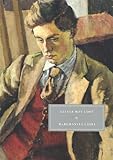 Little Boy Lost by Marghanita Laski is not just one of my favourite reads from February 2012, it is one of my all time favourite books. It is a beautiful book, the story of Hilary Wainwright, who is searching for his son, lost five years earlier in the Second World War. Hilary had left France just after his wife, Lisa, had given birth to John. Lisa, unable to leave France, worked for the Resistance, but was killed by the Gestapo and her son disappeared. It’s written in such clear, straightforward language and yet at the same time it is emotional, heart-wrenching and nerve-wracking, full of tension, but never sentimental.
2013
 It’s historical crime fiction, for February 2013 with The Redemption of Alexander Seaton by Shona MacLean, now known as S G MacLean. It’s set in 17th century Scotland, mainly in the town of Banff, where on a stormy night Patrick Davidson, the local apothecary’s assistant collapses in the street. The next morning he is found dead in the school house of Alexander Seaton, a failed minister, now a schoolteacher. I found the book totally absorbing, convinced I was back in Scotland in the 17th century, eager to find out who the murderer was and the motivation for killing Patrick Davidson.
2014
Purple Hibiscus by Chimamanda Ngozi Adichie, a fabulous book, beautifully written. From the back cover: Fifteen-year-old Kambili lives in fear of her father, a charismatic yet violent Catholic patriarch who, although generous and well-respected in the community, is repressive and fanatically religious at home. Escape and the discovery of a new way of life come when Nigeria is shaken by a military coup, forcing Kambili and her brother to live in their aunt’s home, a noisy place full of laughter. The visit will lift the silence from her world and, in time, unlock a terrible, bruising secret at the heart of her family life.
I loved it even though at times I struggled to read the physical abuse scenes, they were so vivid.
2015
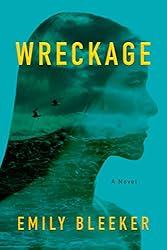 Wreckage by Emily Bleeker; it’s well written, full of suspense, tension and drama as well as love, loss and longing. It’s the story of Lillian Linden and Dave Hall, who were being interviewed following their rescue from a deserted island in the South Pacific where they had spent two years after their plane crashed into the sea. The thing is their interviews are full of lies ‘“ they are desperate to keep what really happened a secret from their families.
 I have read some wonderful debut novels this year –
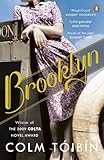 through Eilis’s eyes, a young woman who emigrated to America. A memorable account of both sea sickness and home sickness. The character of Eilis is so well done that she really irritated me with her passiveness and compliance with other people. I enjoyed this book and plan to read Nora Webster, which I think is Toibin’s latest book. It’s set in the same Irish location and I’m hoping it will reveal what happened to Eilis.

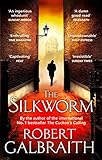 Galbraith, her second book featuring Cormoran Strike. I read the first,
 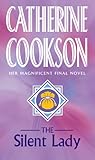 was one of the Kindle Daily Deal books a while ago. I thought it sounded interesting and borrowed it from my local library. I should have known better because I never liked the TV adaptations of her books and have never been tempted to read her novels. But as I liked her book, Let Me Make Myself Plain, which I read years ago, I thought maybe I would like The Silent Lady. I didn’t. It began well as a vagrant asked to see a solicitor (named Alexander Armstrong). She had disappeared over 25 years ago and the novel gradually reveals what had happened to her. Sadly, it got more and more repetitive and maudlin and I lost interest and skipped to the end but found it was just the same mawkish sentimentality.