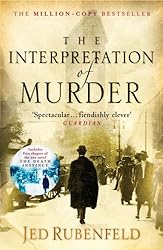
The Interpretation of Murder by Jed Rubenfeld

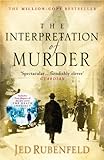
I was looking forward to reading The Interpretation of Murder by Jed Rubenfeld. It had sat on my shelves for nearly 8 years and I decided it was time to read it this year, including it in my TBR Pile Challenge list of books. It’s historical fiction – a mixture of murder mystery and psychoanalysis with an interpretation of ‘˜Hamlet‘˜ thrown in.

It began well as Sigmund Freud and Carl Jung arrived in New York in 1909 to give a series of lectures and to receive an honorary degree from Clark University. That much is fact, but this book is a work of fiction as Rubenfeld makes clear in his Author’s Note and most of the characters are fictional.

There are some things that I did think were well done, for example the descriptions of New York as the city grew, its architecture and streets, the building of the Manhattan Bridge; and as I mentioned earlier the interpretation of ‘Hamlet‘. But as I read on I began to lose interest and at times I felt it was slowed down too much by psychological exposition and debate. Rubenfeld is no doubt well grounded in Freud – as a Princeton undergraduate he wrote his senior thesis on Freud – and also in Shakespeare, which he studied at the Juilliard School of Drama. I found his ideas on interpreting ‘Hamlet‘ most interesting. But I was less enamoured with the dialogue between Freud and Jung, which as Rubenfeld explained is drawn from their own letters, essays and statements, which whilst being factually accurate, doesn’t come across as real conversation.

I thought the murder mystery was unconvincing and too convoluted. Briefly, the morning after Freud’s arrival a young woman is found brutally murdered and later a second, Nora Acton, is attacked in a similar fashion but she survives, although unable to speak. Freud is asked to help by psychoanalysing Nora and asks his young American colleague, Dr Stratham Younger to carry out the analysis. To cut a long story short Younger is helped in his investigations by Detective Jimmy Littlemore and together they discover what really happened.

Maybe I was expecting too much from this book, which is described in the blurb as’Spectacular … fiendishly clever‘, and a ‘thrilling heart-in-the-mouth read … Once you start reading, it’s impossible to put down.’  It jumps about a bit too much for my liking, between narrators and sub-plots, some of the characters came over a bit flat and I didn’t find it either ‘fiendishly clever‘ or ‘impossible to put down‘.

This Week in Books: 8 April 2015

My week in booksThis Week in Books is a weekly round-up hosted by Lypsyy Lost & Found, about what I’ve been reading Now, Then & Next. A similar meme is run by Taking on a World of Words.

Now:

I’m currently reading The Interpretation of Murder by Jed Rubenfeld. I have mixed feelings about it, alternating between thinking it’s good, not so good, and just about OK, so I carry on reading. It’s historical fiction based on Freud’s visit to New York in 1909, accompanied by Jung, when a young woman is brutally murdered and a second is attacked and left unable to speak. A mixture of murder mystery and psychoanalysis with an interpretation of ‘Hamlet‘ thrown in. I’ve nearly finished this book.

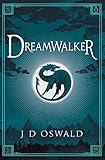
I’m also reading Dreamwalker: The Ballad of Sir Benfro Book One by James Oswald on my Kindle. This is fantasy fiction, not the sort of book I read very often, so it makes a refreshing change. This is inspired by the language and folklore of Wales, following the adventures of a young dragon, Sir Benfro, in a land where his kind have been hunted near to extinction by men. I’ve read about 25% of the book so far.

Then:

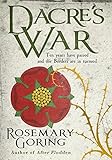
I’ve recently finished reading Dacre’s War by Rosemary Goring, a new book which will be published in June. My copy is a pre-publication review copy courtesy of www.lovereading.co.uk. I loved this book, historical fiction set in the Scottish and English Borders and London between 1523 – 1525, full of political intrigue and personal vengeance. My review will follow soon.

Next:

There are several books lining up that I’m keen to read next. I’m not sure which one to choose. It’s been a while since I read an Agatha Christie, so it could be The Moving Finger, a Miss Marple mystery. Or it could be Elizabeth is Missing by Emma Healey, or Nora Webster by Colm Tobin, or The Last Girl, the third Maeve Kerrigan book by Jane Casey. Or something completely different!

The Classics Club Spin Result …

… it’s NUMBER 2

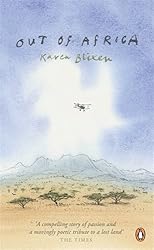
Out of Africa by Karen Blixen

This is the book for me to read by 15 May.

Well, it’s not one of the Dickens’ books I listed but it’s still a book I’ve been looking forward to reading, ever since I saw the film starring Meryl Streep and Robert Redford. It’s Karen Blixen’s memoir of life in Kenya on a coffee plantation in the early years of the 20th century.

Classics Club Spin

The Classics ClubIt’s time for another Classics Spin.

  • List any twenty books you have left to read from your Classics Club list.
  • Number them from 1 to 20.
  • Next Monday the Classics Club will announce a number.
  • This is the book you need to read by 15th May.

I decided to list all the books by Charles Dickens, George Eliot, Elizabeth Gaskell and Gabriel Garcia Marquez that are on my list and then added Moby Dick because it will fit in well with a book I’m planning to read soon, In the Heart of the Sea by Nathaniel Philbrick, which was inspired by Moby Dick.  I added the other books randomly.

  1. Lorna Doone: A Romance of Exmoor by R D Blackmore
  2. Out of Africa by Karen Blixen
  3. No Name by Wilkie Collins
  4. Nicholas Nickleby by Charles Dickens
  5. Little Dorrit by Charles Dickens
  6. Martin Chuzzlewit by Charles Dickens
  7. The Old Curiosity Shop by Charles Dickens
  8. Oliver Twist by Charles Dickens
  9. Adam Bede by George Eliot
  10. The Mill on the Floss by George Eliot
  11. Romola by George Eliot
  12. Silas Marner by George Eliot
  13. Parade’s End by Ford Maddox Ford
  14. Mary Barton by Elizabeth Gaskell
  15. North and South by Elizabeth Gaskell
  16. Wives and Daughters by Elizabeth Gaskell
  17. Three Men in a Boat by Jerome K Jerome
  18. Love in the Time of Cholera by Gabriel Garcia Marquez
  19. One Hundred Years of Solitude by Gabriel Garcia Marquez
  20. Moby Dick by Herman Melville

I quite fancy reading Dickens soon, so hope one of his is the spin book.

Five of the Best – March 2011 to 2015

Looking back over my reviews of the past five years I’m picking out a favourite book for each month from 2011 ‘“ 2015.

Here are my favourite books for each March from 2011 to 2015 (click on the titles to see my original reviews):

2011

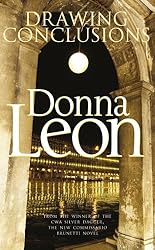
Drawing Conclusions by Donna Leon – the 20th book in her Commissario Guido Brunetti series. Anna Maria Giusti discovers her elderly neighbour Constanza Altavilla lying dead on the floor of her apartment. Apparently she has died from a heart attack but Brunetti thinks otherwise. It’s more than crime -fiction as Brunetti ponders on life, the problems of ageing, and the nature of truth and honesty.

2012

Daphne by Justine Picardie. This book merges fact and fiction so well that it’s hard to differentiate between the two. It tells the story of Daphne du Maurier and her correspondence about Branwell Bronte with Alex Symington, an ex-Bronte curator and librarian. I preferred this strand of the book to the second, which is a modern day story of a young woman, the second wife of an older man, paralleling the story of Rebecca  – beware if you haven’t read Rebecca, as this book gives away the plot. A satisfying mystery about Daphne and the missing Bronte documents.

2013

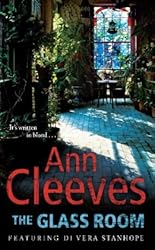
The Glass Room by Ann Cleeves, the fifth book in Ann Cleeves’s Vera Stanhope series. I loved this book ‘“ a great setting, with well drawn characters and a cleverly constructed plot. I didn’t guess who the murderer was but realised afterwards that all the clues had been there, skilfully woven into the narrative, hidden among the dead-ends and red herrings. It’s a murder mystery set in the Northumberland countryside in an isolated country house, where a number of aspiring authors are gathered at the Writers’ House to work on their novels and where one of the visiting tutors is murdered.

2014

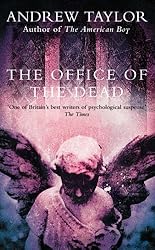
The Office of the Dead by Andrew Taylor, the third book in the Roth Trilogy.  I absolutely loved it. This is a chilling novel of crime and retribution. It works perfectly well on its own, but is even better if you’ve read the first two books.  The characters and setting are totally convincing. It’s well written and the creation of tension and suspense are just right. I thought it was brilliant!

2015

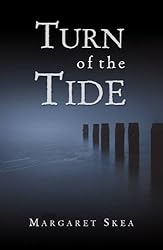
Turn of the Tide by Margaret Skea, her debut novel. It’s historical fiction and it captivated me completely transporting me  back in time to 16th century Scotland. If you have ever wondered,  as I have, what it must have been like to live in a Tower House in the Scottish Borders then this book spells it out so clearly. And it puts you firmly in the middle of the centuries old feud between the Cunninghames and the Montgomeries, with all the drama of their battles, ambushes and schemes to further their standing with the young King James VI. It’s a tale of love, loyalty, tragedy and betrayal.

Reading Challenges Update 1 Jan – 31 March 2015

With three months of the year already gone it’s time to see where I am in the challenges I’ve joined. My main challenge or rather aim is to read as many of the books I’ve owned since before 1 January this year, that is my TBRs, and the other challenges are all geared to that one aim.