Mount TBR Check Point #1

Mount TBR 2015

It’s time for the first quarterly check-in post. Bev at My Reader’s Block asks for two things:

1. Tell us how many miles you’ve made it up your mountain (# of books read).  If you’re really ambitious, you can do some intricate math and figure out how the number of books you’ve read correlates to actual miles up Pike’s Peak, Mt. Ararat, etc. And feel free to tell us about any particularly exciting adventures you’ve had along the way.

My answer: I’ve read 13 books which means I’ve passed Pike’s Peak and am at the Tramway du Mont Blanc.

From Wikipedia: autor : Frédéric Bonifas
2. Complete ONE (or more if you like) of the following:
 A. Post a picture of your favorite cover so far.
 B. Who has been your favorite character so far? And tell us why, if you like.
 C. Have any of the books you read surprised you–if so, in what way (not as good as anticipated? unexpected ending? Best thing you’ve read ever? Etc.)
 D. Which book (read so far) has been on your TBR mountain the longest? Was it worth the wait? Or is it possible you should have tackled it back when you first put it on the pile? Or tossed it off the edge without reading it all?
I am answering 2D:
An Autobiography by Anthony Trollope has been on my TBR Mountain the longest.  Although it was new when I bought it the pages are now yellowed and the paperback a bit worn and damaged from moving house. I bought it about 25 years ago when I was doing an Open University course and my tutor was an avid fan of Trollope. At the time I hadn’t read any of his books, so  I thought it would be better if I knew a bit about his work before reading about his life. It was well worth the wait.
Autobiography Trollope 001

Books Read in March 2015

March has been a bumper reading month, as I finished reading 11 books, bringing my total for the year so far to 26 books.

I’ve written about eight of them – the links in bold are to my posts:

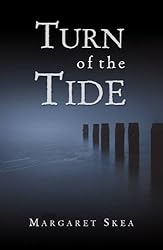
Turn of the Tide by Margaret Skea – historical fiction set  in 16th century Scotland in the Scottish Borders. It’s a tale of love, loyalty, tragedy and betrayal; of the feud between the Cunninghames and the Montgomeries. I loved it.
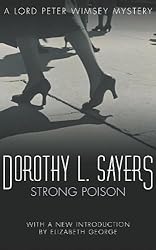
Strong Poison by Dorothy L Sayers – crime fiction. Harriet Vane is on trial for the murder of her former lover, Philip Boyes. Lord Peter Wimsey, attending the trial, is convinced she is innocent and sets out to prove it ‘¦ and falls in love with her. Superbly written with humour as well as ingenuity.
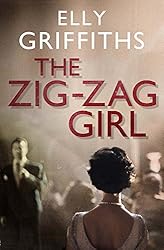
The Zig Zag Girl by Elly Griffiths -historical crime fiction set in the theatrical world of the post-war 1950s and linking back to the war years . DI Edgar Stephens investigates the murder of a girl whose body was found cut into three, reminding him of the illusion known as the Zig Zag Girl.
Three Act Tragedy 001Three Act Tragedy by Agatha Christie – one of her earlier books, featuring Hercule Poirot and Mr Satterthwaite, full of baffling clues, conjuring tricks, clues concealed in conversations, with larger than life personalities, and above all with puzzles to be solved. I really enjoyed it.
The Autistic Brain: Exploring the Strength of a Different Kind of MInd by Temple Grandin – non fiction –  about the changes in the diagnosis of autism and other developmental disorders. ‘Autism, depression and other disorders are on a continuum ranging from normal to abnormal. Too much of a trait causes severe disability, but a little bit can provide an advantage.’  I found parts of this were very readable and easily understandable, other parts (more scientific/technical) were less so.
Catching the Eagle by Karen Charlton – historical crime fiction set in Northumberland in the early 19th century, based on a true story. Kirkley Hall manor house is burgled,suspicion falls on Jamie Charlton and he and his family face a desperate battle to save him from the gallows.  It’s packed with tension and realism that kept me captivated from start to finish.
Seeking Our Eagle by Karen Charlton -non fiction an account of how she came to write Catching the Eagle whilst researching her husband’s family history.
 

Gaudy Night by Dorothy L Sayers  – crime fiction. Harriet Vane goes back to her old Oxford college where she encounters obscene graffiti and poison pen letters. Struggling to find the culprit she enlists the help of Lord Peter Wimsey. This is an absorbing mystery, portraying life in the 1930s, and exploring the role of women in society, particularly with regard to education and marriage.

The Wonderful Wizard of Oz by L Frank Baum – an entertaining story, pure escapism, which I would have loved as a child, following Dorothy’s adventures in the Land of Oz .
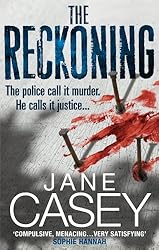
The Reckoning by Jane Casey – crime fiction, the second in the Maeve Kerrigan series. I thoroughly enjoyed this book, although the opening scenes are rather grim as two men are found dead, both tortured to death. The victims were both paedophiles and no one seems to be too concerned about them. Maeve is not finding it easy to get on with her new boss DI Josh Derwent, and her relationship with her lover Rob, is also causing her problems. Most of the book is narrated by Maeve, with just a few by Rob. It’s quite a complicated plot but is basically a police procedural written in a straight forward style that makes it easily readable, if a little over long in parts.

Burying the Typewriter: Childhood Under the Eye of the Secret Police. Carmen Bugan

Burying the Typewriter: Childhood Under the Eye of the Secret Police by Carmen Bugan – nonfiction,  a childhood memoir of political oppression and persecution during Romania’s Ceausescu years.

Blurb from Amazon:

One quiet day when her mother was away from home, Carmen Bugan’s father put on his best suit and drove into Bucharest to stage a one-man protest against Ceausescu. He had been typing pamphlets on an illegal typewriter and burying it in the garden each morning under his daughter’s bedroom window. This is the story of what happened to Carmen and her family, isolated and under surveillance in their beloved village home. It is an intimate piece of our recent history, the testimony of an extraordinary childhood left abruptly behind. Above all, it is a luminous, compassionate, and unflinchingly honest book about the price of courage, the pain of exile, and the power of memory.

Even though this is a beautifully written and descriptive book I struggled a bit at first with the style of writing in the historic present tense, but then I often have problems reading the present tense. However, this does make it a remarkable book, and the first part of it really does seem to be seen through a child’s eyes, unaware of her parents’ activities. As Carmen grew older she became more aware of what was going on. A testimony to courage in the face of oppression.

I can’t choose just one book this month as my favourite – it’s a tie between The Turn of the Tide and Gaudy Night!

The Wonderful Wizard of Oz by L Frank Baum

The Wonderful Wizard of Oz has been on my shelves for a few years and as I’m taking part in the Once Upon a Time event hosted by Carl at Stainless Steel Droppings I decided it was time I read it. It’s a complete change of genre for me as I rarely read children’s books.

It was first published in 1900, made into a Broadway Musical in 1902 and a film in 1939. I’ve seen the film and also a stage version in a local amateur dramatic society production some years ago.

I enjoyed this entertaining story, pure escapism, which I would have loved as a child, following Dorothy’s adventures in the Land of Oz after the cyclone whisked her house high in the air out of Kansas and set it down on top of the Wicked Witch of the East, thus killing her. Dorothy and her little dog, Toto, are very anxious to get back home to Kansas and they set out on the yellow brick road leading to the Emerald City to ask the Wizard of Oz to help them. On the way she meets the Scarecrow, the Tin Man and the Cowardly Lion, who go with her as they want the Wizard to give them brains, a heart and courage respectively.

Their journey is interrupted in various places and by a variety of creatures, some very dangerous indeed; as in most fairy tales, there is a fair amount of violence in the book, as Dorothy and her friends combat the Wicked Witch of the East. I was fascinated by the Winged Monkeys, who can grant three wishes, the Fighting Trees, the Dainty China Country and its pretty little, fragile people and by the Quadlings with their flat hammer heads.

There are several interpretations* of the story that I’ve come across, but the simple message of the story is, of course, that you have to use your brains yourself, after all the Scarecrow can think, he just doesn’t realise that he can and he came up with lots of ingenious ideas along the way; courage comes from facing danger even when you are afraid – it comes from within and the Lion does that without realising he already has courage. As for the Tin Man, again he truly did have a heart – his desire for one shows his kindness and goodness.

And by the way Dorothy’s shoes are silver and not red as in the film.

*On Goodreads there are several reviews that draw parallels with the economics of America in the late 19th century and the political climate of the time.

And I found this interesting article in The New York Times Scarecrow, Lion, Tin Man and Freud, Too by Janet Maslin discussing this book: The Real Wizard of Oz, The Life and Times of L. Frank Baum by Rebecca Loncraine. Baum apparently drew on his own experiences in writing his book – images of the Civil War amputees led to the Tin Man, bizarre sights such as displayed by PT Barnum, the Chicago World Fair and so on. It sounds a fascinating book! I am constantly finding reading one book leads on to wanting to read yet more books – and I hadn’t realised before that there are more Oz books that Baum wrote!

Short Book Meme

I saw this last Sunday on Cath’s blog Read Warbler and thought I’d do it too.

1. What was your favourite book during childhood?

It’s absolutely impossible to choose just one book – how can I choose between the Heidi books, Louisa May Alcott’s books, the Katy books, The Secret Garden , Enid Blyton’s books, or Alice in Wonderland and Through the Looking Glass and many more?

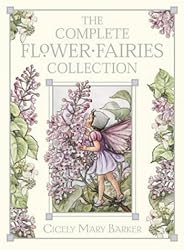
But because  I loved and read the Flower Fairy books so many times, today I’m naming those as my favourite childhood books. I don’t have any of my original Flower Fairy books, but they’re still in print. There are many more now than when I was little and you can get the Flower Fairies Complete Collection of all eight original books ‘“ ‘Spring’, ‘Summer’, ‘Autumn’, ‘Winter’, ‘Wayside’, ‘Garden’, ‘Alphabet’, and ‘Trees’.

2.What is your favourite book now?

Another impossible question with so many to choose from, so I’m choosing one of my favourite books. It’s The Daughter of Time by Josephine Tey, a novel investigating what Richard III was really like and whether he did kill his nephews, the Princes in the Tower. It came to mind because this week it was the re-burial in state in Leicester Cathedral of Richard III, whose bones were recently found under a car park.

I loved it!

3. What is your favourite movie adaptation of a book?

I often avoid watching a film of a book if I’ve read the book first – I usually prefer the book! But I did watch Atonement and even though it doesn’t stick to the book throughout I thought it was excellent.

Atonement UK poster.jpg

Actually Atonement is another of my favourite books.

4. Do you prefer checking out books from the library or buying them?

I love both and wouldn’t want to be without a lending library nearby. It’s great where I live now – I have two not very far away and a mobile library van that visits once a fortnight.

5. Have you ever been let down by a book that was highly recommended to you?

I’m always wary about books that receive lots of hype, as I often think they’re over rated and I agree with Cath’s choice of The Time Traveler’s Wife. Another book that disappointed me is The Thirteenth Tale by Diane Setterfield. It took me some time to get into it and I couldn’t really like the characters, even Margaret, the narrator, irritated me, even though she loves books. And I thought the ending was contrived.

Dorothy L Sayers: Strong Poison & Gaudy Night

I’m no longer attempting  to write about every book I read but I do want to record a few of my thoughts on two of Dorothy L Sayers’ books that I’ve read recently because they are both such good books. However, I doubt very much that I can do justice to either of these books.

Dorothy Leigh Sayers (1893-1957) was born at Christchurch Cathedral School, Oxford, where her father was the headmaster. She learned Latin and French at the age of seven, went to Somerville College, Oxford and in 1915 she graduated with a first class honours degree in modern languages. She is best known as the creator of Lord Peter Wimsey, but as well as writing crime fiction she also wrote poems, plays, essays, books on religion and was a translator – most notably of Dante’s Divine Comedy.

The two of her books I’ve read recently are Strong Poison (first published in 1930) and Gaudy Night (first published in 1935), both featuring Harriet Vane, a crime fiction novelist, and her relationship with Lord Peter Wimsey, the aristocratic amateur detective.

The two first meet in Strong Poison, when Harriet is on trial for the murder of her former lover, Philip Boyes. Wimsey, attending the trial, is convinced she is innocent and sets out to prove it … and falls in love with her.

From the back cover:

The Crown’s case is watertight. The police are adamant that the right person is on trial. The judge’s summing up is also clear. Harriet Vane is guilty of killing her lover and Harriet Vane must hang. But the jury disagrees.

Well, actually one member of the jury won’t agree that she is guilty – that is Miss Climpson, an elderly spinster, who just happens to run what Wimsey calls ‘My Cattery’, ostensibly a typing bureau, but actually an amateur detective/enquiry agency. Wimsey decides that Harriet is innocent, Boyes, who died poisoned by arsenic, either committed suicide or was murdered by someone else. It is Miss Climpson and her employees, mainly spinsters with small fixed incomes, or no incomes, widows without families, or women deserted by their husband, who do the investigations. This involves Miss Climpson posing as a medium and Miss Murchison learning how to pick a lock.

To sum up – this is a delightful book, full of strong characters, a mystery to solve, superbly written with humour as well as ingenuity.

And then there is Gaudy Night, which is even better than Strong Poison. I loved the setting in this book – Shrewsbury College, a fictional all female college, at Oxford University (based on Somerville College, Sayers’ own college). The action of the book takes place in 1935, five years after Harriet’s trial in Strong Poison. During those five years Harriet and Wimsey have had an ongoing ‘relationship’ in which he annually asks her to marry him and she refuses. They had also worked together on a murder at Wilvercombe, as told in Have His Carcase, a book I have yet to read.

Gaudy Night begins as Harriet decides to go back to Shrewsbury College to attend the Shrewsbury Gaudy (a college reunion involving a celebratory dinner), not sure she can face meeting her fellow students and the dons. It doesn’t go well – there are poison pen letters, nasty graffiti and vandalism causing mayhem and upset. Harriet is asked to investigate, under pretence of helping one of the dons to rewrite her manuscript that had been destroyed in one of the nightly attacks and researching the life and works of Sheridan Lefanu. Struggling to discover the culprit and afraid it will end in murder she asks Wimsey for help.

This is a complex novel, with many characters, some of whom I found difficult to visualise, whereas others were vividly depicted, their thoughts, actions and feelings clearly evident. I had no idea who the writer of the poison pen letters etc could be and I was completely absorbed in the mystery.

But what gives both books so much depth is the portrayal of life between the two world wars, the exploration of the role of women in society, particularly with regard to education and marriage and the importance of truth and honesty; not forgetting, the ongoing relationship between Harriet and Lord Peter Wimsey. Of the two books I preferred Gaudy Night, but both are excellent and a pleasure to read.

Stacking the Shelves

STSmall

Stacking The Shelves is all about sharing the books you are adding to your shelves. This means you can include ‘real’ and ‘virtual’ books (ie physical and ebooks) you’ve bought, books you’ve borrowed from friends or the library, review books, and gifts.

This is my first entry in Stacking the Shelves. These are last week’s new arrivals:

In the heart of the sea

First ‘real’ books. It was Mother’s Day last Sunday and my son bought me this book, In the Heart of the Sea: the Epic True Story that Inspired Moby Dick by Nathaniel Philbrick – wonderful!

From the back cover:

The sinking of the Nantucket whaleship Essex by an enraged spermwhale far out in the Pacific in November 1820 set in train one of the most dramatic sea stories of all time. Accounts of the unprecedented whale attack inspired Herman Melville’s mighty novel Moby Dick, but In the Heart of the Sea goes beyond these events to describe what happened when the twenty mixed-race crewmen took to three small boats and what, three months later, the whaleship Dauphin, cruising off the coast of South America, discovered when it spotted a tiny boat sailing erratically across an open ocean.

The other books in the photo above are library books:

  • Collins Artist’s Little Book of Inspiration by Hazel Soan – a lovely little book looking at the basics elements of a painting using watercolours, oils and acrylics, with demonstrations and projects to try. I like just looking at the paintings!
  • The Reckoning by Jane Casey, the second in her Maeve Kerrigan series. I reserved this because I’d enjoyed the first one, The Burning and wanted to read more. This one begins with the murders of two paedophiles.
  • Conan Doyle: the Man who Created Sherlock Holmes by Andrew Lycett. This book was on a display stand and even though it’s a huge, heavy book I fancied reading it. It was probably on display following the  recent TV drama Arthur and George, which I enjoyed. I read Julian Barnes’ book of the same name some years ago, which pre-dates this biography.

When Lovereading offered a review copy of Dacre’s War by Rosemary Goring I didn’t hesitate because I’d loved Rosemary Goring’s earlier novel, After Flodden.

Dacres War

Dacre’s War is set 10 years after the battle of Flodden in the Scottish and English borders, a story of ‘personal and political vengeance’ as Adam Crozier sets out to take revenge on Lord Thomas Dacre, who had ordered the death of his father. It’s due to be published on 14 May 2015.

Lastly, the latest ebook I’ve downloaded is today’s Kindle Daily Deal, Last Man in Tower by Aravind Adiga. A. N. Wilson ‘was absolutely mesmerized by this novel’ and thinks ‘that Aravind Adiga is already, with this, his second book, the most exciting novelist writing in English today.’ 

Last Man in Tower