My Week in Books: 11 November 2015

This Week in Books is a weekly round-up hosted by Lypsyy Lost & Found, about what I’ve been reading Now, Then & Next. A similar meme,  WWW Wednesday is run by Taking on a World of Words.

Now: Currently I’m reading two books: Even Dogs in the Wild by Ian Rankin. I’d like to finish this today.
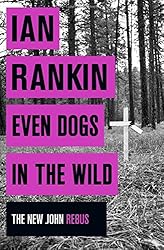
BlurbHands in his pockets, Rebus turned to face Cafferty.
They were old men now, similar builds, similar backgrounds. Sat together in a pub, the casual onlooker might mistake them for pals who’d known one another since school.
But their history told a different story.

Retirement doesn’t suit John Rebus. He wasn’t made for hobbies, holidays or home improvements. Being a cop is in his blood.

So when DI Siobhan Clarke asks for his help on a case, Rebus doesn’t need long to consider his options.

Clarke’s been investigating the death of a senior lawyer whose body was found along with a threatening note. On the other side of Edinburgh, Big Ger Cafferty – Rebus’s long-time nemesis – has received an identical note and a bullet through his window.

Now it’s up to Clarke and Rebus to connect the dots and stop a killer.

Meanwhile, DI Malcolm Fox joins forces with a covert team from Glasgow who are tailing a notorious crime family. There’s something they want, and they’ll stop at nothing to get it.

It’s a game of dog eat dog – in the city, as in the wild.

I’m also reading  Mrs Jordan’s Profession: the Story of a Great Actress and a King by Claire Tomalin, which I’ve been reading very slowly for a few weeks now. I hope to finish it soon. I’m up to 1812/13 when Dora and Prince William have parted and Dora is trying to come to terms with her new situation and pick up the pieces of her life. It’s very moving.
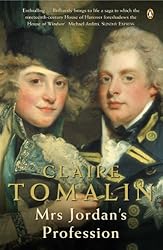
Blurb: Acclaimed as the greatest comic actress of her day, Dora Jordan lived a quite different role off-stage as lover to Prince William, third son of George III. Unmarried, the pair lived in a villa on the Thames and had ten children together until William, under pressure from royal advisers, abandoned her. The story of how Dora moved between the worlds of the eighteenth-century theatre and happy domesticity, of her fights for her family and her career makes a classic story of royal perfidy and female courage.

Then: I recently finished A Fear of Dark Water by Craig Russell. This is the sixth Jan Fabel book, but can be read as a stand-alone. Russell is now one of my favourite authors. This book is so good I raced through it.
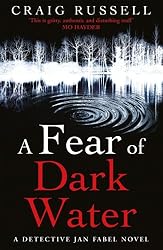
Blurb: Just as a major environmental summit is about to start in Hamburg, a massive storm hits the city. When the flood waters recede, a headless torso is found washed up.

Initially, Jan Fabel of the Murder Commission fears it may be another victim of a serial rapist and murderer who stalks his victims through internet social network sites, then dumps their bodies in waterways around the city.

But the truth of the situation is far more complex and even more sinister. Fabel’s investigations lead him to a secretive environmental Doomsday cult called ‘Pharos’, the brainchild of a reclusive, crippled billionaire, Dominik Korn.

Fabel’s skills as a policeman are tested to their utmost as he finds himself drawn into an unfamiliar, high tech world of cyberspace, where anyone can be anybody or anything they want. And he quickly realises that he is no longer the hunter, but the hunted.

I’ll write more about this book in a later post.

Next: always tentative choices as when the time comes I may choose other books, but right now I’m thinking of reading Nagasaki: Life after Nuclear War by Susan Southard, a book that follows the lives of five teenage survivors of the atomic bombing of the civilian population of Nagasak from 1945 to the present day Southard. She  unveils the lives they have led, their injuries in the annihilation of the bomb, the dozens of radiation-related cancers and illnesses they have suffered, and the humiliating and frightening choices about marriage they were forced into as a result of their fears of the genetic diseases that may be passed through their families for generations to come.

And as I like to have both a non-fiction and a fiction book on the go together I may read A Pale View of the Hills by Kazuo Ishiguro, which has post-war life in Japan as its backdrop to a story of memory, suicide, and psychological trauma.
Color Coded Challenge 2015 – Completed

Colour coded

I’ve completed the Color Coded Challenge hosted by Bev at My Readers Block by reading nine books in different colour categories. The colour may either be named in the title or it may appear as the dominant colour for the cover of the book.

Here is what I read with links are to my posts on the books:

1. A book with ‘Blue‘ or any shade of Blue (Turquoise, Aquamarine, Navy, etc) in the title/on the cover. Blue Mercy by Orna Ross (Kindle)

2. A book with ‘Red‘or any shade of Red (Scarlet, Crimson, Burgundy etc) in the title/on the cover. Five Red Herrings by Dorothy L Sayers

3. A book with ‘Yellow‘or any shade of Yellow (Gold, Lemon, Maize, etc.)in the title/on the cover. The Golden Age of Murder by Martin Edwards

4. A book with ‘Green‘or any shade of Green (Emerald, Lime, Jade, etc) in the title/on the cover. Green Darkness by Anya Seton

5. A book with ‘Brown‘or any shade of Brown (Tan, Chocolate, Beige, etc) in the title/on the cover. Appointment with Death by Agatha Christie ‘“ brown cover

6. A book with ‘Black‘or any shade of Black (Jet, Ebony, Charcoal, etc) in the title/on the cover. Gray Mountain by John Grisham

7. A book with ‘White‘or any shade of White (Ivory, Eggshell, Cream, etc) in the title/on the cover. The Man in the Wooden Hat by Jane Gardam ‘“ white cover

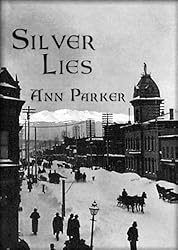
8. A book with any other colour in the title/on the cover (Purple, Orange, Silver, Pink, Magneta, etc.). Silver Lies by Ann Parker (Kindle)

9. A book with a word that implies colour (Rainbow, Polka-dot, Plaid, Paisley, Stripe, etc.). House of Shadows by Nicola Cornick

Silver Lies by Ann Parker

From out of the black hole that is my Kindle came Silver Lies by Ann Parker, a new-to-me author. Books have been known to disappear for ever in there and this one had been languishing down in the depths for three years, so I thought it was time to read it. It looked as though it would be a bit different from other books I’ve been reading this year. Apart from True Grit I don’t think I’ve read any westerns for years and actually this one is not a typical western. It’s not a Cowboys and Indians type western at all but is set in 1879/80 in the silver-mining town of Leadville, Colarado in the heart of the Rocky Mountains. It probably fits in more with the crime fiction genre than with westerns, but it was the setting  that attracted me to it.

It’s a really good story beginning when Joe Rose, a silver assayer, facing a bleak future as the last of his money has gone and the hope of making his fortune in silver has disappeared, is found dead in Tiger Alley propped up behind the Silver Queen saloon. Inez Stannert’s husband Mark had won the saloon in a poker game and eight months before the story begins he had left her and their friend and business partner, Abe Jackson to run it on their own. Inez has no idea where he is and whether he’ll ever return.

Joe’s death is just the start of the mystery – was his death an accident or was he murdered and if so why?  Inez sets out to discover the truth and although his wife Emma has asked her to settle his affairs for her what is she keeping from Inez? Where is Mark and why did he leave? There is a new Reverend in town. Inez falls for his charms but is he to be trusted? She had him pegged as a gambler rather than a man of the cloth. And she doesn’t trust the new marshall either – ‘a thin man with the look of a hungry rattlesnake’. Inez knows he is ‘just a two-bit gunslinger from Texas’ hired by the ‘silver barons to keep the peace after last month’s lynching’. So it’s no wonder that she uncovers a web of deceit, counterfeit, blackmail and murder.

With plenty of memorable characters I could easily imagine I was in the silver rush town, a town where:

People rush in – from the East, from the West – and collide at the top of the Rockies. They’re looking for riches or looking to escape. And running. Everyone’s either from their past or running toward some elusive vision of the future. (location 5896)

Leadville was a colourful place, a boom-town, bustling with life -everything is there – the Silver Queen saloon and the Crystal Belle Saloon, Leadville’s leading parlor house, a brick built opera house, whose patrons ‘swelled the after-midnight crowds’ in the Silver Queen saloon, five banks and a small white church with a steeple.

Silver Lies won the Willa Award for Historical Fiction and the Colorado Gold Award and was chosen as best mystery of the year by Publishers Weekly and The Chicago Tribune.  For more information about Ann Parker and her books see her website.

I was completely engrossed in this book with its multi-layered and intricate plot that kept me guessing all the way through.  I hope to read more of this series:
  1. Silver Lies (2003)
  2. Iron Ties (2006)
  3. Leaden Skies (2009)
  4. Mercury’s Rise (2011)

Reading challenges: Mount TBR Reading Challenge 2015Historical Fiction Reading ChallengeColor Coded Challenge

The Monocled Mutineer by John Fairley & William Allison

When I was asked if I would read and review a revised edition of The Monocled Mutineer by John Fairley and William Allison, the book on which the 1986 BBC TV series was based I was immediately interested as I had watched the TV series.

Description from the Press Release:

In 1917 British, New Zealand and Australian troops stationed at the Étaples Training Camp in northern France protested against the inhuman conditions and the protest erupted into mutiny. Private Percy Toplis was named by the authorities as a leader of this mutiny. While several of the mutineers were executed in its aftermath, Toplis escaped and remained at large for three years. The Army immediately covered up the mutiny, thousands of the participants died shortly afterwards in the Passchendaele offensive while the survivors remained silent for over fifty years. After three years as Britain’s most wanted man Percy Toplis was killed in 1920 by a policeman.

My thoughts:

This is the 2nd and updated edition of The Monocled Mutineer, which  includes a new introduction and epilogue that expand on newly discovered information about the events of the mutiny and the government’s response to it. It is primarily based on interviews and correspondence with survivors of the First World War nearly sixty years after the events they describe. In 1976 the authors advertised in newspapers asking whether any veterans from the First World War had recollections of the events in Étaples in September 1917. They received many replies containing:

  … sharp, bitter accounts of events long ago, but far from forgotten. Inevitably they were careful handwritten stories in old men’s script, teased out without any other prompting than the brief enquiry in their local paper. (page 2)

In addition to the anecdotal evidence the authors have used other sources including the published personal reminiscences of Edwin Woodhall,  Detective and Service Days and Lady Angela Forbes. Memories and Base Details; journalists’ accounts in various periodicals; and have drawn background material from records about the First World War in the  Imperial War Museum, The Public Record Office and the British Newspaper Library.

Not many contemporary records have survived that relate to the mutiny. One of the surviving records is the war diary of the Commandant at the Étaples Camp,  Brigadier-General Andrew Graham Thomson. Thompson describes what happened as a ‘disturbance’ and as ‘riots’ and ‘breakouts’:

Disturbance in Reinforcement Camp between military police and troops, Corporal Wood, 4th Gordons being accidentally shot … a crowd of about 1,000 gathered at Ã‰taples town, and about 7.30 pm tried to break into the Sevigne cafe where two policemen were hiding. (page 1)

But in 1978, after the publication of the 1st edition and the BBC dramatisation, the British government admitted that the events that took place at Ã‰taples had been a mutiny and also that  it was probable that the records relating to the board of inquiry into the events had been destroyed many years ago. The files on the mutiny and Percy Toplis’ military records are closed until 2017.

Historical accuracy is never easy to obtain, especially where records have been lost and where there is a limited number of sources to compare one against the other. In this case the main sources of information are the personal accounts from the veterans as they remembered them many years later.

And the picture they paint is a most remarkable and shocking one of the brutal and inhuman conditions which were in operation at the camp. As for Toplis’ part in the mutiny, the letters from the veterans occasionally mentioned him and whilst some thought he was the main ringleader, few thought he was the only one, but that there were a number of soldiers involved. One remembered Toplis’ name on a wanted poster and wrote:

If he was a villain then he was not the only one around Étaples. Maybe he too was tired of being humiliated, deprived, brutalized and treated like a dog. We had all got tired of being treated with less consideration than that given to horses. (page 91)

Another reported that Toplis, heading a mob of about 1,000 deserters confronted Thompson, surrounding his car. Toplis climbed on the running board and dictated the terms for ending the mutiny (page 93). After the mutiny ended, whilst some of the ringleaders were executed, Toplis escaped. Others were killed in the battle for Passchendale which began on 20th September.

Maybe more information will be available in 2017 when the files are opened and a fuller picture of what happened will emerge.

The Monocled Mutineer also goes into detail about Percy Toplis’ life before and after the war. Coming from a working-class background, by the age of eleven he was already a con artist and a thief. He must have been a charismatic character, able to both charm and deceive people, successfully impersonating officers, able to melt into the background deserting and then rejoining the army seemingly at will, not sentenced to execution by the firing squad (the penalty for desertion). But after the war ended in 1920 his luck ran out as he was accused of murdering a taxi-driver. The inquest held that he was guilty in his absence. Toplis fled, evading capture for six weeks and he was eventually shot down in a police ambush near Plumpton in Cumberland.

  • Paperback: 208 pages
  • Publisher: Souvenir Press Ltd; 2nd Revised edition edition (7 Sept. 2015)
  • Language: English
  • ISBN-10: 028564310X
  • ISBN-13: 978-0285643109
  • Source: review copy from the publisher

Five of the Best October 2011 – 2015

This was originally Cleo’s idea (Cleopatra Loves Books). It’s to look back over your reviews of the past five years and pick out your favourite books for each month from 2011 ‘“ 2015. I like it so much it inspired me to do the same.

I really enjoy looking back over the books I’ve loved reading. These are some of my favourite books for each October from 2011 to 2015 (click on the titles/covers to see my original reviews).

2011

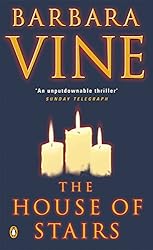
The House of Stairs by Barbara Vine – It is a most remarkable book, in that it turns a murder mystery upside down, as it were. It is clear from the start that there has been a murder and the murderer is known ‘“ she has just been released from prison. But who did she murder? Why, where, when and how? The other characters all know ‘“ but not the reader. The House of Stairs is so called because it’s a big house on five floors with a staircase of 106 stairs.

The crime is only revealed very gradually, building up the suspense and tension in a series of flashbacks, as you realise the how, the where and the when, but only by inference. As for the identity of the victim, I kept changing my mind, only finally deciding it must be this person, just a few pages before the dénouement.

2012

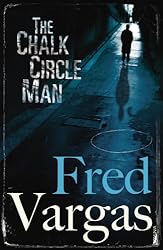
The Chalk Circle Man by Fred Vargas – this is a very cleverly constructed and quirky mystery with a twist at the end which took me totally by surprise. Strange blue chalk circles start appearing on the pavements of Paris and then the body of a woman with her throat savagely cut is found in one of them.

This is the first of her Commissaire Jean-Baptiste Adamsberg novels. Adamsberg just doesn’t fit the usual detective profile ‘“ well, he is a loner, so that’s pretty standard, but apart from that he stands out  ‘“ an outsider from the Pyrenees, newly appointed to Paris as Commissaire of police headquarters in the 5th arrondissement. His colleagues don’t understand him, especially Inspector Danglard, who likes a drink and isn’t too reliable after about four in the afternoon. A most enjoyable read!

2013

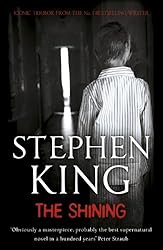
The Shining by Stephen King tells the story of Jack Torrance and his family as they move into the Overlook Hotel in the Colorada Rockies. The Overlook is closed for the winter and Jack, a recovering alcoholic is the caretaker. Just what impels him towards murder is horrifyingly revealed as the winter weather closes in on the hotel and they are cut off from the rest of the world.

The characters are so well-drawn and so distinct. Their vulnerability, coupled with the way King gets inside each person’s head, increases the element of fear. There’s the horror of the father who has monsters inside his head, who still loves his son, but demands he should ‘˜take his medicine‘; the evil is palpable. It’s an excellent choice to read at Halloween.

2014

I read so many brilliant books in October 2014! I’ve picked just one for this post – the others are listed in this post.

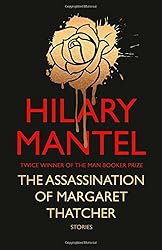
The Assassination of Margaret Thatcher by Hilary Mantel. I enjoyed this collection of stories,  which are brooding, somewhat melancholic, dark, disturbing and full of sharp and penetrating observations. One of my favourite stories was Sorry to Disturb, which describes the dilemma of a British woman living in Jeddah in Saudi Arabia when she finds herself befriended by a young Pakistani businessman ‘“ a situation that was ‘˜ripe for misunderstanding‘˜. It has a claustrophobic atmosphere.

Overall this is a compelling book, brilliantly written, keenly observed, with the power to chill and shock me.

2015

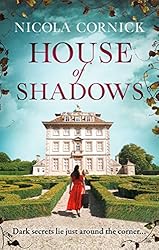
House of Shadows by Nicola Cornick – a time-slip novel with each strand of the story clearly defined, each set firmly in its historical context. It’s a fascinating mix of factual history combined with historical interpretation/imagination to fill in the gaps in the records.

There is so much I loved in this book ‘“ the history, all the storylines,  the characters, and the settings against the backdrop of years from the 16th to the 21st centuries. It has mystery, elements of the supernatural as well as being a love story. Once I started reading the House of Shadows I didn’t want to stop as the history of the crystal mirror and the Sistrin pearl, a jewel of rare beauty and price unfolds.

October’s Books

After a bumper reading month in September, when I read 12 books, it was back to normal in October with a total of 8 books read and 1 still in progress. It has been a mixed month, some books were disappointing for a variety of reasons, whilst others surprised me by how much I enjoyed them when I wasn’t sure I would.

The month began slowly and the first book,The Devil’s Promise by David Stuart Davies, a Sherlock Holmes sequel, was a bit disappointing as it began well  but later became repetitive as the dead body disappeared and reappeared. It was a bit too predictable.

The Old Curiosity Shop by Charles Dickens was my next book – a Classics Club Spin choice and one off my to-be-read shelves. This was much better than I thought it would be and was very entertaining, full of fantastic characters and wonderful scenes.

Little Black Lies by Sharon Bolton, didn’t quite match up to her earlier books for me. It was a combination of the use of the present tense and the way the plot descended into more of a farce by the end that meant it didn’t really appeal to me.
But the next book was a complete change and I loved House of Shadows by Nicola Cornick. It has three storylines set in three different time periods. There is so much I loved in this book ‘“ the history, all the storylines,  the characters, and the settings against the backdrop of years from the 16th to the 21st centuries. It has mystery, elements of the supernatural as well as being a love story.
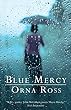
With Blue Mercy by Orna Ross I was back to being disappointed, despite its lovely setting in Ireland and California. It’s a book about family relationships, the plot being secondary to the characters and the various themes running through the book.  I enjoyed some of it, thought some parts were OK and didn’t like other parts, but I didn’t find it compelling or enthralling reading.

And my disappointment continued with the next book I read –The Church of Dead Girls by Stephen Dobyns about the disappearance and murders of three young teenage girls. It’s far too detailed and drawn out. I had trouble with the narrator, wondering how he  could possibly know all the detail of what other characters were thinking and doing.
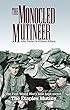
The final two books were much more to my liking and I shall write separate posts about them. They are:

The Monocled Mutineer by John Fairley & William Allison, a revised edition of the 1978 book that was the basis of the TV series of the same name, broadcast in 1986, starring Paul McGann as Percy Topliss.

and

The Queen of the Tambourine by Jane Gardam, which I thoroughly enjoyed, narrated by Eliza Peabody writing letters to her neighbour, Joan who it seems has disappeared from her home. It’s an intriguing novel, at times funny and at others tragic.

My book of the month is House of Shadows by Nicola Cornick